For three summers in a row, researchers working in the Mai Po Nature Reserve noticed something unusual drifting through the brackish shrimp ponds. At first glance, the small, translucent animal looked like a familiar jellyfish. A closer look suggested otherwise. Its shape, tentacle arrangement, and internal features did not line up with any species known from the region. After years of fieldwork, lab analysis, and genetic testing, scientists confirmed the surprise. The animal represents a new species of box jellyfish.
The species has been named Tripedalia maipoensis, after Mai Po, where it was first found. The discovery marks the first time a new box jellyfish species has been described from Chinese waters. It also expands a small and distinctive family of jellyfish known as Tripedaliidae.
The work was led by a team from Hong Kong Baptist University, with collaborators from WWF-Hong Kong, Ocean Park Hong Kong, and the University of Manchester. Their findings were published in the international journal Zoological Studies.
Box jellyfish belong to the class Cubozoa, named for their cube-shaped bells. Although the group includes fewer than 50 known species worldwide, some are among the most venomous marine animals. Not all box jellyfish are dangerous to humans, but their reputation often overshadows their diversity and biology.
Scientists divide box jellyfish into two main orders. One group has a single tentacle at each corner of the bell. The other carries several tentacles per corner and is usually larger and easier to spot. Tripedalia maipoensis belongs to the first group, known as Carybdeida.
Within this order sits the family Tripedaliidae. Before this discovery, the family included only three described species. Two belong to the genus Tripedalia. One species, Tripedalia cystophora, is found across tropical and subtropical waters, from the Caribbean to Southeast Asia. Another, Tripedalia binata, has a far narrower range and has only been reported from Australia and Thailand.
Despite Hong Kong’s long coastline and extensive marine surveys, only three box jellyfish species had ever been recorded in local waters. None belonged to the Tripedaliidae family. That made the Mai Po find especially striking.
The discovery took place in intertidal shrimp ponds known locally as gei wais. These ponds sit within Mai Po’s mangrove wetlands, near the eastern edge of the Pearl River Estuary. Although they may appear isolated, tidal channels connect them directly to coastal waters.
From 2020 through 2022, researchers surveyed the ponds each summer using fine-mesh plankton nets. They consistently found the jellyfish in April and May, with some individuals still present into June. During those months, water temperatures ranged from 20 to 29 degrees Celsius. Salinity levels varied widely, reflecting the mix of freshwater and seawater.
Back in the lab, the team raised some specimens to observe their growth and early development. They preserved adult jellyfish for detailed anatomical work and DNA sequencing. All samples were archived in the Tropical Marine Biodiversity Collections in Guangzhou.
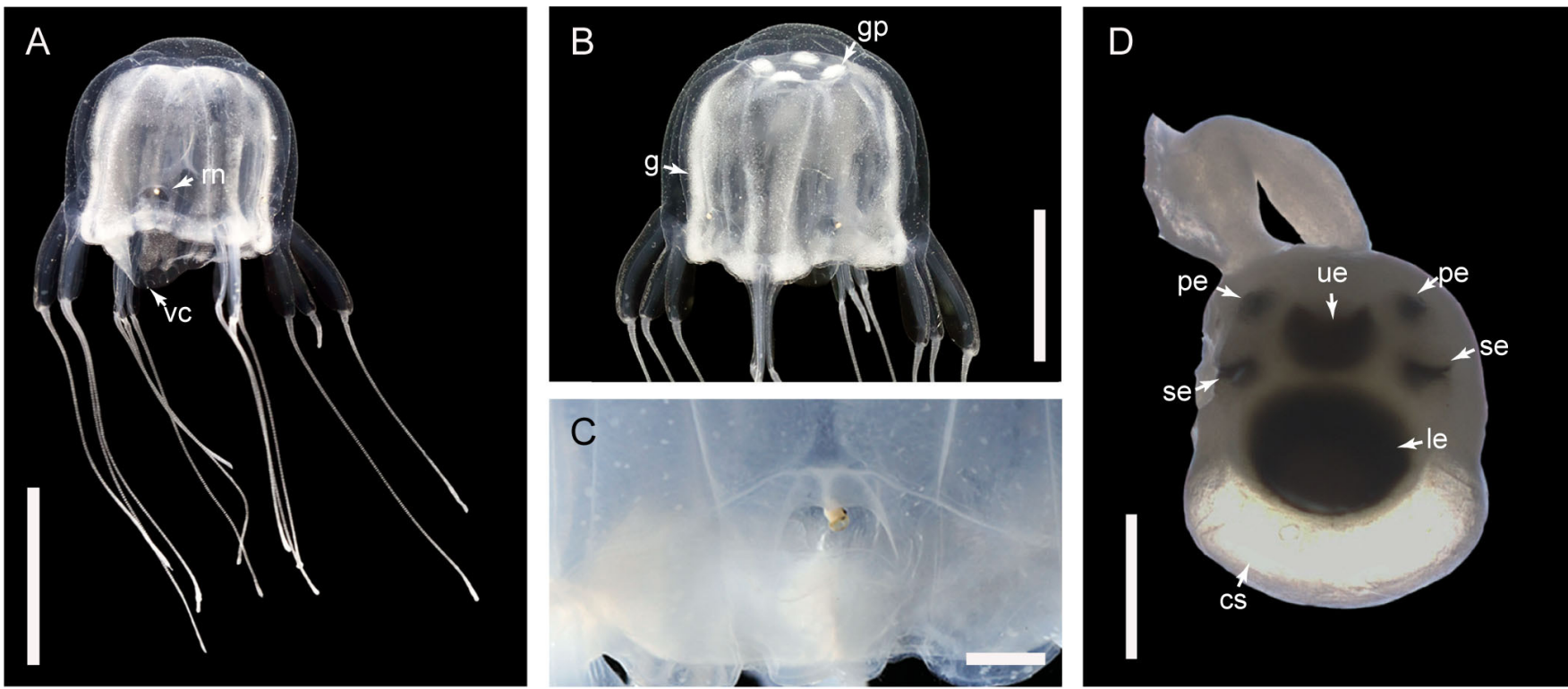
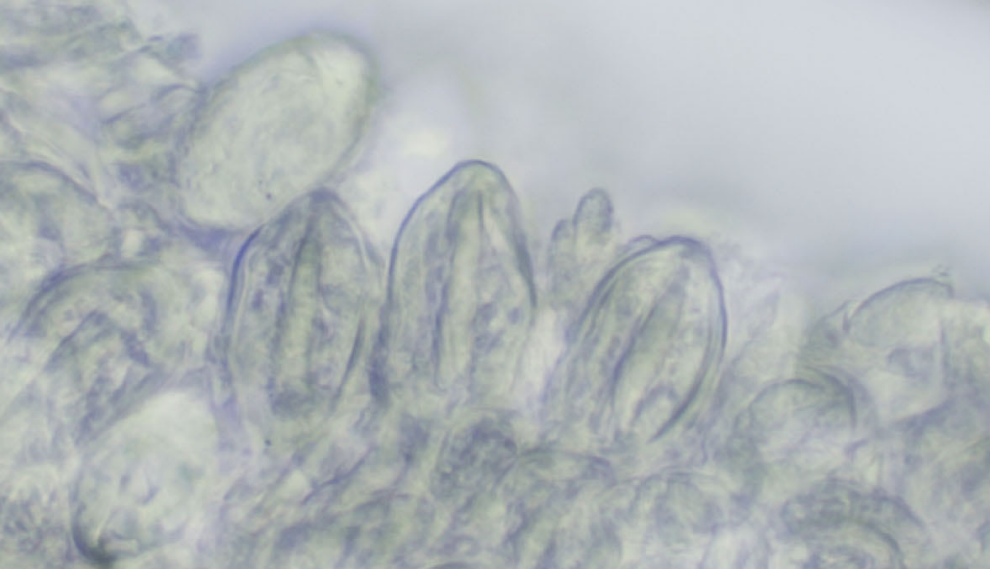
Careful examination revealed a suite of features that distinguish Tripedalia maipoensis from its relatives. The jellyfish has a transparent, colorless bell with smooth sides and rounded edges. White clusters of stinging cells dot the outer surface.
At each corner of the bell, the species carries three pedalia. Each pedalium supports a single, unbranched tentacle. This detail matters. Closely related species have either fewer pedalia or different internal canal structures. Juvenile individuals start with two pedalia per corner and add a third as they grow.
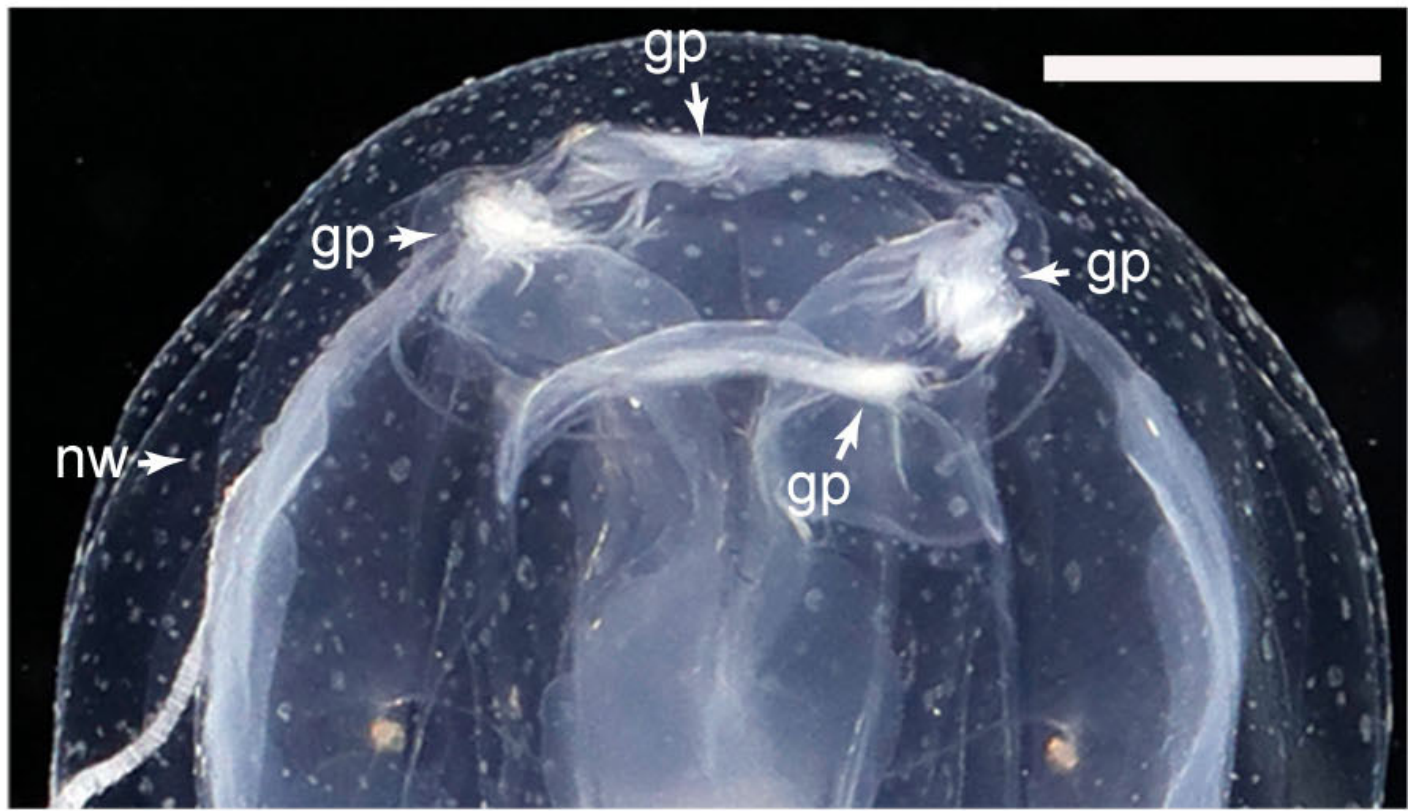
“The bell of T. maipoensis is transparent, colorless, and cube-like, with rounded edges. Its smooth exterior is covered in white nematocyst warts—clusters of stinging cells—that vary in shape and size. At each of the four corners, the jellyfish carries a pair of gonads, which stretch from the stomach down to the velarium in both males and females,” Professor Qiu Jianwen of Hong Kong Baptist University explained to The Brighter Side of News.
“One of the most distinctive features appears at the bell corners. This species has three pedalia at each corner, and each pedalium carries a single unbranched tentacle. Inside each pedalium runs a straight canal that tapers near the tip. Juvenile jellyfish start with two pedalia per corner and then develop a third as they grow to about 3.2 millimeters in bell height,” he continued.
Inside the bell, the velarium plays a key role. This muscular membrane helps control swimming by constricting the bell opening. In T. maipoensis, the velarial canals branch into three to six forks with sharp white tips. Its closest known relative, T. cystophora, has canals that do not branch.
The sensory system adds another layer of distinction. Like other box jellyfish, the species has 24 eyes. These are arranged into four groups, with six eyes housed in each rhopalium. Two eyes in each group contain lenses that form images. The other four detect light and darkness. A small crystal structure beneath the main lens eye helps the animal maintain balance and orientation.
Adult jellyfish average about 1.5 centimeters in body length. Tentacles can extend several centimeters, trailing behind as the animal swims.
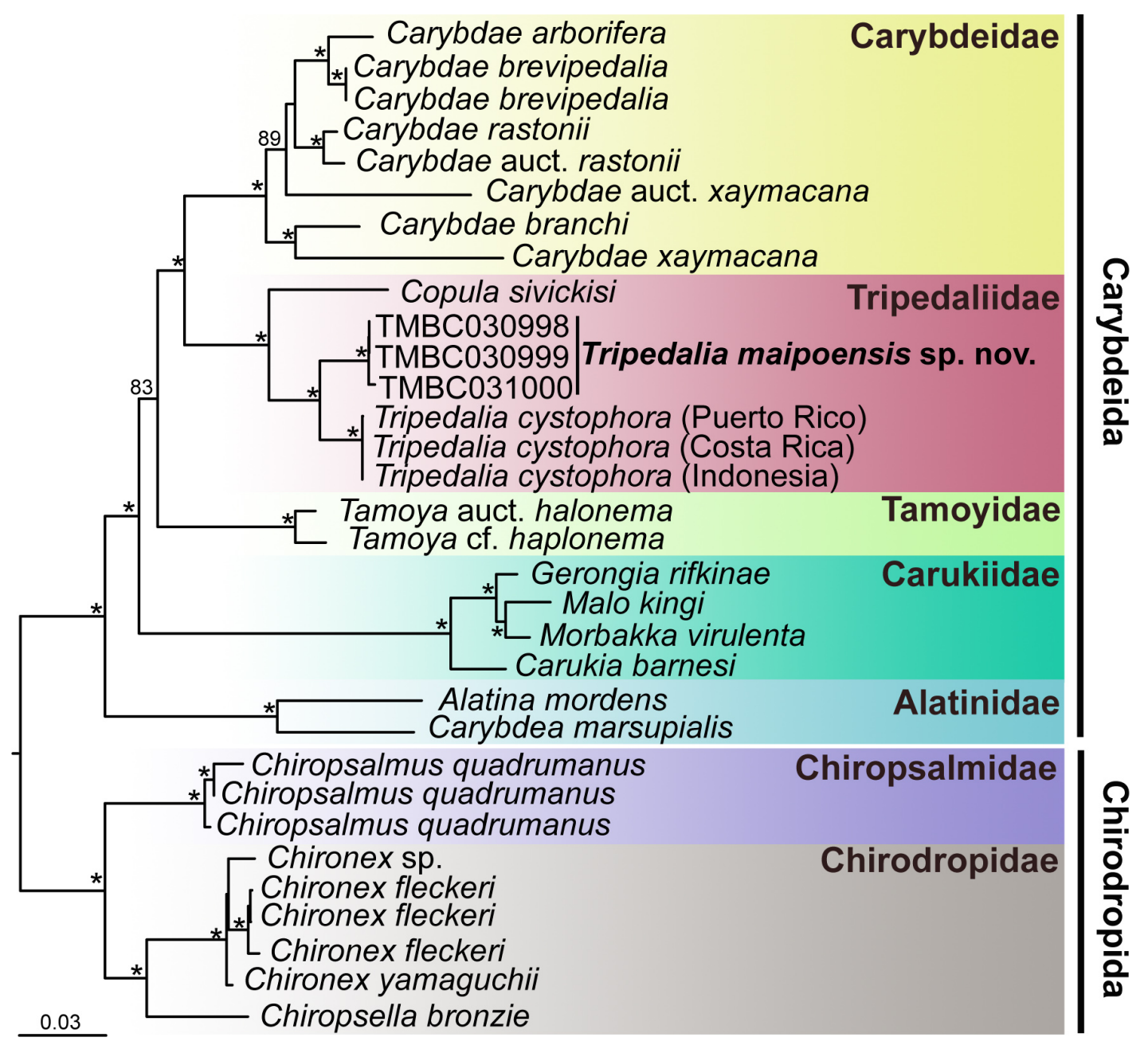
To confirm what anatomy suggested, the researchers turned to genetics. They sequenced three genes, one from the mitochondrial genome and two from the nuclear genome. These sequences were compared with those of other box jellyfish.
The results were clear. Tripedalia maipoensis formed its own distinct branch on the evolutionary tree. It appeared as the closest known relative of T. cystophora, but the genetic distance between them was large. The mitochondrial gene showed a difference of 17.5 percent, far beyond what scientists expect within a single species.
By contrast, individuals of T. maipoensis differed from one another by only a fraction of a percent. That pattern strongly supports the conclusion that the Mai Po jellyfish is a separate species.
Finding a new species in a group as well studied as box jellyfish is rare. Finding one in a heavily monitored wetland makes it even more notable. The discovery suggests that marine biodiversity along the Chinese coast remains underexplored.
“The find highlights how much remains to be learned. We named the new species Tripedalia maipoensis to reflect its type locality, where the new species was first found,” Jianwen said. “Although it is currently known only in Mai Po, we believe that this species is also distributed in the adjacent waters of the Pearl River Estuary.”
The gei wais connect directly to the estuary, which opens into the South China Sea. That raises the possibility that the jellyfish occupies a wider range than currently documented.
The discovery adds to scientific understanding of box jellyfish diversity and evolution. It provides new data on how these animals adapt to brackish and coastal environments. For researchers, the species offers a fresh opportunity to study box jellyfish vision, swimming, and life cycles in shallow waters.
From a conservation perspective, the finding underscores the ecological value of wetlands like Mai Po. Protecting these habitats safeguards not only birds and fish, but also lesser-known marine species. In the long term, better knowledge of box jellyfish diversity may also inform public safety and environmental monitoring in coastal regions.
Research findings are available online in the journal Zoological Studies.
Like these kind of feel good stories? Get The Brighter Side of News’ newsletter.
The post New box jellyfish species has 24 eyes and can see in all directions at once appeared first on The Brighter Side of News.

