Severe stomach pain can hide a silent threat that even seasoned doctors struggle to spot in time. One of the most dangerous is acute mesenteric ischemia, a sudden loss of blood flow to your intestines that can kill more than half of the people it affects. Now, researchers from Mass General Brigham and the Massachusetts Institute of Technology have built a swallowable light sensing capsule that may finally help catch this condition before it turns deadly.
Acute mesenteric ischemia is not common. It accounts for less than 1.5 percent of emergency room visits for abdominal pain. Yet the mortality rate sits around 55 percent. The main reason is delay. Early symptoms often mimic far more routine problems, such as food poisoning, stomach flu, or irritable bowel syndrome.
You might show up with intense abdominal pain while your physical exam looks fairly normal. Blood tests can be vague. Standard scans are not always specific. By the time more advanced imaging or surgery finally reveals the problem, part of the intestine may already be dead.
“Acute mesenteric ischemia is a potentially deadly but often underdiagnosed condition. Its early symptoms can resemble common gastrointestinal problems, and current diagnostic tools such as imaging tests are invasive, costly, and often too slow to enable timely treatment,” said senior author Giovanni Traverso, a gastroenterologist at Mass General Brigham.
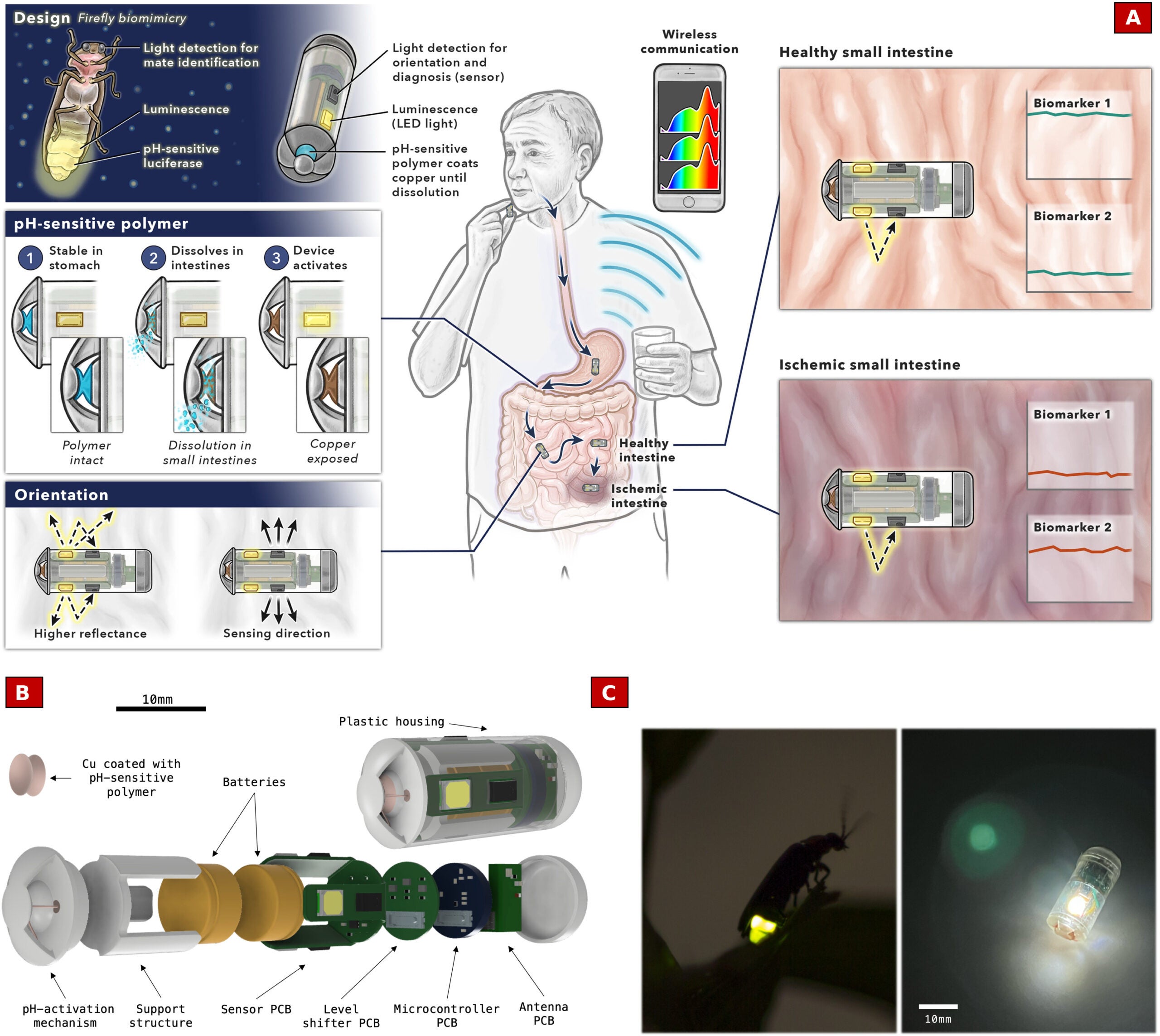
To close this deadly gap, Traverso’s team created FIREFLI, short for Finding Ischemia via Reflectance of Light. The capsule is battery powered, about the size of a large vitamin, and designed to be swallowed.
The concept borrows from fireflies, which use a pH sensitive enzyme called luciferase to trigger bioluminescent flashes. FIREFLI does not use the same chemistry, but it follows the same idea: light is generated in one place, then sensed and interpreted.
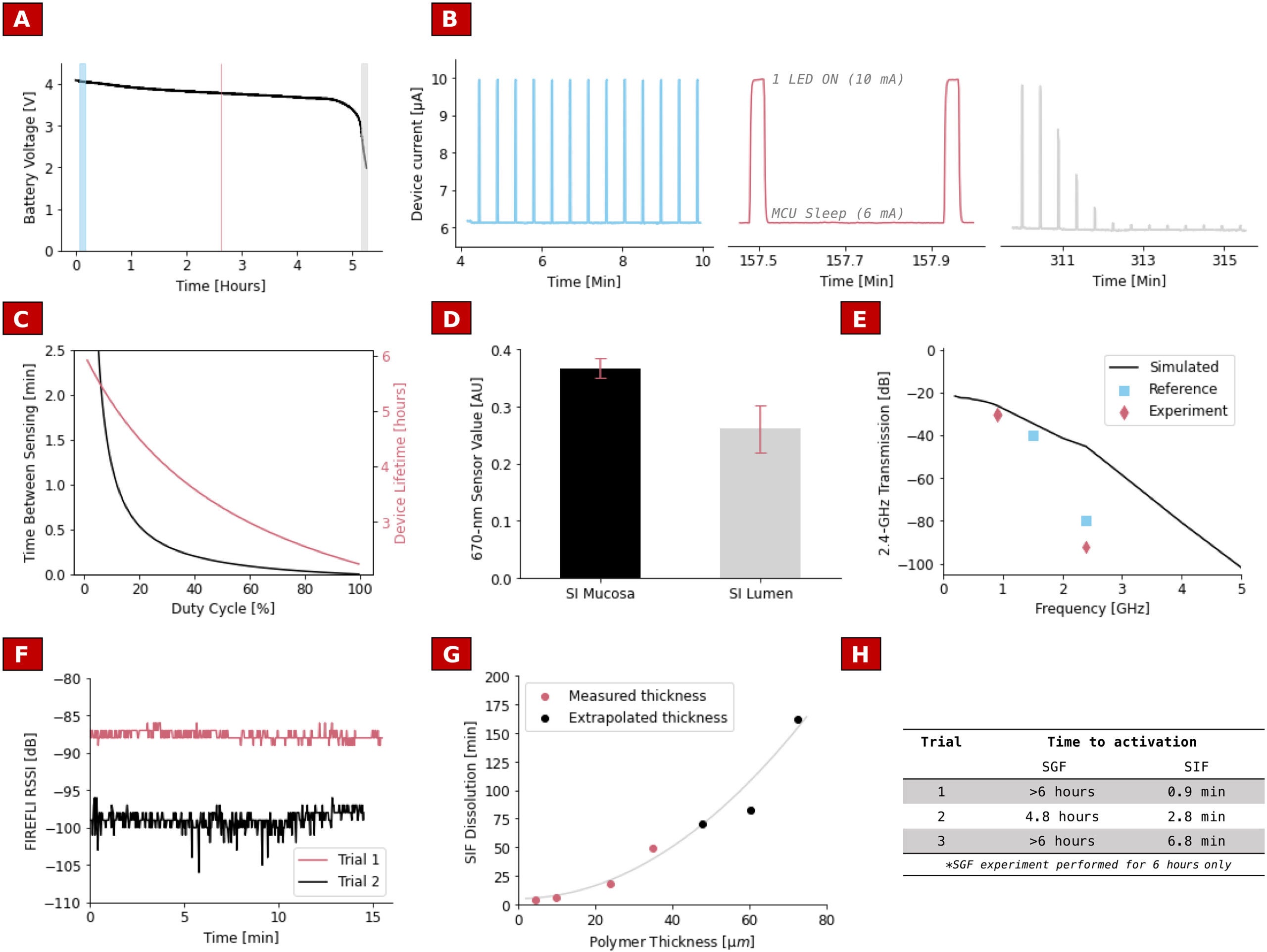
When you swallow FIREFLI, it stays inactive in the acidic stomach. A special coating dissolves only when the capsule reaches the more neutral pH of your small intestine. Once that happens, FIREFLI switches on and starts to work.
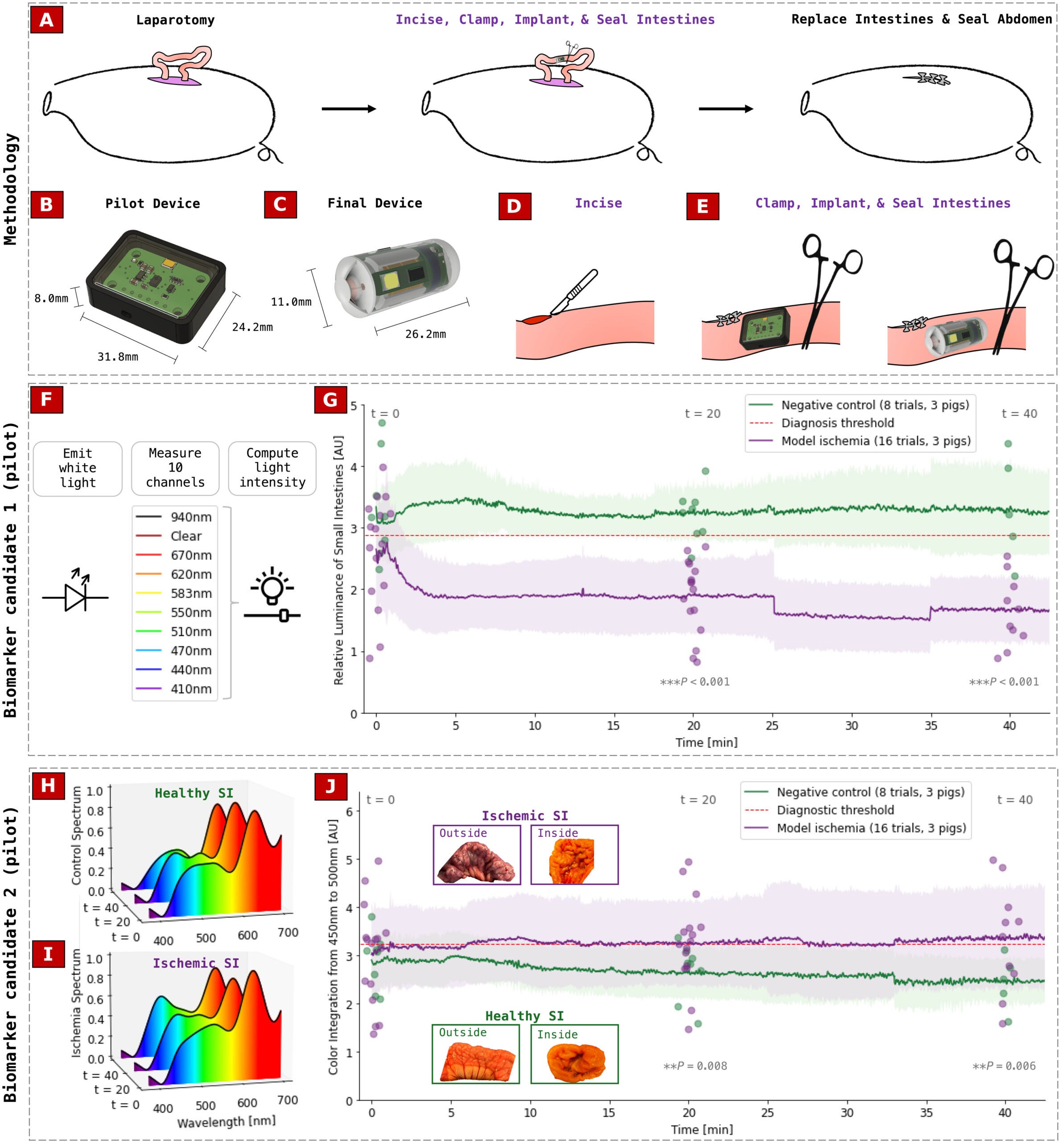
Inside the capsule, tiny lights shine on the intestinal wall and sensors measure how much light bounces back. Healthy tissue and oxygen starved tissue reflect light differently. In their study, the team found that ischemic segments showed much lower overall luminance, or brightness, than normal intestine.
At the heart of FIREFLI is a stack of miniature circuit boards. A microcontroller runs the system. White light emitting diodes send out brief pulses. A set of photodiode sensors with multiple channels reads the reflected light across different wavelengths.
“Instead of sending raw data, the capsule does some of the thinking inside your gut. It converts the light readings into a single luminance value and compares that to a preset threshold. If the brightness falls below that level, the device marks the tissue as likely ischemic,” Traverso told The Brighter Side of News.
“Those results do not stay trapped inside your body. FIREFLI uses a low power wireless signal to transmit the data to a phone or an external receiver placed on the abdomen. In a future emergency room, a clinician could read the result in real time on a mobile device,” he continued.
“The approach could enable faster triage in emergency departments, reduce unnecessary invasive testing in patients whose abdominal symptoms are not caused by ischemia, expand access to diagnostic care in clinics that lack advanced imaging technology, and lay the groundwork for future ‘smart’ capsules that combine sensing, wireless communication, and even targeted therapy delivery,” he concluded.
To see if FIREFLI could truly tell sick intestine from healthy bowel, the researchers tested the device in pigs, which have gastrointestinal anatomy similar to yours.
In nine animals, they induced acute mesenteric ischemia by briefly clamping key blood vessels. As the capsule moved through the small intestine, it measured tissue luminance and transmitted the data. The team then compared those readings with direct surgical assessment.
FIREFLI correctly identified the presence or absence of ischemia about 90 percent of the time. Its sensitivity reached 98 percent, which means it almost never missed a truly ischemic segment. Specificity reached 85 percent, meaning it sometimes gave false alarms but rarely failed to detect real danger.
Crucially, the luminance signal dropped within 10 minutes of blood flow being cut off, which fits the rapid course of this emergency. That fast change suggests the capsule could flag trouble early enough for doctors to act before permanent damage occurs.
Any swallowable device must pass a simple test: it has to move through the gut safely and leave the body intact. To answer that, the team carried out survival studies in ambulatory pigs.
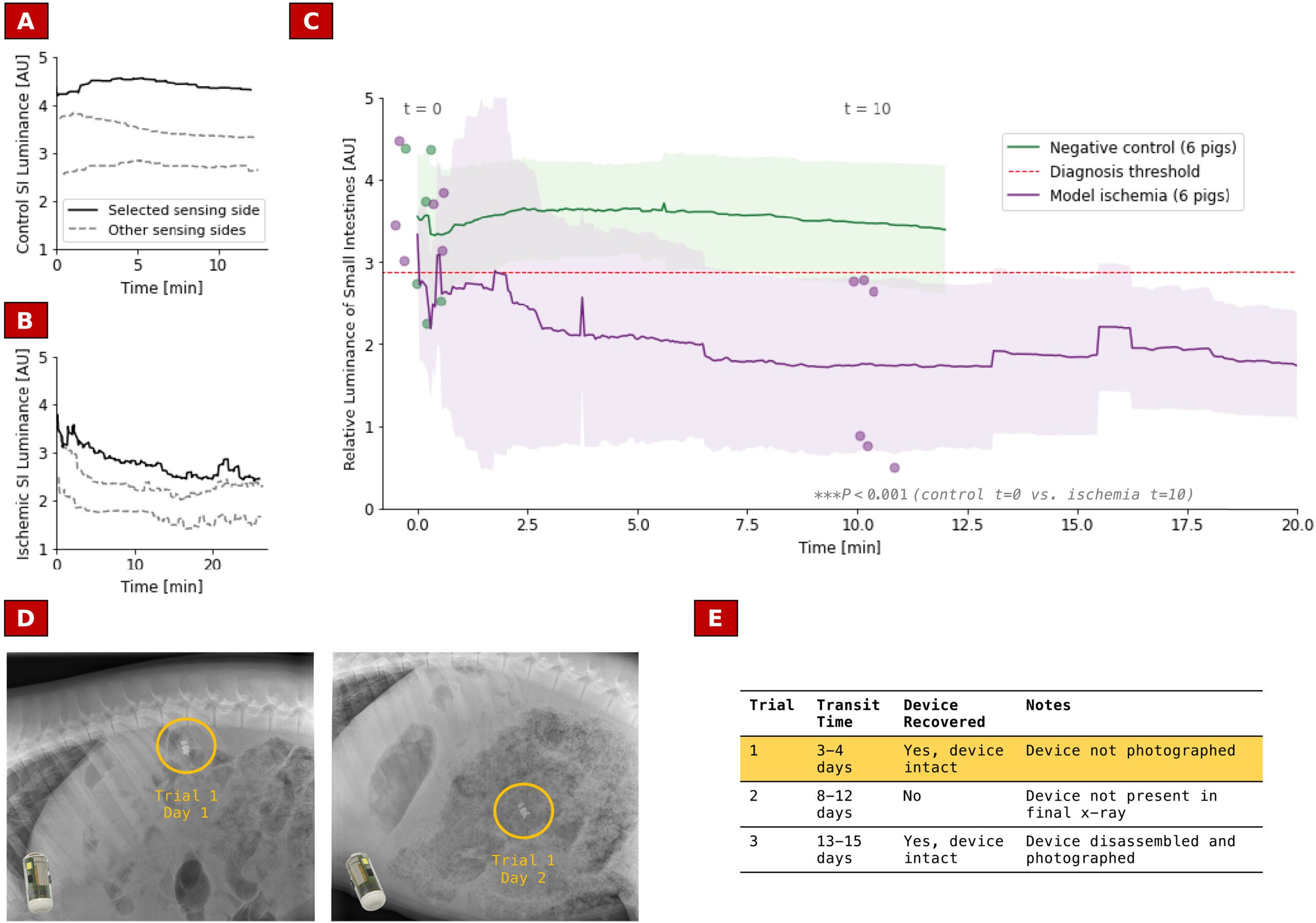
The animals swallowed FIREFLI, then were monitored over several days. X rays showed the capsule traveling naturally through the stomach, small intestine, and colon. When recovered, the casing and electronics remained intact. The pigs showed no signs of distress or injury.
The engineers also checked whether the device could stay powered long enough to do its job. By using a low duty cycle, where the capsule spends most of its time asleep and wakes only for short bursts, they achieved a battery life of a little more than five hours. That window matches the typical transit time through the small intestine.
For now, FIREFLI remains a preclinical prototype, and the work appears in the journal Science Robotics. Many steps remain before you would ever be offered this capsule in an emergency department. It must be tested in more animals, refined for manufacturing, and eventually studied in human trials.
Even at this stage, the concept feels powerful. Instead of relying only on scans, blood tests, and clinical hunches, doctors could someday add a simple pill that looks for one clear signal from inside your gut: does this tissue reflect light the way healthy intestine should.
“This work brings together engineering, biology, and medicine to make an invisible medical emergency detectable quickly and noninvasively,” Traverso said.
If that promise holds up in people, a small glowing capsule could turn one of the most terrifying hidden killers in abdominal medicine into a problem that you can find, and treat, in time.
If FIREFLI reaches the clinic, it could change how emergency teams handle severe, unexplained abdominal pain. A fast, swallowable test could help doctors triage patients sooner, sending those with clear signs of ischemia straight to advanced imaging or surgery and sparing others invasive procedures.
Hospitals without high end scanners could gain a low cost way to screen for this deadly condition, which would expand access to life saving diagnosis in smaller centers and rural areas. The device might also reduce exposure to contrast dyes and radiation by cutting back on unnecessary scans.
Beyond mesenteric ischemia, FIREFLI shows how smart capsules can blend sensing, on board data processing, and wireless communication inside your digestive tract. That platform could be adapted to monitor other threats, such as bleeding, localized inflammation, or even early tumors, and later paired with targeted drug release.
In a broader sense, this work points to a future in which the inside of your gut is no longer a dark mystery. Instead, small devices could move through quietly, reading the health of your tissues and sending back clear, early warnings that help keep you alive.
Research findings are available online in the journal Science Robotics.
Like these kind of feel good stories? Get The Brighter Side of News’ newsletter.
The post Swallowable light sensing pill could catch deadly gut ischemia before it kills appeared first on The Brighter Side of News.

