The Mediterranean Sea is heating up faster than ever before, and the consequences are already being felt. In places like Greece, Italy, and Spain, water temperatures are climbing to 28°C or more, making summer swims increasingly uncomfortable.
July 2025 averaged 26.9°C, the highest temperature recorded for the region since monitoring began, according to the Copernicus Earth Observation Service. Scientists warn that rising sea temperatures, combined with ocean acidification, habitat loss, and pollution, are putting marine and coastal ecosystems under severe stress.
“The consequences of warming are not only projections for the future, but very real damages we are witnessing now,” says Dr. Abed El Rahman Hassoun, biogeochemical oceanographer at the Helmholtz Centre for Ocean Research Kiel. “The continuing rise in temperatures, sea level, and ocean acidification cause severe risks for the environment in and around the Mediterranean Sea.”
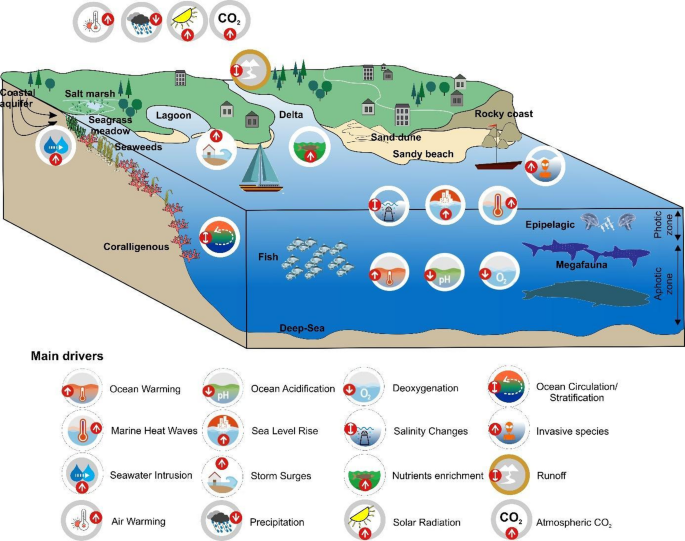
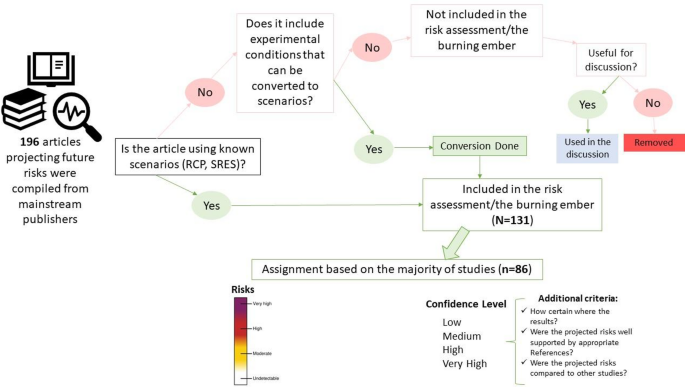
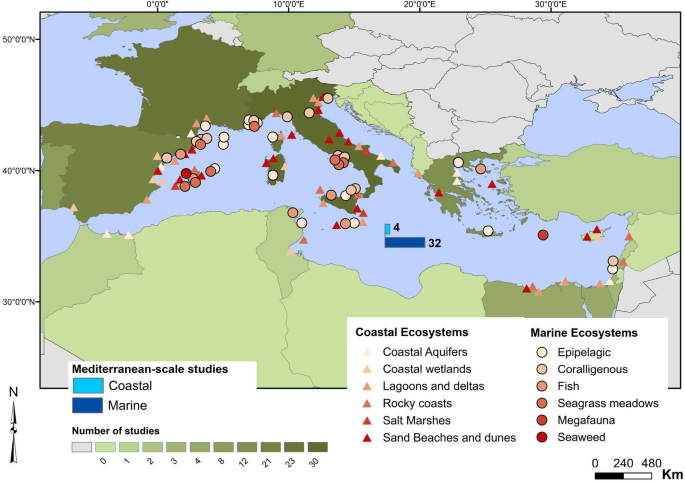
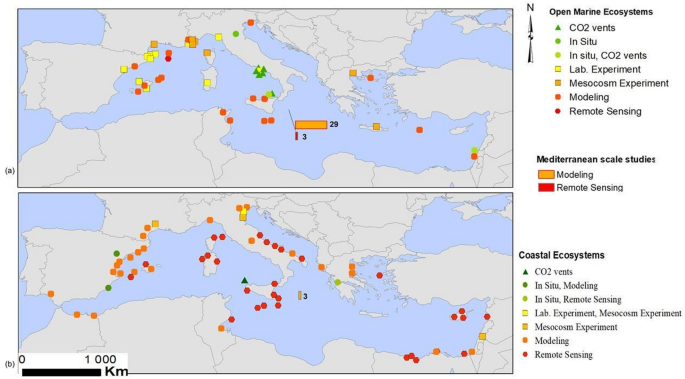
Dr. Hassoun and Prof. Dr. Meryem Mojtahid, a paleo-oceanographer at the University of Angers, conducted a meta-study analyzing 131 scientific papers on Mediterranean ecosystems published up to August 2023.
Their work, combined with data from the Research Initiative on Climate Change and Environmental Degradation in the Mediterranean Region (MedECC), produced a “burning ember” diagram for the Mediterranean. This visualization, originally developed by the Intergovernmental Panel on Climate Change (IPCC), highlights areas of greatest ecological risk and shows how climate change threatens key marine and coastal habitats.
“The diagram clearly shows how strongly climate change threatens these ecosystems,” Mojtahid says. “I hope our results will help raise awareness and inspire real action to protect these unique systems.”
The Mediterranean Sea is semi-enclosed, connected to the global ocean only through the Strait of Gibraltar. Because of this, it warms faster and acidifies more sharply than most open oceans. From 1982 to 2019, surface temperatures rose by 1.3°C, more than double the global average. Scientists call the region a “hotspot of climate change,” and consider it a natural laboratory to observe climate impacts at an accelerated pace.
“What happens in the Mediterranean often foreshadows changes expected elsewhere,” Hassoun told The Brighter Side of News. “The sea acts as an early warning system for the processes that will later affect the global ocean.”
The study explored two IPCC scenarios: a medium-emissions pathway (RCP 4.5) and a high-emissions pathway (RCP 8.5). Under moderate policies, warming could rise another 0.6–1.3°C by 2050 and 2100. Under a “business as usual” scenario, temperatures may increase by 2.7–3.8°C. Even small changes, such as 0.8°C of additional warming, could trigger major shifts in marine life.
“These scenarios show: we can still make a difference! Every tenth of a degree counts,” Hassoun says. “Political decisions made now will determine whether Mediterranean ecosystems collapse partially, fully, or remain functional.”
Rising temperatures and acidification are reshaping entire ecosystems. Seagrass meadows like Posidonia oceanica could vanish by 2100 with just 0.8°C of additional warming. Seaweed species such as Cystoseira are also at risk, while heat-loving invasive algae may expand.
Fish populations could drop 30–40 percent, shift northward, and allow invasive species like lionfish to thrive. Corals, with their long evolutionary history, are moderately resilient but still face high risks at higher warming levels. Limited data on marine mammals and sea turtles suggest altered migration, feeding, and reproduction could occur.
Plankton communities are changing as well, with toxic algal blooms and harmful bacteria appearing more often. These shifts affect food webs, fisheries, and overall biodiversity.
Coastal ecosystems are among the most vulnerable. Areas up to ten meters above sea level, including dunes, rocky coasts, and wetlands, face rising risks from sea-level rise and warming. Over 60 percent of sea turtle nesting sites may be lost as sandy beaches erode. Even small temperature increases exacerbate habitat loss for plants, birds, and young fish.
Wetlands, lagoons, deltas, and coastal aquifers are also under threat. Rising seas, decreased precipitation, and changes in water chemistry could lead to vegetation loss and more invasive species. With warming above 1°C, flooding and nutrient overloading could further damage these delicate habitats.
“We found that Mediterranean ecosystems are remarkably diverse in how they respond to climate-related stress,” Mojtahid says. “Some are more resistant than others, but none are invincible. Only strict climate protection measures can keep the risks at a level ecosystems can still adapt to.”
Not all parts of the Mediterranean are affected equally. Eastern and southern sub-basins may warm faster and acidify more, creating higher risks for habitats and species. Rocky coasts and coralligenous reefs show relative resilience due to historical adaptation, but even these ecosystems may falter under high-emissions scenarios.
Beyond climate, overfishing, pollution, and habitat destruction amplify the threats. The study notes that climate change rarely acts alone, and the combination of stressors increases the likelihood of widespread ecosystem disruption.
While the study consolidated a wide array of data, gaps remain. Deep-sea habitats, macroalgae, megafauna, and salt marshes are underrepresented, especially in southern and eastern Mediterranean regions. Limited long-term studies tracking multiple stressors simultaneously restrict precise risk projections. Scientists call for stronger interdisciplinary research and expanded monitoring to fill these gaps and better guide conservation and policy efforts.
The research makes clear that Mediterranean ecosystems face immediate and long-term risks from climate change. By highlighting hotspots and projecting future warming, the study provides critical information for policymakers and coastal managers.
Protecting seagrass meadows, fish stocks, and wetlands is vital for sustaining fisheries, tourism, and coastal protection. Reducing greenhouse gas emissions and managing human activities like overfishing and coastal development are essential to prevent ecosystem collapse.
This knowledge empowers action, helping communities prepare for environmental changes and maintain the services these habitats provide.
Research findings are available online in the journal Scientific Reports.
Like these kind of feel good stories? Get The Brighter Side of News’ newsletter.
The post Mediterranean sea faces record warming and rising climate risks appeared first on The Brighter Side of News.

