Scientists from Boston University, Queensland University of Technology, and the University of Toronto are advancing a shared idea about how the mind works. They argue that the same brain systems used to remember the past also shape conscious experience of the present and expectations of the future. The work brings together neurologist Andrew Budson, neuroscientist Hinze Hogendoorn, and psychologist Donna Rose Addis. Their perspective appears in the Journal of Cognitive Neuroscience.
The researchers come from different fields, but they reached similar conclusions independently. Once they compared ideas, the overlap became clear. Conscious perception, remembering, and imagining may not be separate mental acts. Instead, they may reflect a single process in which the brain builds and updates a working model of reality over time.
Although experience feels immediate, the brain processes information with delays. Sound, color, and motion reach awareness at different speeds. If perception simply mirrored the outside world in real time, everyday actions would feel disjointed. Yet they do not. The researchers argue that the brain solves this problem by creating a short, editable timeline that blends recent past, present input, and near-future prediction.
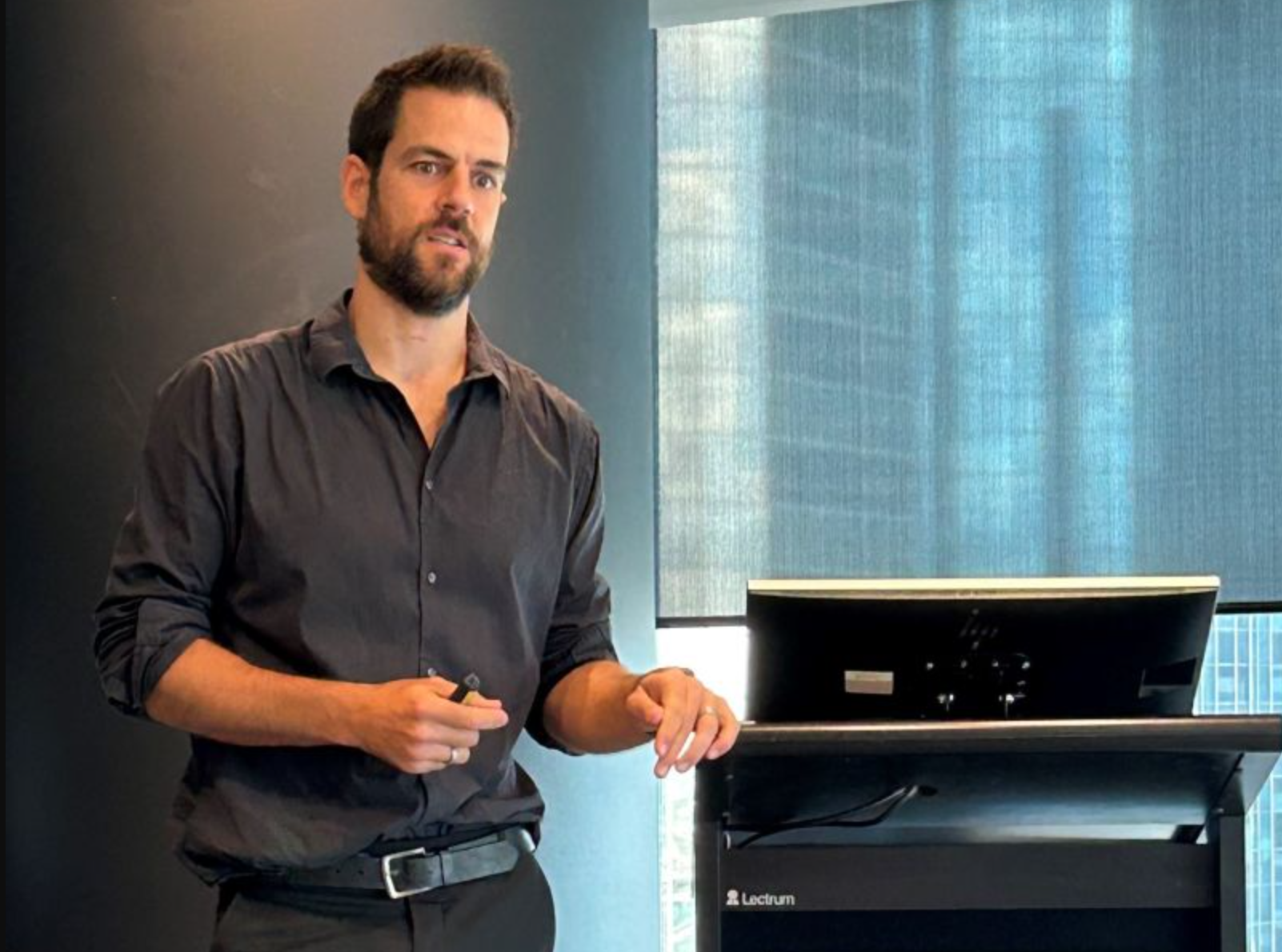
Hogendoorn focuses on the timing of perception. He notes that neural signals arrive out of sync, yet perception feels unified. His theory proposes that unconscious perceptual systems track a brief timeline lasting milliseconds to seconds. This timeline acts as a “best estimate” of what just happened and what is likely happening now.
Early interpretations remain flexible. Later information can revise them before awareness settles. The final conscious experience reflects the most coherent version, not the first one. Hogendoorn argues there is no strict boundary between perception and memory at these short timescales. As events recede, they gradually become what people call memory.
Time itself may be coded like other features, such as color or shape. Neurons may respond to specific durations or adjust their responses based on recent activity. In this view, the feeling of a single present moment is a construction, not a fixed point.
Budson approaches the problem from neurology. At Boston University Chobanian and Avedisian School of Medicine and the VA Boston Healthcare System, he studies memory disorders and consciousness. He argues that conscious experience is a form of explicit memory. Perceptions, decisions, and actions become conscious only after unconscious processes complete.
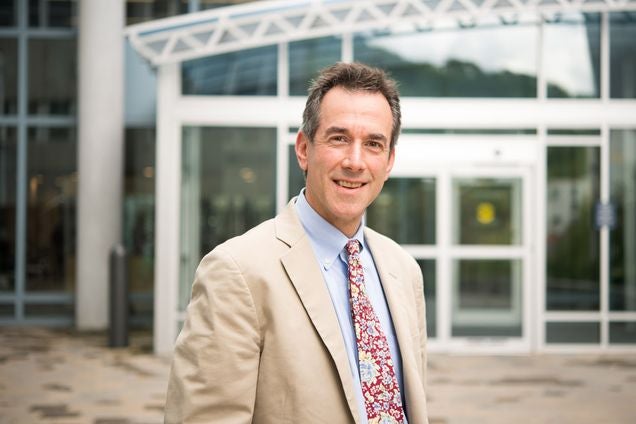
“The same simulation processes are used whether we are consciously remembering the past, experiencing the present or imagining the future,” Budson said. “There is no hard boundary between conscious perception and memory at milliseconds to seconds timescales.”
This view explains why conscious experience lags behind fast actions. It also accounts for postdictive effects, where later events shape how earlier ones are remembered. If consciousness is memory-like, delay and revision make sense.
Budson suggests that consciousness evolved to support explicit memory. Its purpose matches memory’s purpose: using past information to understand the present and plan ahead. The brain regions involved include the entire cerebral cortex, not a single control center. Disorders affecting the cortex, such as epilepsy or Alzheimer’s disease, often disrupt consciousness as well.
Addis studies memory and imagination at the University of Toronto. Her imaging research shows that remembering and imagining activate overlapping brain networks. She argues that both rely on constructive simulation, a process centered in the default mode network.
In her model, perception involves more than raw sensation. Sensory input feeds into brain regions that assemble events using prior knowledge and context. The hippocampus helps bind details into a coherent scene. This representation updates as experience continues and later becomes memory.

Imagination works similarly. Schemas and semantic knowledge provide structure, while episodic details fill in the scene. The same system supports recall, future thinking, and awareness of ongoing events, though effort levels differ.
Together, the researchers propose that consciousness reflects an ongoing simulation updated by memory and prediction. Perception becomes a refined remembering of recent sensory information. Prediction prepares the future, while postdiction revises the past when new input arrives.
This synthesis fits alongside other theories, including predictive processing and global neuronal workspace. Budson noted to The Brighter Side of News that “many major theories of consciousness may be describing its various parts.”
“The framework also raises new questions. Scientists still need to learn how the brain marks the present on its internal timeline. It remains unclear whether earlier perceptual versions ever reach awareness. The role of different brain networks and the thalamus also needs testing,” he added.
This research could reshape how scientists study consciousness and memory disorders. By linking awareness to explicit memory systems, it points researchers toward specific brain networks rather than abstract processes. The framework may improve understanding of conditions such as Alzheimer’s disease, stroke, or epilepsy, where memory and consciousness often change together.
In the long term, the findings may influence approaches to mental health, learning, and rehabilitation. If conscious experience reflects an updated memory-based simulation, therapies could focus on how the brain revises and integrates information over time.
This view also clarifies why habits resist change and why awareness alone often fails to guide behavior.
Research findings are available online in the Journal of Cognitive Neuroscience.
Like these kind of feel good stories? Get The Brighter Side of News’ newsletter.
The post Memory shapes your conscious experience of the past, present and future appeared first on The Brighter Side of News.

