Late in 2024, astronomers spotted a new near-Earth asteroid named 2024 YR4. By mid-2025, its improved orbit tracking raised an unusual possibility: the space rock could hit the Moon on Dec. 22, 2032, with about a 4% chance.
That scenario is the focus of a new arXiv preprint led by Yifan He of Tsinghua University and co-authors. Their work asks a simple question with big consequences. If a 60-meter asteroid slams into the Moon, what would you see, what would instruments record, and what risks would follow for Earth’s space hardware?
The team describes 2024 YR4 as an Apollo-class asteroid whose path crosses both Earth’s and the Moon’s orbits. In their modeling, an impact would occur at about 14.1 kilometers per second. That speed would turn a single strike into a physics experiment that unfolds in seconds, then echoes for years.
In the study, the asteroid’s kinetic energy at impact reaches about 3 × 10^16 joules. The authors compare that to roughly 6.5 megatons of TNT. On the Moon, that amount of energy can carve a crater roughly a kilometer wide and 150 to 260 meters deep, depending on the impact angle.
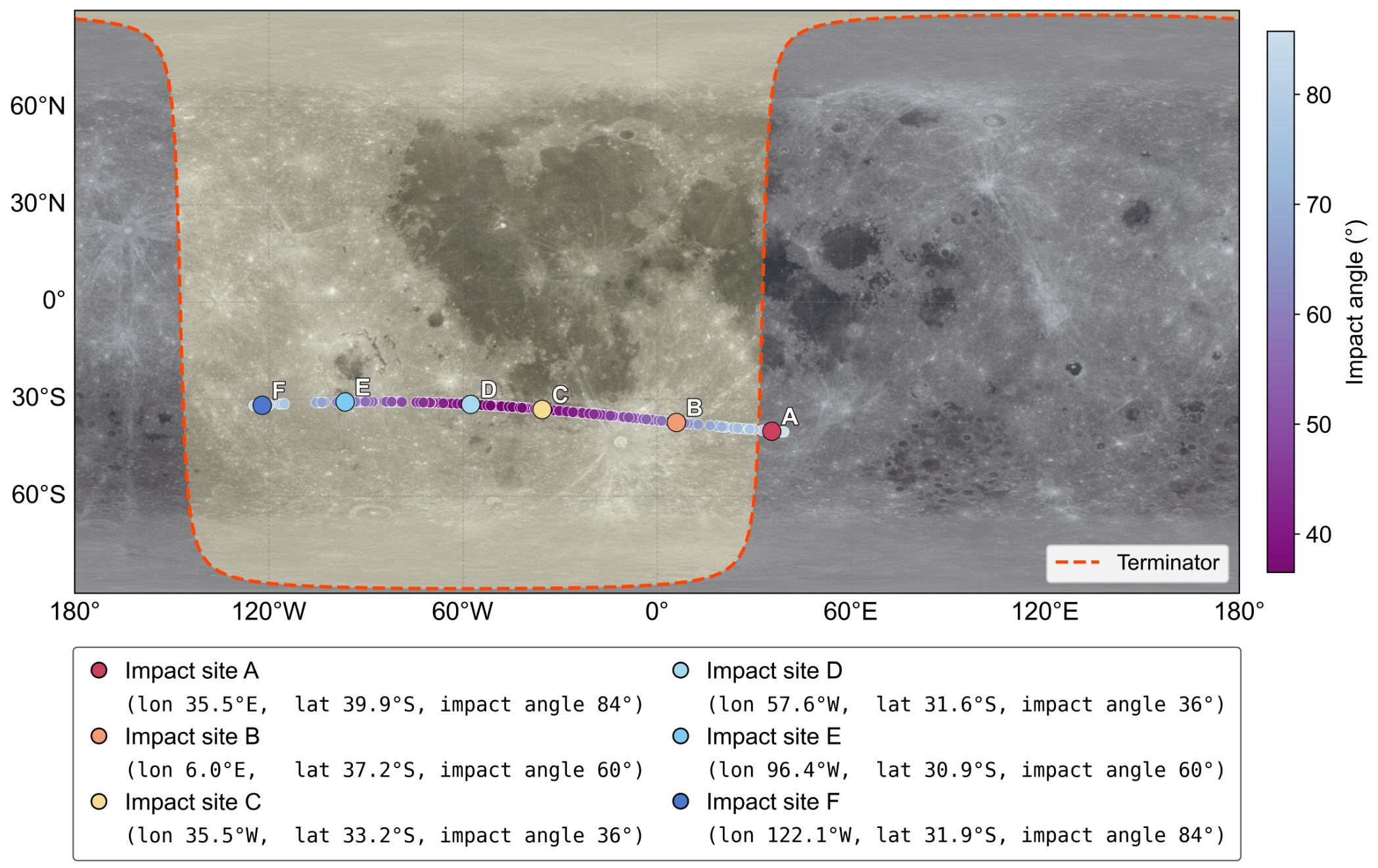
“The Moon takes hits all the time, but modern observers rarely catch anything large. Our paper contrasts the 2032 scenario with a well-documented lunar flash from Sept. 11, 2013, linked to a meteoroid of about 400 kilograms. That smaller event produced a short, visible burst and left a crater about 40 meters wide. By comparison, the 2024 YR4 impact would be about six orders of magnitude more energetic,” He told The Brighter Side of News.
“If the strike happens, we expect a bright optical and infrared flash, a pool of melt about 100 meters across, and a fast-moving spray of debris. Some fragments would exceed lunar escape speed and leave the Moon entirely. That ejected material is where the story becomes relevant to daily life on Earth,” He added.
To estimate the odds, the researchers generated 10,000 possible future paths for the asteroid. They sampled the uncertainty in the orbit solution from mid-2025 and projected each “clone” forward to December 2032 using a detailed gravity model.
In that run, 426 out of 10,000 simulated orbits struck the Moon on Dec. 22, 2032. That equals a 4.26% chance, consistent with the paper’s headline figure. Impact times clustered within about two hours of 15:18 UTC. The speed stayed nearly fixed at 14.1 km/s, while approach angles ranged from steep to very shallow.
Next, the team simulated the collision itself. They used smoothed particle hydrodynamics to follow the first 500 seconds after impact in a local region a few kilometers across. They tested three angles, 36 degrees, 60 degrees, and 84 degrees, and tracked crater growth, ejecta patterns, and the mass flung fast enough to escape.
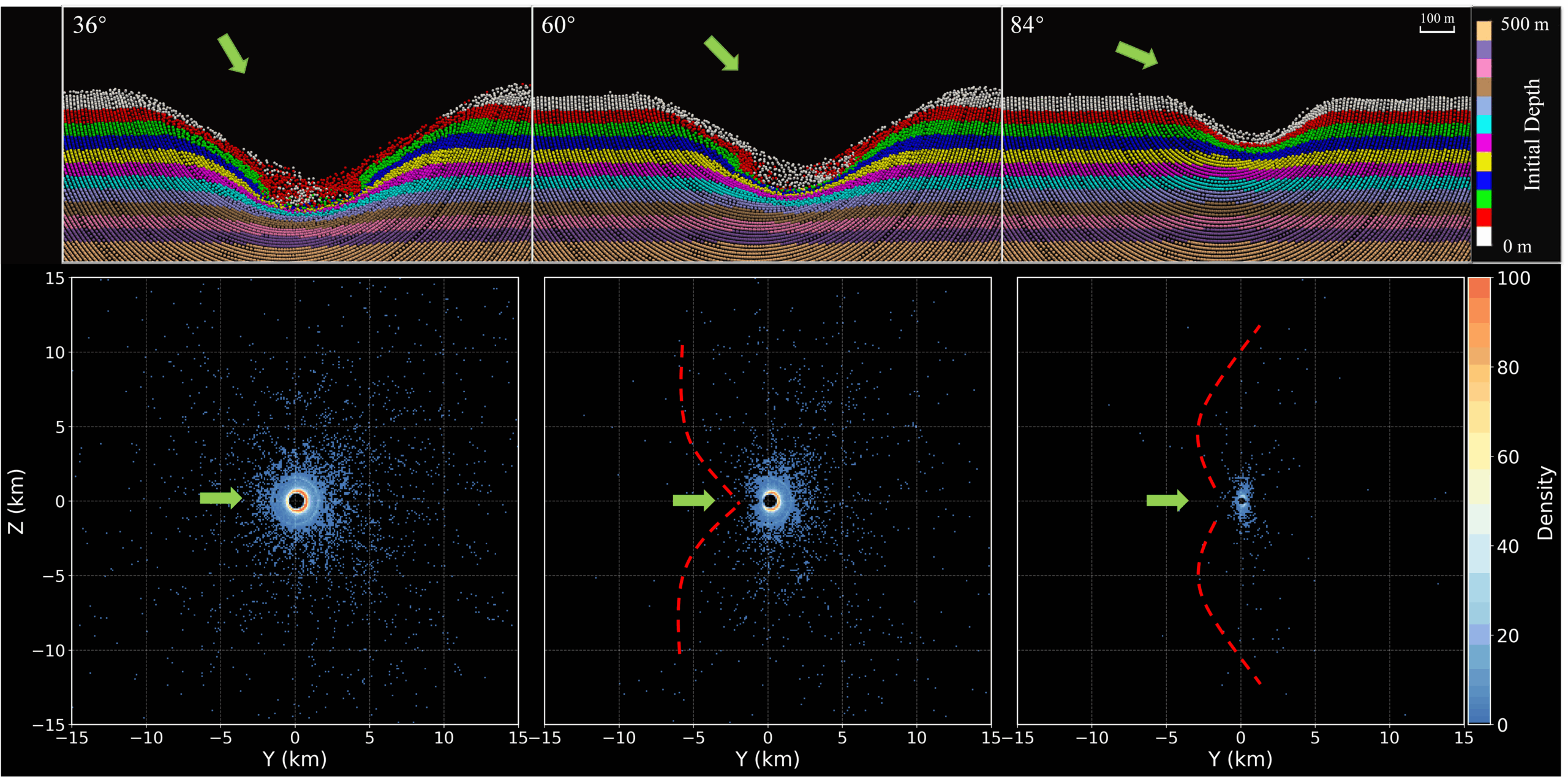
The paper estimates the flash brightness by using a “luminous efficiency” factor, based on past lab work and observed lunar impact flashes. Using an upper-end value, the authors calculate that the impact could briefly reach an apparent magnitude around -2.5 to -3 as seen from Earth. Under the right conditions, it could be visible to the naked eye for a short window.
The light would not end with the flash. The authors expect the hottest material to radiate strongly in the near-infrared, with peak emission near 1.2 to 1.6 micrometers. They estimate temperatures of roughly 1,800 to 2,300 K early on. After that, the melt region should cool for hours to days. Thermal signatures could remain above 300 K for 1 to 2 days, which would make infrared monitoring practical during lunar night.
The impact should also shake the Moon. Assuming about one ten-thousandth of the impact energy becomes seismic energy, the team estimates a global “moonquake” near magnitude 5.0 to 5.1. That signal could register across the lunar surface, with strong surface waves and long-lasting reverberations in the Moon’s low-loss interior.
Fast ejecta create the biggest near-term concern for Earth’s space environment. The simulations show that tens of millions to hundreds of millions of kilograms of material could exceed lunar escape speed, depending on impact angle. The paper then follows that debris for up to 100 years using long-term orbital calculations.
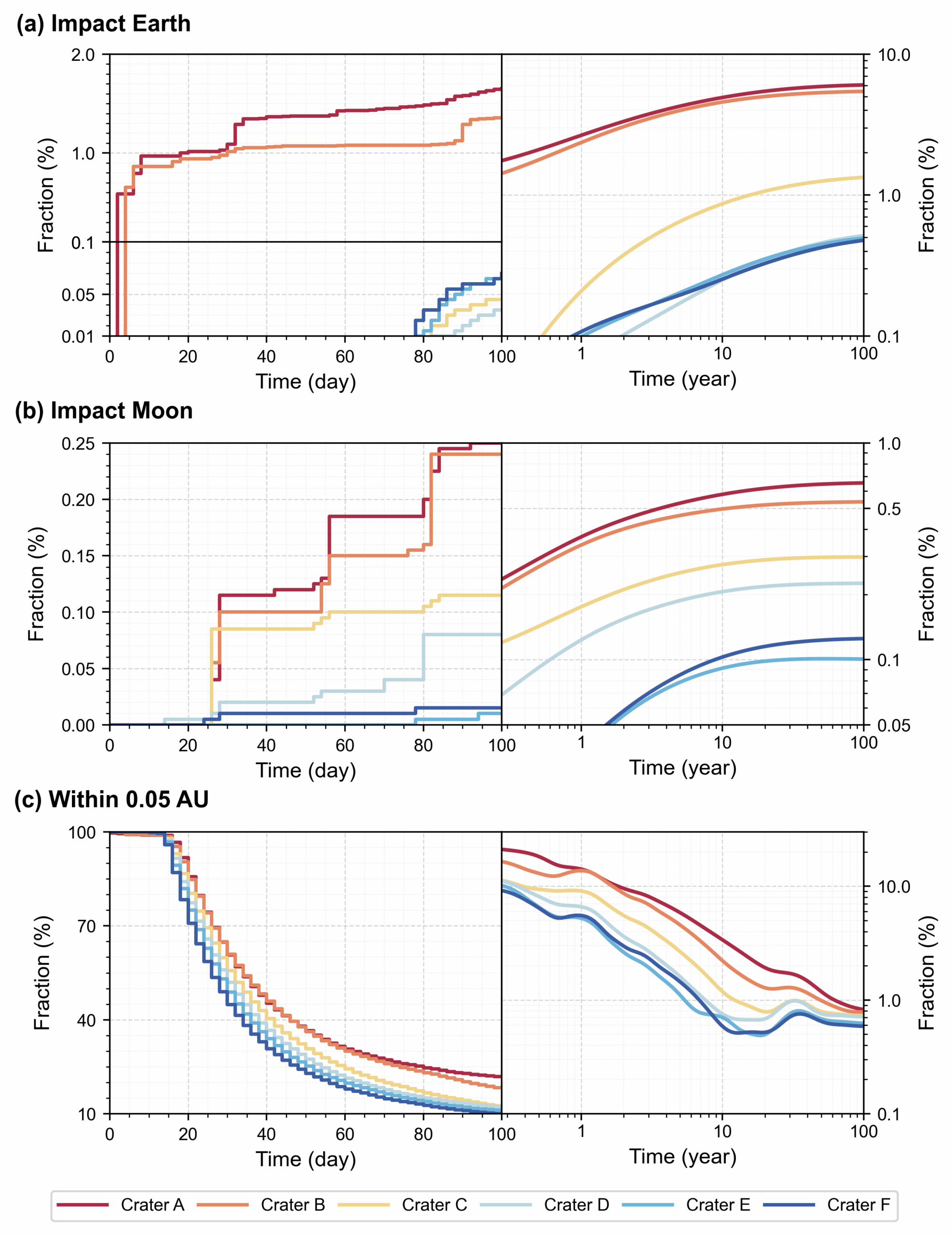
Where the asteroid hits matters. If the impact occurs on the Moon’s trailing side, debris can reach Earth quickly. The authors estimate first arrivals in about 2 to 8 days, with roughly 1% of the escaped mass delivered early. In that case, they project up to 10^13 meteoroids larger than 1 millimeter, and an average meteor rate of about 1 to 6 × 10^5 per hour. They also estimate about 100 to 400 fireballs per hour.
If the impact corridor falls mainly on the leading side, which the paper says matches the latest orbit determination, delivery becomes less efficient and slower. The first meteoroids might arrive after about 80 days. Even then, the authors say a meteor surge could still reach about 2 × 10^7 per hour at its strongest, starting around that 80-day mark.
The study also tracks larger pieces. Depending on the scenario, about 50 to 350 meter-scale boulders could escape. Some of that material could survive entry and reach the ground, with the paper estimating up to about 400 kilograms of meteorites in a high-yield case within the first year. The authors note the samples would be badly altered by atmospheric heating, but they could still act as an unplanned lunar sample return.
The downside is not limited to the ground. The paper warns about hazards to satellites and mentions the risk of “Kessler Syndrome.” If debris elevates impact rates in key orbital regions, it could damage spacecraft and complicate launches during the most intense period.
The authors also note that some agencies have discussed a deflection mission to reduce the chance of a lunar collision, though no plan is set. Future observations will decide whether the odds rise or fall as astronomers refine the orbit.
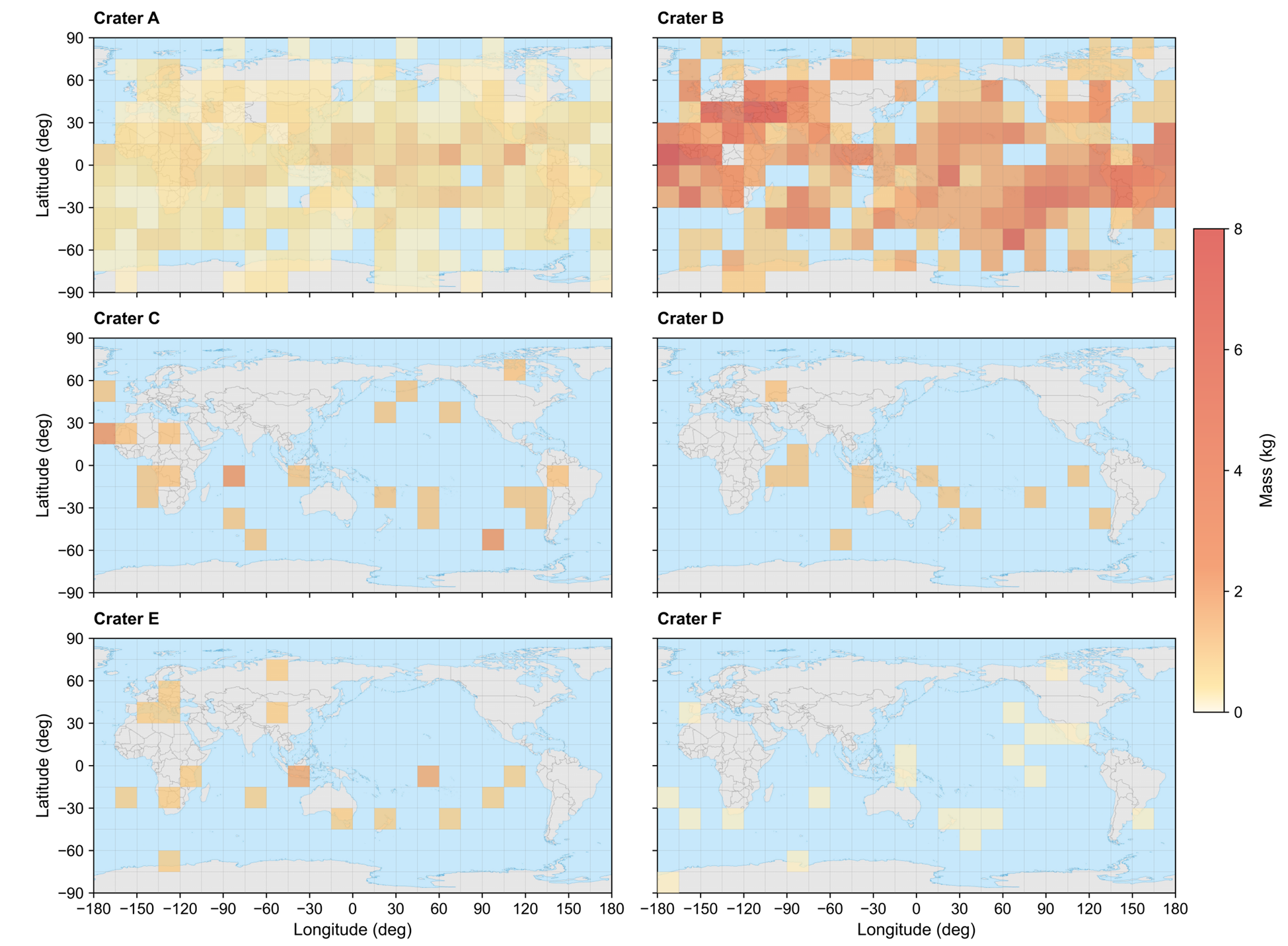
If 2024 YR4 hits the Moon, you would gain a rare, well-timed chance to test impact physics at a scale that labs cannot reproduce. Measurements of the flash, heat, crater shape, and debris plume could tighten models used to interpret craters across the solar system.
A magnitude-5 “moonquake” would provide a strong, known seismic source, which could improve maps of the Moon’s interior. That matters for science and for future lunar infrastructure planning.
The debris forecasts could guide satellite operators on protective steps, such as adjusting operations during peak meteoroid windows. The modeling also supports risk planning for future spacecraft near the Earth-Moon system, including crewed missions and lunar orbiters.
Finally, any meteorites that reach Earth could offer time-stamped lunar material. Even damaged samples can help connect lunar chemistry to a specific impact event, which is rarely possible.
Research findings are available online in the journal arXiv.
Like these kind of feel good stories? Get The Brighter Side of News’ newsletter.
The post Lunar asteroid strike in 2032 could trigger moonquakes and meteor storms on Earth appeared first on The Brighter Side of News.

