They slip through your skin, your walls, and the whole Earth without leaving a mark. Neutrinos earn the nickname “ghost particles” because they almost never interact with anything. Yet those rare moments when you do catch them can change what you know about the universe.
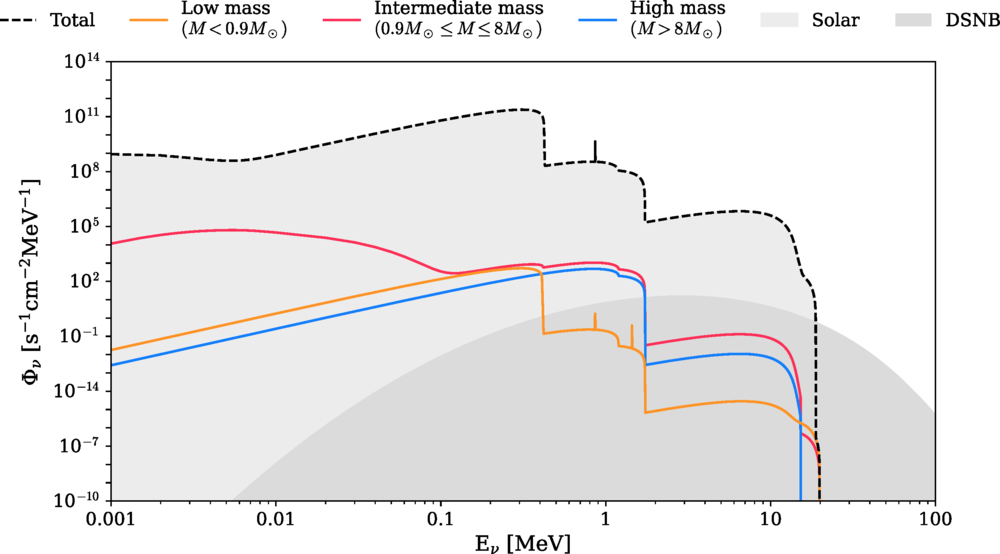
Now, researchers at the University of Copenhagen say they have built the most complete picture yet of how many neutrinos the stars in the Milky Way make, where those particles come from, and how many should reach Earth. The team combined advanced models of how stars behave with precise star-position data from the European Space Agency’s Gaia telescope.
“For the first time, we have a concrete estimate of how many of these particles reach Earth, where in the galaxy they come from, and how their energy is distributed. Because ghost particles come straight from the core of stars, they can tell us things that light and other radiation cannot,” said lead author Pablo Martínez-Miravé, a postdoc at the Niels Bohr Institute.
The new model acts like a “neutrino weather map” for your galaxy. It does not show clouds or storms. It shows where star-made neutrinos most strongly flow toward Earth, and how that flow changes with the types of stars producing it.
Neutrinos are elementary particles. They are electrically neutral, extremely light, and nearly impossible to stop. That is why they can travel across the galaxy in straight lines. Dust clouds do not block them. Magnetic fields do not bend them. Even the dense interior of a star cannot hold them for long.
They form in nuclear reactions inside stars. They also arise in thermal processes deep within stellar interiors. Violent events can create them too. But this study focuses on the steady neutrino output of stars across the Milky Way, not just dramatic explosions.
Researchers have long had rough estimates of this “galactic neutrino background.” What has been missing is a detailed, galaxy-wide accounting that links neutrino production to the actual distribution of stars.
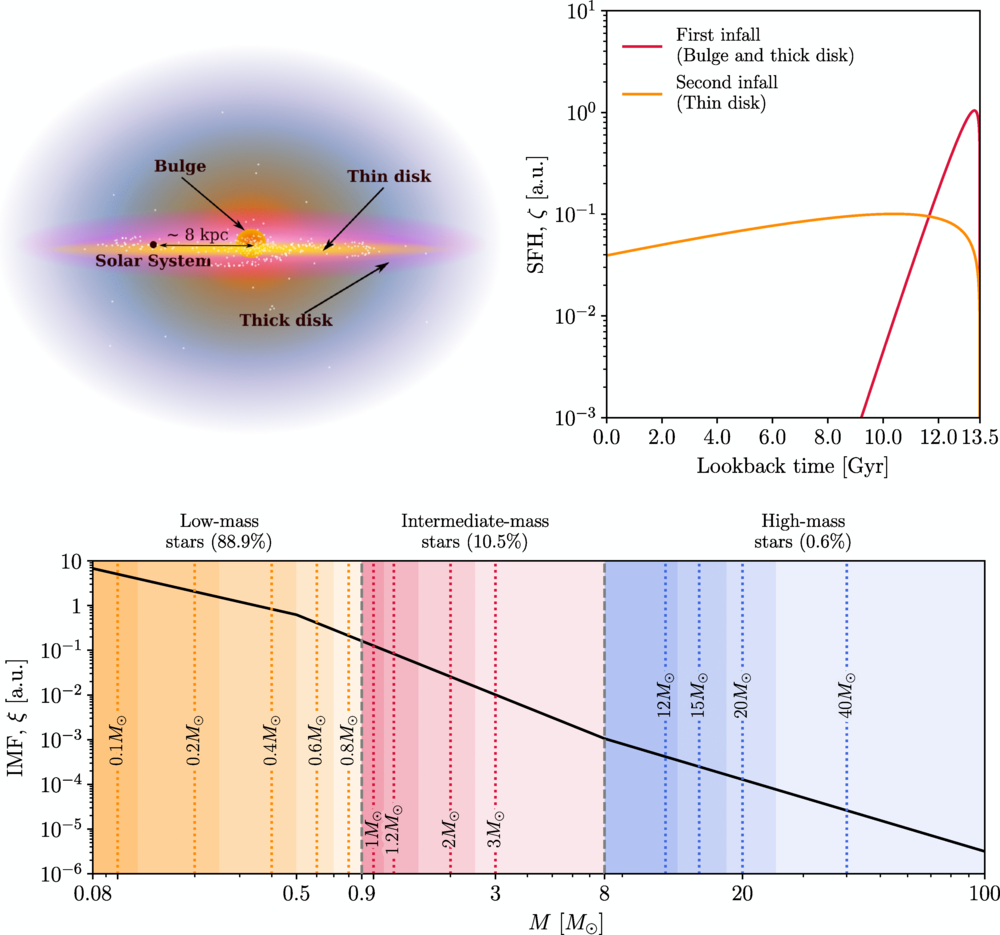
The Copenhagen team tackled that gap. They used stellar evolution calculations to estimate neutrino output across many kinds of stars. They then tied those estimates to where stars live in the galaxy using Gaia data. The result is a full map of neutrinos from all Milky Way stars and a prediction of what reaches Earth.
The model points your attention toward one region more than any other, the galactic center area. That is where stars pack together most densely, so the combined neutrino signal becomes strongest.
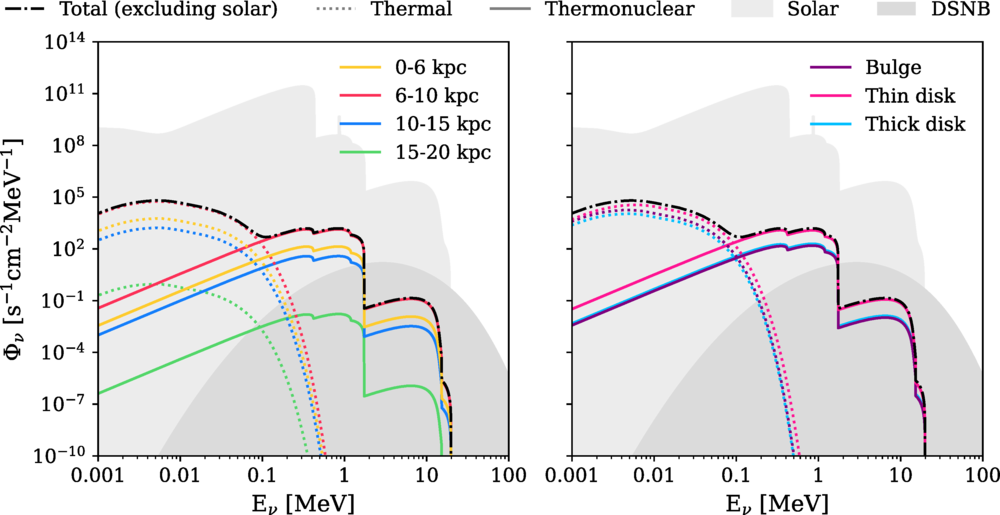
The study finds that most neutrinos reaching Earth come from the region around the galactic center, especially from areas a few thousand light-years from Earth. The flow is not uniform across the sky. It rises when you look inward toward the crowded heart of the Milky Way.
“Now we know more precisely where to look for Galactic neutrinos. Our results show that most neutrinos are produced in stars that are as massive or more massive than the Sun. This means that the best chance of detecting neutrino signals is when looking towards the galactic center, where the signal is the strongest,” Martínez-Miravé said.
That detail matters because detecting these particles is brutally hard. Neutrino observatories rely on enormous detectors, often built deep underground. Scientists cannot aim them like telescopes. They wait for rare interactions. Knowing where the highest signal should come from helps them focus analyses and improve odds of pulling a faint galactic signal out of noise.
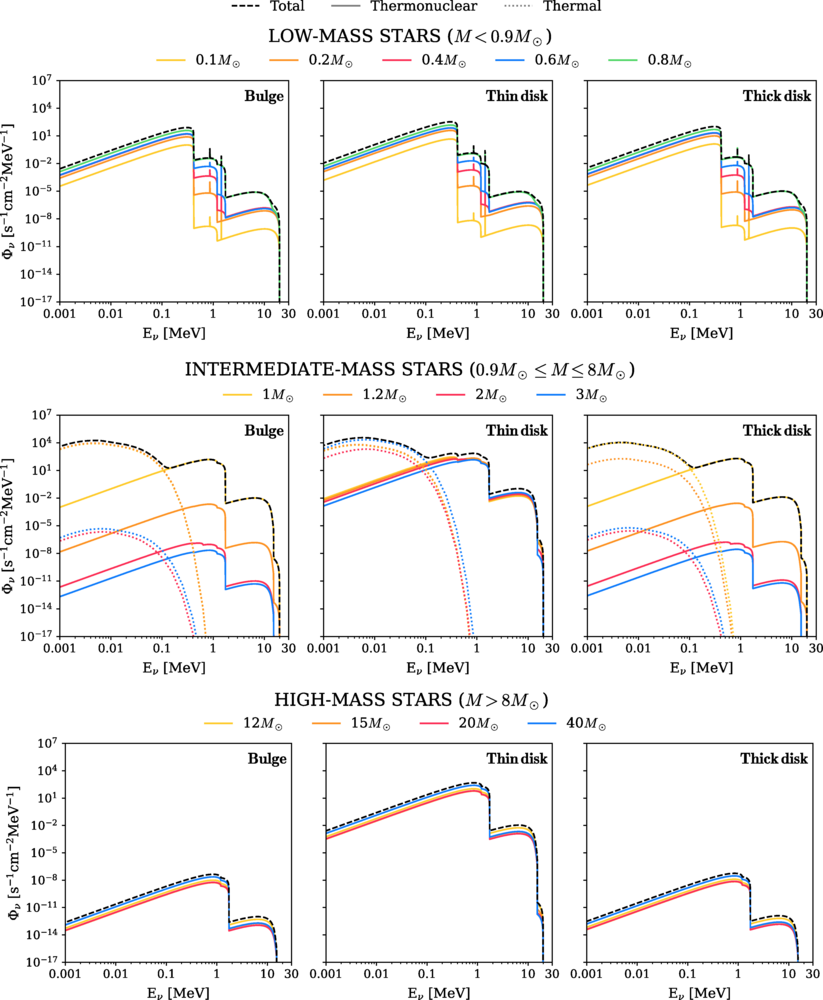
The study also describes how the neutrino flux covers a wide energy range. It includes contributions from light, intermediate, and very massive stars. It also highlights that neutrino output depends on a star’s mass and age.
Younger stars that are heavier than the Sun produce the most neutrinos, according to the team’s mapping. That means regions rich in such stars become especially important contributors to the overall neutrino flow toward Earth.
The researchers also separate how neutrinos arise inside stars. Most originate in nuclear reactions. Some are created by thermal processes. Both channels shape the energy distribution of neutrinos that arrive here, which influences how future detectors might identify them.
This is part of why the work is described as a roadmap. If you know the expected energy range and the brightest directions, you can design better searches. You can also judge whether a future detector needs better sensitivity at certain energies.
Most of what you know about space comes from light. Telescopes capture visible light, radio waves, X-rays, and gamma rays. But light cannot escape every region. It can be absorbed, scattered, or blocked by gas and dust. It also does not come directly from the deepest core of a star.
Neutrinos are different. They leave a star’s interior and carry information straight out, almost untouched.
“Neutrinos carry information straight from the interior of stars. If we learn to harness them, they can give us new insights into stellar life cycles and the structure of our galaxy in a way no other source can,” said senior author Irene Tamborra, a professor at the Niels Bohr Institute.
That promise feels personal when you think about what it could mean. If you can measure neutrinos from distant stars, you can probe stellar interiors across the Milky Way, not just the Sun. You could test how stars burn fuel, how they age, and how their inner conditions vary across the galaxy.
The team also points to a deeper payoff. Neutrinos interact so weakly that physicists can make clear predictions about how they should behave during their long trip to Earth. That makes them powerful messengers. If their behavior differs even slightly from expectations, the change could signal new physics.
“Because neutrinos are barely affected, we have clear expectations of how they should behave on their long journey to Earth. So even tiny deviations in their behaviour would be a strong clue to new, unknown physics,” Tamborra said.
“With neutrinos, it’s like dimming the lights in a room and suddenly seeing what was hidden in the dark; and with this new model, we now have both a map and a compass to start navigating it.”
This is the kind of line that captures what makes neutrinos compelling. You do not chase them because they are easy. You chase them because they might reveal something nothing else can.
This new mapping gives neutrino observatories a clearer target in both direction and expected energy spread. Instead of treating the Milky Way as a vague backdrop, researchers can now test detector data against a detailed prediction of where the strongest stellar neutrino flow should appear. That helps scientists design smarter analyses, and it can guide how future low-energy neutrino detectors are built and tuned.
The work also supports a long-term shift in astronomy. If researchers learn to measure neutrinos from many stars, not just the Sun, they can probe stellar interiors across the galaxy in a direct way. That could improve models of how stars live and change over time, and it could sharpen what you know about how the Milky Way is structured.
Finally, the model creates a baseline for discovery. Because neutrinos should travel largely unchanged, any small mismatch between prediction and measurement can become a clue. Those deviations could point toward new particle behavior or unknown physical laws.
Over time, that kind of insight can ripple into broader physics, improving how scientists describe matter and energy at the most basic level.
Research findings are available online in the journal Physical Review D.
Like these kind of feel good stories? Get The Brighter Side of News’ newsletter.
The post Milky Way neutrino map predicts how many ghost particles will reach Earth appeared first on The Brighter Side of News.

