Volcanic caves are not just an Earth thing. Scientists have spotted signs of lava tubes on the Moon and Mars. Now, researchers at the University of Trento say they have strong evidence that one exists on Venus as well, deep below its hostile surface.
The discovery comes from a detailed study of radar images collected decades ago by NASA’s Magellan spacecraft. The work, funded by the Italian Space Agency, was published in the journal Nature Communications. It points to what appears to be a massive, empty lava tube beneath a collapsed pit near a Venusian volcano called Nyx Mons.
Lorenzo Bruzzone led the research. He is a full professor of telecommunications and heads the Remote Sensing Laboratory at the University of Trento’s Department of Information Engineering and Computer Science. He says the finding fills a major gap in what scientists know about Earth’s closest planetary neighbor.
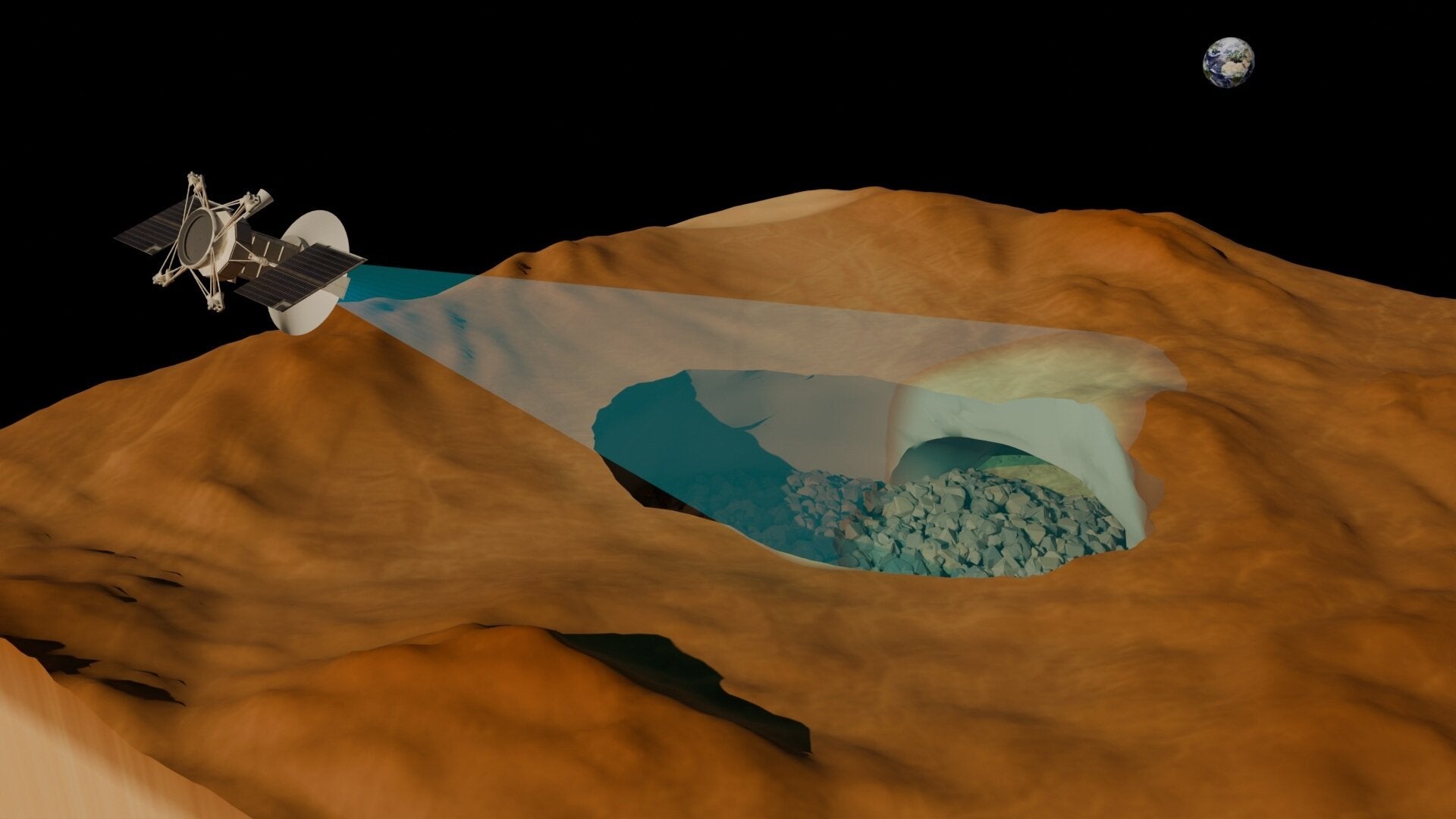
“Our knowledge of Venus is still limited, and until now we have never had the opportunity to directly observe processes occurring beneath the surface of Earth’s twin planet,” Bruzzone said. “The identification of a volcanic cavity is therefore of particular importance, as it allows us to validate theories that for many years have only hypothesized their existence.”
Venus is wrapped in thick clouds of carbon dioxide that block ordinary cameras. That forces scientists to rely on radar, which can pierce the clouds and map surface shapes. From 1990 to 1992, Magellan used synthetic aperture radar to scan nearly the entire planet.
Finding lava tubes with radar is tricky. These tunnels form underground and stay hidden unless part of the roof collapses. When that happens, a pit or skylight appears at the surface. On Earth, hikers might peer into such openings. On Venus, researchers must look for subtle radar clues instead.
Bruzzone’s team focused on areas where Magellan showed signs of surface collapse. They applied a radar imaging method developed at Trento to detect underground conduits near skylights. One feature stood out.
“Our analyses revealed the existence of a large subsurface conduit in the region of Nyx Mons,” Bruzzone said. “We interpret the structure as a possible lava tube, with an estimated diameter of approximately one kilometer.”
Nyx Mons is a broad shield volcano about 362 kilometers across. Its western flank hosts chains of collapse pits. One of them, known as pit A, showed an unusual radar pattern that suggested something hollow lay beneath.
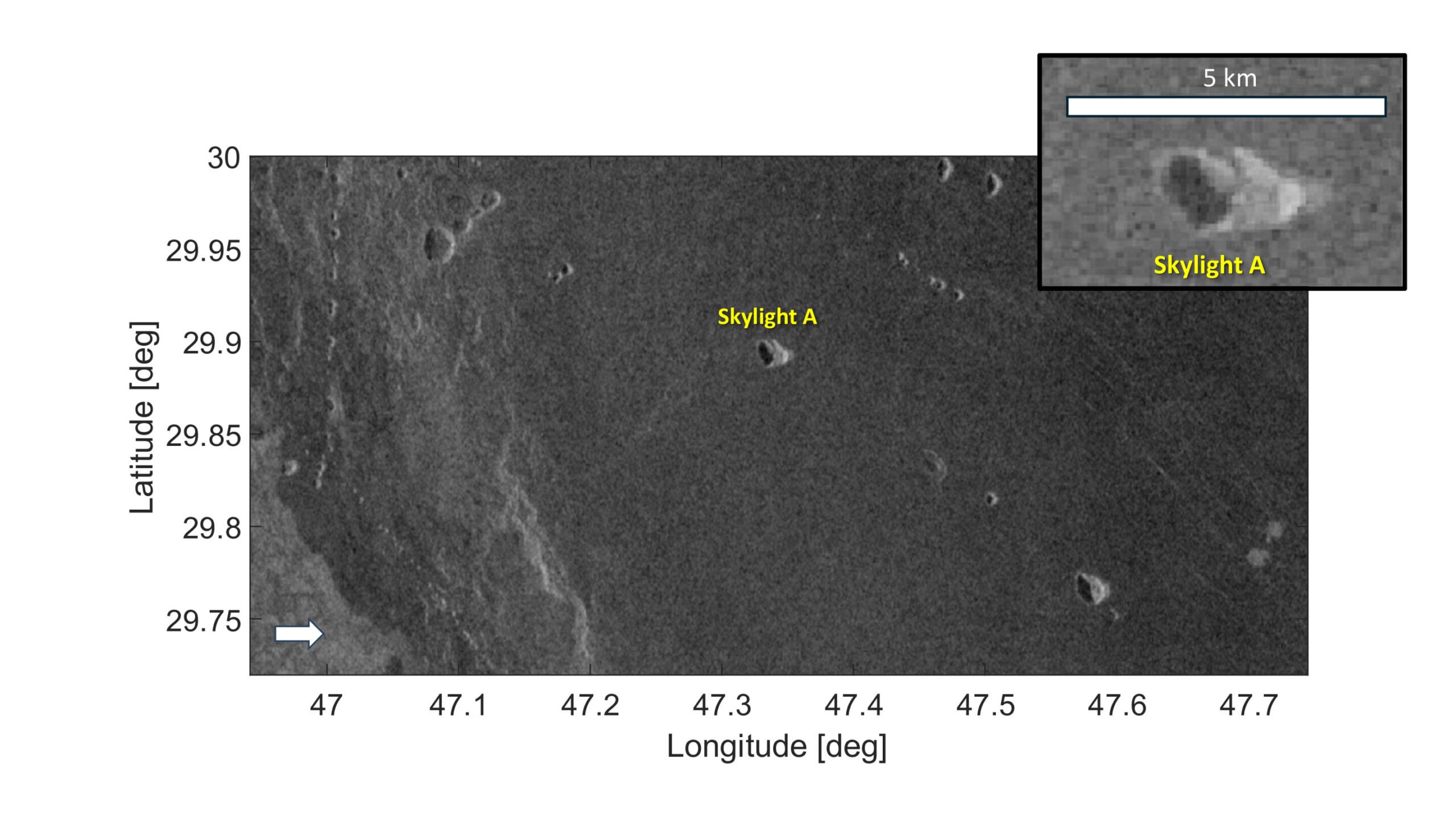
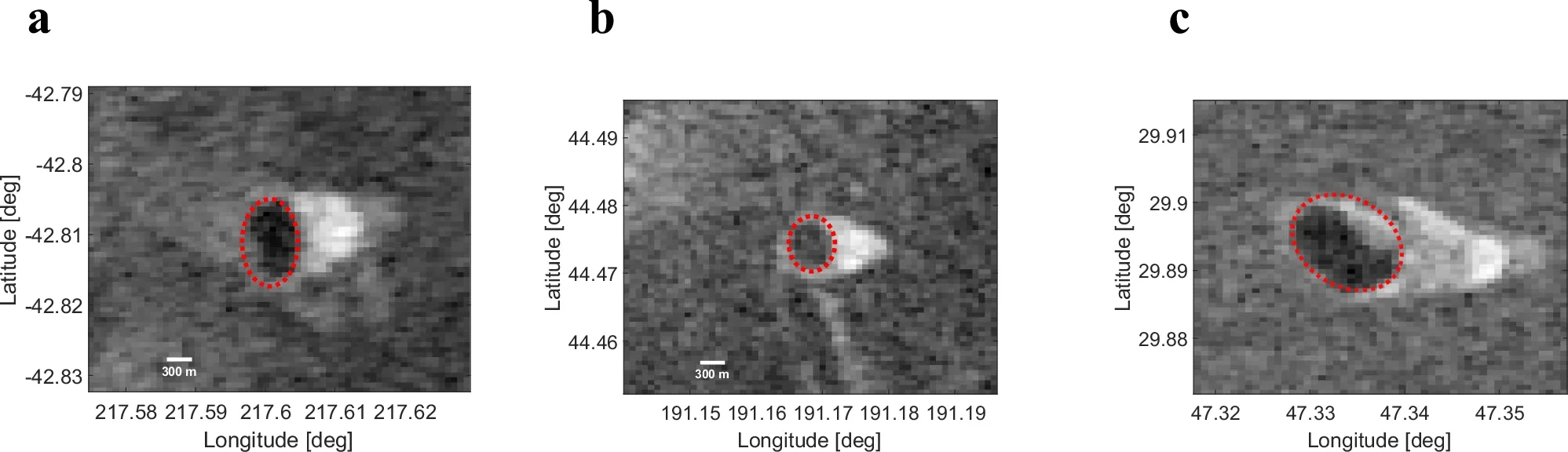
Radar works by sending radio waves toward the surface and recording the echoes. A simple hole produces a dark shadow and a bright rim. Pit A did more than that. Its bright radar signal stretched well beyond the pit’s edge and appeared uneven.
That pattern matches what happens when radar waves enter an opening and bounce off interior surfaces. Earlier studies of lava tube skylights on Earth and the Moon show the same effect.
Using the radar data, the team estimated pit A’s size. The opening measures roughly 1.5 kilometers by just over 1 kilometer. The collapse appears to drop about 450 meters. Radar reflections suggest the cavity continues at least 300 meters inward from the opening.
Near the skylight, the tunnel could be about 1,350 meters wide. Farther in, it narrows to about 525 meters. The average width is close to 940 meters. The roof above the tube is estimated to be at least 150 meters thick, with an open space inside about 375 meters tall.
All measurements carry uncertainty because Magellan’s resolution was about 75 meters. Even so, the structure is enormous by planetary standards.
Venus may be especially good at making lava tubes. Its gravity is lower than Earth’s, and its atmosphere is much denser. Those conditions help lava flows cool quickly at the surface, forming thick crusts that can support wide roofs.
Venus also hosts lava channels that are longer and broader than those on other planets. A large tube near Nyx Mons fits that picture.
The team studied the surrounding terrain as well. The pit appears to sit along a winding chain of collapses that slopes downhill for many kilometers. Based on spacing and alignment, the researchers suggest the underground conduit could extend at least 45 kilometers.
Not every pit in the chain looks open. Several nearby collapses show radar signatures consistent with blocked skylights, likely filled with fallen rock.
The researchers compared pit A with known lava tube collapses on Earth, Mars, and the Moon. On Earth, skylights are usually tens of meters across. Martian examples can be larger. Lunar pits are bigger still.
Pit A fits at the upper end of what scientists have seen on the Moon and exceeds most martian and terrestrial cases. Its estimated collapse volume matches values reported for lunar skylights thought to open into deep caves.
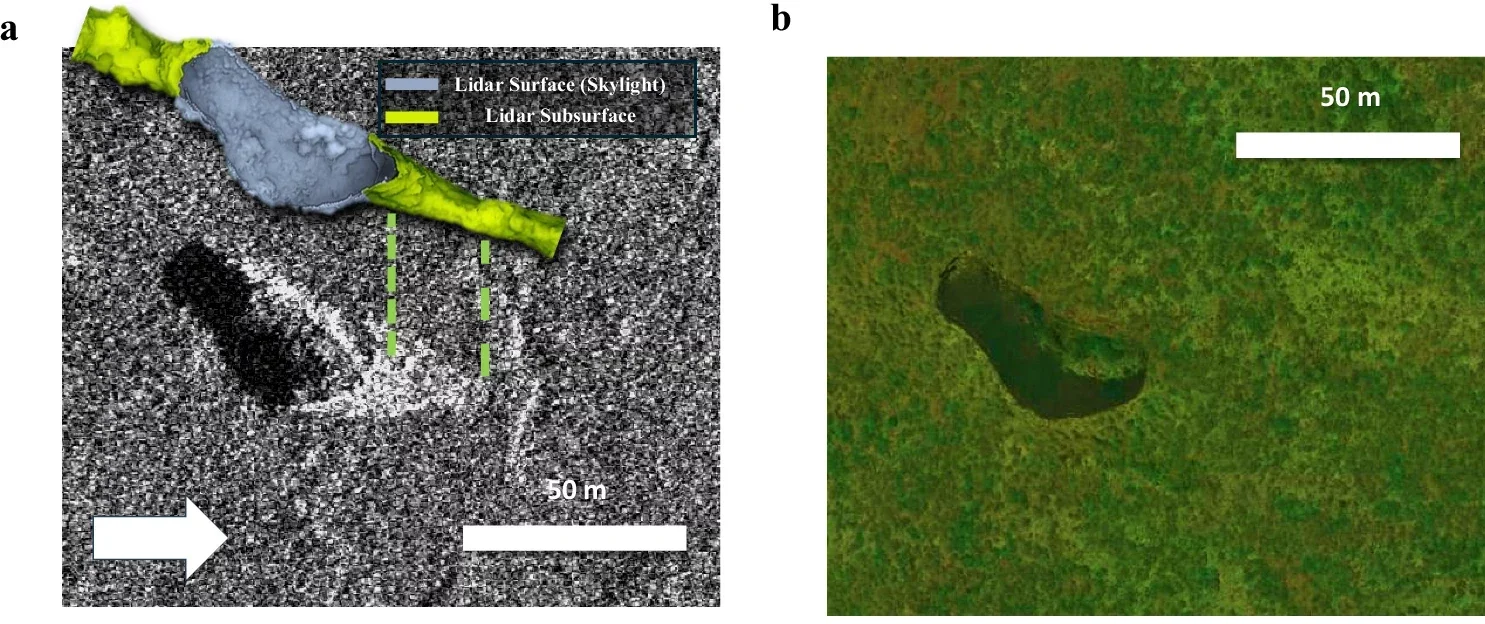
To strengthen their case, the team compared the Venus pit with a known Earth analog. On Lanzarote in Spain, the Corona volcano hosts a long lava tube with several collapsed sections. One collapse, called Jameo Agujerado, shows a radar pattern very similar to pit A, just on a much smaller scale.
The team considered other possible causes. Impact craters were ruled out because pit A lacks ejecta, which usually boosts radar brightness around a crater. Small impact craters are also rare on Venus.
Volcanic vents and tectonic pits can produce shadows and bright rims, but they do not usually show the strong asymmetry seen here. Dyke-related collapses, where magma intrudes underground and later drains, remain a possible explanation. However, radar signatures from known dyke pits do not match pit A as closely as lava tube skylights do.
The researchers stress that the evidence points to an empty conduit, at least near the opening. Magellan’s data cannot show the full extent of the tunnel.
“This discovery contributes to a deeper understanding of the processes that have shaped Venus’s evolution and opens new perspectives for the study of the planet,” Bruzzone said.
The finding matters for more than planetary curiosity. Lava tubes preserve records of volcanic activity and show how lava once moved across a surface. On Venus, they could reveal how the planet cooled and evolved over time.
Large subsurface cavities may also shape future mission plans. Upcoming spacecraft such as the European Space Agency’s Envision and NASA’s Veritas will carry advanced radar systems with much higher resolution. Envision will also include a subsurface radar sounder that can probe hundreds of meters below the surface.
Those tools could confirm whether long, intact lava tubes run beneath Venus and whether more skylights exist. While Venus is far from habitable, understanding its hidden geology helps scientists compare rocky planets and refine models of how worlds change. In that sense, a cave on Venus sheds light on Earth’s own past and on the geology of planets yet to be explored.
Research findings are available online in the journal Nature Communications.
The original story “Scientists find evidence of a massive lava tube hiding on Venus” is published in The Brighter Side of News.
Like these kind of feel good stories? Get The Brighter Side of News’ newsletter.
The post Scientists find evidence of a massive lava tube hiding on Venus appeared first on The Brighter Side of News.

