Weight loss is often described as a reset. Your blood sugar can improve. Your risk of diabetes and heart disease can fall. Yet a stubborn question has lingered for years: does your fat tissue truly heal, or does it keep a “memory” of obesity even after the scale drops?
A new study from the University of Southern Denmark takes that question seriously and examines it up close, cell by cell. Using advanced single-cell analyses, researchers tracked what happens inside fat tissue during modest weight loss and after major weight loss following gastric bypass surgery. The team reports that after large weight loss, fat tissue in these patients largely resembled the lean state. The findings appear in Nature Metabolism.
The work was led by Assistant Professor Anne Loft, Associate Professor Jesper Grud Skat Madsen, and Professor Susanne Mandrup. All three are based at the Center of Excellence ATLAS, which focuses on the molecular changes in liver and fat tissue during obesity and weight loss. Their goal is practical: obesity-driven dysfunction in these tissues helps fuel metabolic diseases, including type 2 diabetes and cardiovascular disease.
Scientists already know obesity commonly triggers inflammation and dysfunction in adipose tissue. That damaged state can reduce insulin sensitivity and raise disease risk. Weight loss lowers that risk, but it has remained unclear whether the tissue itself returns to health, or whether it stays biologically altered.
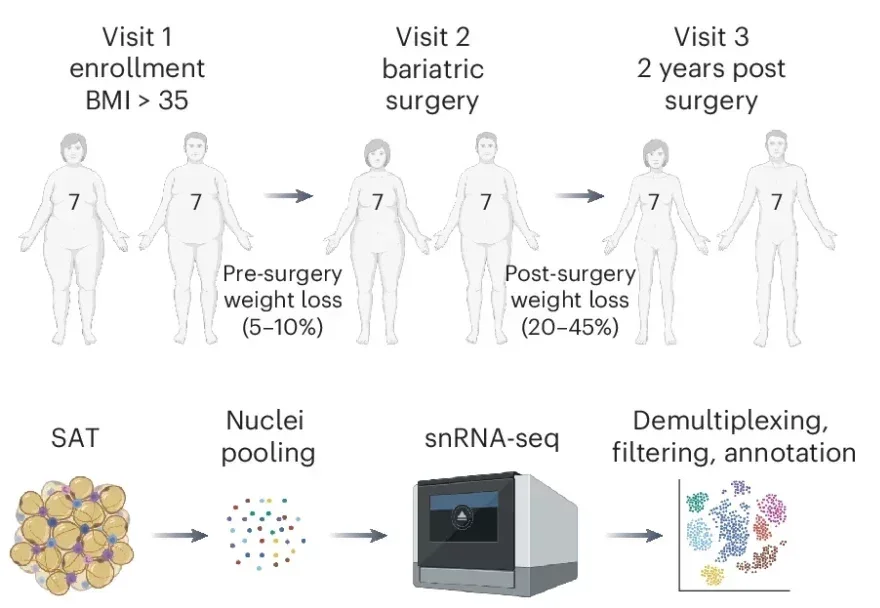
To answer that, the researchers analyzed fat tissue from patients with severe obesity at three moments that reflect real clinical life.
First, they collected samples when patients were scheduled for gastric bypass surgery. Second, they took samples after patients lost a modest amount of weight, about 5% to 10%, through dietary changes, just before surgery. Third, they collected tissue two years after surgery, after substantial weight loss of about 20% to 45%.
That design matters because it separates two different kinds of change. One is moderate weight loss that many people can achieve through diet. The other is major, sustained weight loss that often follows bariatric surgery. By comparing the tissue at each point, the team could see what improves early, what improves later, and what takes time.
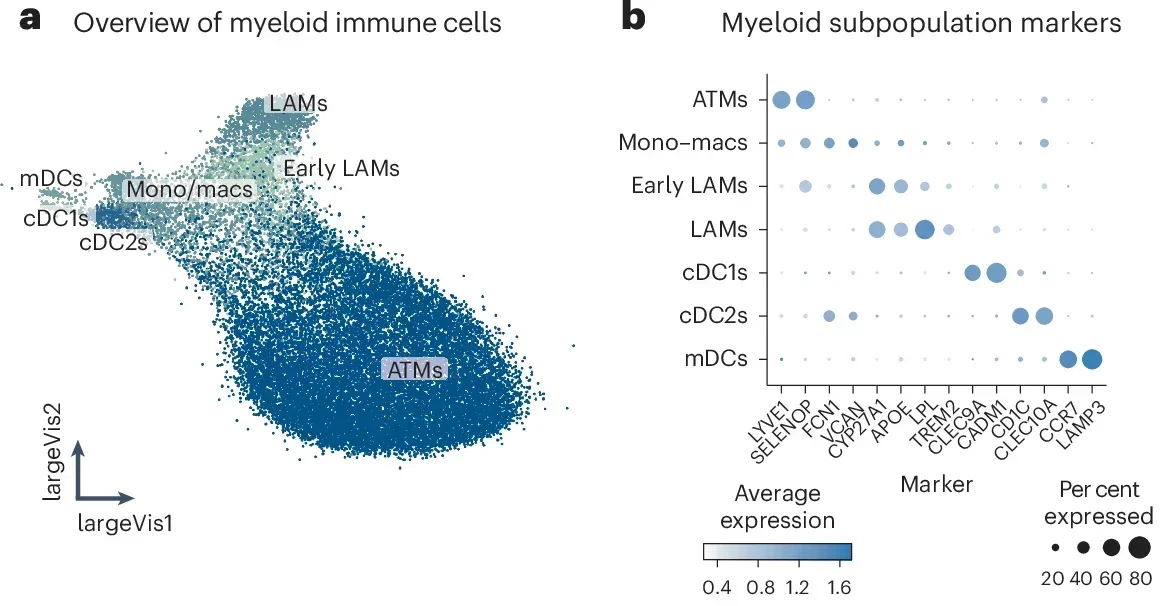
Two years after surgery, the differences in fat tissue were striking. The number of immune cells in the tissue fell greatly, and several types dropped to levels typically seen in lean individuals, according to the researchers.
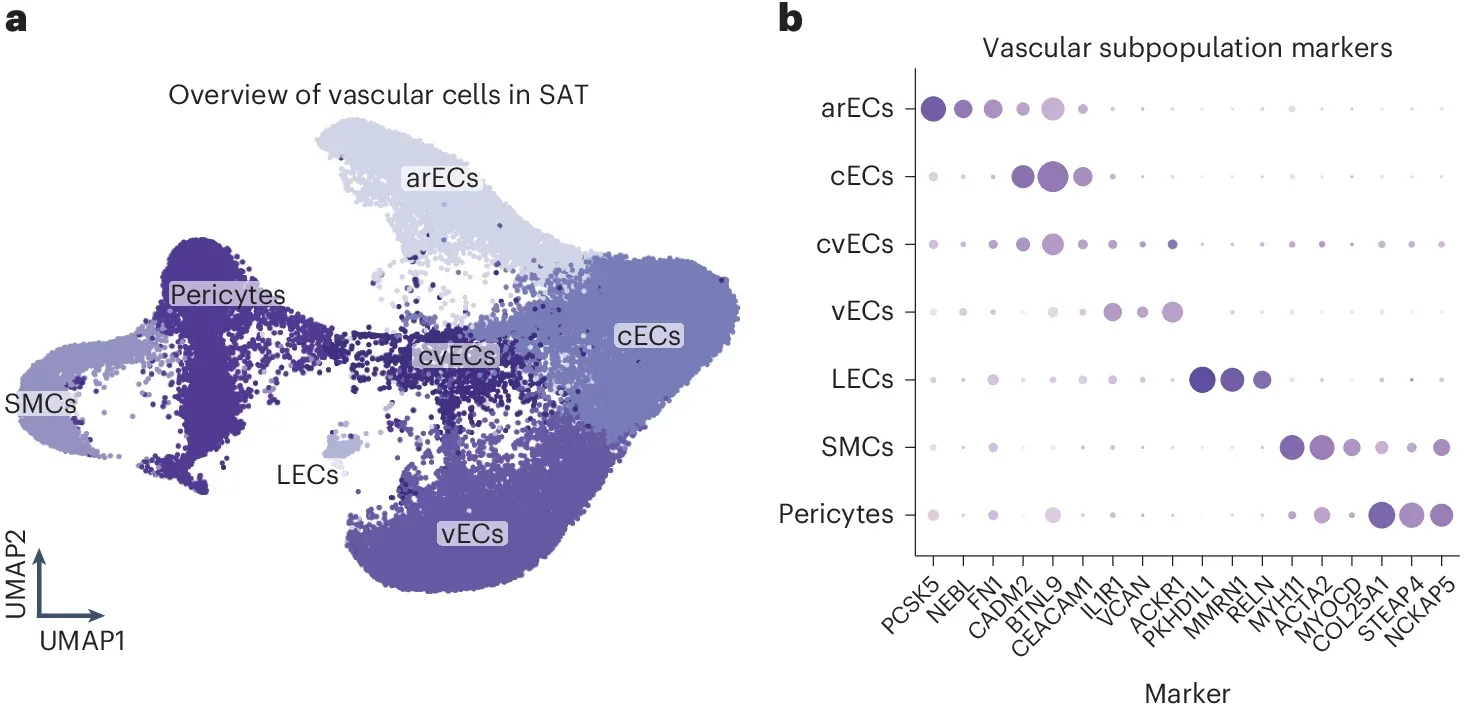
“When we analyzed the adipose tissue samples taken two years after surgery, following considerable weight loss, the changes were striking. The number of immune cells was greatly reduced; and several types of immune cells were down to levels normally seen in lean individuals,” Loft said.
This shift is a big deal because immune cells in fat tissue help drive inflammation, and that inflammation can worsen insulin sensitivity. When fat tissue becomes locally insulin resistant, it can influence the whole body over time and increase the risk of type 2 diabetes and other obesity-related disease.
“So when inflammation and immune cells decrease, it’s a clear benefit for health,” Loft said.
The team also saw a significant rise in blood vessel cells in the fat tissue. That change likely improves the delivery of oxygen and nutrients. In other words, the tissue did not only cool down immune activity; it also appeared to rebuild support systems that keep fat tissue functioning well.
The researchers report that gene expression in all cell types normalized toward the lean state after major weight loss. This suggests that, on a cellular and molecular level, the tissue moved away from an obesity-linked pattern.
The moderate weight loss phase raised an important puzzle. Clinicians have long seen that even a 5% drop in body weight can improve whole-body insulin sensitivity. If that is true, you might expect inflammation in fat tissue to drop early too. The researchers looked for that signal.
“At this stage, we didn’t see a drop in inflammation,” Loft said, “meaning that the improvements in insulin sensitivity is unlikely to be driven by reduced inflammation in fat tissue.”
Instead, the study points to another possible early benefit. During modest weight loss, the researchers saw an increase in a specific type of pre-fat cell and a boost in gene activity that promotes the creation of new fat cells.
“Using single cell technologies, we saw an increase in a specific type of pre-fat cell and a boost in gene activity promoting the creation of new fat cells,” Mandrup said. “This suggests that modest weight loss may promote formation of new and healthier fat cells, which may contribute to the improved insulin sensitivity.”
This finding reframes what “early improvement” might mean. Instead of fat tissue rapidly lowering inflammation after modest weight loss, the tissue may begin renewing itself by preparing for healthier fat cell formation. That process could help the body handle nutrients better, even before inflammation fades.
The results offer a hopeful message for anyone who wonders whether weight loss is only skin deep. The study suggests that fat tissue does not hold onto the obese state as permanently as some had feared, at least in the context of major weight loss.
“Our study indicates that even modest weight loss in these patients can benefit the health of the fat tissue,” Mandrup said. “After major weight loss, the fat tissue largely resemble that of lean individuals, suggesting that the ‘memory’ of obesity is not as persistent as previously thought.”
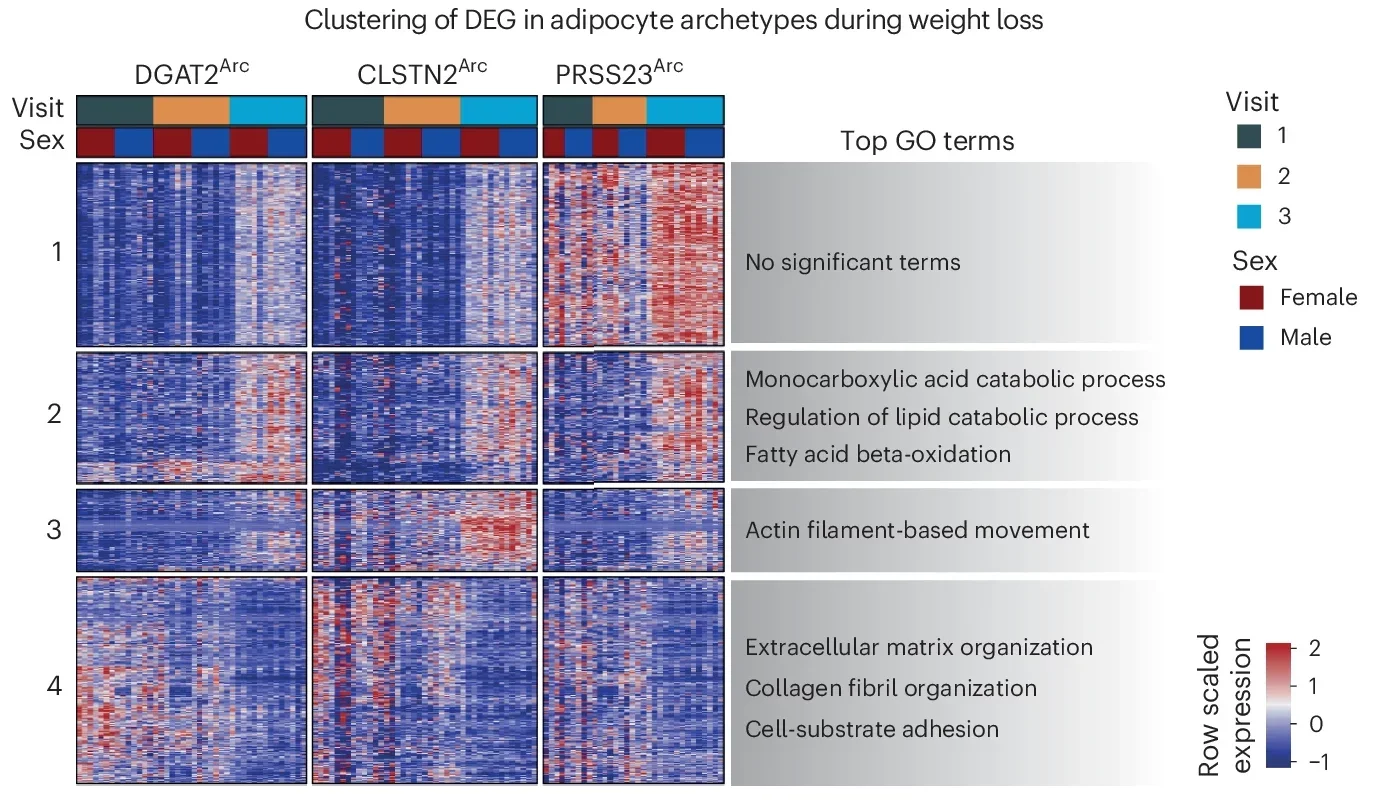
That does not mean every harmful effect of obesity disappears instantly. The study shows a timeline. Some improvements may begin with modest weight loss, possibly through healthier fat cell development. Other major shifts, such as the reduction in immune cells and a rise in blood vessel cells, appear most clearly after substantial weight loss.
This research gives clinicians and scientists a clearer picture of what changes inside fat tissue during different degrees of weight loss. It suggests that modest weight loss may start improving fat tissue health through renewed fat cell development, even if inflammation does not drop right away. That insight can shape future studies on why early insulin sensitivity improves and how to support that process.
For patients and health systems, the results reinforce that major, sustained weight loss can do more than lower risk on paper. It can help fat tissue shift toward a lean-like cellular state, with fewer immune cells linked to inflammation and more blood vessel cells that support tissue function. This could guide strategies for preventing type 2 diabetes and other metabolic disease by focusing not only on weight change, but on the tissue-level recovery that may follow.
For future therapies, the findings may help researchers look for targets that mimic the most helpful tissue changes, such as boosting healthy fat cell formation or reducing harmful immune activity, without requiring surgery in every case.
Research findings are available online in the journal Nature Metabolism.
The original story “Modest weight loss may form new and healthier fat cells, study finds” is published in The Brighter Side of News.
Like these kind of feel good stories? Get The Brighter Side of News’ newsletter.
The post Modest weight loss may form new and healthier fat cells, study finds appeared first on The Brighter Side of News.

