A quiet shift in the numbers behind the universe’s growth is pushing scientists toward a bold possibility. Two of the cosmos’ most elusive players, dark matter and neutrinos, may not be strangers after all. New research from the University of Sheffield reports signs they could be interacting, a finding that challenges a core assumption in the standard model of cosmology.
Dark matter makes up about 85% of the matter in the universe, yet no one has seen it directly. Scientists infer it from its gravitational pull on galaxies and large-scale structure. Neutrinos are also famously hard to catch. They carry an extremely small mass, and they rarely interact with other matter. Even so, researchers have observed neutrinos using huge underground detectors.
For decades, the leading cosmological picture, called Lambda-CDM, has treated dark matter and neutrinos as separate. In that view, they do not meaningfully interact with each other. The new study adds evidence that this clean separation may not hold. The research suggests that a subtle interaction could help explain why different measurements of the universe do not line up as neatly as scientists expect.
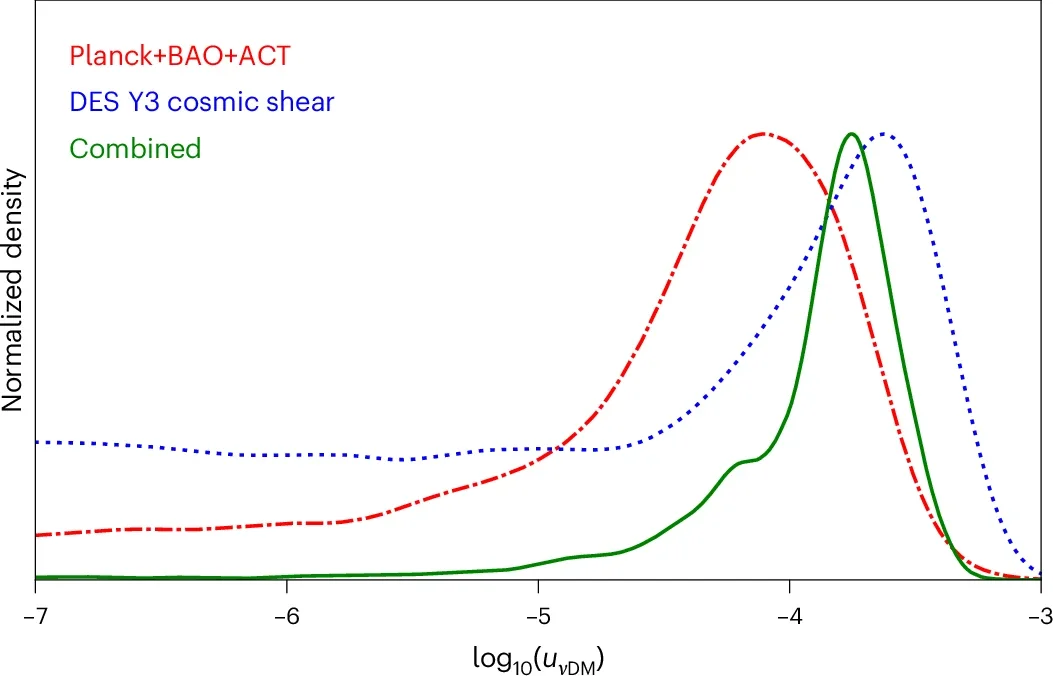
If the signal holds up, it offers something rare: a way to learn about dark matter through its influence on the universe’s structure, not through a direct detection.
The mystery starts with a long-running tension in cosmology. When scientists study the early universe, they can predict how cosmic structures should grow over time. Those early measurements suggest matter should end up a bit more clumped today than what researchers actually observe.
This mismatch is not huge. It is also stubborn. The early-universe picture comes from the faint afterglow of the Big Bang, and the late-universe picture comes from galaxy maps and the way mass bends light. Put side by side, they do not perfectly agree.
Eleonora Di Valentino, a senior research fellow at the University of Sheffield and a co-author, said the tension has lingered for years. “Our results address a long-standing puzzle in cosmology,” she said. “Measurements of the early universe predict that cosmic structures should have grown more strongly over time than what we observe today.”
She stressed the result does not automatically topple the standard model. “This tension does not mean the standard cosmological model is wrong, but it may suggest that it is incomplete,” Di Valentino said. The new work shows a possible reason for the gap. “Our study shows that interactions between dark matter and neutrinos could help explain this difference, offering new insight into how structure formed in the universe.”
In plain terms, the universe may have grown up a little differently than the simplest version of the model assumes.
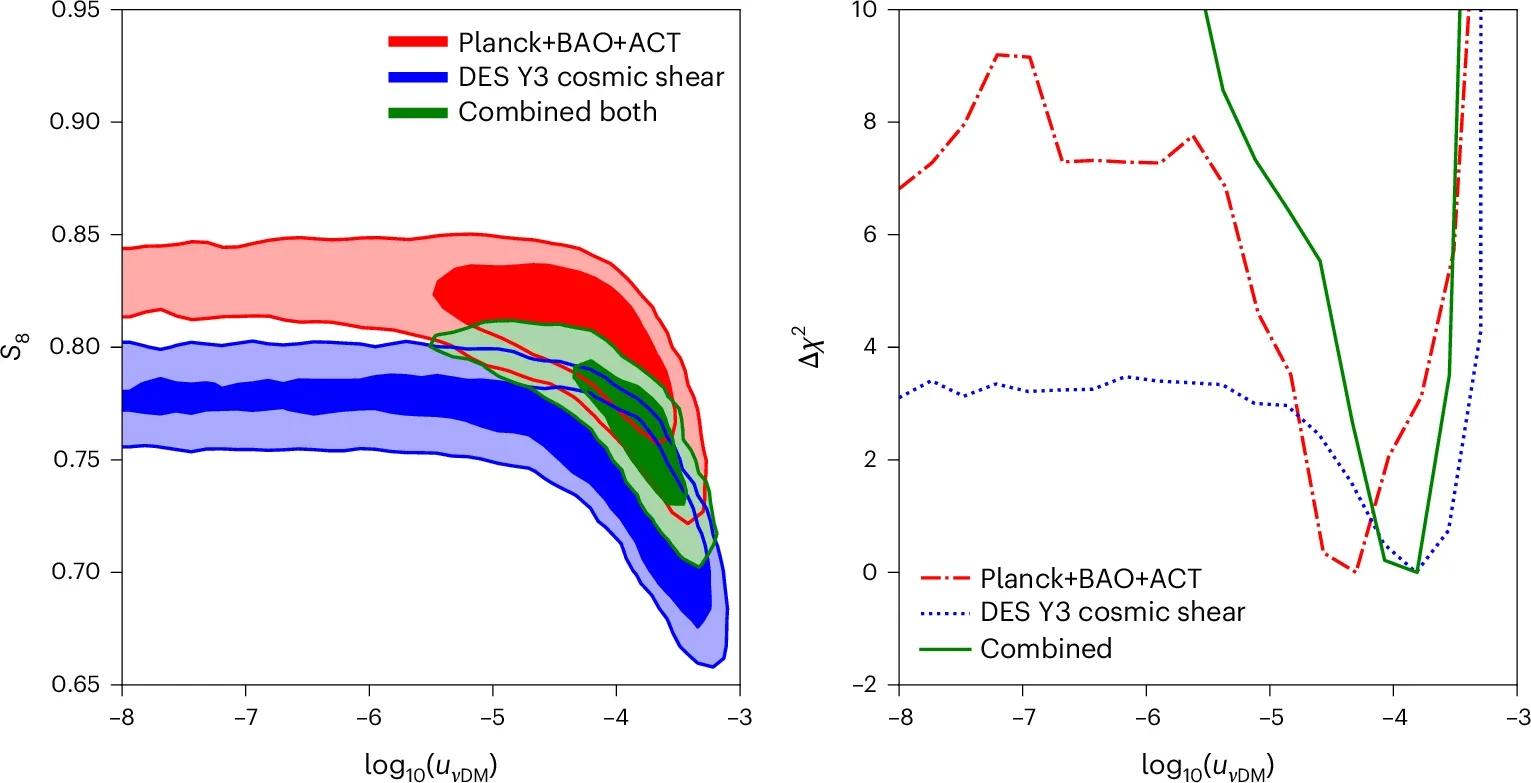
To test the idea, the team combined measurements that span the history of the cosmos. For the early universe, they relied on two instruments designed to study the leftover glow of the Big Bang.
One is the Atacama Cosmology Telescope, a highly sensitive ground-based facility. The other is the Planck Telescope, a space observatory run by the European Space Agency from 2009 to 2013. Both target the cosmic microwave background, often described as the universe’s ancient afterglow.
For the later universe, the researchers turned to large catalogs of observations. They used a massive set of measurements taken by the Dark Energy Camera on the Victor M. Blanco Telescope in Chile. They also used galaxy maps from the Sloan Digital Sky Survey.
These datasets do not just describe pretty pictures of the sky. They track how matter collects into structure. That includes matter you can see, and matter you cannot.
The strength of the study comes from the mix. The early-universe data sets the starting conditions. The later-universe maps show what those starting conditions produced over billions of years.
The researchers tested whether a dark matter and neutrino interaction could sit inside the data without breaking everything else. They found signs that such an interaction could exist, and that it could influence how structure grows.
In the standard picture, dark matter helps form structure because gravity pulls it into clumps. Neutrinos, because they are light and elusive, behave differently and can smooth things out. The new work suggests an added twist: if dark matter and neutrinos interact even slightly, that interaction could change the pace of growth in cosmic structure.
The study reports evidence of this effect by combining early- and late-universe measurements. The researchers say the interaction could have affected how galaxies and other structures formed over time. That, in turn, could reduce the mismatch between what early-universe data predicts and what late-universe observations show.
The result does not claim a final answer. It points to a direction that can be tested with more precise measurements.
If confirmed, the finding would matter far beyond cosmology. It would hint at new particle behavior that laboratory researchers could try to probe.
William Giarè, a co-author and former postdoctoral researcher at the University of Sheffield who is now at the University of Hawaiʻi, framed it as a potential turning point. “If this interaction between dark matter and neutrinos is confirmed, it would be a fundamental breakthrough,” he said.
He described two payoffs. “It would not only shed new light on a persistent mismatch between different cosmological probes, but also provide particle physicists with a concrete direction, indicating which properties to look for in laboratory experiments to help finally unmask the true nature of dark matter.”
That last line matters because dark matter research often feels like searching in fog. You know something is there. You feel its pull. Yet you do not know what it is. A possible interaction with neutrinos could narrow the search.
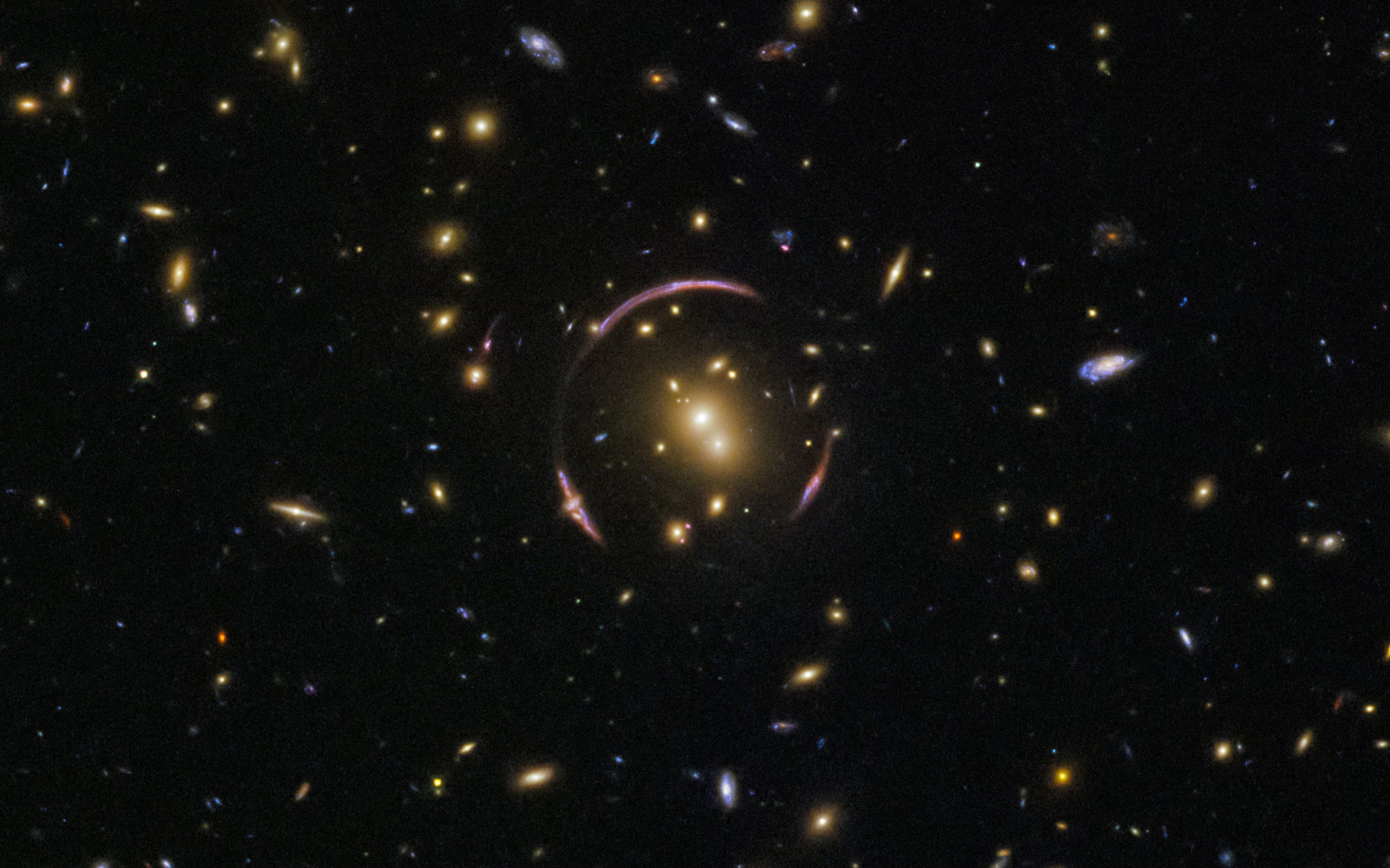
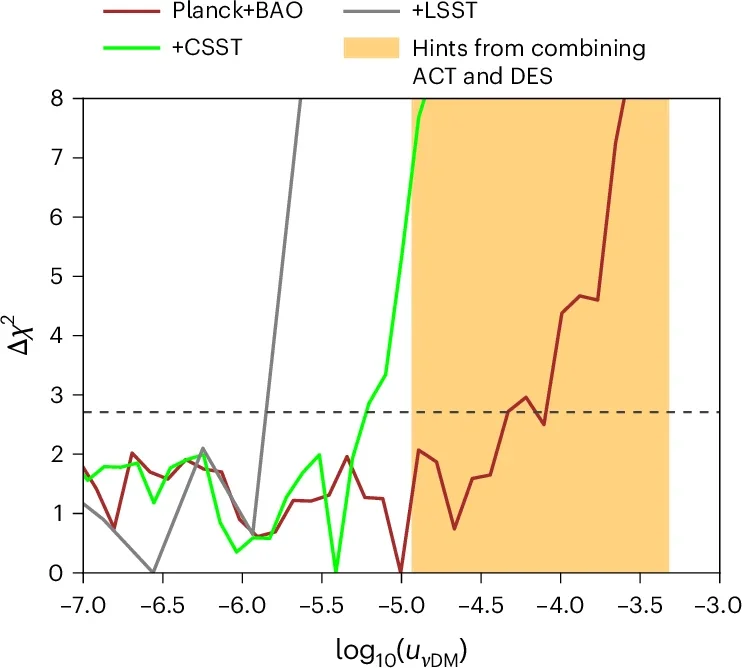
The study also points to what comes next. The researchers say future telescopes, cosmic microwave background experiments, and weak lensing surveys can test the idea more strongly. Weak lensing measures tiny distortions in the light from distant galaxies. Those distortions help map mass across space, including mass you cannot see directly.
Better data would let scientists check whether the interaction signal strengthens, weakens, or disappears.
The results offer a testable way to refine the standard cosmological model, especially where early- and late-universe measurements show a mild mismatch.
If the interaction is confirmed, it could guide particle physics experiments by pointing to specific properties to search for in dark matter.
Future cosmic microwave background studies and weak lensing surveys could use this framework to interpret higher-precision data with fewer unresolved tensions.
A clearer model of structure growth can improve how scientists understand galaxy formation over time, using the same kinds of observational tools described in the study.
Research findings are available online in the journal Nature Astronomy.
The original story “Dark matter and neutrinos are linked and interact with each other” is published in The Brighter Side of News.
Like these kind of feel good stories? Get The Brighter Side of News’ newsletter.
The post Dark matter and neutrinos are linked and interact with each other appeared first on The Brighter Side of News.

