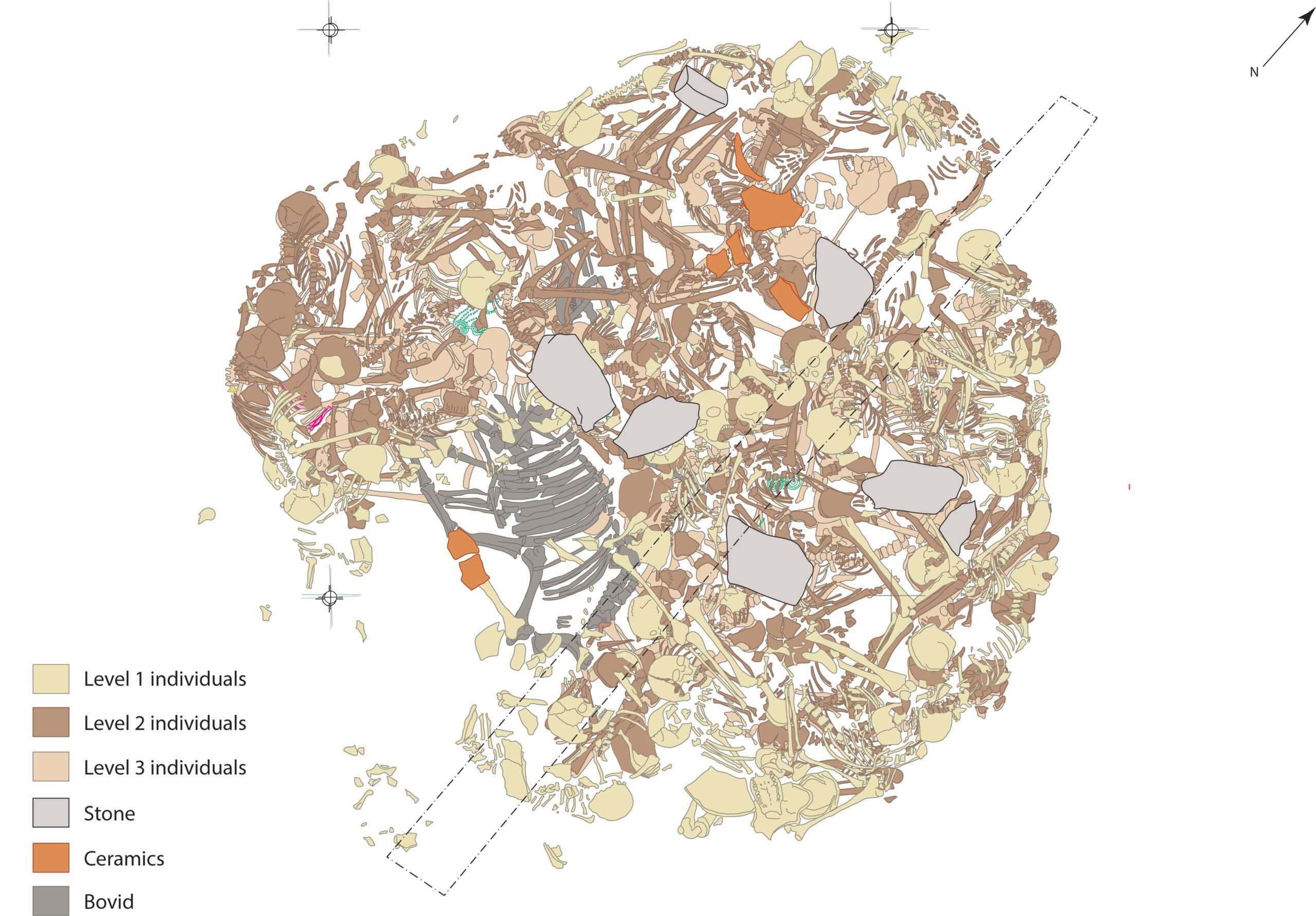
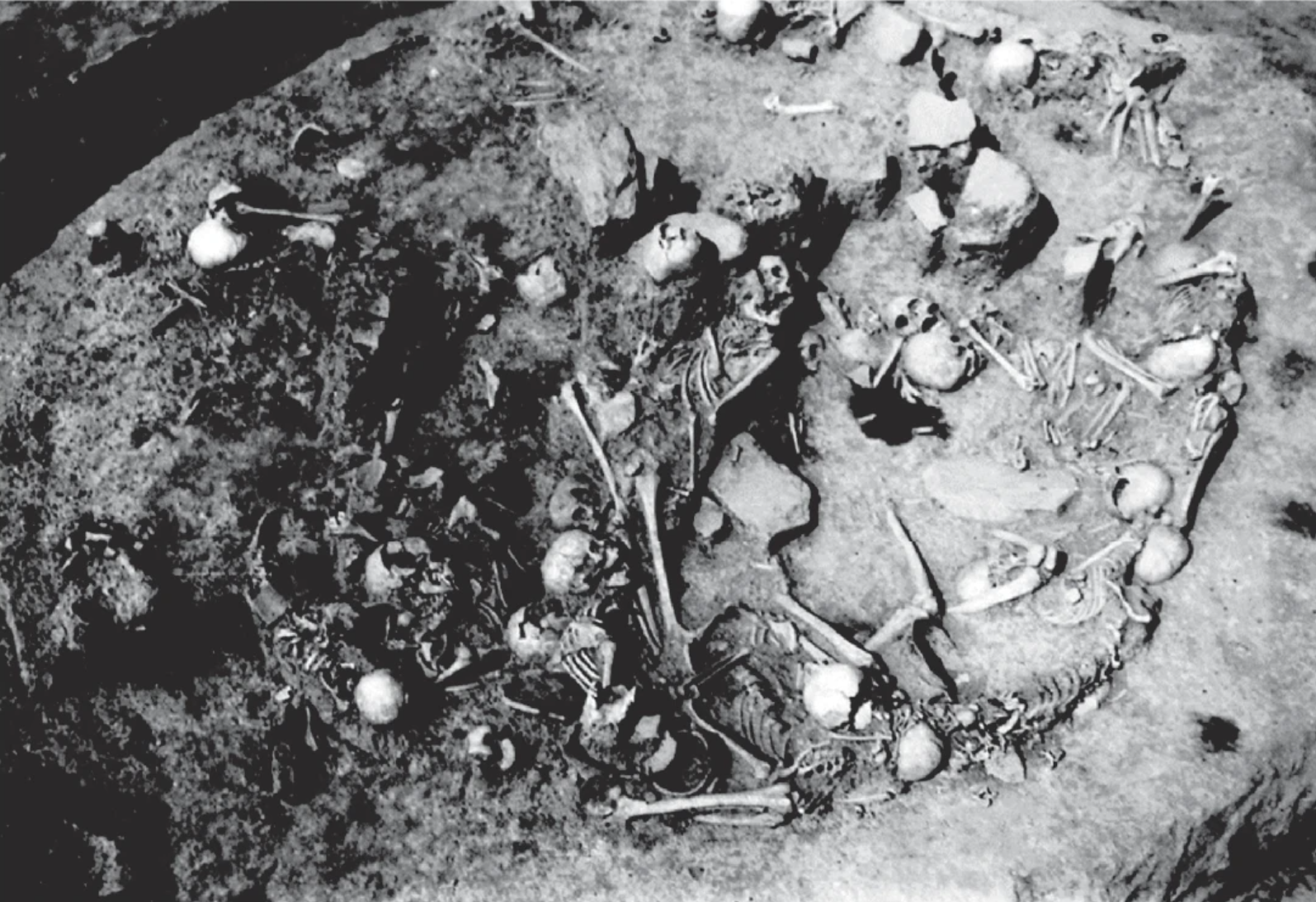
Bones lay tightly packed inside what had once been a semi-subterranean house, along with bronze ornaments, pottery vessels, and the butchered remains of animals. The scene was not chaotic. It was arranged.
Archaeologists studying the Early Iron Age site of Gomolava in northern Serbia now say the burial represents one of the largest prehistoric mass killings in Europe, and one that appears to have deliberately targeted women and children. Their findings, published in Nature Human Behaviour, challenge long-held assumptions about how violence operated in prehistoric societies.
The grave contained the remains of at least 77 people buried around 2,800 years ago. Most were female, and more than half were children.
“When we encounter mass graves from prehistory with this kind of demographic, we might expect they were families from a village that was attacked,” said co-lead Associate Professor Barry Molloy of University College Dublin’s School of Archaeology. “Gomolava genuinely took us by surprise when our genetic analysis showed the majority of people studied were not only unrelated, not even their great–great-grandparents were.”
That pattern is unusual. In many prehistoric mass graves, victims tend to come from a single community or extended family group.
The demographic breakdown stood out immediately. Of the 77 individuals, 40 were children between ages one and twelve, 11 were adolescents, and 24 were adults. Among those whose sex could be determined, 87 percent of adults were female. The only infant identified was male.
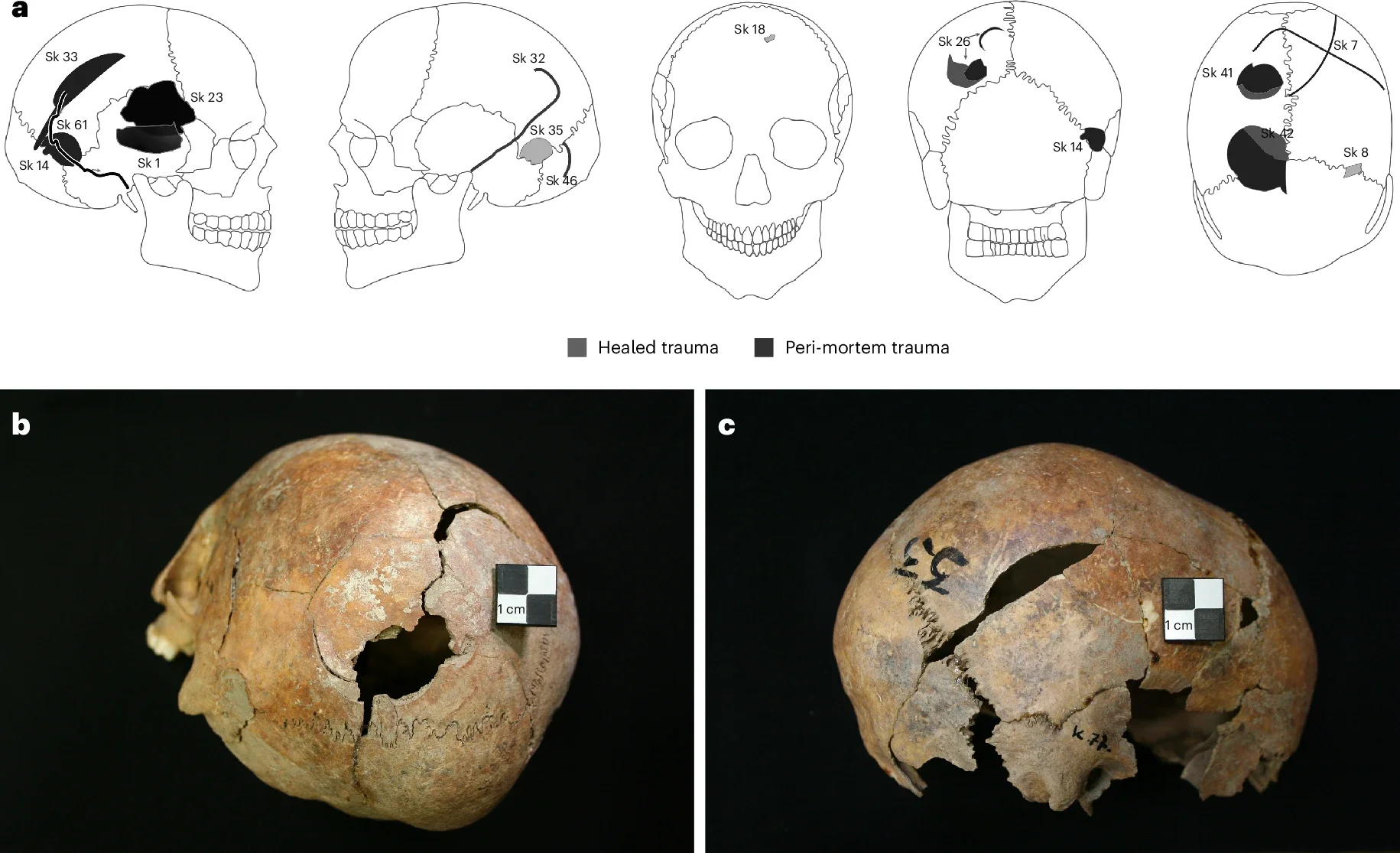
Evidence of violence appeared across the remains. At least 20 percent showed trauma linked to attacks, most commonly blows to the head delivered at close range. Injuries suggested victims were struck from behind or above, sometimes while fleeing or already incapacitated.
Researchers also ruled out disease as the cause of death. Genetic screening found no evidence of infectious pathogens, overturning earlier interpretations that had proposed a pandemic.
The pattern of injuries painted a picture of deliberate killing rather than accidental casualties of battle.
One individual displayed a defensive wound consistent with attempting to ward off an attack. Projectile injuries from arrows or spears were also present.
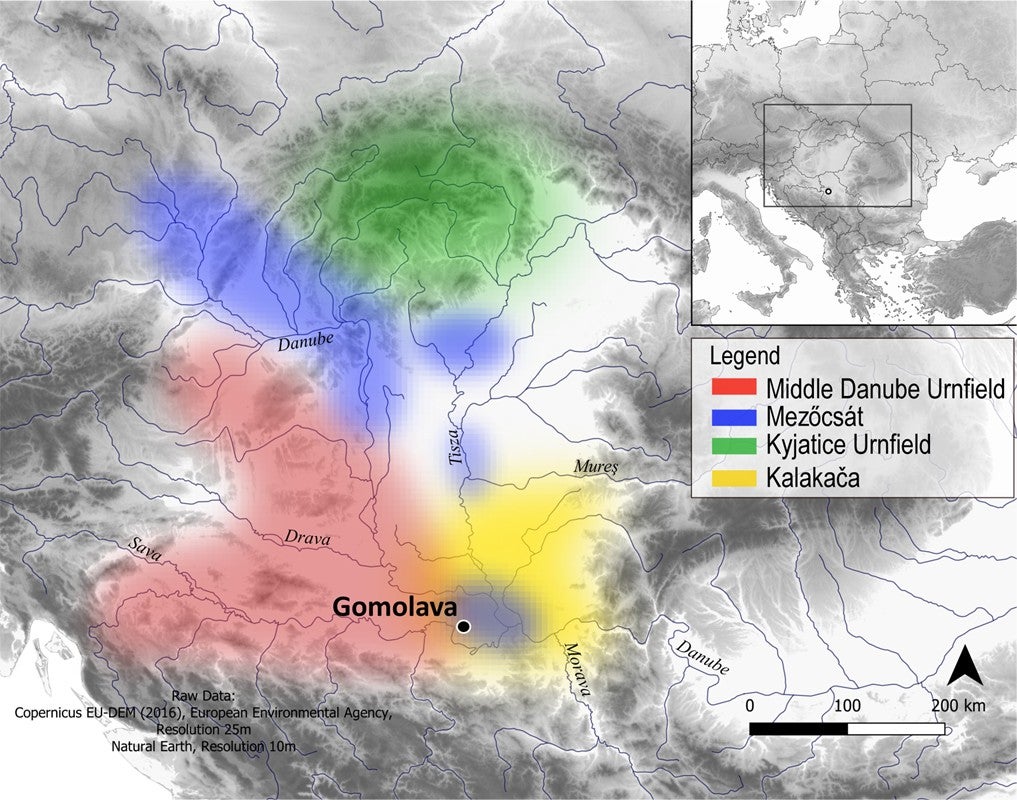
Genetic and chemical analyses revealed another surprise. Most individuals were not closely related to one another. Only one small family unit, a woman and her two daughters, could be identified among those tested.
Isotope data from teeth and bones showed varied childhood diets and geographic origins, indicating the victims likely came from multiple settlements across the broader region rather than a single village.
About 35 percent of sampled individuals grew up tens of kilometers away from the burial site. One person appeared to originate from even farther outside the Pannonian Plain.
Taken together, the findings suggest a group assembled from a wider population network, possibly displaced or captured before the killings.
“With limited information on Early Iron Age settlement numbers and size of sociopolitical units, demographic estimates based on archaeology are problematic,” the authors wrote, but the lack of relatedness makes it unlikely the victims came from a single community.
The killings occurred during a turbulent period in the Carpathian Basin, when communities were reorganizing after the collapse of large Bronze Age settlement systems centuries earlier.
By the ninth century BCE, new fortified sites were emerging, and older settlement mounds were being reoccupied. Competition over land, resources, and territorial claims may have intensified tensions between established farming communities and more mobile pastoral groups moving through the region.
“Our team has been tracing the Bronze Age collapse and its aftermath in Europe,” Molloy said. “What we found at Gomolava tells us that as things recovered in this area moving into the Iron Age, reasserting control over landscapes could include widespread and extremely violent episodes between competing groups.”
The researchers argue the killings were not random. The choice to target women and children, who often played central roles in social and economic networks, may have been intended to disrupt alliances and kinship connections across communities.
Despite the brutality, the burial itself shows signs of care and ceremony.
Unlike many prehistoric mass graves, the victims were not stripped of valuables. Bronze jewelry and ceramic drinking vessels were placed alongside bodies. Animal remains, including parts of cattle and pigs, were deposited in the pit, and a young cow was laid beneath the human remains.
Broken grain-grinding stones and burnt seeds were placed on top of the grave.
“It is typical in prehistoric mass graves for victims to be hastily buried together in a pit,” Molloy said. “The victims at Gomolava were hastily buried in a disused semi-subterranean house, but uniquely, not only had the bodies not been looted of their valuables, offerings were made in what must have been a respectful ritual.”
The investment of time and resources suggests the burial served symbolic purposes beyond simple disposal of the dead.
Co-lead Dr. Linda Fibiger of the University of Edinburgh said the killings and burial together may reflect attempts to reshape power relationships.
“The brutal killings and subsequent commemoration of the event can both be read as a powerful bid to balance power relations and assert dominance over land and resources,” she said.
Mass graves in Europe date back thousands of years, but Gomolava stands out for its selective demographic profile. Comparable sites often contain a mix of men, women, and children, suggesting indiscriminate violence.
Here, the pattern appears intentional.
Researchers believe there may have been more victims than the 77 studied. A second nearby grave discovered decades earlier may contain remains from the same event, potentially raising the total death toll above 130.
The findings suggest prehistoric violence could be more strategic and socially targeted than previously recognized, involving calculated acts meant to reshape communities and territories.
Research findings are available online in the journal Nature Human Behaviour.
The original story “Iron Age mass grave reveals targeted violence against women and children” is published in The Brighter Side of News.
Like these kind of feel good stories? Get The Brighter Side of News’ newsletter.
The post Iron Age mass grave reveals targeted violence against women and children appeared first on The Brighter Side of News.

