Moments before a goal, the movement that created the chance often looks chaotic. A pass goes somewhere unexpected, defenders hesitate, space opens. That sense of disorder may not be random at all. It might be one of the strongest signals that a team is about to win.
A new analysis published in the journal PLOS One suggests that soccer teams perform better when they spread their play unpredictably across the entire field rather than focusing attacks in familiar areas. The research examined how ball movement patterns relate to match outcomes using data from professional competitions.
“Soccer is low-scoring, so a couple of moments can swing a match, and simple statistics like possession or shot counts do not always capture who performed better,” said Dr. Sergiy Shelyag, an associate professor in applied mathematics and data science at Flinders University. “Our approach measures how unpredictably and widely a team moves the ball across a match.”
The international research group included scientists from Deakin University’s School of IT and Centre for Sport Research, as well as Coventry University and Aston University in the United Kingdom.
Traditional football statistics often focus on possession percentages, shot counts, or expected goals models. Those metrics can help, but they sometimes fail to explain why one team wins. Soccer outcomes also depend on tactical decisions, defensive reactions, and chance events, which complicate performance evaluation.
Researchers instead examined something more subtle, how teams distribute ball movement across space over time.
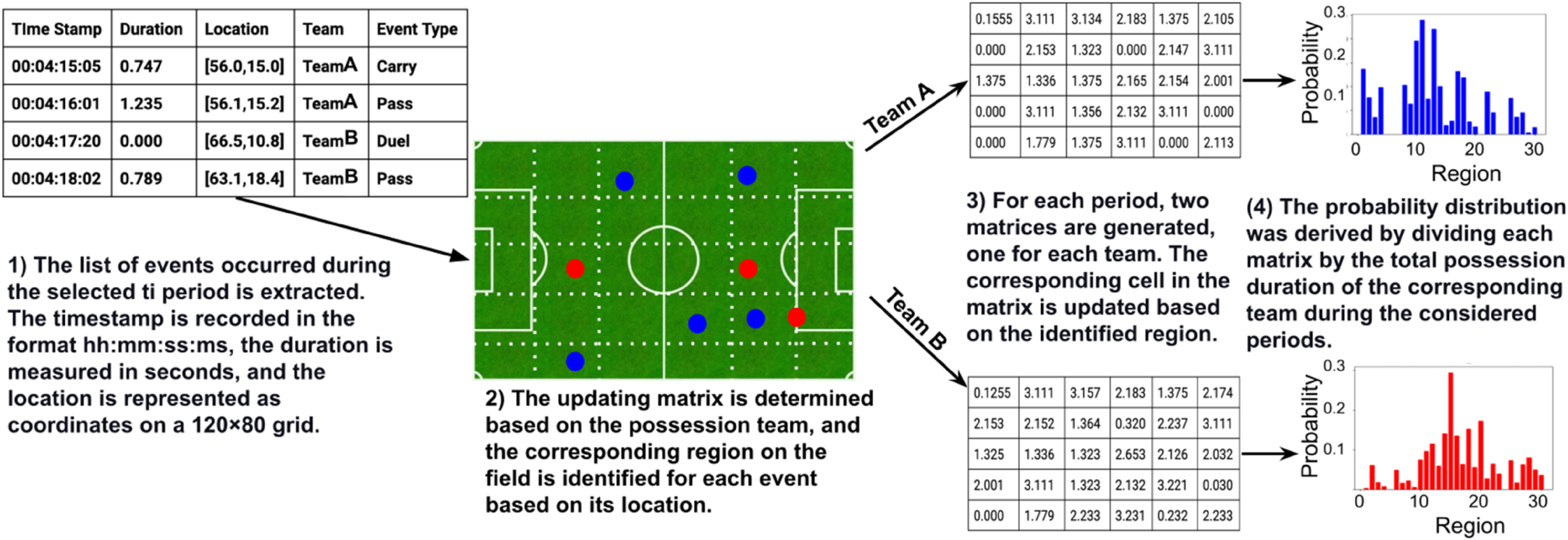
They used a metric called Spatial Event Distribution Randomness, or EDRan, which evaluates how widely and unpredictably a team moves the ball around the pitch. Instead of tracking individual players, the method focuses on the ball itself, which avoids complications from substitutions and positional changes.
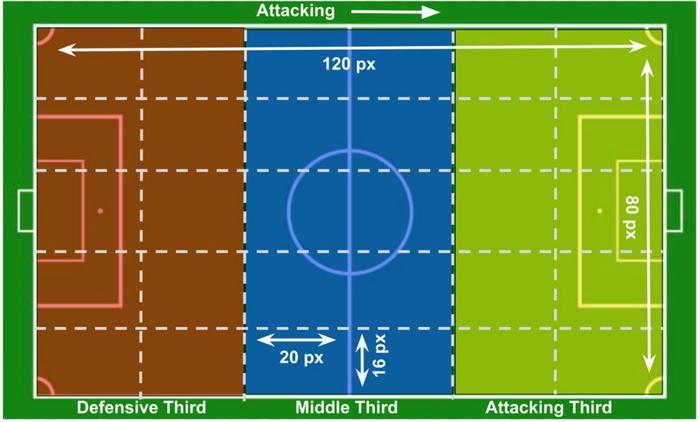
To calculate this measure, the field was divided into 30 equal regions. Matches were also split into ten time segments, five per half. By analyzing how long the ball spent in each area during those intervals, the scientists created probability distributions that could quantify randomness using tools from information theory.
The study relied on the publicly available StatsBomb dataset, which includes detailed event logs from top-tier men’s and women’s competitions. After removing draws and matches without a clear winner, the researchers analyzed 608 men’s matches and 374 women’s matches. The women’s dataset was considered underpowered, meaning conclusions from that group are less certain.
Across men’s matches, winning teams consistently showed higher unpredictability scores than losing teams throughout games. The difference tended to shrink toward the final minutes, which may reflect teams becoming more cautious when protecting a lead.
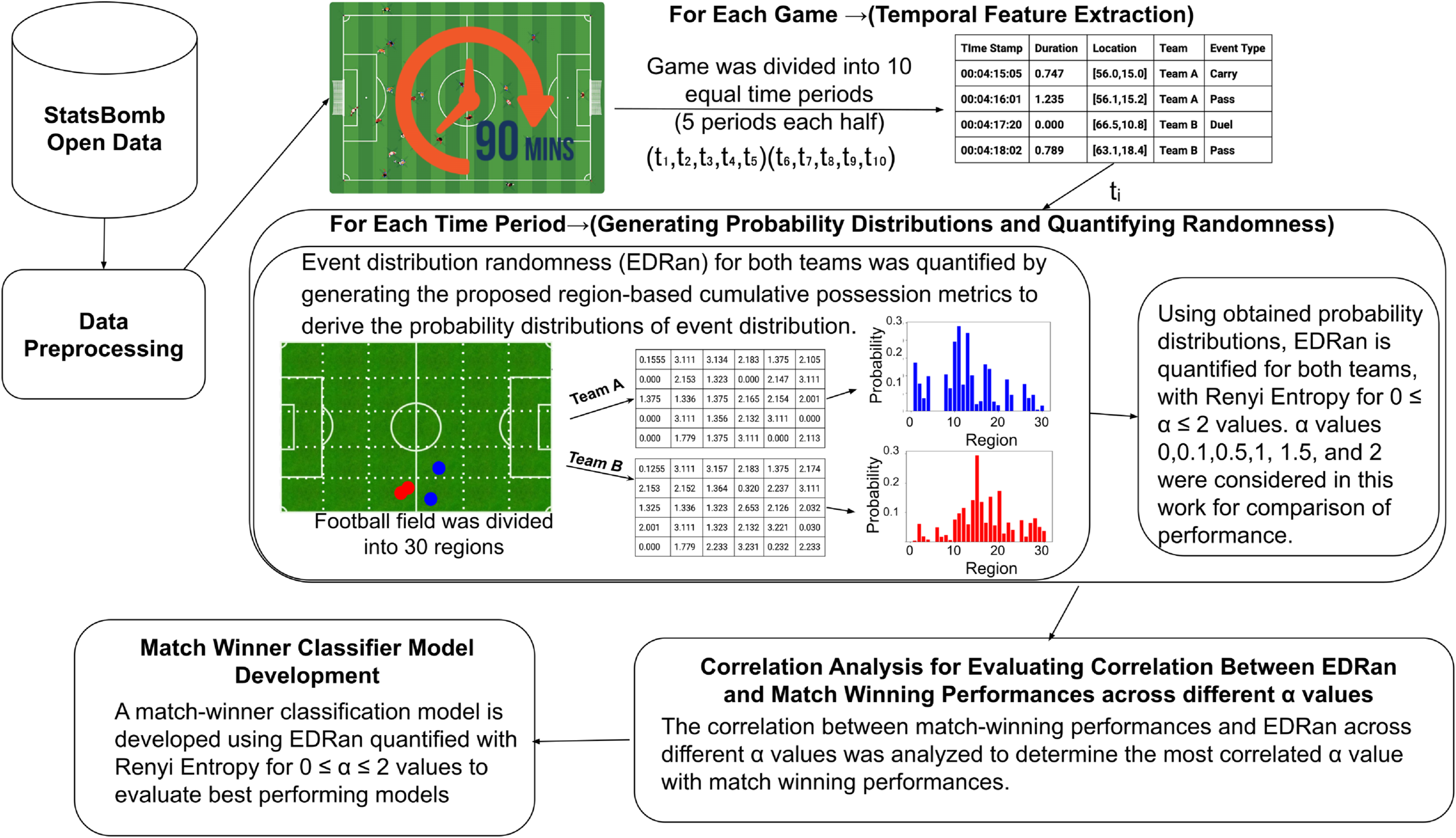
Correlation analysis also showed that the association between unpredictability and winning weakened late in matches. Machine learning models developed by the researchers placed greater importance on early-game patterns when predicting outcomes.
That pattern aligns with known tactical behavior. Teams ahead on the scoreboard often shift toward defensive play, reducing risk and, in turn, unpredictability.
“A mathematically grounded, information theory-based view suggests that broad, field-wide unpredictability is a stronger path to success than being tricky in the same old places,” Shelyag said.
One key finding involved how the metric treated different parts of the field. The researchers compared several mathematical approaches that emphasized either commonly used regions or rarely used ones.
The strongest link to winning occurred when every region of the field was treated equally, including areas teams rarely use. That version of the metric, known as maximum entropy, captured how broadly teams spread play rather than how often they repeated patterns in preferred zones.
In practical terms, this suggests that successful teams exploit the full width and depth of the pitch, forcing defenders to cover more territory and react to unexpected movements. Concentrating unpredictability in only a few areas appears less effective because opponents can adapt more easily.
The best-performing predictive model based on this approach reached 80.61 percent accuracy in identifying match winners in men’s games, outperforming models built on traditional entropy measures.
The researchers emphasized that their findings are associative, not causal. Other factors, including team strength, opponent quality, home advantage, and match context, could influence results.
The analysis also focused only on top-tier European competitions, which may limit generalization to lower leagues or different regions. Drawn matches were excluded, and the models did not incorporate game state factors such as whether a team was leading or trailing.
Women’s match data did not show a consistent pattern across the tested metrics, likely due to limited statistical power rather than fundamental differences in gameplay.
Future studies with larger datasets and broader contexts could clarify how these patterns apply across competitions and playing styles.
Research findings are available online in the journal PLOS One.
The original story “What ball movement patterns reveal about winning football teams” is published in The Brighter Side of News.
Like these kind of feel good stories? Get The Brighter Side of News’ newsletter.
The post What ball movement patterns reveal about winning football teams appeared first on The Brighter Side of News.

