A few teeth, smaller than a grain of rice, are changing the map of your earliest primate relatives.
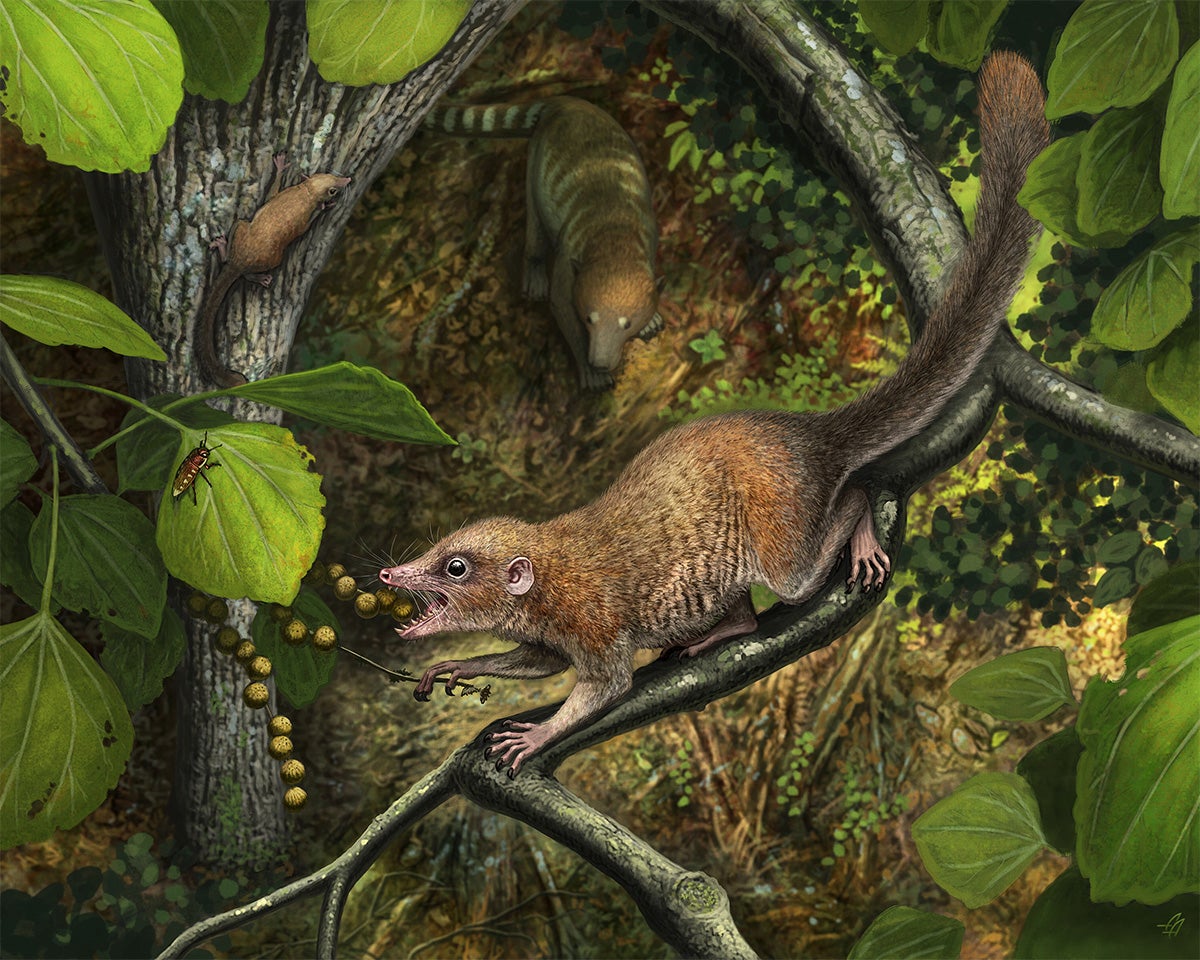
They come from a creature called Purgatorius, a tiny tree-dwelling mammal that lived about 66 million years ago, right after the dinosaurs vanished. For decades, fossils of this animal turned up only in northern places like Montana and Saskatchewan. That left a big blank space farther south, where some scientists suspected Purgatorius simply was not there.
Now, that blank space has a dot.
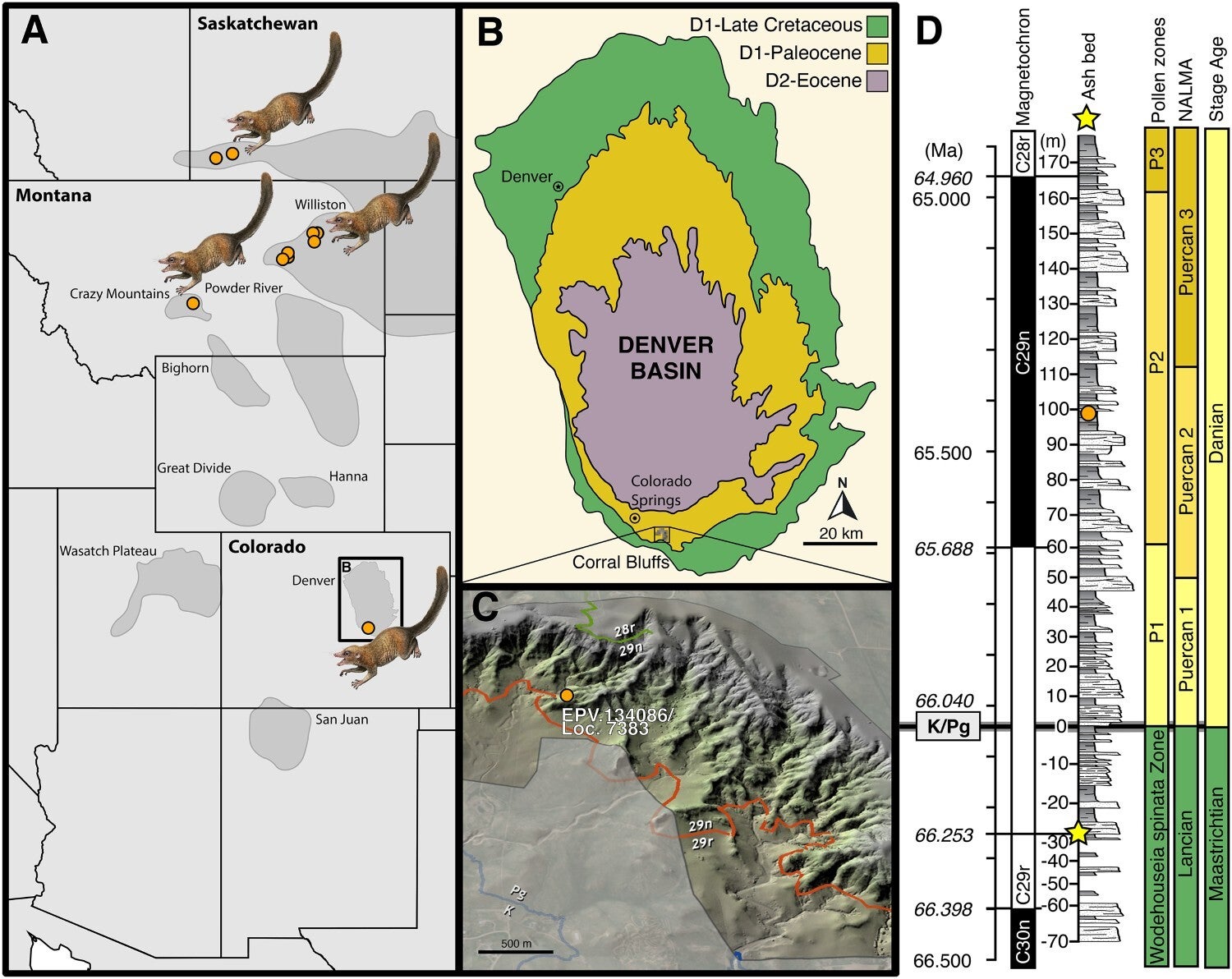
A team led by paleontologist Stephen Chester, an anthropology professor at the CUNY Graduate Center and Brooklyn College, reports the southernmost Purgatorius fossils ever found. They were recovered from Colorado’s Denver Basin, at the Corral Bluffs study area. The work appears as the cover article in the Journal of Vertebrate Paleontology, with co-authors Jordan Crowell, Tyler Lyson, and David Krause of the Denver Museum of Nature & Science.
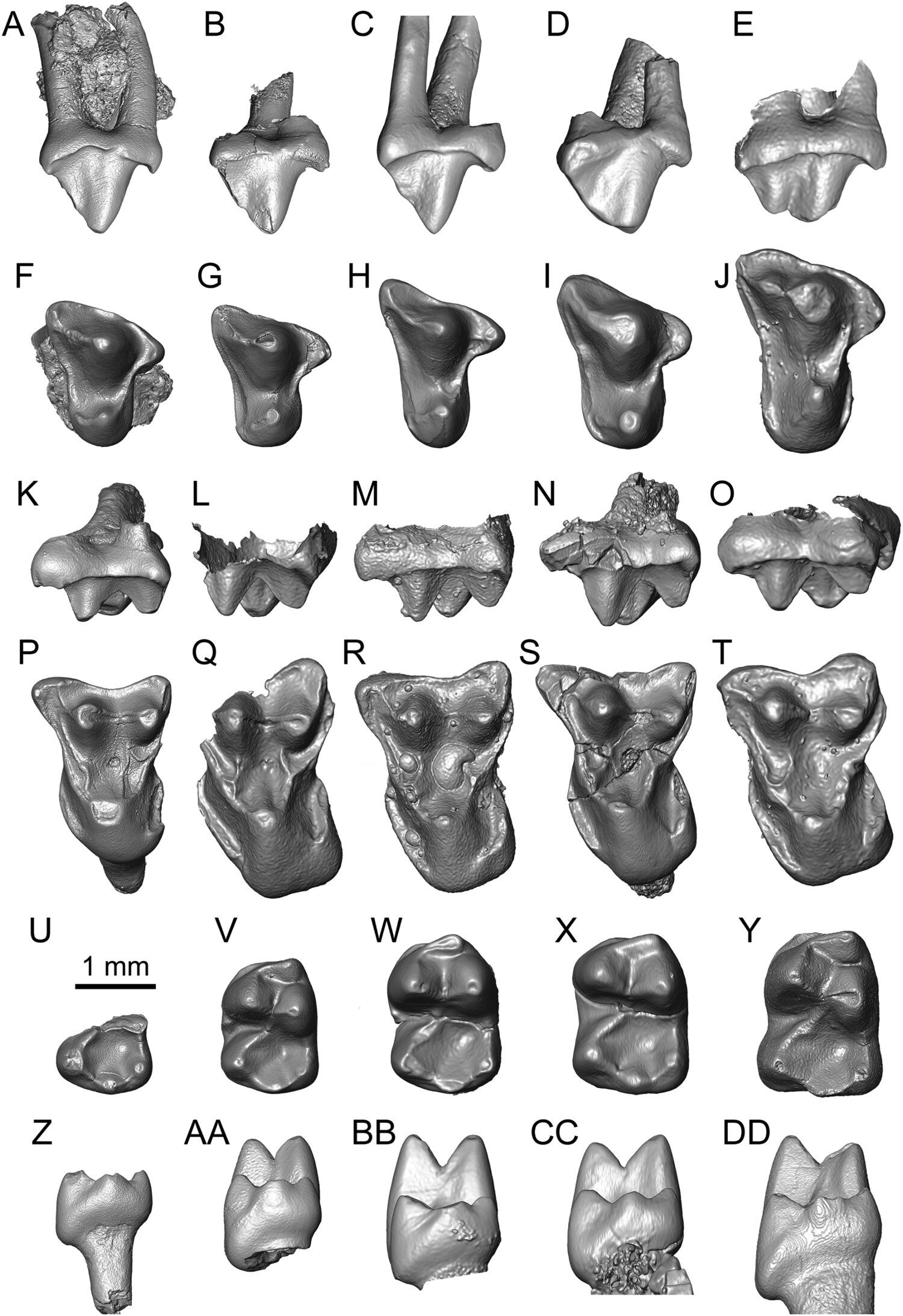
The new specimens are not skulls or skeletons. They are three isolated teeth, collected after researchers screen-washed several tonnes of ancient sediment. That method, which involves rinsing sediments through fine mesh, is built for exactly this kind of find. Without it, teeth this small can slip past standard collecting.
“This discovery helps fill a gap in understanding the geography and evolution of our earliest primate relatives after dinosaur extinction,” Chester said.
The fossils came from a site labeled DMNH Loc. 7383, described as a vertebrate microfossil locality in the Corral Bluffs area. It sits in the Denver Formation of the Denver Basin and contains a range of fossil vertebrates. The locality lies 99.8 meters above the Cretaceous-Paleogene boundary, the geological line marking the mass extinction.
Based on two different age models cited in the paper, the sediments are estimated at either 65.46 million years old or 65.38 million years old. That places the fossils about 656,000 to 560,000 years after the boundary.
Purgatorius matters because it sits near the base of a larger family tree. The paper describes purgatoriid plesiadapiforms as the earliest known members of Euarchonta, the group that includes primates, colugos, and treeshrews. Purgatorius, in particular, is described as the oldest known plesiadapiform, and it has long been treated as the earliest diverging known stem primate, near the ancestry of all primates.
Those relationships are not just academic labels. They shape how you picture the recovery of life after the asteroid impact. In northeastern Montana’s Hell Creek region, previous work has suggested purgatoriid plesiadapiforms were among the first placental mammals there to diversify after the extinction. Within the first million years of their appearance in that region, plesiadapiforms became numerically abundant and took up a large portion of an omnivore-frugivore niche.
Until this Colorado find, documented Purgatorius occurrences from the earliest Paleocene were limited to southern Canada and the northernmost contiguous United States. The map looked like a northern story.
Colorado complicates that.
The team compared the Colorado teeth with known Purgatorius species described from other sites. Their conclusion is careful. The fossils show a combination of features “previously not documented in any known species of Purgatorius,” but the authors say they need more material before they can decide whether it is truly a new species.
They outline several traits that hint at an early, more primitive form. The teeth include what the paper calls a relatively small fourth upper premolar and a second upper molar with a large projecting parastylar lobe. The lower molar fragment has a fully enclosed talonid basin and low-crowned cusps, a pattern the authors note resembles all known species of Purgatorius.
Size also stands out. The Colorado second upper molar is described as smaller than all known purgatoriid second upper molars.
The paper does not claim the new teeth solve every argument about early primate relatives. It frames them as an early clue, from a place that had been missing.
The discovery adds a new data point for the early evolutionary history of what the authors call Pan-Primates, Primatomorpha, and Euarchonta. It also feeds into a bigger question: where did these animals originate, and how did they spread?
The Colorado site is younger than the oldest Purgatorius occurrence documented in northeastern Montana, which the paper places most likely within 105,000 to 139,000 years after the K/Pg boundary. By contrast, the Colorado fossils are about 550,000 to 650,000 years after the boundary and correlate with Puercan 2 horizons elsewhere.
That pattern supports a scenario the authors describe: Purgatorius expanding its geographic range from north to south. The paper notes that several younger plesiadapiform families, likely derived from a Purgatorius-like ancestor, are known from the later Torrejonian interval across the Western Interior, including south of the Denver Basin.
But the authors also point to what is still missing. They say it is possible the group originated in poorly known regions of North America, such as uplands or eastern areas, where there is no fossil record for this interval of time. In other words, there may be an origin story you cannot test yet, because the rocks have not given up the evidence.
The Colorado fossils also push back against an older assumption. For years, the absence of plesiadapiforms in more southern Western Interior sites from the earliest Paleocene was treated as potentially real biogeographic separation between northern and southern mammal faunas.
The new work argues that at least part of that pattern may be an artifact of how fossils were collected.
“Our results demonstrate that small fossils can easily be missed,” Chester explained. “With more intensive searching, especially using screen-washing techniques, we will undoubtedly discover many more important specimens.”
The paper notes that only several Puercan vertebrate microfossil localities outside the Williston Basin have been screen-washed. It also emphasizes how much sediment had to be processed to recover just a few teeth at Corral Bluffs. That is a reminder that “not found” can sometimes mean “not searched for in the right way.”
Support for this kind of work can be labor-intensive and long-term. The study was supported in part by a nearly $3 million collaborative National Science Foundation grant awarded in 2023.
Over five years, the grant will continue to fund Brooklyn College undergraduate research assistants who sift through excavated sediment in Chester’s lab, where they have uncovered Purgatorius fossils and other vertebrates from the time just after the dinosaurs’ extinction.
Research findings are available online in the Journal of Vertebrate Paleontology.
The original story “Giant dark matter ‘sheet’ may shape galactic motion in the Milky Way” is published in The Brighter Side of News.
Like these kind of feel good stories? Get The Brighter Side of News’ newsletter.
The post New fossil findings help clarify the history of primate evolution appeared first on The Brighter Side of News.

