A quiet grassland can feel still, but it is never silent. Every leaf, flower, and root releases tiny scent molecules that drift through the air. Those odors help plants deal with threats, recruit helpful insects, and send cues to nearby life. New research from the Max Planck Institute for Chemical Ecology and the University of Kiel shows that when plant diversity drops, this scent language changes across whole communities, and even inside individual plants.
The study offers rare experimental proof that biodiversity shapes chemical communication. The researchers found that species-rich grasslands release a broader, more layered mix of odor signals. As diversity declines, those signals shift, which can change how organisms interact across the ecosystem.
“Understanding how a plant’s chemical signals change with plant diversity in its environment helps us to see the loss of biodiversity as more than just a loss of species. It also changes the chemical communication of an entire ecosystem,” said Sybille Unsicker, who led the Plant-Environment Interactions project group at the Max Planck Institute for Chemical Ecology and is now a professor at Kiel University’s Botanical Institute.
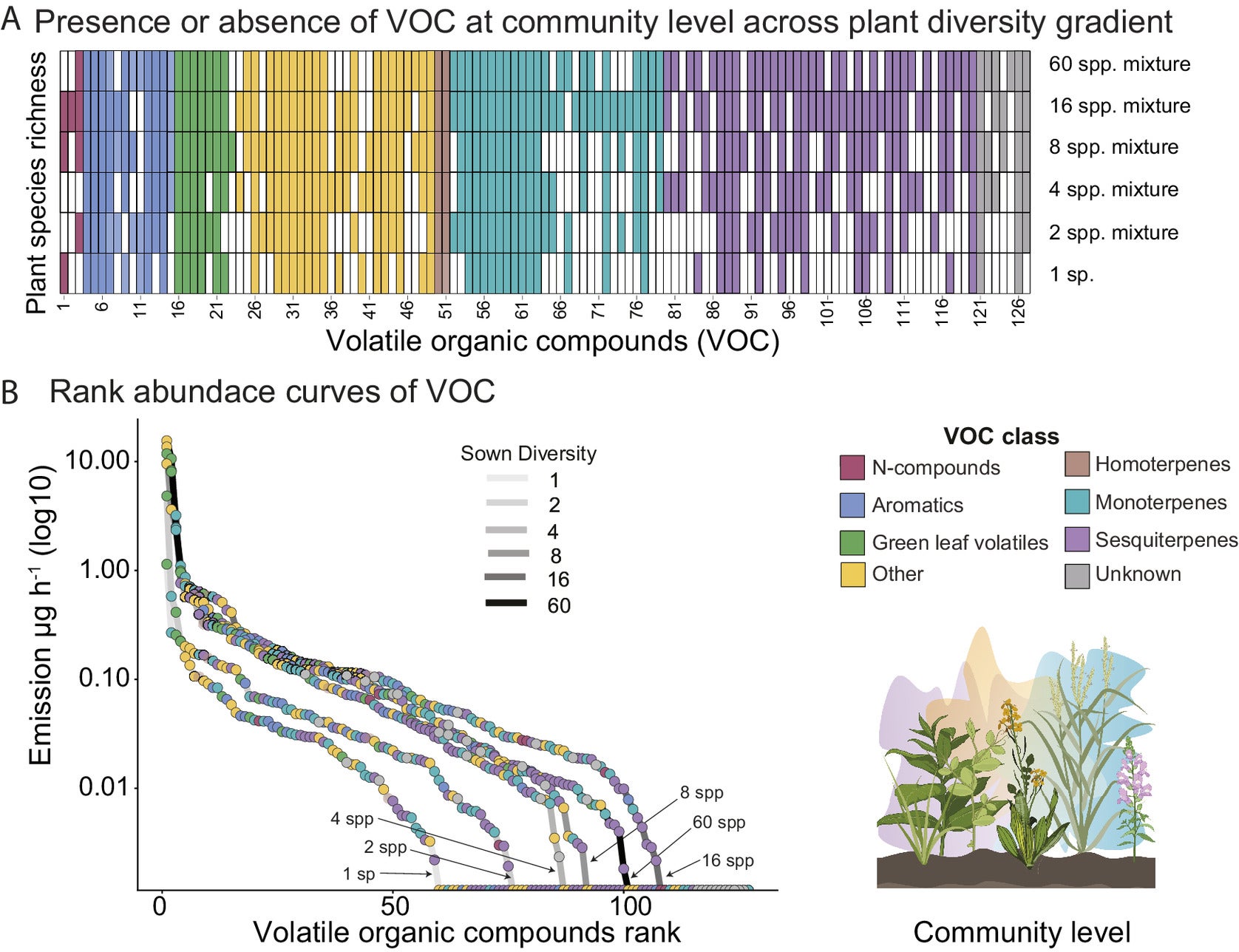
Plants communicate with other organisms using volatile organic compounds, which are odor molecules released from flowers, leaves, and roots. You cannot see them, but they can carry a lot of meaning. These compounds can help attract pollinators, push away plant-eating insects, and support exchanges with microbes.
Scientists have long known these signals matter. What has been harder to test is how a whole community’s mix of species shapes the odor cloud hanging over a field. A diverse meadow is not just a list of species. It is also a shared chemical space, built from thousands of tiny releases.
That is what made this work stand out. The researchers did not only compare one plant with one neighbor. They tested plant odor signals across a full diversity gradient in real grassland plots, where many plants share air, soil, insects, and light.
The team carried out its work in the Jena Experiment, a large grassland research platform designed to test how biodiversity shapes ecosystem function. The study focused on communities that differed in how many plant species grew together. Across that gradient, the researchers measured odor signals at two scales, the entire plant community and single plants within it.
Ribwort plantain, also known as Plantago lanceolata, played a central role. Scientists often use it in ecological studies because many of its interactions have been well described. It also grows across many community types, which makes it useful for comparing what changes when neighbors change.
“In our experiments, we wanted to include more than one or two neighboring plants, as is common in laboratory or greenhouse conditions. In natural ecosystems, plants live in diverse communities and interact with many other plants, insects, and microorganisms. The Jena Experiment provided the ideal conditions for our research,” said first author Pamela Medina van Berkum.
Measuring plant odors outside is difficult. Wind, shifting sunlight, and changing humidity can dilute or distort what plants release. The researchers had to build methods that worked in the field while keeping signals clear enough to measure.
“We designed a system that traps these odors at the community level using a transparent cage. This cage is placed over the vegetation to concentrate the odors. At the individual plant level, we took a similar approach but enclosed the plants separately in small, transparent plastic bags,” Medina van Berkum said.
With these setups, the team collected odor samples from both the shared community space and from single plants. They then used advanced chemical analysis to identify and measure the compounds present. That approach let them compare odor richness, not just total scent strength.
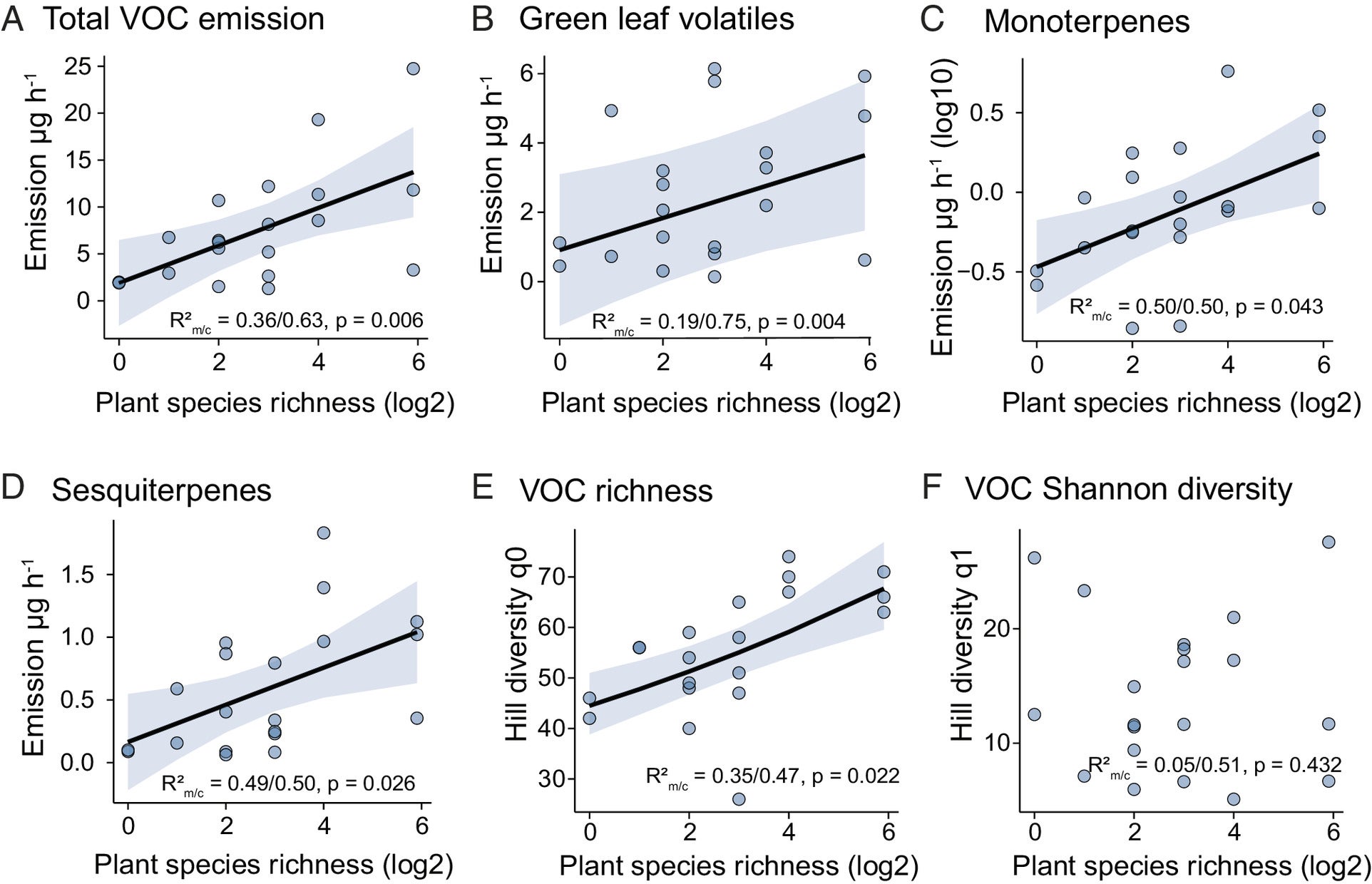
The main pattern was consistent. Plant communities with more species produced richer and more complex odor profiles. In other words, the scent signal above a diverse plot carried more types of compounds and a fuller mix overall.
When species diversity declined, the odor cloud changed. The signal became less complex, and the blend of compounds shifted. That shift matters because the odor profile is part of how plants, insects, and microbes find each other and respond.
This result also highlights a deeper point about biodiversity. Species loss does not only reduce visible variety. It can also simplify the invisible cues that guide interactions. Even if a grassland still looks green, its chemical “conversation” may be altered.

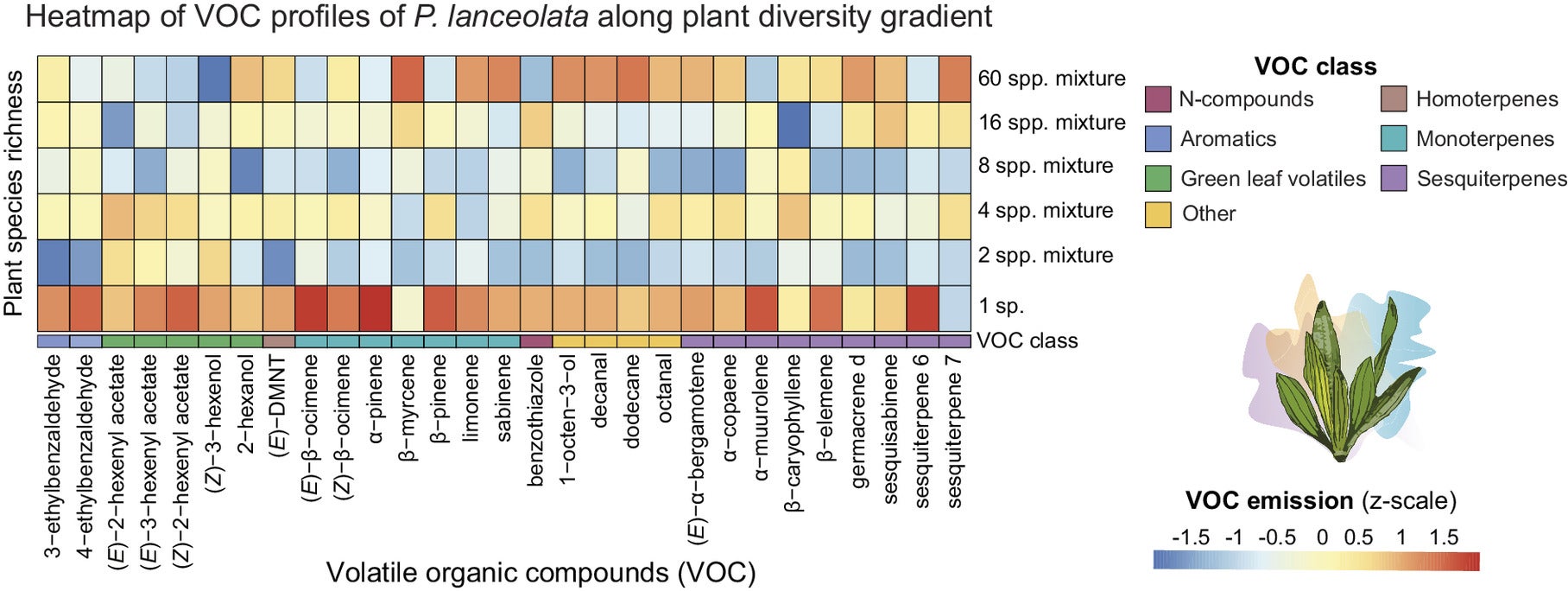
The study also found that odor changes at the community level can ripple into individual plants. A single ribwort plantain did not act in isolation. Its chemical output could shift depending on the odors produced by neighboring plants around it.
That means diversity can influence plant communication indirectly. The plantain’s signal changed because the surrounding odor environment changed. The community odor cloud did not just reflect the sum of plants. It also helped shape the signals of plants living inside it.
This insight matters because many ecological studies focus on direct effects, like how soil nutrients change with diversity. Here, the driver is a shared airborne environment. When the community odor changes, individual plants may change how they “speak” too.
Odor signals play a key role in how plants interact with insects and microbes. If the scent blend changes, the whole network of interactions may shift. Pollinators may respond differently. Plant-eating insects may track hosts in new ways. Microbes may face a different chemical landscape around roots and leaves.
Unsicker warned that biodiversity loss can disrupt both visible and invisible links in nature.
“Plant diversity has a direct impact on the co-evolution of species, the stability of ecosystems, and nature conservation. The loss of biodiversity can disrupt visible interactions between species and invisible communication networks of plants,” she said.
The study also points toward practical steps that could support chemical communication in managed landscapes. Increasing species diversity through sustainable agriculture, including flower strips and crop diversification, and avoiding herbicides, could help restore these signaling systems. Healthier chemical networks may support natural plant defenses and help pollinators find resources.
The researchers plan to keep pushing this work forward. They want to learn how changes in chemical communication, driven by species composition, affect ecosystem function. They also want to test how biodiversity shapes which insects are attracted, and what that means for stability over time. The study highlights how many volatile compounds exist in species-rich grasslands, while also showing that scientists still do not fully understand what many of those compounds do in the wild.
This research changes how you can think about biodiversity loss. When plant species disappear, ecosystems lose more than names on a list. They may also lose the chemical richness that helps keep interactions steady. A simpler odor landscape could make it harder for pollinators to locate diverse resources. It could also weaken natural pest defenses, if helpful insects or microbes respond less strongly to altered signals.
For scientists, the findings offer a new tool for studying ecosystem health. If odor complexity tracks biodiversity, chemical measurements could help identify early signs of ecological decline. Future work may also reveal which odor shifts predict trouble, like rising pest pressure or falling pollinator activity.
For conservation and land management, the message is direct. Practices that support plant diversity may help rebuild chemical communication networks, not just scenic beauty. In a changing climate, that invisible stability could matter more than you expect, because it helps living systems respond, adapt, and recover.
Research findings are available online in the journal Proceedings of the National Academy of Sciences.
The original story “Scientists discover the invisible scent language of plants” is published in The Brighter Side of News.
Like these kind of feel good stories? Get The Brighter Side of News’ newsletter.
The post Scientists discover the invisible scent language of plants appeared first on The Brighter Side of News.

