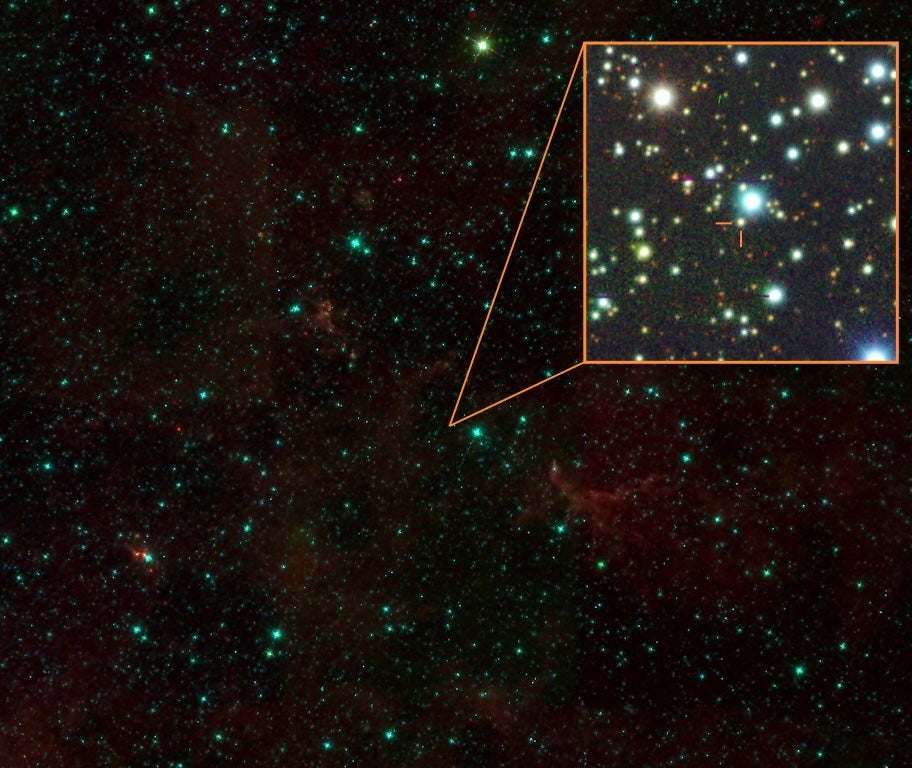
When Anastasios Tzanidakis was sifting through some older telescope observations, he stumbled across something that should not be occurring. A star around 11,000 light-years from Earth in the constellation Puppis, which had previously been relatively stable, has begun to flicker in ways that are uncommon for this type of star (similar to our sun).
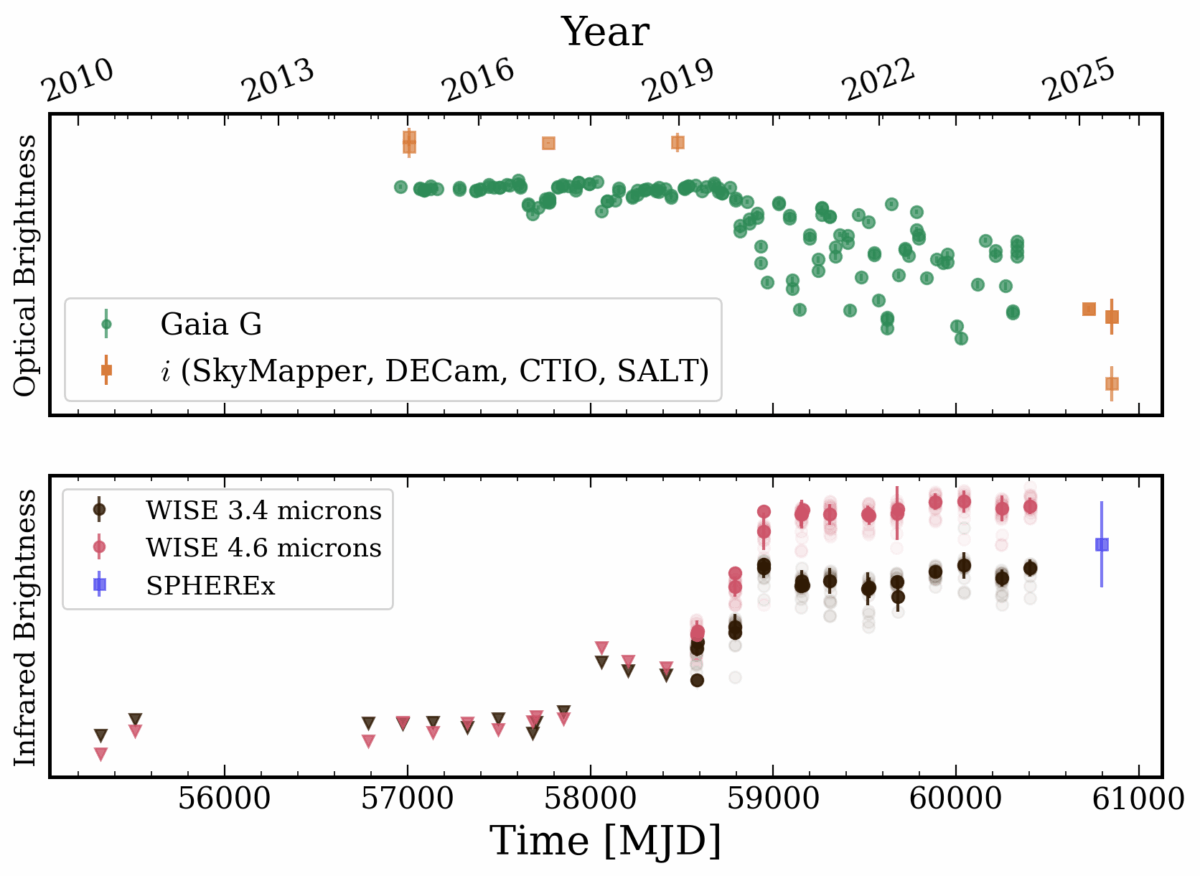
“The light from the star was relatively constant over time, until 2016; then there were three drops in brightness in the light output. Then in 2021, it absolutely exploded in brightness,” said Tzanidakis, who is currently pursuing his PhD in astronomy at the University of Washington. “The behaviour of these stars was strange. Normally they are stable. So we were asking ourselves, ‘What is happening?’”
The answer to Tzanidakis’ question, as pieced together by comprehensive analysis of several telescope observations taken over years, along with a large amount of archived data from a variety of sources, ultimately leads to the conclusion that it is possible that two planets from that distant solar system may have collided with each other. The collision may have created a vast cloud of debris that is now travelling at approximately the same speed and direction toward their host star that Earth travels toward the sun.
This discovery provides some of the earliest observations so far that provide insight into similarities between how the moon and Earth were formed approximately 4.5 billion years ago. The results of this investigation have been published in The Astrophysical Journal Letters by Tzanidakis and his senior author James Davenport, an assistant research professor of astronomy at the University of Washington.
The first signal of the star, designated as Gaia20ehk but now identified as Gaia-GIC-1, was highlighted by an automated alert system on the Gaia space telescope.
Tzanidakis and Davenport analyzed the visible light record and found three distinct dips in brightness between 2016 and 2019. Each dip decreased the star’s light output by approximately 25 percent for around 200 days. After that time, the star entered a period of long-term chaotic flickering that has persisted for many years.
The reason for the fluctuations in brightness puzzled Tzanidakis and Davenport until Davenport suggested looking at another type of data altogether.
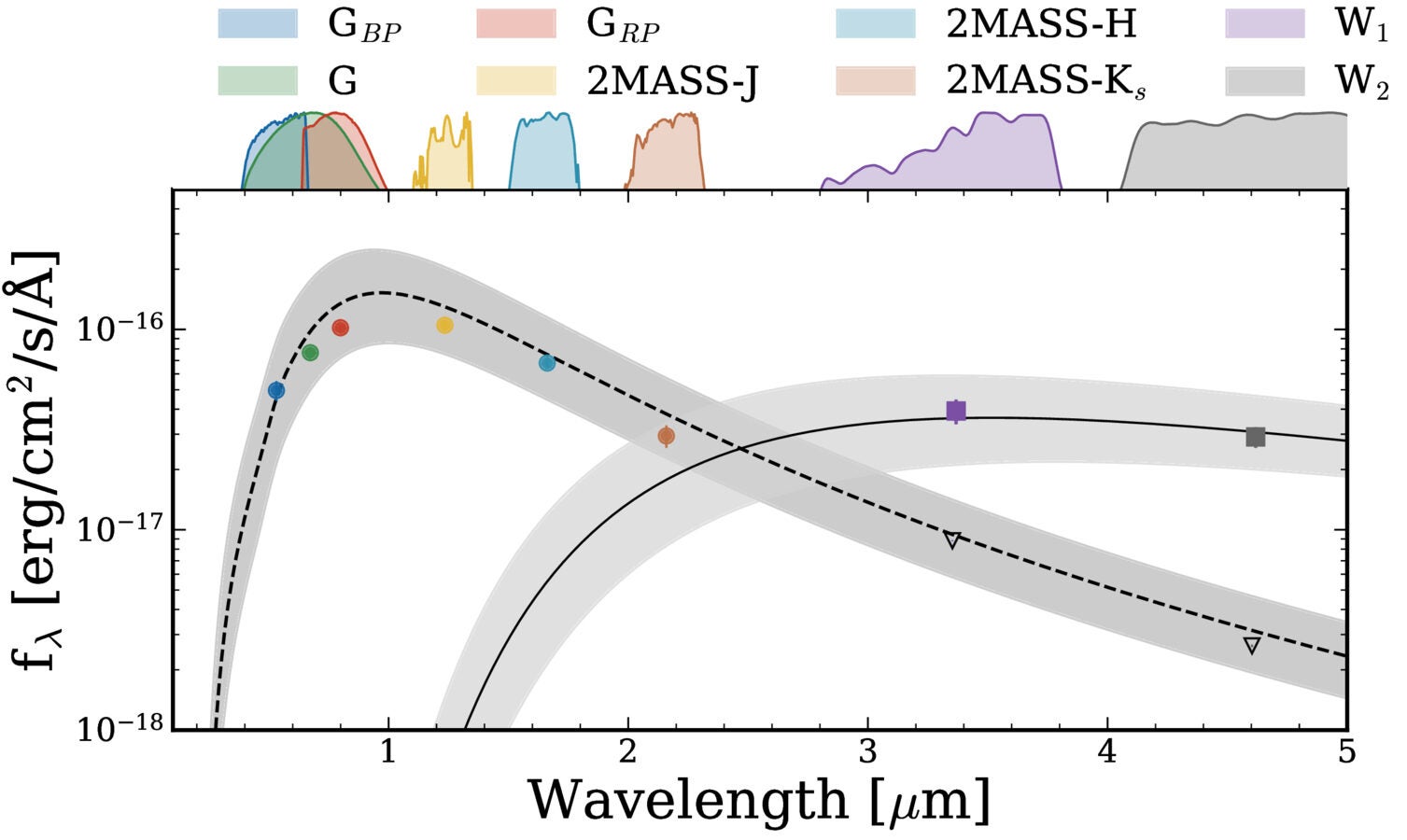
“The infrared light curve was the exact opposite of the visible light,” Tzanidakis explained. “When the visible light started to flicker and fade, the infrared light spiked. This suggests that the material obscuring the star is hot enough to radiate in the infrared spectrum.”
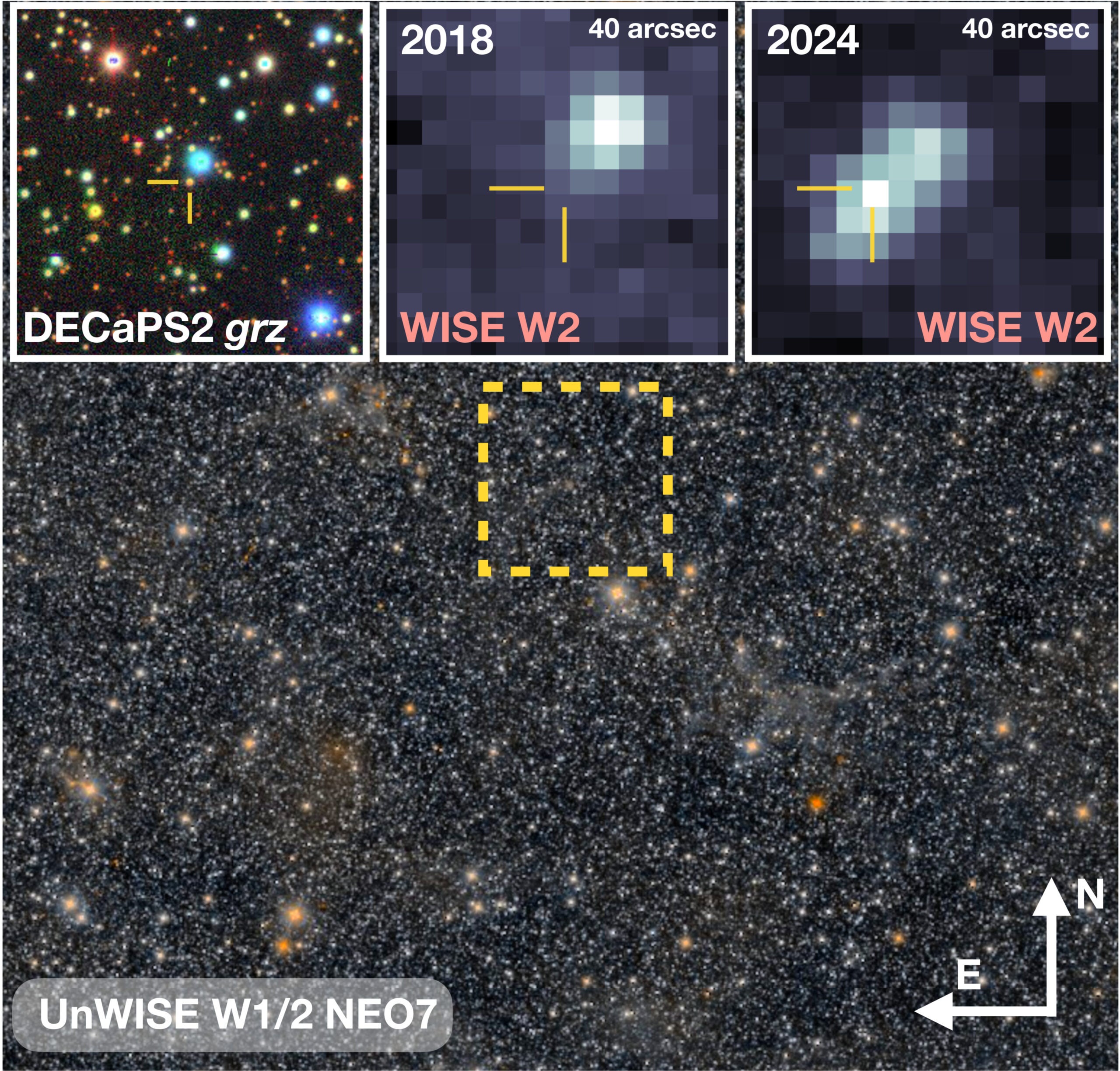
This opposite trend provides a distinct diagnostic signature. When freshly created dust obstructs the visible light from a star, it also re-radiates the energy absorbed as heat. This causes the infrared and optical signals to move in opposite directions.
By fitting the infrared data to determine the dust temperature, it was found to be approximately 900 Kelvin. The material appeared to be located about 1.1 AU from the star, which is almost exactly the same distance as the Earth is from the sun.
The timing of the original three dips, which occurred every 380 days, can be explained by the existence of material orbiting at that same distance from the star. After the intense infrared brightness began, this periodicity completely disappeared. Only random fluctuations remained, indicating that the debris had spread out and fragmented over time.
Before chaos set in, three early dips occurred, filling up every crevice of an otherwise perfectly formed ticking-clock-like interval. This could represent the two planets as they spiral toward a collision. As they get closer together and pass each other, they throw debris into space that crosses the path between the debris and observers for short periods of time.
“At first, we think they had several grazes, just as they were grazing past one another, and the grazing phases don’t create very large amounts of infrared energy,” stated Tzanidakis. “After the grazes, they hit each other in a real impactful event, and the total amount of infrared energy produced was exponential over what had been produced before.”
By estimating the total mass of the resulting dust cloud based on its infrared emissions, researchers determined that it is approximately the total mass of a small icy moon such as Enceladus.
Because the estimate comes from limited observations of the dust produced within only a few AUs of space around the system where the impact occurred, and because the measurements of distance to this system remain uncertain, the actual mass of the impacting bodies would have been much larger.
“It’s amazing that multiple telescopes were able to capture the event in real time,” stated Tzanidakis. “There are only a few examples of any sort of planetary collisions recorded, and very few of them demonstrate so many similarities between the impact that formed the Earth and the moon.”
The reason the impact is compared to the formation of Earth’s moon is that the collision creating Earth’s moon is thought to be a major incident in Earth’s history that directly contributed to the existence of life.
The moon keeps Earth’s axial tilt stable and therefore affects long-term climate. The moon also causes tides that help circulate various elements and compounds throughout the oceans. Some researchers think that the effect of the moon could also influence certain tectonic events.
The world as we know it, with the moon orbiting the Earth, represents an evolutionary step that will not happen in every planetary system. The answer to the question of how rare similar giant collisions are in the universe, and whether these collisions lead to successful life, cannot be answered based solely on what scientists observe in our own solar system.
“I have no idea how common these types of collisions are. However, if we see more of these events over time, we will have a better idea,” said Davenport. “The moon plays a significant role in making Earth a more hospitable place for life. The closer we get to catching these collisions happening, the better we’ll be able to figure out how common they are.”
It is too soon to predict how long it will take for the debris that currently exists in orbit around Gaia-GIC-1 to cool down, coalesce, and solidify into a configuration that strongly resembles the moon and Earth. However, there is evidence that it may eventually do so.
The search for Gaia-GIC-1 was quite different from other searches done in astronomy. Most searches try to find transient objects such as supernovae, gamma-ray bursts, or flares, where the signals are strong and short-lived.
Gaia-GIC-1, in contrast, showed evidence of its existence over an extended period of time. Many of the early warning signs and signals associated with it existed in archived data for several years before someone decided to investigate.
Tzanidakis has been researching the longest periods of variability in very extreme stars. This discovery was made possible by searching through light curves for events that take place slowly.
A similar method was previously used for the discovery of a binary star system with a seven-year eclipse caused by an enormous dust cloud around it.
Dr. Davenport’s work seeks to leverage decades of astronomical data to find these rapidly changing events that unfold over long timescales. This approach opens new avenues for discoveries.
The star is also interesting because it is young. Gaia-GIC-1 is estimated to be between 10 and 16 million years old based on several sources of evidence.
At this stage in its evolution, current theories of planetary formation predict that giant impacts would occur. Two open clusters of stars are located close to Gaia-GIC-1 and are both believed to be very young within the same general age range.
These clusters may potentially be associated with this star system. Current planetary formation models predict that planetary collisions take place during the first 100 million years of a solar system’s creation.
The discovery of one happening, with its previous grazing encounters and the following infrared afterglow, could change how scientists study this step in planetary evolution.
The findings of this research provide both practical and theoretical implications for the study of very ancient planetary events.
The results from this event demonstrate that giant impacts can be detected in real time from Earth through the use of multiple telescopes.
Based on calculations made by Davenport, the Legacy Survey of Space and Time (LSST) performed by the Vera C. Rubin Observatory will have the potential to discover approximately 100 new giant impact events over the next decade.
This large volume of observations will allow scientists to shift the study of planetary development from a largely theoretical field into a data-driven one.
Researchers may eventually gather enough observations to determine whether there are sufficient statistics to support the hypothesis that giant impact events are a common phenomenon. If so, these events could play a role in the development of life throughout the Milky Way galaxy.
In addition to providing researchers with new data about what factors favor the establishment of stable and habitable planetary systems, each new detection will also reveal more about how planets evolve.
Although the dust around Gaia-GIC-1 will eventually settle, it could take millions of years for scientists to learn what structures it may eventually create. In the meantime, the data from this event will continue to reveal how violent the birth of planetary systems can be.
Research findings are available online in the journal The Astrophysical Journal Letters.
The original story “Astronomers find evidence of two planets colliding 11,000 light-years away” is published in The Brighter Side of News.
Like these kind of feel good stories? Get The Brighter Side of News’ newsletter.
The post Astronomers find evidence of two planets colliding 11,000 light-years away appeared first on The Brighter Side of News.

