DNA, long known as the molecule that carries genetic information, is taking on a new role in science. Researchers now see it as a powerful building material for machines so small they operate at the scale of molecules. These emerging devices, often called DNA nanomachines, could one day travel through the body, deliver drugs, or assemble materials with near-perfect precision.
A recent review from the Harbin Institute of Technology brings together years of work in this fast-growing field. Scientists including Yiquan An, Fan Wu, Yanyu Xiong, Cheng Zhang, Jian S. Dai, and Lifeng Zhou describe how DNA can be shaped into working systems. Their analysis shows both the promise and the challenges of turning these tiny designs into real-world tools.
“The robots of tomorrow won’t just be made of metal and plastic,” the research team said. “They will be biological, programmable, and intelligent. They will be the tools that allow us to finally master the molecular world.”
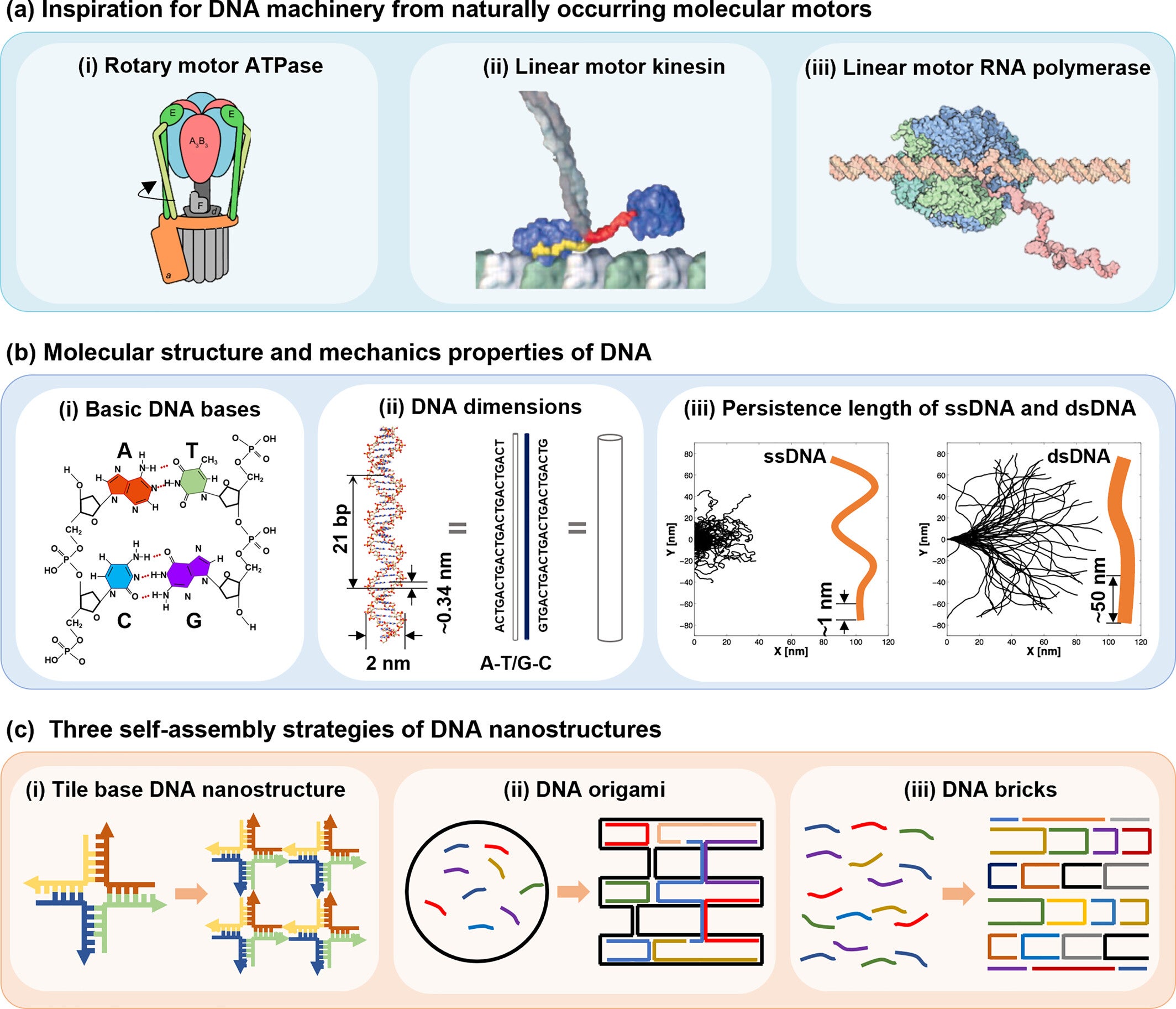
The shift toward DNA-based machines did not happen overnight. Scientists have long studied molecular motors found in living cells. These natural systems move, transport materials, and perform tasks with precision.
Attempts to build artificial machines at this scale have faced limits. Traditional manufacturing struggles to reach atomic precision. Protein-based designs are powerful but difficult to control. DNA offers a different path.
Its structure follows simple pairing rules. Short strands bind only to matching sequences. This allows researchers to program how DNA pieces assemble. Double-stranded DNA acts like a stiff rod. Single strands behave like flexible joints.
This combination gives scientists a clear design toolkit. They can build rigid frames and flexible hinges using the same molecule. That balance makes DNA especially useful for mechanical systems at tiny scales.
Turning DNA into a machine requires more than structure. It also requires motion. Scientists have developed several ways to control how these systems move.
One of the most important methods uses DNA strand displacement. In this process, one strand pushes another out of position. This shift acts like a molecular switch. It can open or close a structure, or trigger movement.
Researchers also use physical forces to guide behavior. Electric fields can pull on DNA because of its charge. Magnetic particles can attach to DNA structures and allow external control. Light and heat can also trigger changes.
Each method has trade-offs. Chemical control offers precision but produces waste molecules. Physical methods can act quickly but may affect surrounding systems.
By combining these strategies, scientists aim to create machines that move in predictable ways, even in the chaotic environment of the body.
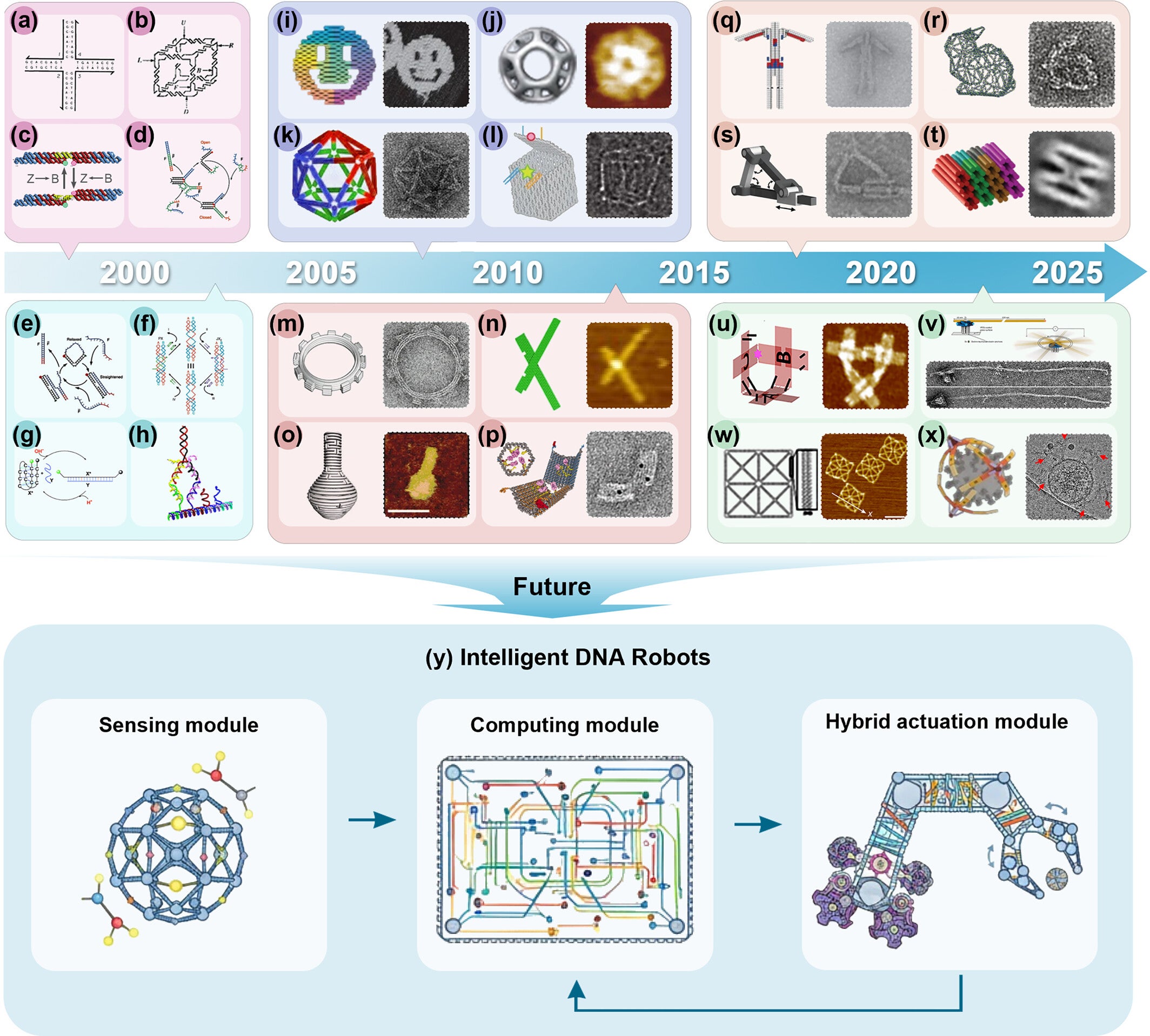
Early DNA devices were simple. They could open and close or move along a track. These early designs proved that motion at the molecular level was possible.
The field advanced with DNA origami, a technique that folds long strands into complex shapes. Using hundreds of smaller strands, researchers can guide a single strand into detailed forms.
These shapes include boxes, gears, and cages. Some designs contain thousands of components. Others act as tiny grippers or switches.
As designs became more complex, scientists began combining sensing, movement, and logic. Some DNA systems can detect molecules and respond with a specific action. Others can change shape based on their surroundings.
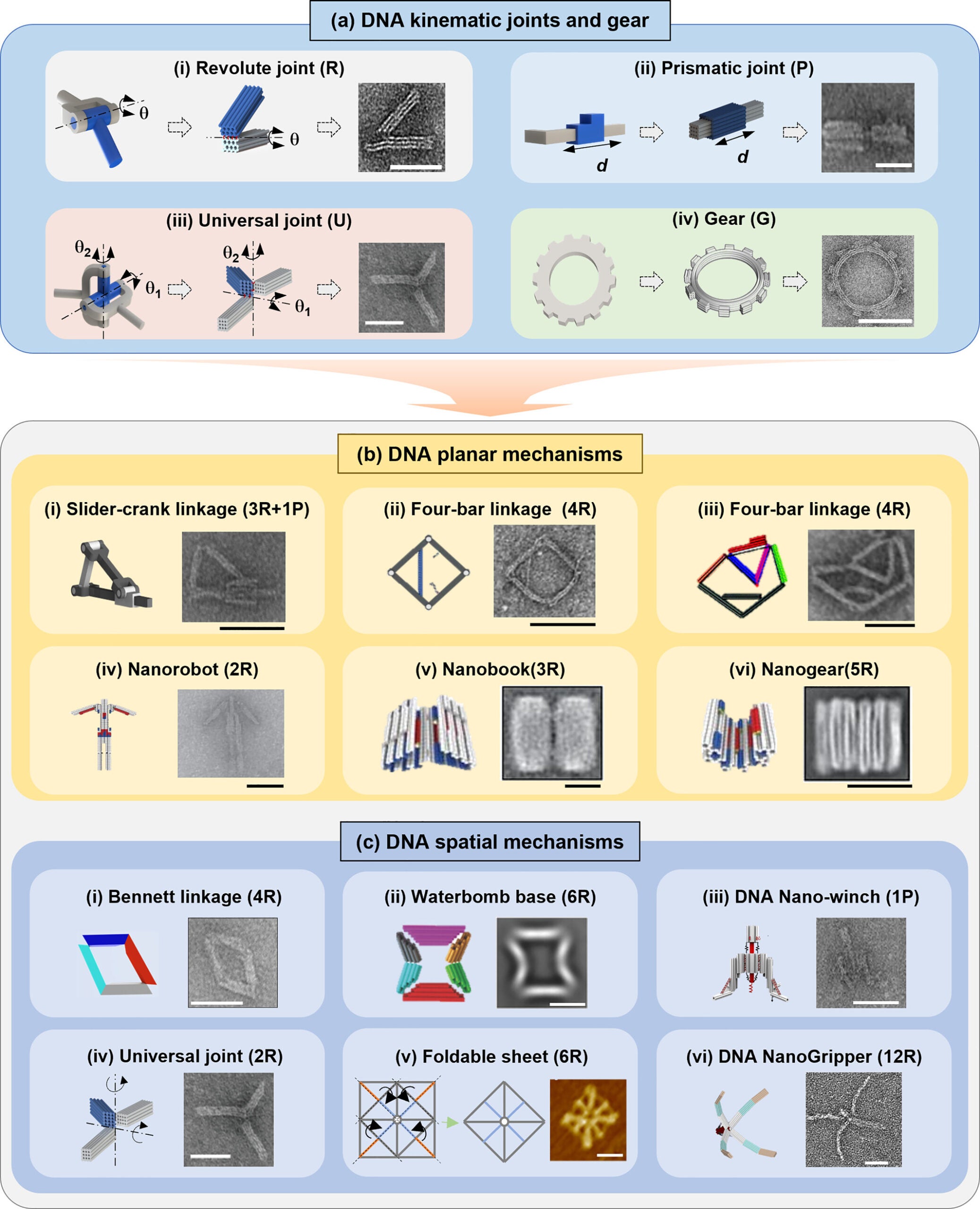
This shift marks a move toward true molecular machines, not just static structures.
The potential uses of DNA machines reach far beyond the lab. In medicine, researchers envision systems that act inside the body with high precision.
These devices could locate diseased cells and deliver treatment directly to them. They could also detect viruses and capture them before they spread. Some early designs have already shown the ability to identify viral particles.
In manufacturing, DNA can act as a template for arranging materials. Scientists can position nanoparticles with accuracy measured in billionths of a meter. This could lead to new types of electronics and optical devices.
DNA also offers a path toward new computing systems. Its structure allows for dense information storage. Theoretical limits suggest it could store far more data than current technologies.
These ideas remain in development. Still, they point to a future where machines operate at a level once thought impossible.
Despite progress, DNA machines are not yet ready for widespread use. Many designs remain proofs of concept. Several key challenges stand in the way.
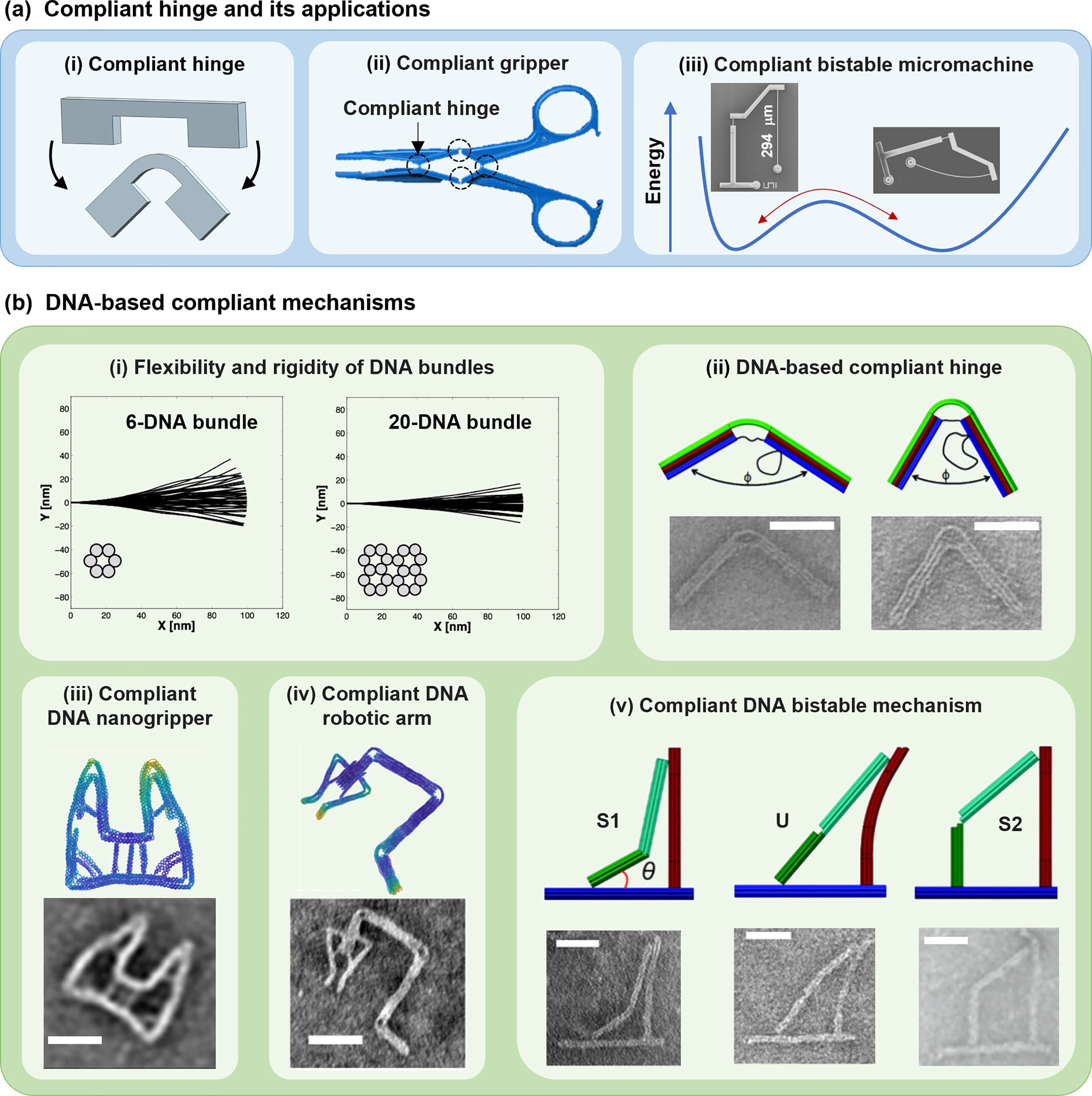
One issue is scale. Molecular systems behave differently than larger machines. Random motion, known as Brownian motion, constantly affects them. This makes precise control difficult.
Another challenge is complexity. Many DNA structures operate in isolation. They lack the integration needed for real-world tasks. Scientists must find ways to connect sensing, movement, and decision-making.
There is also a lack of detailed data. Researchers still need better information about how DNA structures behave under different conditions. Simulation tools are improving but remain limited.
Manufacturing presents another hurdle. Producing large numbers of identical DNA machines requires reliable methods. Current approaches are advancing, but scaling remains difficult.
To address these issues, scientists are exploring new strategies. These include standardized design libraries, improved simulation tools, and the use of artificial intelligence to guide development.
The review highlights a field moving from early ideas toward practical systems. DNA machines have grown more complex and capable. Yet they still face significant barriers.
Researchers believe progress will depend on collaboration across disciplines. Biology, engineering, and computer science all play a role. Advances in one area can unlock progress in others.
The goal is not just to build smaller machines. It is to create systems that can sense, respond, and act with purpose at the molecular level.
That vision remains ambitious. Still, the steady pace of progress suggests it may be within reach.
The development of DNA-based machines could reshape several areas of science and medicine. In healthcare, these systems may lead to more precise treatments that target disease without harming healthy tissue. This could reduce side effects and improve patient outcomes.
In technology, DNA-guided assembly could enable new types of materials and devices. These could be smaller, more efficient, and more powerful than current designs. Data storage using DNA could also transform how information is preserved.
For research, DNA machines offer a new way to study processes at the molecular level. Scientists could observe and control interactions that were once difficult to measure.
While challenges remain, the potential benefits are significant. Continued progress could lead to tools that improve health, advance technology, and deepen understanding of the natural world.
Research findings are available online in the journal SmartBot.
Like these kind of feel good stories? Get The Brighter Side of News’ newsletter.
The post DNA nanomachines could revolutionize medicine and technology appeared first on The Brighter Side of News.

