A small patch, no larger than a bandage, may soon change how doctors understand the immune system. Instead of relying on blood draws or surgical biopsies, scientists have created a device that listens directly to immune activity in the skin. The technology, developed by researchers at The Jackson Laboratory and the Massachusetts Institute of Technology, offers a new way to track how the body responds to disease, vaccines, and treatment.
The study introduces a microneedle patch that can painlessly collect immune cells and inflammatory signals from the skin. Within minutes, it can detect early signs of inflammation. Within hours, it gathers specialized immune cells that once required invasive procedures to study.
“Traditionally, studying some of the most important immune cells in the body requires a skin biopsy or blood draws. Because many of these cells live and respond in tissues like the skin, accessing them has meant invasive procedures,” said Sasan Jalili, a biomedical engineer and immunologist at The Jackson Laboratory. “We’ve shown we can capture them painlessly and noninvasively instead. This is especially important in sensitive or visible areas like the face or neck, where people often don’t want biopsies because of scarring, as well as for older adults, frail patients, and very young children or infants.”
Doctors often turn to blood tests to understand immune health. These tests reveal many important signals. However, they miss a key part of the story. Many immune cells do not circulate in large numbers in the bloodstream. Instead, they live in tissues like the skin, where they act as the body’s first line of defense.
These cells include resident memory T cells. They remain in place after an infection or vaccination. They wait quietly until they recognize a familiar threat. When that happens, they act quickly and send out signals that call other immune cells to the area.
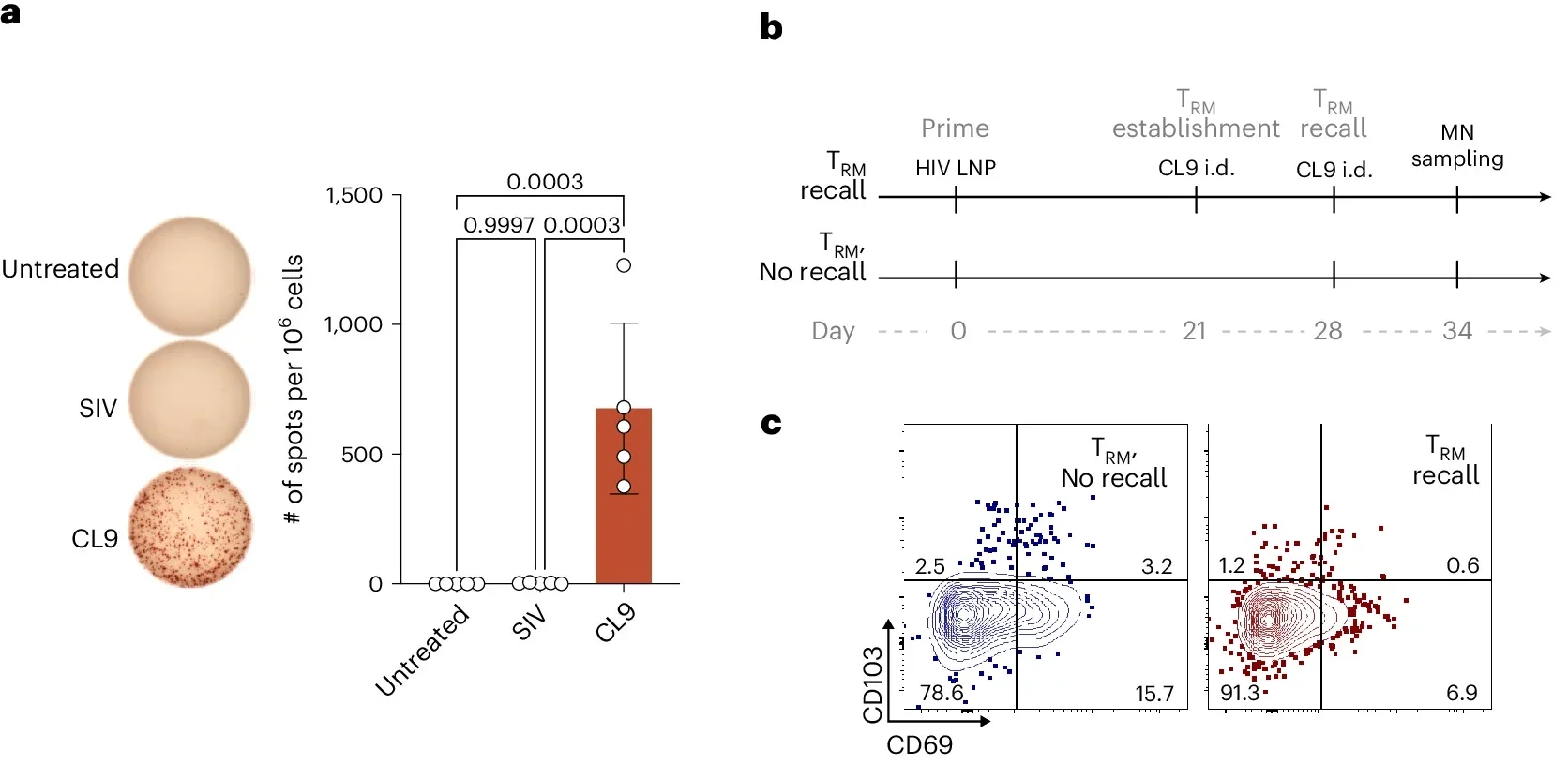
The research team built their approach around this natural alarm system. By activating these resident cells with a small amount of antigen, they triggered a local immune response. This response pulled additional immune cells from the bloodstream into the skin, creating a concentrated sample that the patch could collect.
“In this study, we used antigen-specific T cells as a proof of concept, but the patch also captures other immune cells and inflammatory biomarkers,” Jalili said.
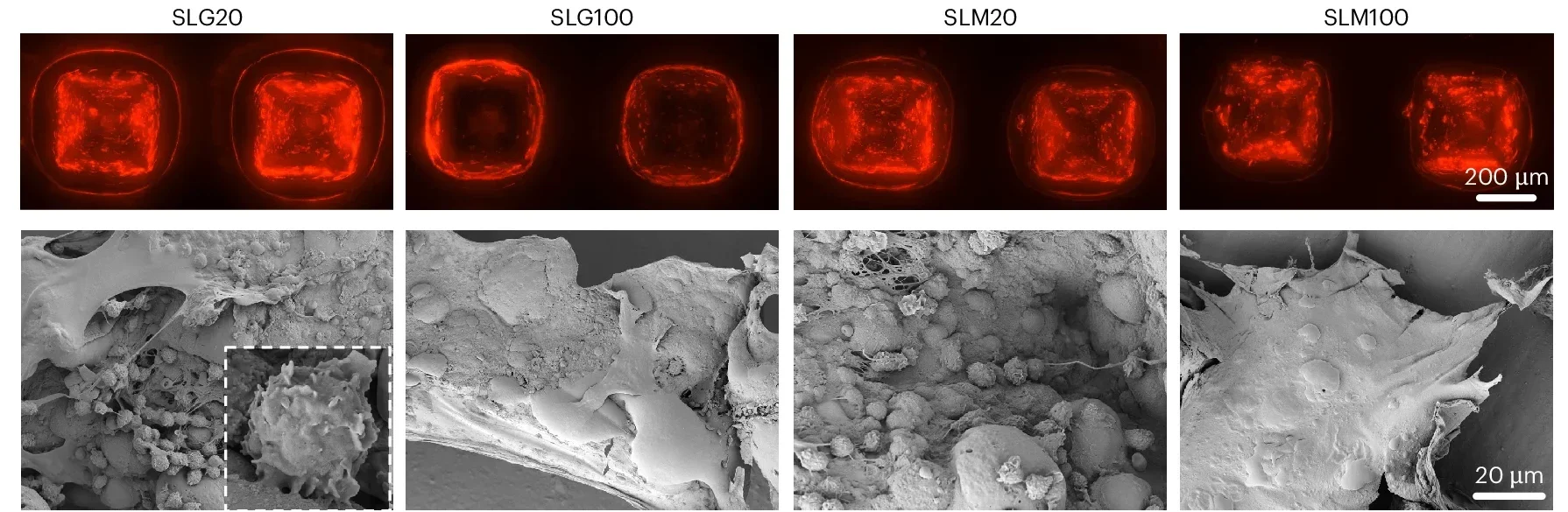
At first glance, the device appears simple. It contains hundreds of microscopic needles made from a polymer already approved by the U.S. Food and Drug Administration. These needles are extremely small. They reach only the upper layers of the skin. They avoid deeper tissue, nerves, and blood vessels.
Each needle is coated with a soft, gel-like material derived from seaweed. This material absorbs fluid from the skin. It also captures immune cells and signaling molecules present in that fluid.
When the patch is applied, the needles gently enter the skin’s surface. Most people feel little to no discomfort. The coating then begins to swell as it absorbs interstitial fluid, the liquid that surrounds cells in tissues. Immune cells move into this gel and remain there until the patch is removed.
The process is fast. Researchers found that inflammatory signals could be detected within 15 to 30 minutes. Longer application times allow the patch to collect larger numbers of immune cells.
“People wouldn’t need hours of sampling. Even 15 to 30 minutes can be enough to detect inflammatory signals and get a sense of what’s happening in the tissue,” Jalili said.
The technology began during Jalili’s postdoctoral work at MIT. It later advanced at The Jackson Laboratory, with support from the University of Massachusetts Chan Medical School. Researchers tested the patch in both animal models and early human studies.
In mouse studies, the patch showed strong results. When scientists triggered an immune response, the number of antigen-specific T cells collected increased dramatically. Many of these cells came from the bloodstream, not just the skin. This confirmed that the patch could capture a broader picture of immune activity.
The team then tested the patch in humans. In one case involving allergic contact dermatitis, the patch collected a rich mix of immune cells and signaling proteins. These included key T cells, natural killer cells, and other immune players. The results closely matched those from more invasive methods.
Darrell Irvine, a co-author and immunologist at Scripps Research, emphasized how unusual this progress is for a new technology. “Not only did we run extensive preclinical experiments, we were able to carry out an initial test in humans,” Irvine said. “That’s exciting because it almost never happens with brand-new technologies. Moving new technologies from the lab to testing on patients often takes years.”
The patch does not replace blood tests or biopsies. Instead, it adds a new layer of insight. It allows researchers to study immune responses where they actually happen, inside tissues.
This could be especially important for skin-related conditions. Diseases like psoriasis, vitiligo, and allergic dermatitis involve immune cells that live in the skin. Traditional tests often miss key signals from these cells.
The technology may also help researchers study aging. Jalili and his team are already using the patch to examine how immune responses change in older adults. These changes can contribute to chronic inflammation and frailty.
The potential extends beyond the skin. Researchers believe similar approaches could be adapted for other tissues, such as the mouth or nasal passages. This could open new ways to monitor immune responses in different parts of the body.
One of the most promising aspects of the patch is its simplicity. It could eventually allow for at-home monitoring. Patients might track their immune responses without visiting a clinic. This could help people with chronic conditions manage flare-ups more effectively.
The device could also support vaccine research. Scientists could monitor how strongly a person responds to a vaccine over time. It may also help track responses to cancer treatments, where immune activity plays a critical role.
For now, researchers are continuing to test how well the patch works across different diseases and populations. They are also refining the design to improve comfort and accuracy.
This research could reshape how doctors and scientists monitor the immune system. By offering a painless and simple method, the microneedle patch lowers the barrier to frequent testing. Patients who avoid biopsies or repeated blood draws may feel more comfortable participating in long-term monitoring.
In clinical settings, the patch could help doctors detect immune changes earlier. This may improve how conditions like autoimmune diseases or infections are managed. For cancer patients, it could provide a less invasive way to track how well therapies are working.
In research, the technology opens new opportunities to study immune responses in real time and in natural environments. Scientists can observe how immune cells behave directly within tissues, rather than relying only on blood samples.
Over time, this approach may lead to more personalized medicine. Doctors could tailor treatments based on how each person’s immune system responds. The patch may also speed up the development of new therapies by providing faster and more detailed data.
Research findings are available online in the journal Nature Biomedical Engineering.
The original story “Small microneedle skin patch tracks body’s response to disease, vaccines, and treatment” is published in The Brighter Side of News.
Like these kind of feel good stories? Get The Brighter Side of News’ newsletter.
The post Small microneedle skin patch tracks body’s response to disease, vaccines, and treatment appeared first on The Brighter Side of News.

