For years, planetary scientists have argued that some of the material that built Earth must have drifted in from beyond Jupiter, carrying water and other volatile ingredients with it. Estimates often put that outer Solar System share somewhere between 6 percent and 40 percent.
A new analysis led by ETH Zurich researchers Paolo Sossi and Dan Bower takes a very different view. After comparing Earth’s isotopic makeup with that of meteorites, Mars and the asteroid Vesta, they argue that Earth formed almost entirely from material already present in the inner Solar System.
That does not mean the question is settled. Sossi himself says the debate over Earth’s building blocks is “far from over.” But the new study, published in Nature Astronomy, sharply narrows the room for one popular idea, that large amounts of outer Solar System matter crossed Jupiter’s orbit and became part of the growing Earth.
“We were truly astonished to find that the Earth is composed entirely of material from the inner Solar System distinct from any combination of existing meteorites,” Bower said.
The argument turns on isotopes, atoms of the same element that carry different numbers of neutrons and therefore different masses. Scientists have long used isotopic signatures in meteorites to trace where Solar System material came from. Over time, that work revealed two broad families. Non-carbonaceous material formed in the inner Solar System. Carbonaceous material, richer in water and carbon, came from farther out.
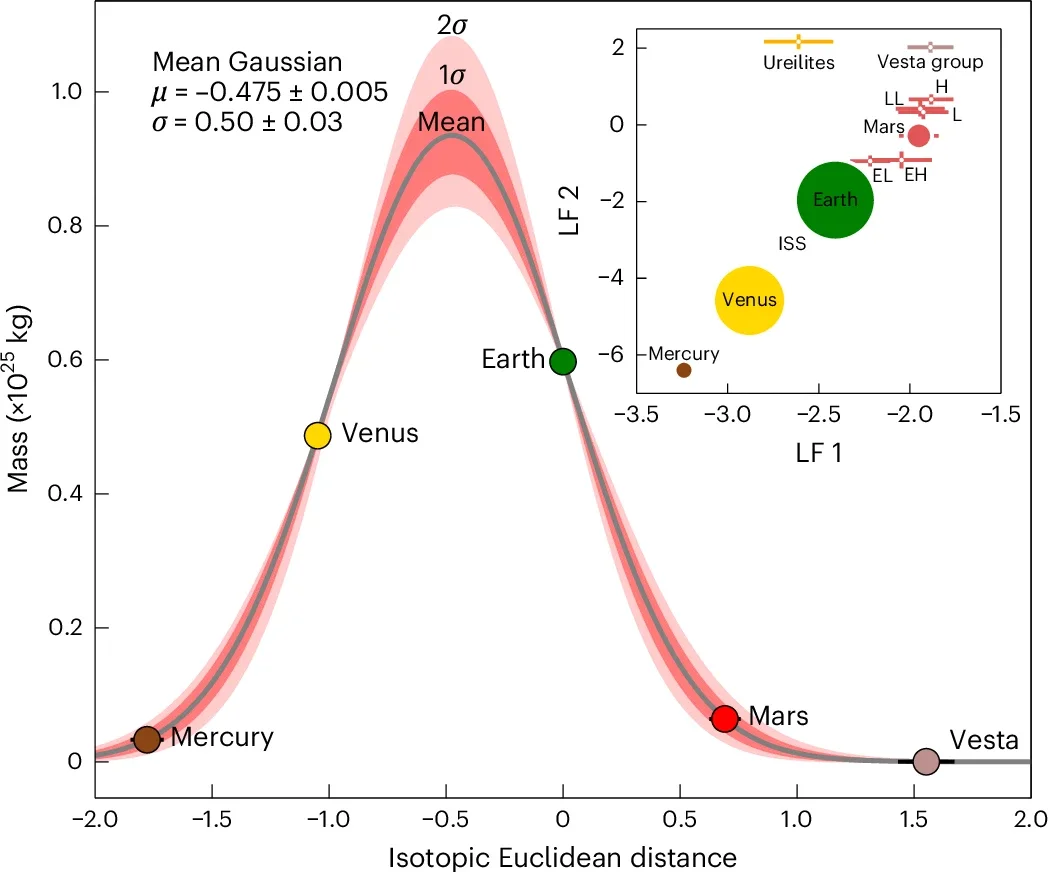
Earlier studies often focused on only one or two isotopic systems, especially oxygen, chromium and titanium. Sossi and Bower widened the lens. Using existing data on ten isotopic systems, they applied a probabilistic statistical approach to compare the bulk silicate Earth with known meteorite groups and other rocky bodies.
“Our studies are actually data science experiments,” Sossi said. “We carried out statistical calculations that are rarely used in geochemistry, even though they are a powerful tool.”
Their conclusion is blunt. Earth’s composition fits an inner Solar System source alone. The paper argues that carbonaceous material likely makes up less than about 0.1 percent of the bulk silicate Earth and less than 2 percent of the bulk Earth. In some cases, the contribution could be effectively zero.
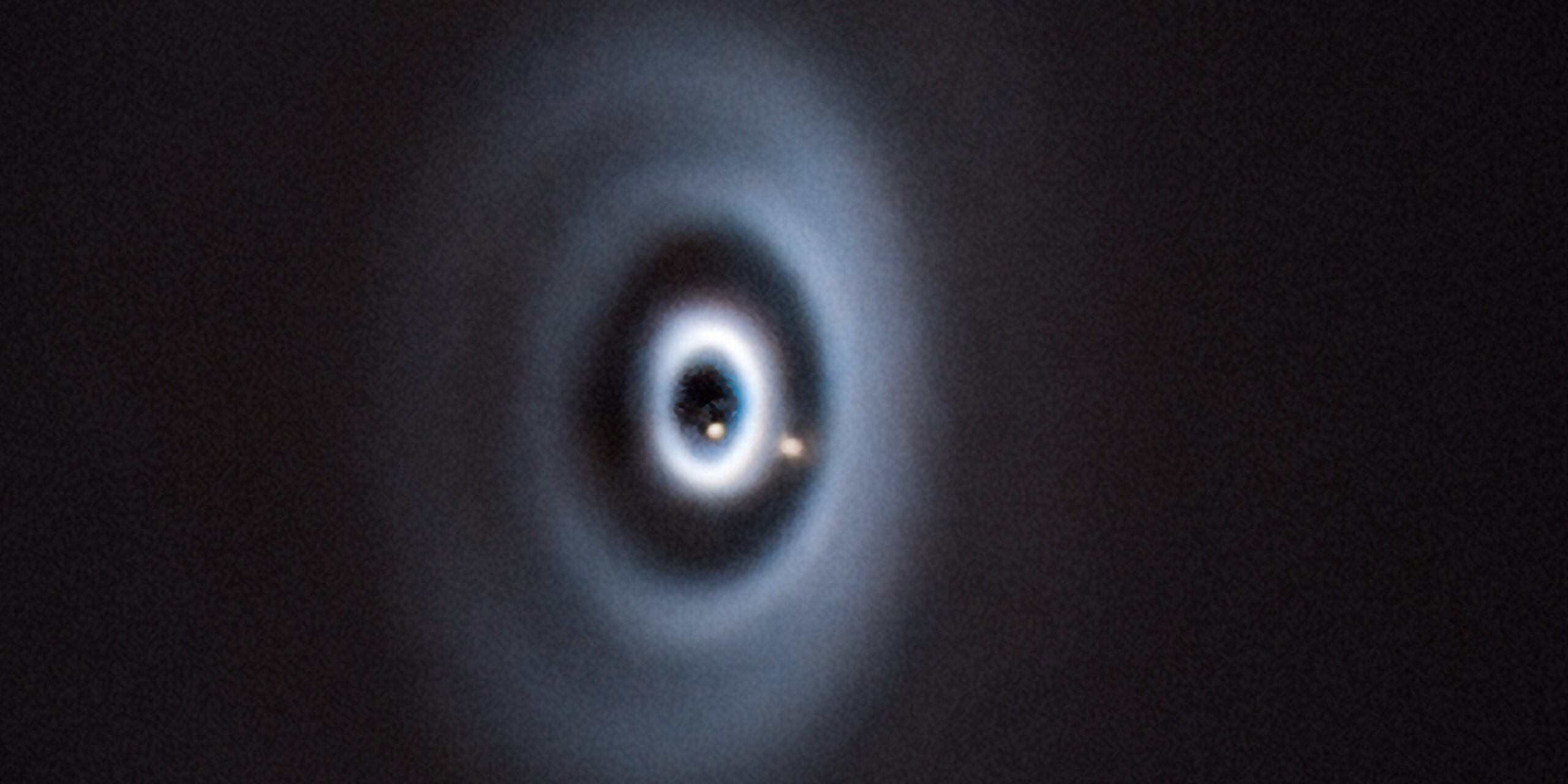
That finding matters because the Solar System seems to have been split early into two reservoirs. Researchers think Jupiter’s rapid growth opened a gap in the young protoplanetary disk around the Sun, acting as a gravitational barrier between inner and outer material. What remained unclear was how leaky that barrier really was.
This study says it was barely leaky at all, at least for Earth-bound material.
The researchers found no isotopic evidence that Earth was built from a blend of inner and outer Solar System matter. Instead, they argue that Earth grew within a relatively static inner system, drawing on neighboring rocky material. They also report that Earth’s composition lines up closely with material linked to Mars and Vesta.
That has a second consequence. If little or no outer Solar System matter reached Earth, then volatile elements such as water must already have been available in the inner Solar System. Sossi and his team plan to investigate that next.
The paper also pushes back on earlier models that treated Earth as a mixture of known meteorite families, sometimes with a small carbonaceous component and sometimes with a much larger one. The new statistical analysis suggests those mixtures are not needed once all ten isotopic systems are considered together.
At the same time, the study leaves open more than one path for how Earth got its present isotopic signature. One possibility is that Earth accreted material that stayed isotopically similar over roughly 34 million years, the interval during which its core formed. Another is that Earth accreted distinct materials, but later mixing between core and mantle erased those differences. The authors say the first option appears more probable, though they do not claim to have closed the issue.

There are other limits too. The researchers suggest Venus and Mercury may fall along the same inner Solar System trend seen for Earth, Mars and Vesta, and they use a model to predict where those planets should sit isotopically. But Sossi notes that this cannot be checked directly because scientists do not have rock samples from Venus or Mercury.
That makes the paper strongest where the data already exist, and more speculative where samples are missing.
What emerges is a more self-contained origin story for Earth. Rather than being assembled from a major traffic of material moving inward from beyond Jupiter, Earth may have formed from a local inner Solar System reservoir that was already capable of supplying the ingredients needed for a habitable planet.
It is a simpler picture, but not a final one.
Sossi puts it plainly: “Our results shed new light on the formation history of our Earth and the other rocky planets.”
This work changes where scientists may need to look for the source of Earth’s water and other volatile elements.
If those ingredients were already present in the inner Solar System, models of planet formation may need to place less weight on material drifting in from beyond Jupiter.
The findings also give researchers a new framework for comparing rocky planets, including Venus, Mercury and even exoplanets, once better samples or observations become available.
Research findings are available online in the journal Nature Astronomy.
The original story “Planetary scientists reveal where Earth’s water and building blocks came from” is published in The Brighter Side of News.
Like these kind of feel good stories? Get The Brighter Side of News’ newsletter.
The post Planetary scientists reveal where Earth’s water and building blocks came from appeared first on The Brighter Side of News.

