The spectrum looked almost empty.
That was the clue. In the faint light from a red giant star called SDSS J0715-7334, astronomers found barely any sign of the heavier elements that later generations of stars forged and scattered across space. As a result, what remained was something close to a chemical time capsule. It was a star so chemically primitive that researchers now call it the most pristine star known.
The finding, published in Nature Astronomy, points to an object born from material touched by only the earliest stellar deaths. This likely makes it one of the clearest surviving records of the young universe.
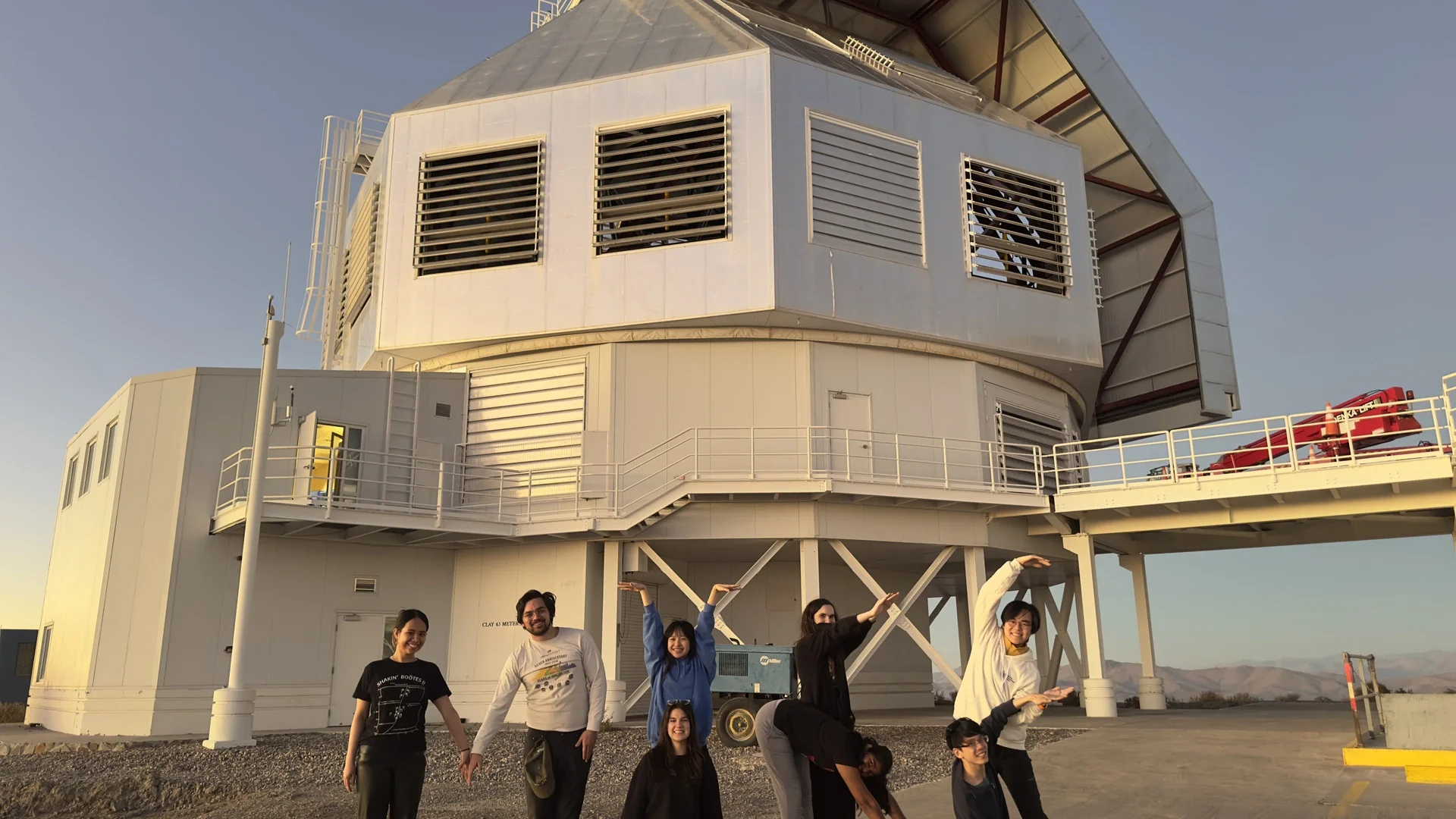
“These pristine stars are windows into the dawn of stars and galaxies in the universe,” said Alexander Ji of the University of Chicago, who led the work.
After the Big Bang, the universe began as a hot, dense mix of particles. As it expanded and cooled, hydrogen and helium gas gathered into the first stars. Those first stars were thought to be massive and short-lived. Before dying, they forged heavier elements, what astronomers call metals, and blew them into space. Later stars formed from that enriched debris.
That is what makes SDSS J0715-7334 remarkable. It appears to come from just the second generation of stars. This generation formed after the first stellar explosions but before the cosmos had been heavily enriched.
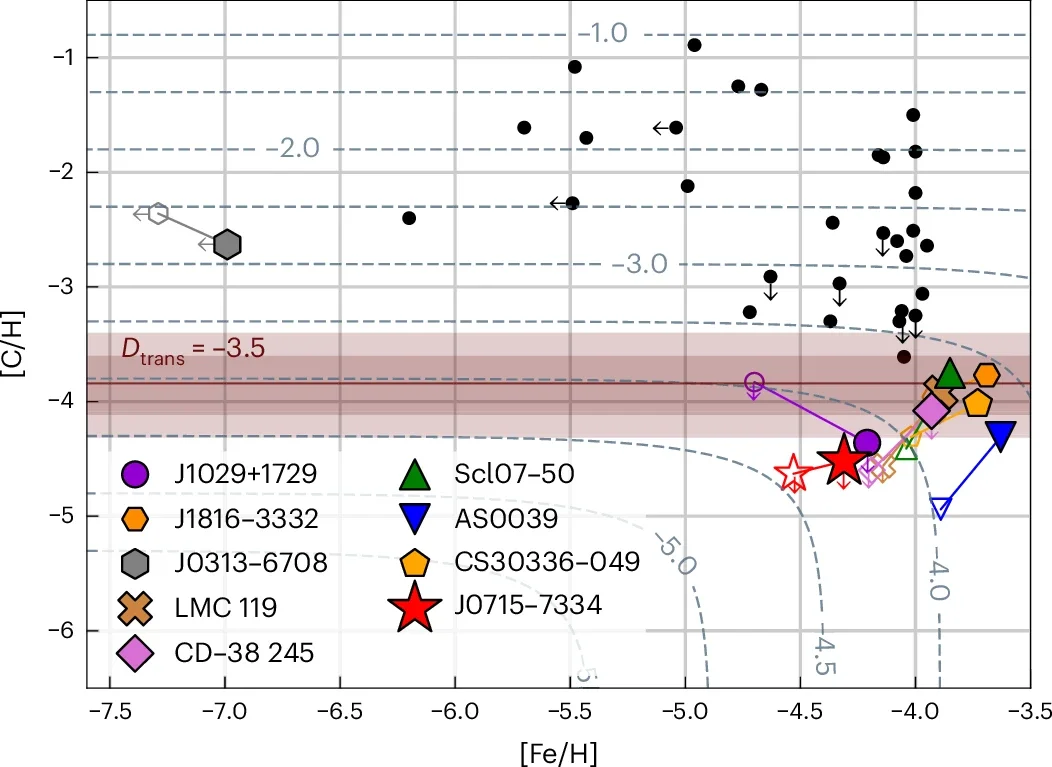
Deeper analysis showed the star has less than 0.005 percent of the Sun’s metal content. The research team reported a metallicity upper limit of less than 7.8 × 10⁻⁷. This makes it about twice as metal-poor as the previous record holder, J1029+1729. In addition, its iron and carbon levels are especially low. The star is also more than ten times more metal-poor than the most iron-poor star known. This is a reminder that iron alone does not tell the whole story.
“All of the heavier elements in the universe, which astronomers call metals, were produced by stellar processes, from fusion reactions occurring within stars to supernovae explosions to collisions between very dense stars,” Ji said. “So, finding a star with very little metal content in it told this group of students that they’d come across something very special.”
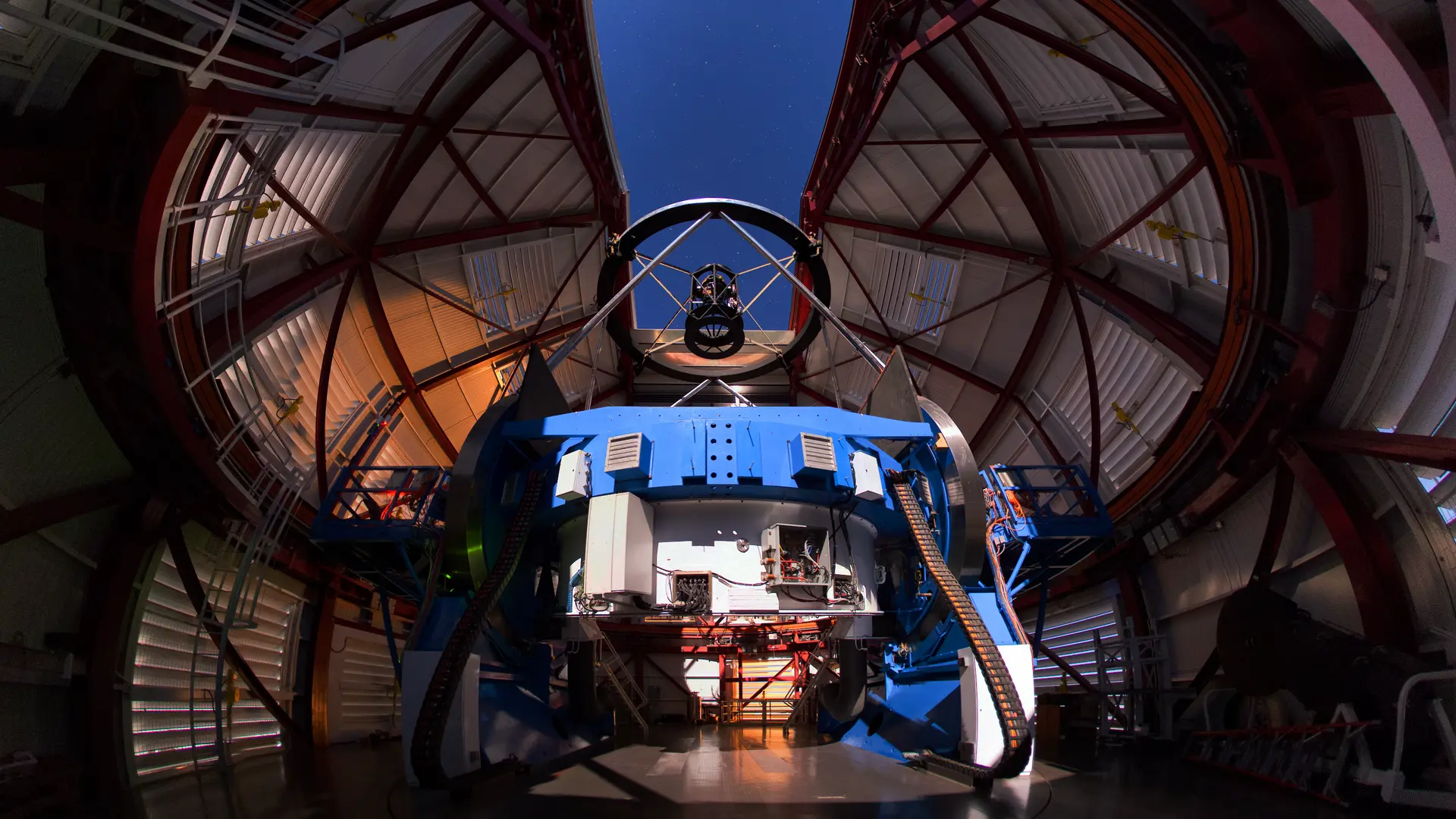
The discovery began in data from the fifth-generation Sloan Digital Sky Survey, or SDSS-V, which takes millions of optical and infrared spectra across the sky. Ji and his students used those survey data to flag stars with extremely low heavy-element content. Then, they traveled to Carnegie Science’s Las Campanas Observatory in Chile. There, they used the Magellan telescopes to gather sharper, high-resolution spectra.
The star was confirmed during their first Magellan observing run.
“We have to look in our cosmic backyard to find these objects, because we can’t yet observe individual stars at the dawn of star formation,” said Juna Kollmeier, a Carnegie astrophysicist who leads SDSS-V. “Since these stars are rare, surveys like SDSS-V are designed to have the statistical power to find these needles in the stellar haystack and test our theories of star formation and explosion.”
The Las Campanas site played a central role. Data from the du Pont telescope, gathered through SDSS-V’s Milky Way mapping, helped identify the candidate. Meanwhile, the Magellan Clay telescope delivered the spectrum that proved just how unusual it was.
“The ecosystem of telescopes at Las Campanas was critical to nearly every aspect of this breakthrough work,” said Michael Blanton, Director and Crawford H. Greenewalt Chair of the Carnegie Science Observatories.
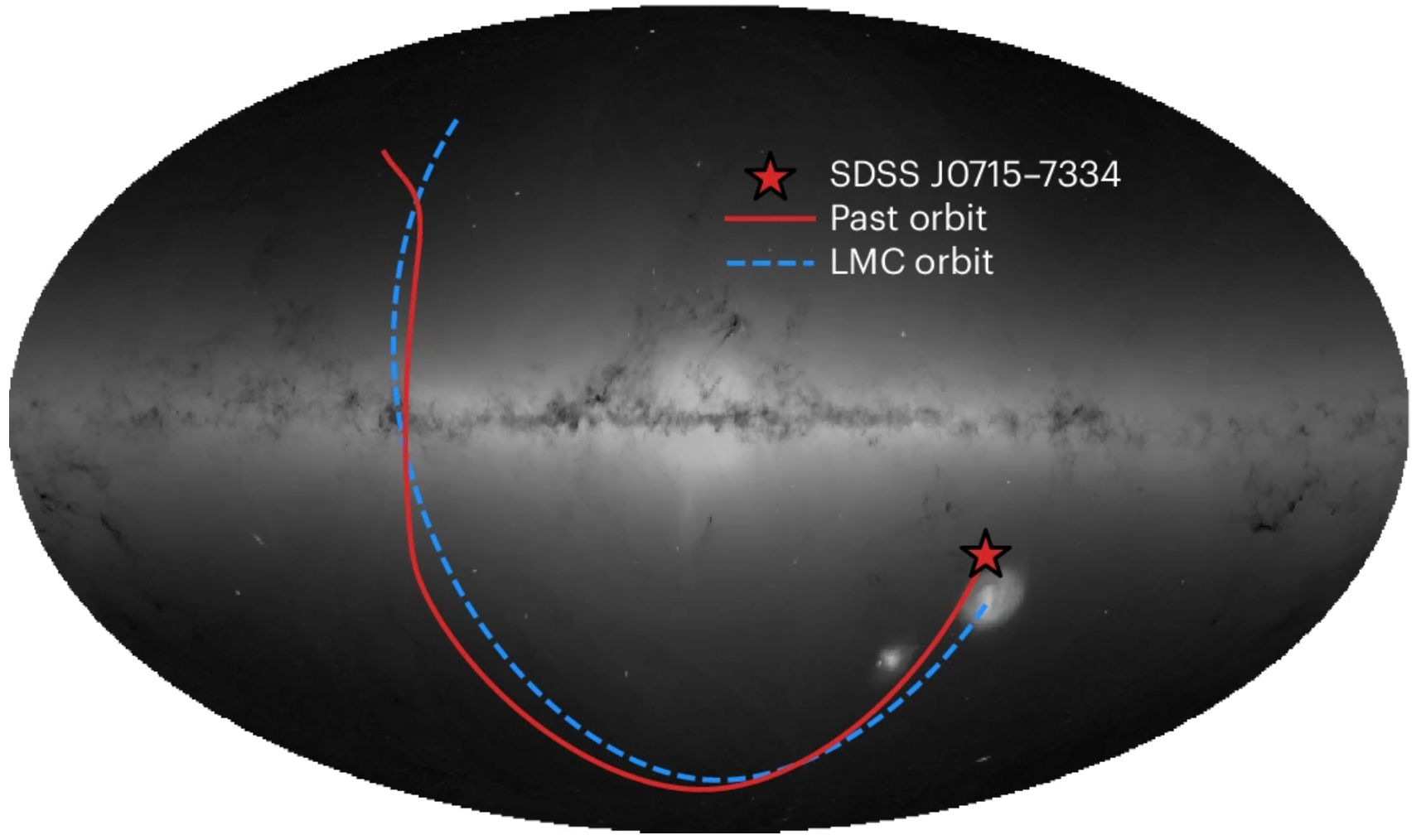
The star sits about 80,000 light-years from Earth. By combining their observations with data from the European Space Agency’s Gaia mission, the team concluded that SDSS J0715-7334 was likely born in or near the Large Magellanic Cloud. Later, it was pulled into the Milky Way. In that sense, it is a galactic immigrant.
Its chemistry matters as much as its orbit. The team found that the star’s carbon content is so low that it likely could not have formed through a process called atomic fine structure cooling. Therefore, that leaves dust cooling as the required mechanism. This makes SDSS J0715-7334 only the second known star to provide such evidence. The result suggests dust-driven low-mass star formation operated not only in the Milky Way, but in other environments as well.
The researchers also matched the star’s elemental pattern to models of metal-free Population III supernovae. Their best fit points to a progenitor star of about 27 solar masses. It also shows a high explosion energy around 6.0 × 10⁵¹ erg.
Even so, the paper leaves room for caution. The exact metallicity still depends on assumptions about unmeasured elements, especially nitrogen and oxygen. The team also notes that more stars this metal-poor, found in different environments, will be needed to test bigger ideas about how the first stars formed.
“My first visit to LCO is where I really fell in love with astronomy, and it was special to share such a formative experience with my students,” Ji said.
This discovery gives astronomers a cleaner benchmark for testing how the first stars changed the universe. It strengthens the case that dust helped later low-mass stars form, even in environments beyond the Milky Way.
It also offers a nearby target for studying conditions that telescopes still cannot resolve directly in the early universe.
For now, SDSS J0715-7334 serves as a rare local record of a cosmic era that mostly survives only in theory.
Research findings are available online in the journal Nature Astronomy.
The original story “Pristine star reveals the dawn of stars and galaxies in the universe” is published in The Brighter Side of News.
Like these kind of feel good stories? Get The Brighter Side of News’ newsletter.
The post Pristine star reveals the dawn of stars and galaxies in the universe appeared first on The Brighter Side of News.

