Even a brief time spent on a bedside pedal device has positively impacted an area of the brain related to memory, according to recent research published in Brain Communications.
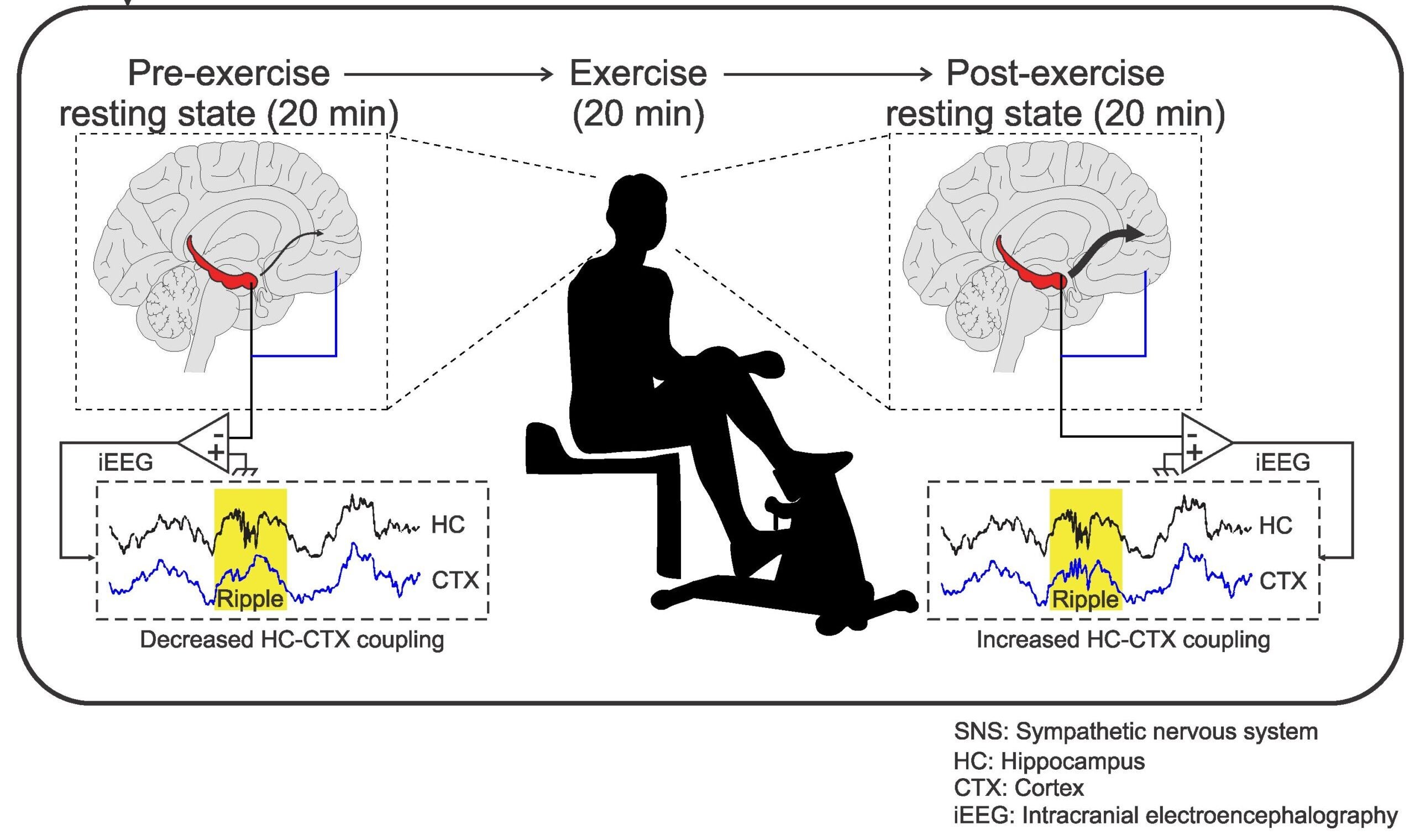
In a study involving 14 participants suffering from medically intractable epilepsy, researchers recorded activity in the brain before and after the participants engaged in approximately 20 minutes of light to moderate cycling. After cycling, the participants showed a higher incidence of fast electrical bursts (known as “ripples”) in the hippocampus. This is a well-known brain structure involved in learning and memory.
For several years, scientists have been researching these ripples and their role in helping the brain sort and organize new information and replay memories. However, this study was unique because the authors were able to view the patterns directly in a human brain via intracranial electroencephalography (iEEG). This is an uncommon type of monitoring used for patients undergoing pre-surgical evaluation.
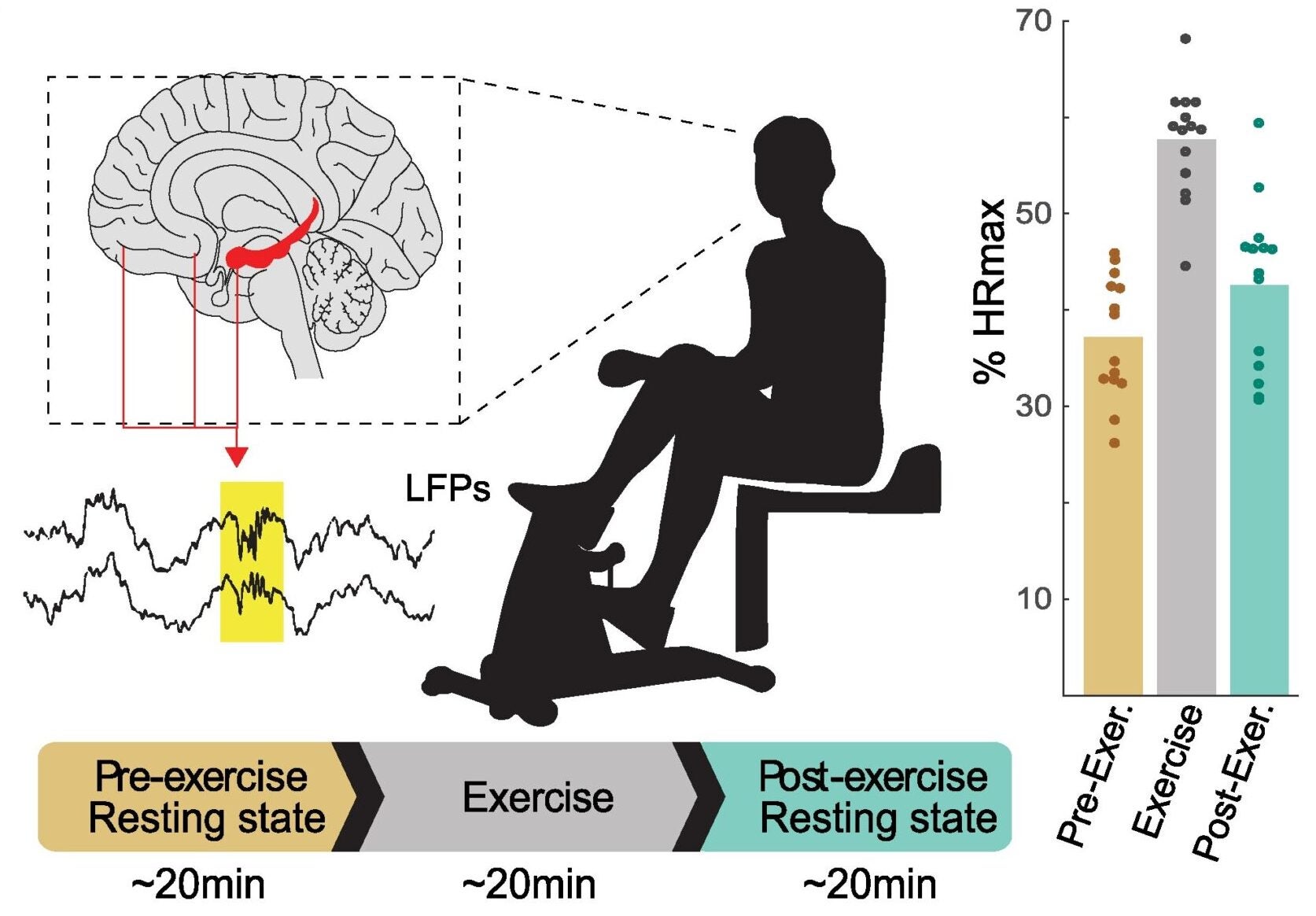
Exercise has physiological effects throughout the body, including on brain activity. In the current study, participants aged 17–50 who were evaluated for epilepsy surgery at the University of Iowa performed approximately 20 minutes of rest prior to and after participating in approximately 20 minutes of guided cycling on a MagneTrainer mini-bike. They then completed another period of rest. Each subject was instructed to exercise at 50–60% of their maximum predicted heart rate for their age.
The average maximum percentage of heart rate achieved by the participants was approximately 57.7%. The average level of perceived exertion reported by the group was 11.9 on a 6–20 scale (rated as being between light and moderately strenuous).
Researchers compared brain activity before and after exercise to confirm that the post-exercise increase in the rate of hippocampal ripples coincided with similar increases in activity in the limbic network. This network consists of a number of brain regions commonly activated during inward-directed thought, memory recall, and mental rehearsal (the default mode network).
The primary conclusion of this study is that one session of low to moderate intensity physical activity alters human hippocampal-cortical ripple dynamics.
Importantly, the bulk of previous exercise research utilized indirect methods (such as measuring blood flow and oxygen consumption) as evidence for changes induced in the hippocampus by exercise. These measures indicate that exercise influences the function of the hippocampus. However, they do not reveal the exact patterns of millisecond-by-millisecond electrical signals. This study provides the detailed evidence necessary to identify those patterns.
In this study, heart rate was investigated as a key variable. The results also demonstrated that heart rate was a significant predictor of larger changes in ripple activity in some of the cortical regions after exercising, including the default mode network. Therefore, the degree of exercise intensity appears to influence the response to exercise-induced activity.
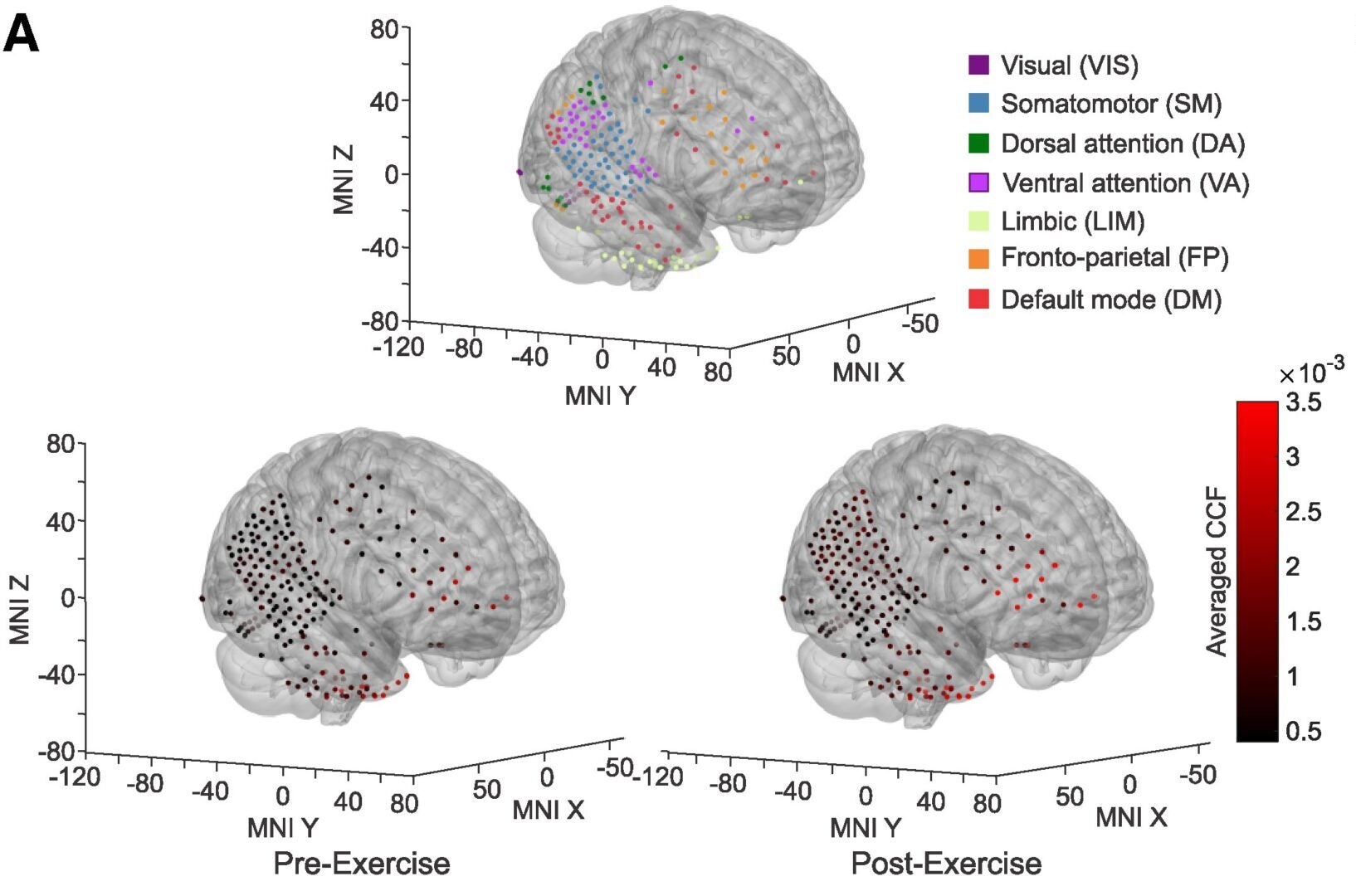
Additionally, the team examined the relationship between hippocampal ripples and those observed in other brain regions. After the exercise period, the degree of coupling between the hippocampus and the other specified brain networks increased. This was particularly evident between the hippocampus and the limbic network, the default mode network, and the ventral attention network.
The phase-locking changes of ripple activity in these areas were improved with an increased number of cycles. This means that the number of times these events were observed increased. Moreover, how closely they occurred with one another also increased.
The limbic system contained the largest amount of changed phase-locking. The frontoparietal and default mode networks also contained large increases.
The angle of this study and what it ultimately finds is that signals observed in the human brain provide further support for existing evidence suggesting that exercise enhances memory.
Earlier research involving rats indicated that exercise results in changes to the hippocampus. Human imaging research has also shown that after exercising, human subjects show stronger connectivity in networks associated with memory processing.
The present study connects all of this evidence.
However, this study is limited by several factors.
(1) The sample size in this study was small, with only 14 people who met the eligibility requirements to effectively participate. Each participant included in the study had drug-resistant epilepsy and was monitored in a clinical research protocol. Therefore, the findings from this research do not uniformly apply to the general population. The placement of electrodes for research purposes was also based on clinical indications rather than being established with an exact standard for research.
(2) The authors did not conduct any assessments to determine the extent to which these findings relate to memory improvement. While researchers measured the number of ripples, how they couple, and their degree of phase synchronization prior to and immediately after exercising, they have not yet established a test of the relationship between these measurements and increased cognitive ability in comparison to other studies.
Thus far, the authors state that the present research is an initial assessment of changes to the timing and synchronization of electrical activity associated with the hippocampus and related brain networks after exercising. It does not provide definitive evidence of how exercise improves cognition.
The importance of this is that the authors indicate they will conduct further tests to determine the extent to which the present research demonstrates an influence on cognitive performance.
Additionally, this research documents that one short session of light to moderate exercise may be associated with quantifiable increases in brain activity related to learning.
While no determinations can yet be made regarding whether a 20-minute exercise program will improve memory ability for every individual, this research provides further support that physical activity influences the systems within the brain responsible for learning and remembering.
This study also provides researchers with a potential mechanism. The increased level of ripple activity may serve as an explanation for how physical activity promotes cognitive health.
Research findings are available online in the journal Brain Communications.
The original story “20 minutes of cycling can make your brain fitter” is published in The Brighter Side of News.
Like these kind of feel good stories? Get The Brighter Side of News’ newsletter.
The post 20 minutes of cycling can make your brain fitter appeared first on The Brighter Side of News.

