The scars on Ceres should have softened by now.
That was the long-running problem. If the dwarf planet’s crust held a great deal of ice, many of its craters should have slowly sagged over geologic time, their sharp bowls easing into shallower shapes. Instead, NASA’s Dawn spacecraft found a world still marked by deep impacts, landslides, pits, domes and bright patches that hinted at buried ice, while also seeming to argue against too much of it.
A new study now tries to resolve that contradiction. In Nature Astronomy, researchers from Purdue University and NASA’s Jet Propulsion Laboratory argue that Ceres may be far icier than many scientists had come to accept, with an outer crust made not of mostly dry rock but of dirty ice, possibly reaching about 90% ice near the surface and becoming less icy with depth.
That would make Ceres less like a dry leftover of the asteroid belt and more like the frozen remnant of an ancient muddy ocean world.
Ian Pamerleau, a PhD student in Purdue’s Department of Earth, Atmospheric, and Planetary Sciences, and assistant professor Mike Sori led the work by building computer simulations of how craters on Ceres should relax over billions of years.
Their idea starts with a change in how scientists think about impure ice. Earlier models had assumed that an ice-rich crust would deform too easily to preserve the cratered landscape Dawn saw. But newer rheology experiments, the kind that test how materials deform over long timescales, suggest that ice mixed with even a small amount of impurities can be much stronger than once believed.
“We think that there’s lots of water-ice near Ceres’ surface, and that it gets gradually less icy as you go deeper and deeper,” Sori said.
Pamerleau put the underlying physics more plainly. “Even solids will flow over long timescales,” he said. “Ice flows more readily than rock. Craters have deep bowls which produce high stresses that then relax to a lower stress state, resulting in a shallower bowl via solid state flow.”
The important twist is that impurities can slow that process dramatically.
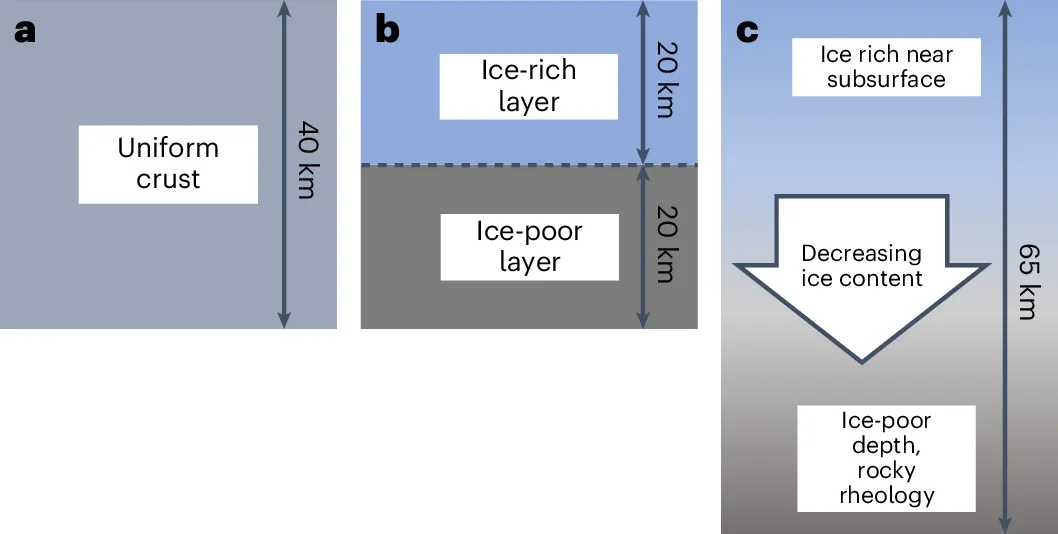
The team tested several possible crustal structures. One assumed a uniform crust. Another used a two-layer crust with a more ice-rich upper layer and a drier lower layer. The third, and the one they favor, was a gradational crust, with very high ice content near the surface and more impurities deeper down.
That gradual transition mattered. In their simulations, it did the best job of preserving the deep craters seen on Ceres today while still matching other Dawn observations that suggest abundant ice.
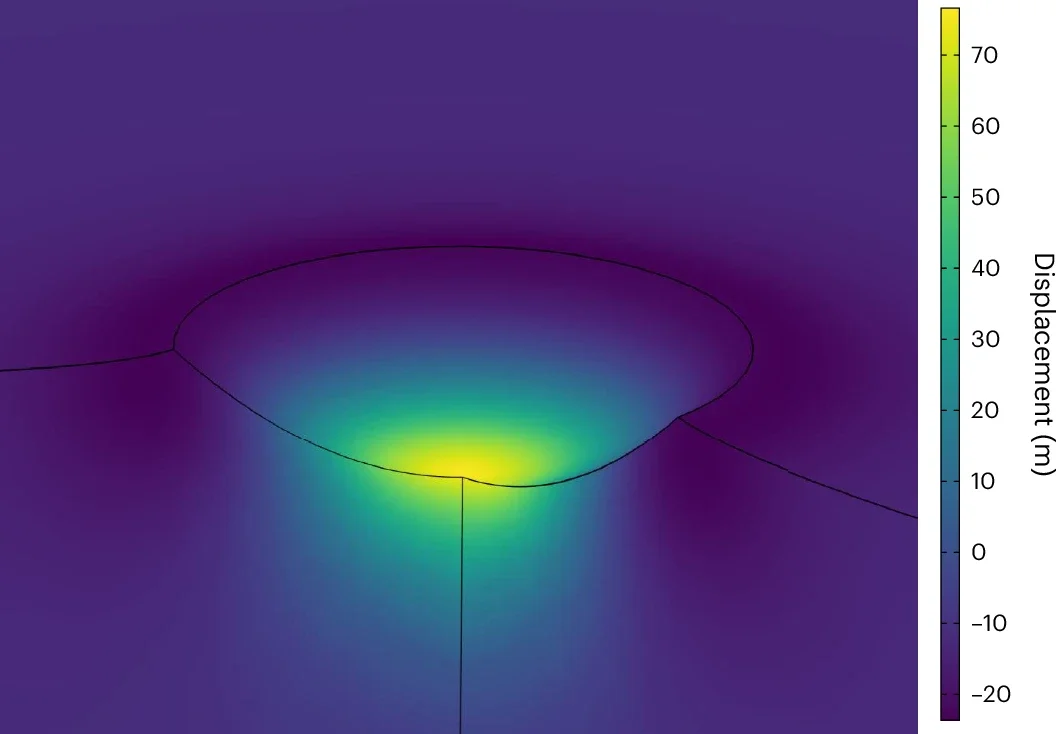
The argument hinges on crater behavior across size, latitude and composition.
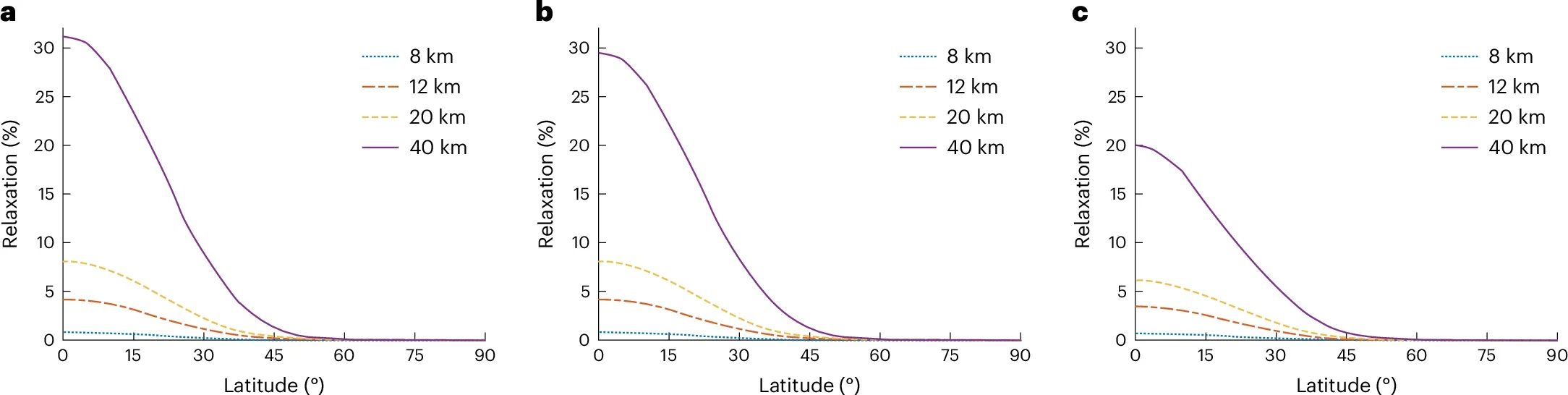
The model found that small, simple craters, those up to 12 kilometers wide, should remain largely intact even in a crust that is about 90% ice, as long as at least a few percent of impurities are present. In one example, a 12-kilometer crater at the equator in a uniformly 90% ice crust relaxed by less than 5% after 1 billion years. The crater shallowed by about 70 meters from an initial depth of 2,400 meters.
That is a sharp break from earlier work, which had suggested that craters on an icy Ceres would relax away much more efficiently.
Larger craters proved more sensitive to what lay deeper in the crust. In a uniform crust, a 40-kilometer crater at the equator could still relax by about 30% if the crust was 90% ice. A gradational crust did better. In that setup, complex craters between 12 and 40 kilometers wide relaxed by less than 20% after 1 billion years, depending on size and latitude.
The researchers argue that this better fits what Dawn actually saw.
He pointed out that NASA’s Dawn mission had originally concluded that Ceres couldn’t be very icy, due to the lack of shallow craters. However, their new simulations account for how a mixture of ice and rock might cause a rich ice crust to flow so slowly that the craters don’t appear to change much over billions of years.
The preferred model starts with a near-surface crust that is about 90% ice and gradually drops to 0% ice at a depth of 117 kilometers. The study says that profile matches gravity measurements suggesting an average density in the upper 41 kilometers of 1,287 kilograms per cubic meter.
That picture also lines up with a broader story of how Ceres may have formed.
The study leans toward a strongly differentiated interior, meaning water and rocky material separated efficiently early in the dwarf planet’s history. In this scenario, Ceres may once have hosted a muddy ocean. As that ocean froze from the top down, fine impurities became trapped in the growing ice shell, while deeper layers became richer in non-ice material.
The result would be a crust that grows denser with depth.
That is important because it offers a way to explain several puzzling observations at once: the cratered landscape, the high hydrogen content in the shallow subsurface, geomorphic signs of buried ice, and the density structure inferred from Dawn.
“We used multiple observations made with Dawn data as motivation for finding an ice-rich crust that resisted crater relaxation on Ceres,” Pamerleau said.
The paper also argues that this explanation works without relying on clathrates, cage-like ice materials that had been invoked in earlier models to help explain Ceres’ low crustal density and apparent strength. The authors note that clathrates may be difficult to form on Ceres under some thermochemical models, and they may also be unstable in the presence of salts, which are thought to be abundant there.
Ceres already stood apart from most objects in the asteroid belt. At about 950 kilometers across, it has craters, volcanoes and landslides, traits more often associated with larger planetary bodies than with smaller, lumpy asteroids.
“Ceres is the largest object in the asteroid belt, and a dwarf planet. I think sometimes people think of small, lumpy things as asteroids (and most of them are!), but Ceres really looks more like a planet,” Sori said.
Dawn, launched in 2007, reached Ceres in 2015 after first visiting Vesta. It stayed at Ceres until 2018, gathering the gravity, spectroscopy and topographic data that made this new modeling possible.
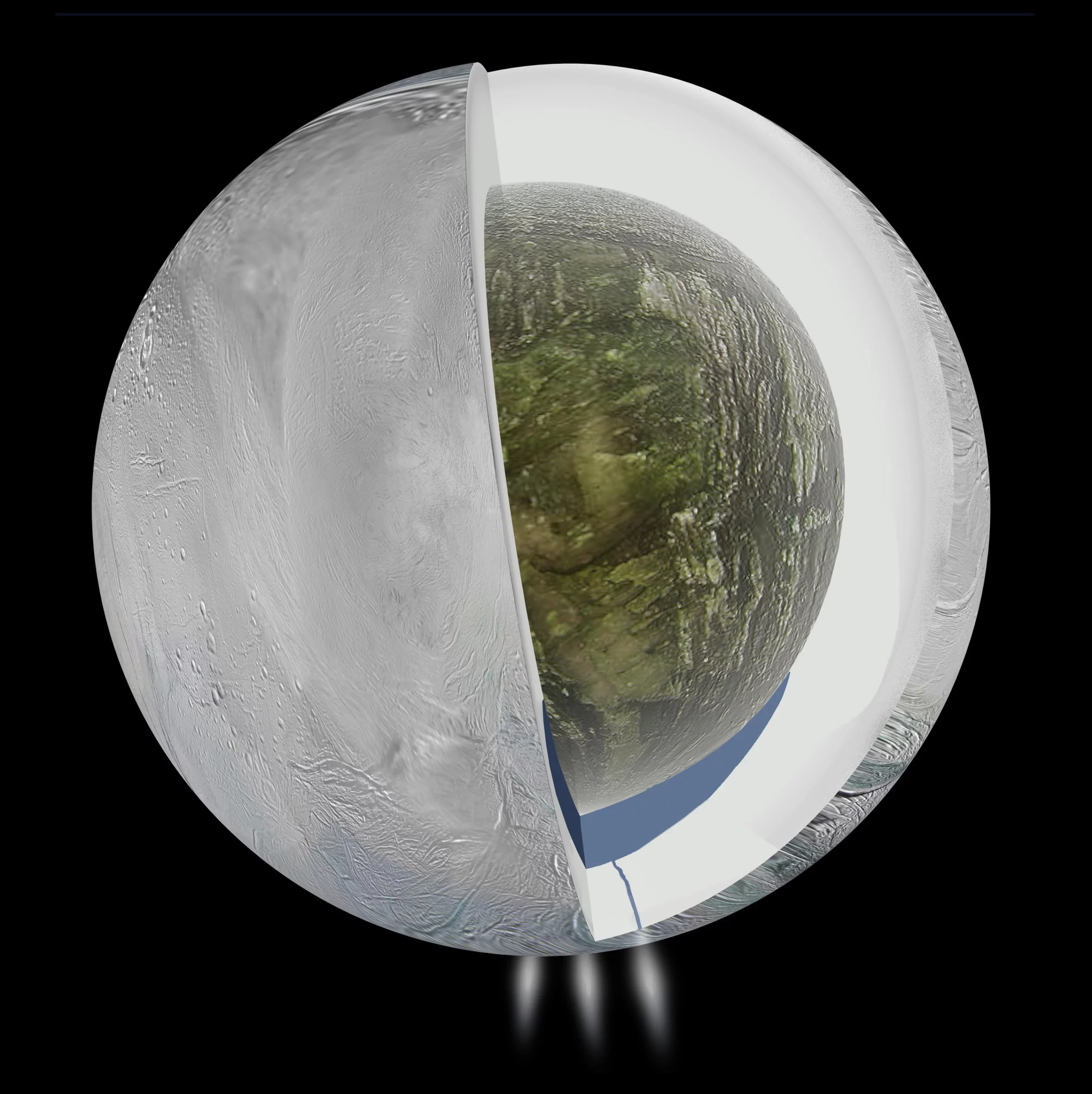
The bright deposits on Ceres, including the famous faculae in Occator crater, are thought to be tied to brines from depth. The new work says an ice-rich crust could still allow enough water at depth to produce those features. It also keeps alive the idea that Ceres belongs in the company of ocean worlds, though a muddier one than Europa or Enceladus.
“To me the exciting part of all this, if we’re right, is that we have a frozen ocean world pretty close to Earth,” Sori said. “Ceres may be a valuable point of comparison for the ocean-hosting icy moons of the outer solar system, like Jupiter’s moon Europa and Saturn’s moon Enceladus. Ceres, we think, is therefore the most accessible icy world in the universe. That makes it a great target for future spacecraft missions.”
The researchers are careful not to claim the case is closed. Their favored crustal model does not rule out every structure already in the literature. They also note limits in their approach. The simulations only covered craters up to 40 kilometers wide, because larger craters on Ceres are more asymmetric and harder to capture with the study’s two-dimensional axisymmetric models.
The paper also says signs of relaxation may exist in craters from 50 to 100 kilometers wide, and that the biggest basins may require separate impact and relaxation studies.
Many objects in the solar system, like Ceres, contain significant amounts of water in various forms.
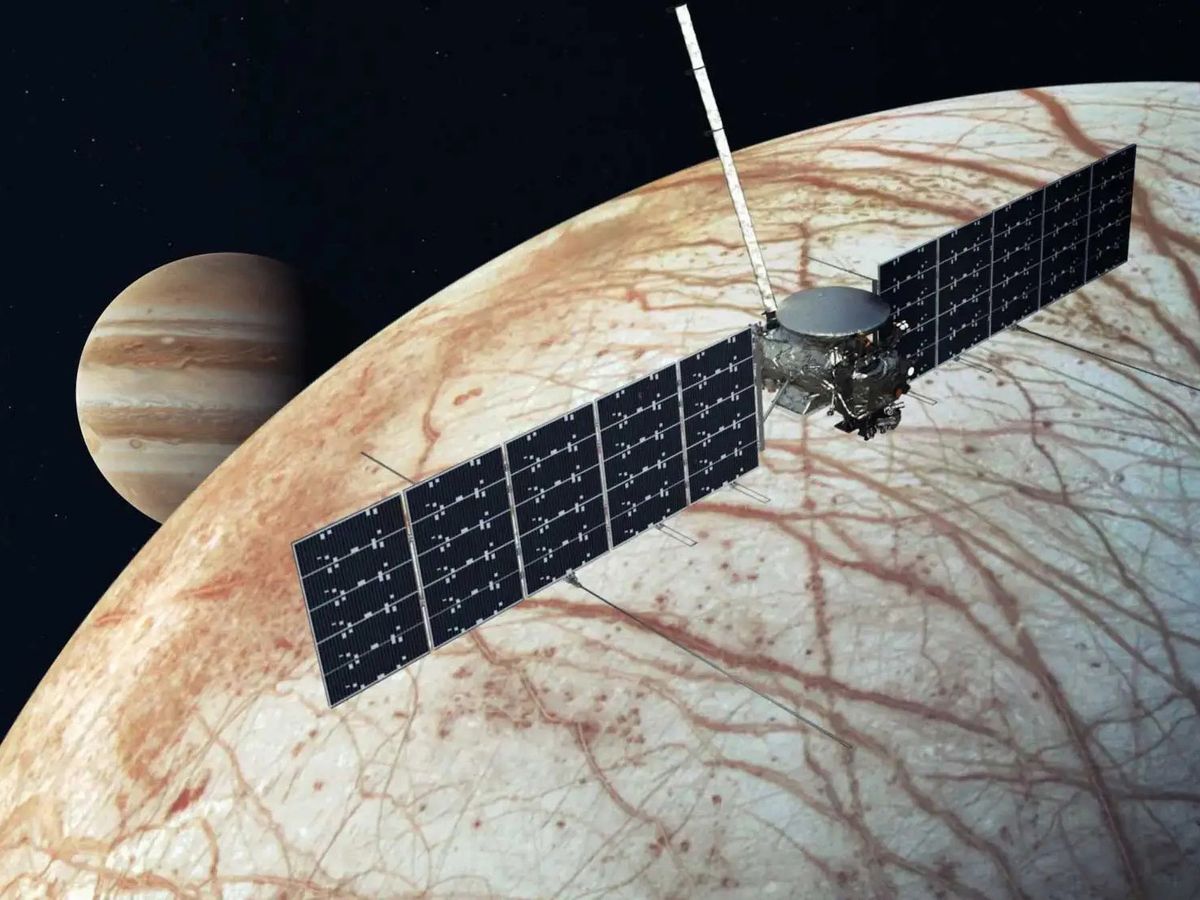
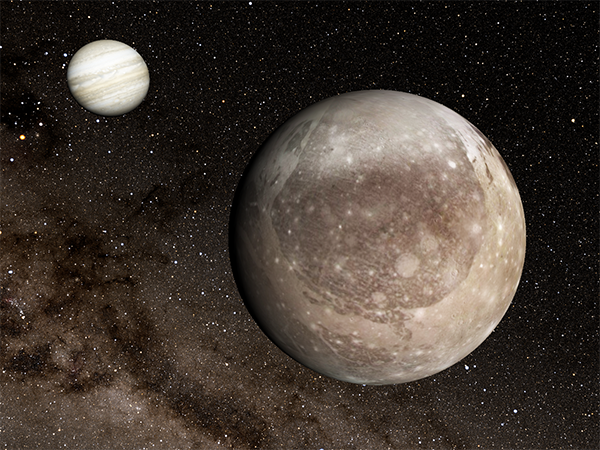

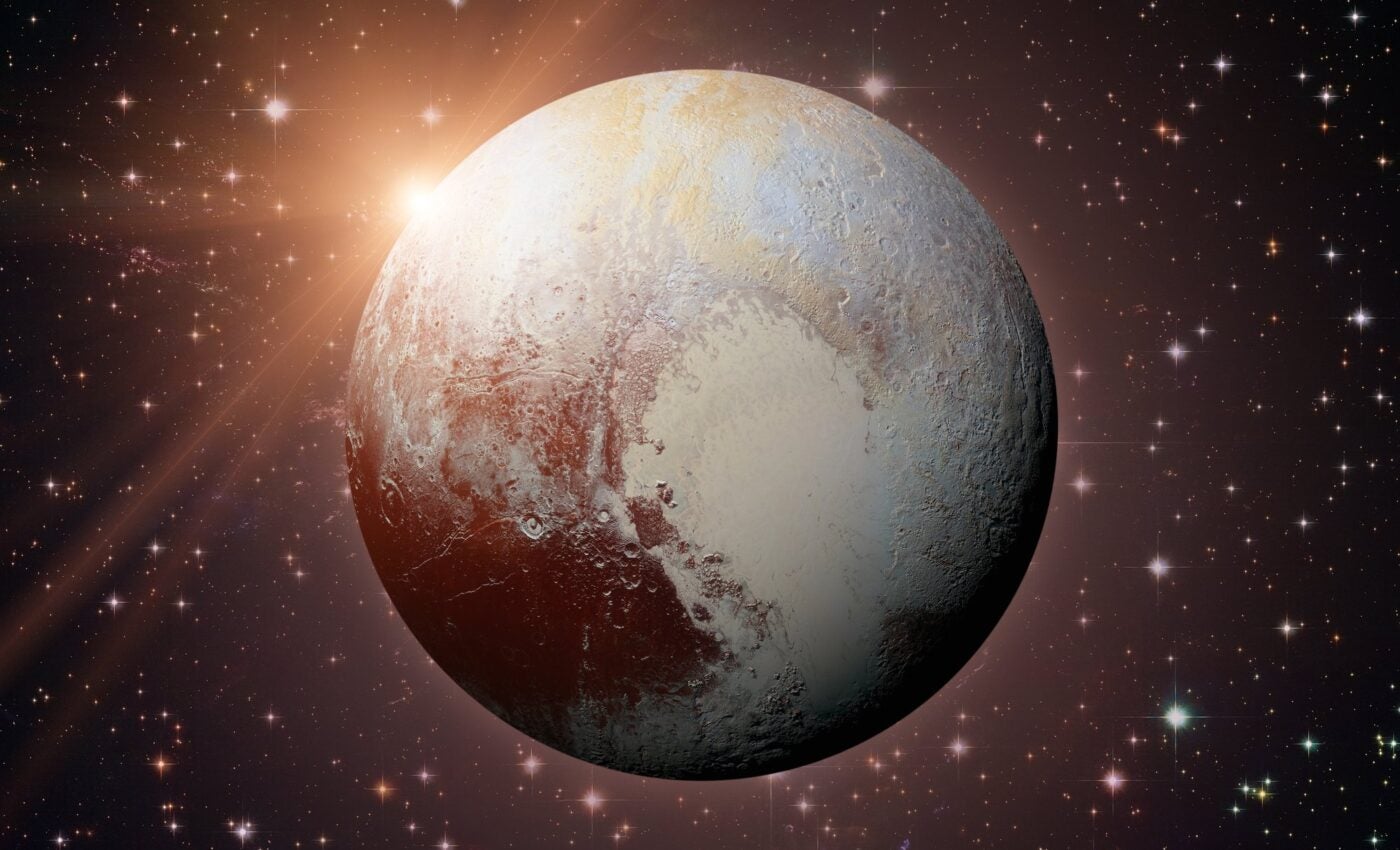
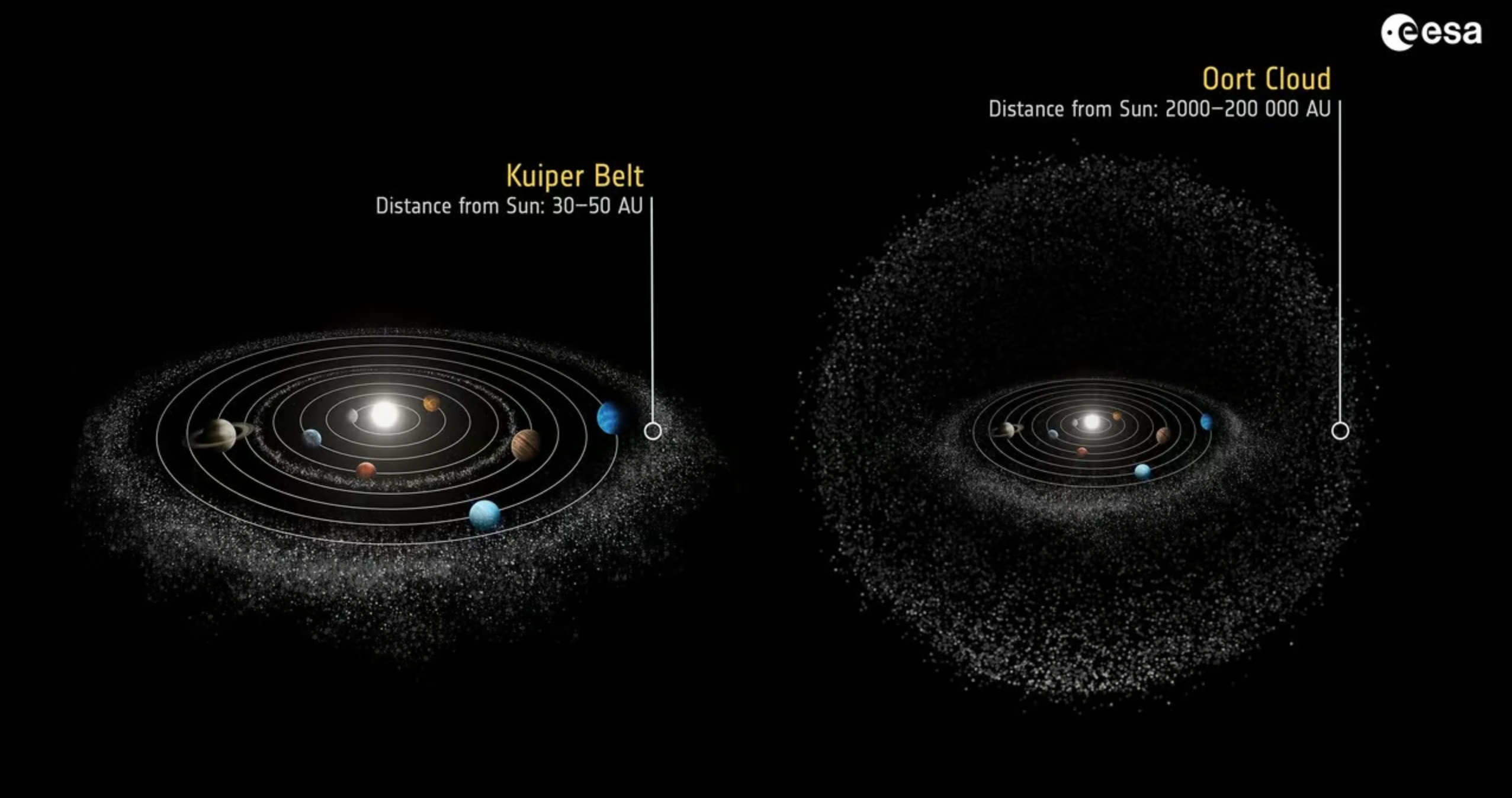
Each of these objects provides a unique opportunity to study water in various forms, helping scientists understand the solar system’s history and the potential for life beyond Earth.
The study gives future Ceres missions a more specific target. If the crust is an ice-rich shell left behind by a frozen ocean, spacecraft could test that by probing the upper kilometers with geophysical tools such as ground-penetrating radar or by analyzing returned samples.
It also means mission planners may need to rethink how deep any remnant brines or key internal boundaries lie.
More broadly, the work makes Ceres look less like an oddball in the inner solar system and more like an accessible example of an ancient ocean world whose frozen materials may still be sitting near the surface.
Research findings are available online in the journal Nature Astronomy.
The original story “Frozen ocean world discovered lurking between Mars and Jupiter” is published in The Brighter Side of News.
Like these kind of feel good stories? Get The Brighter Side of News’ newsletter.
The post Frozen ocean world discovered lurking between Mars and Jupiter appeared first on The Brighter Side of News.

