A ball tossed into the air follows a path that classical physics can track with confidence. Shrink that ball down to the size of an atom, though, and the rules usually change. At that scale, particles can seem to pass through two openings at once. They can also tunnel through barriers and act more like waves than tiny objects.
Now two MIT researchers say there is a tighter mathematical connection between those two worlds than physicists once thought.
In a new paper, the team reports that a familiar idea from classical physics, known as least action, can be extended to reproduce the same answers as the Schrödinger equation for several standard quantum cases. Their method, they say, can handle examples such as the double-slit experiment and quantum tunneling. It does so while relying on a framework built from classical action and density.
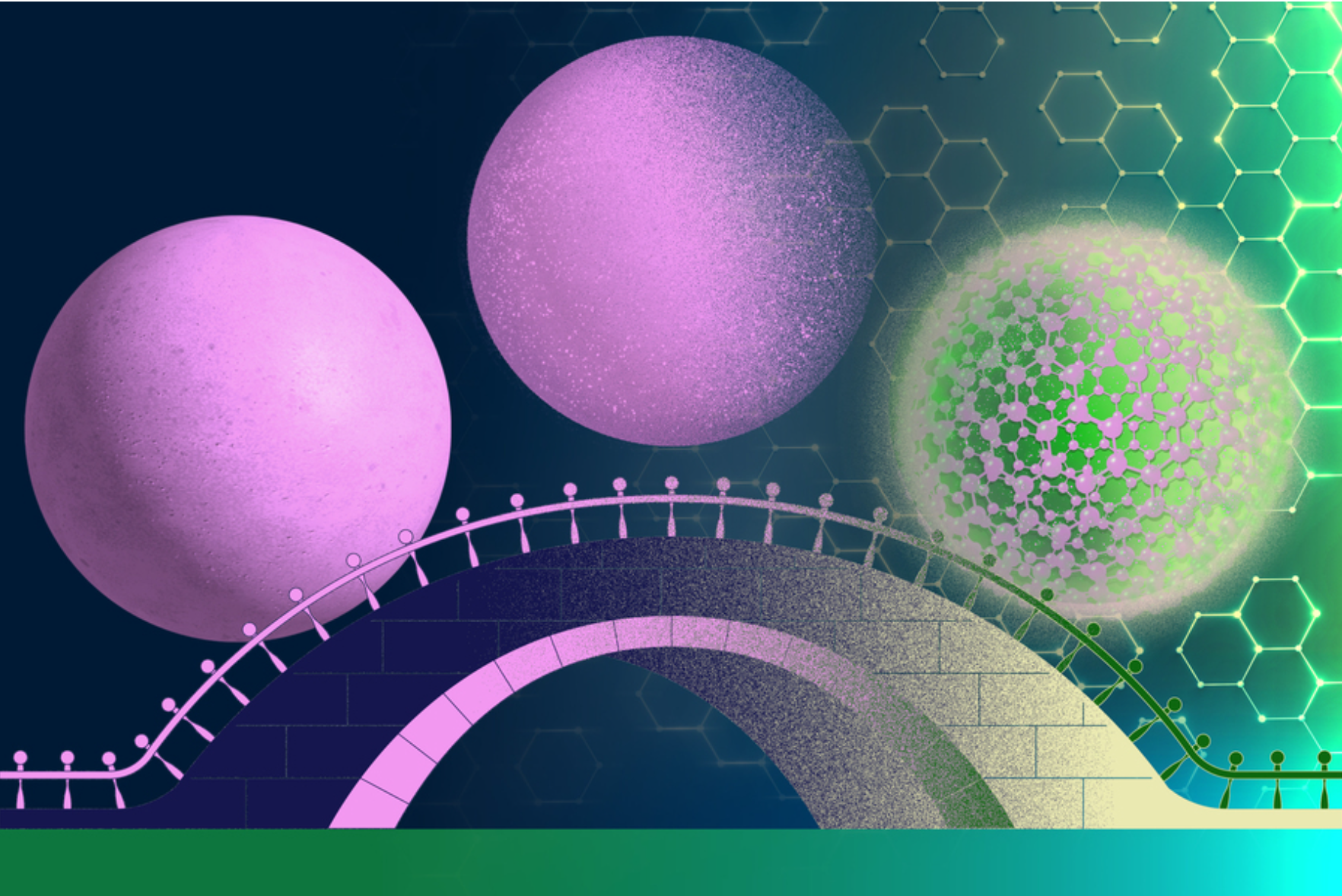
“Before, there was a very tenuous bridge that worked only for reasonably large [quantum] particles,” says study co-author Winfried Lohmiller, a research associate in the Nonlinear Systems Laboratory at MIT. “Now we have a strong bridge, a common way to describe quantum mechanics, classical mechanics, and relativity, that holds at all scales.”
The work does not argue that quantum mechanics is wrong. Instead, it offers another route to the same mathematical destination.
“We’re not saying there’s anything wrong with quantum mechanics,” says co-author Jean-Jacques Slotine, an MIT professor of mechanical engineering and information sciences, and of brain and cognitive sciences. “We’re just showing a different way to compute quantum mechanics, which is based on well-known classical ideas that we put together in a simple way.”
Slotine and Lohmiller arrived at the result while working on classical problems. Both are part of MIT’s Nonlinear Systems Laboratory, where researchers build models for robotic and aircraft control, neuroscience, and machine learning.
A key tool in that work is the Hamilton-Jacobi equation, one of the major formulations of classical mechanics. It is closely tied to the principle of least action. That principle treats motion as a path that minimizes a quantity called action.
For a thrown ball, the idea is simple in spirit. The ball could, in theory, take many possible routes from one point to another. However, nature selects the path that minimizes the difference between kinetic and potential energy over time. Classical mechanics uses that logic to describe smooth, single paths.
Quantum mechanics does not.
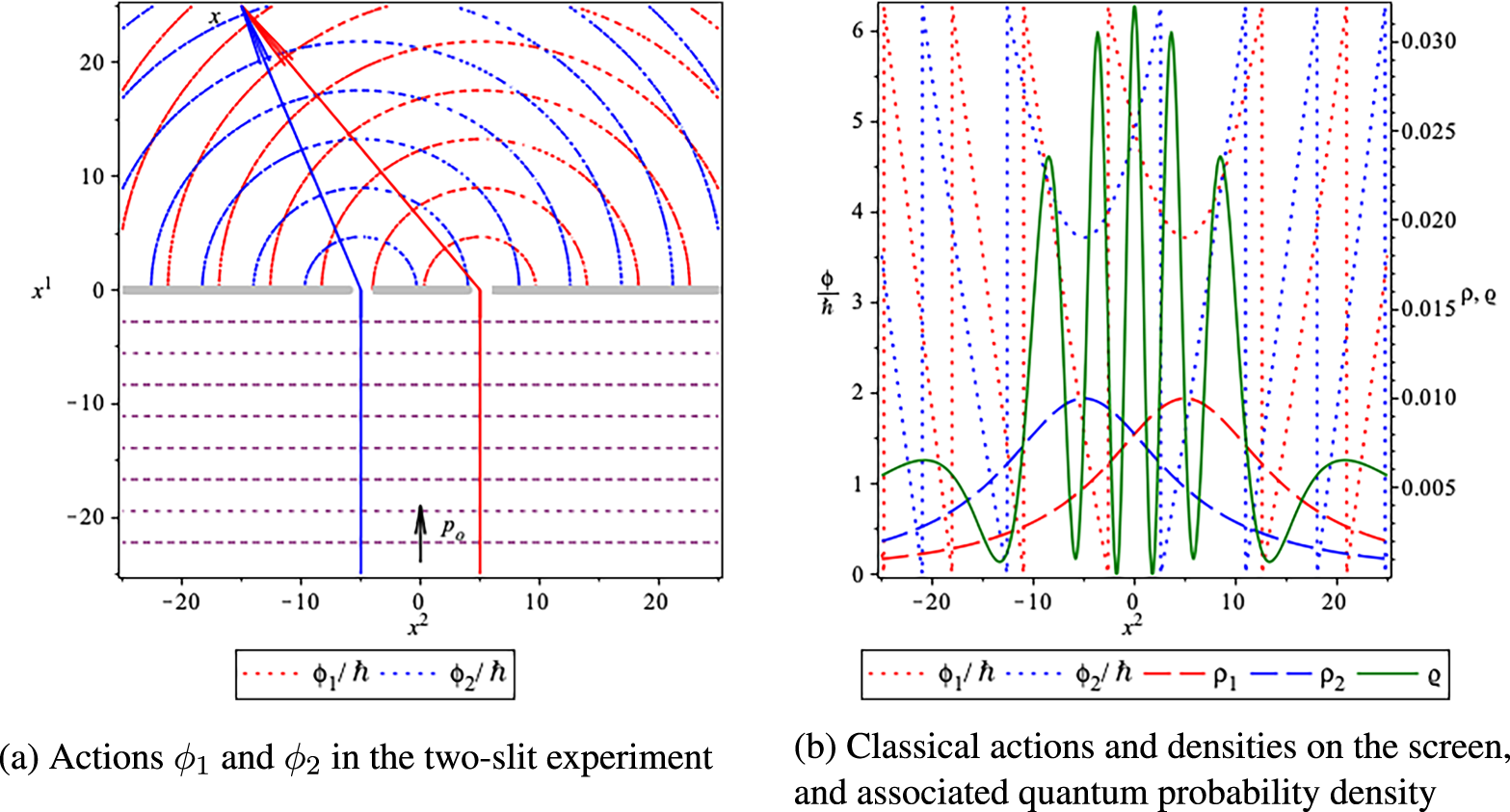
In the double-slit experiment, for instance, a photon fired at a wall with two narrow openings does not behave as classical intuition would suggest. Instead of leaving a single spot on a screen behind the wall, many photons build up a striped interference pattern. That pattern implies each photon behaves like a wave and, in some sense, travels through both slits at once.
Physicists have long tried to connect that strange behavior to classical ideas. Richard Feynman’s path-integral approach famously considered every possible route a particle might take, including an infinity of jagged, nonclassical ones. It worked, but at the cost of summing over an enormous set of possibilities.
Slotine and Lohmiller saw an opening in that logic.
Their insight was to let classical physics entertain more than one least-action path at a time. If quantum systems can occupy multiple paths or states through superposition, the researchers asked whether a classical description could be broadened to include multiple least-action branches. They proposed this instead of having one single route.
They then added another ingredient, density, which in this setting acts as a probability measure for how likely a path is.
“We think of density in terms of fluid dynamics,” Lohmiller says. “For the double-slit experiment, imagine pumping a hose toward the wall. What will happen is, most of the water will hit the center, but some droplets will also go toward the sides. A high density of water at the center means there is a high probability of finding a droplet along that path. And there will be a distribution, which we can compute.”
Using that combination of multiple least-action paths and density, the team found that they could reconstruct the same wave function predicted by the Schrödinger equation. In the double-slit case, they say, the calculation can be reduced to two classical paths through the two slits. This is rather than Feynman’s infinity of zigzagging ones.
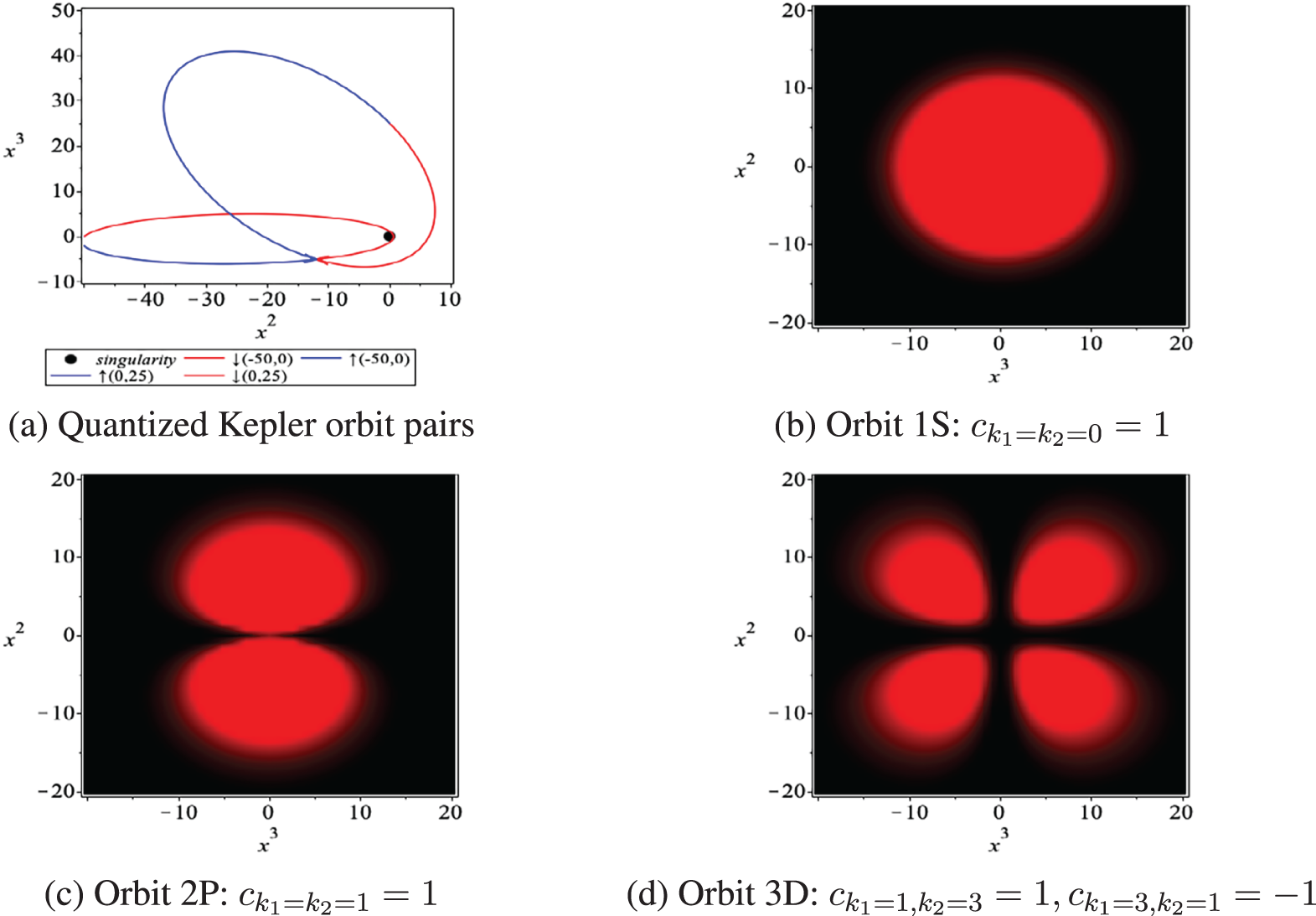
The same formalism, according to the paper, also reproduces several other textbook quantum results. These include tunneling, where particles cross barriers that classical mechanics would forbid; the electron wave in a hydrogen atom; the Aharonov-Bohm effect. In later sections of the paper, it also covers extensions to relativistic equations and spinning particles.
That is a broad claim, and the authors frame it as a mathematical one.
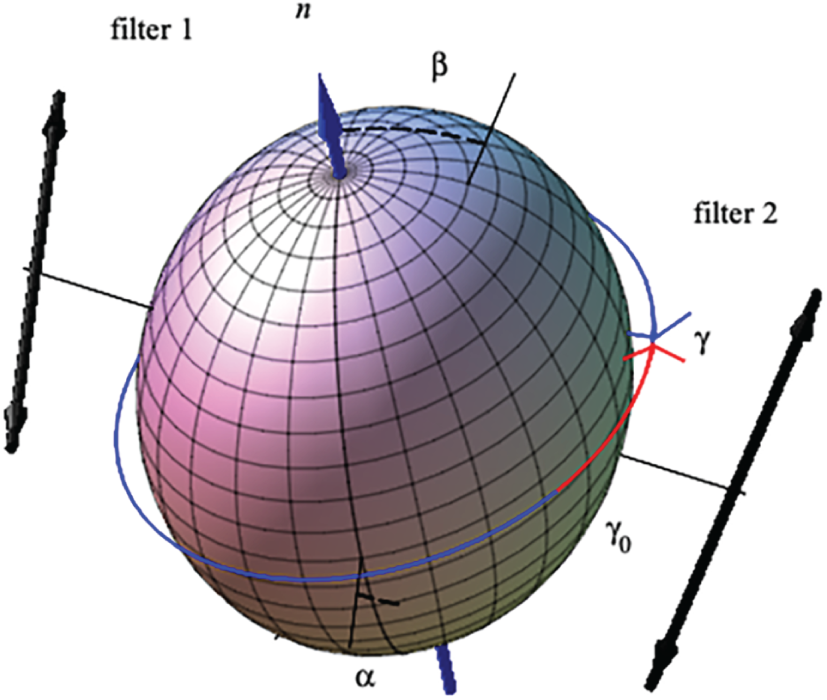
“We show that the Schrödinger’s equation of quantum mechanics and the Hamilton-Jacobi equation of classical physics are actually identical given a suitable computation of density,” Slotine says. “That’s a purely mathematical result. We’re not saying that quantum phenomena happens at classical scales. We’re saying you can compute this quantum behavior with very simple classical tools.”
The researchers argue that their method provides an exact way to build quantum wave functions from classical action and classical densities, without relying on the usual semiclassical approximations. They also suggest it may offer a cleaner way to simulate some quantum systems. Perhaps it can help with problems that mix quantum physics with general relativity.
“There could be important implications for quantum computing, where quantum bits have these nonlinear energies that physicists must approximate, or for better understanding problems involving both quantum physics and general relativity,” Slotine says. “In principle at least, we should now be able to characterize this quantum behavior exactly, with simple classical tools, and show that it’s not so mysterious after all.”
Still, the paper leaves some important questions open.
Its central result is a reformulation, not a replacement, of standard quantum mechanics. The authors also note that one major rule of quantum theory, Born’s measurement rule, remains a postulate in their framework. And while they discuss wave collapse in classical-density terms, they acknowledge that the deeper interpretation of what is physically “real” remains unsettled. The paper says that question stays open because different interpretations can lead to the same experimental results.
The authors also point to unfinished work. In the concluding section, they write that current research is focused on deriving complex actions for more general nonlinear potentials. This is an area where perturbation theory is still often used.
If the method proves useful beyond the examples in the paper, it could give physicists a simpler way to calculate the behavior of some quantum systems. That matters in areas where exact solutions are hard to get and approximations pile up fast.
The authors suggest possible uses in quantum simulations, quantum information processing, and computational quantum chemistry. Because their approach relies on differentiable classical paths, they also think it may work well with machine learning tools.
Even if it does not settle the philosophical puzzles of quantum theory, it may offer researchers a more direct way to compute them.
Research findings are available online in the journal Proceedings of the Royal Society A Mathematical Physical and Engineering Sciences.
The original story “The strange connection between falling balls and quantum weirdness” is published in The Brighter Side of News.
Like these kind of feel good stories? Get The Brighter Side of News’ newsletter.
The post The strange connection between falling balls and quantum weirdness appeared first on The Brighter Side of News.

