“There is a silence in the night sky that has bothered me for as long as I can remember.”
That line, attributed to Richard Feynman, lands because it gets at a simple, stubborn feeling. The sky looks full. Stars crowd the darkness. It seems reasonable to think someone else should be out there, and close enough to find. Yet the deeper physicists look into the laws that govern the universe, the more that silence starts to seem less like a cosmic riddle and more like a built-in feature of reality.
Human intuition is not much help. It developed for ordinary distances, daily motion, and short-term survival. It did not develop for light years, relativistic speeds, or timescales longer than the history of civilization. As Feynman puts it, “When you take that human intuition and apply it to the scale of the universe, it doesn’t just fail. It snaps.”
That mismatch sits at the center of the story. Five barriers shape the quiet: distance, the speed of light, propulsion, biology, and time. Taken together, they form what Feynman called “absolute walls that prevent civilizations from ever meeting.”
Size comes first, and size alone is enough to scramble ordinary thinking.
Carl Sagan warned that “The size and age of the Cosmos are beyond ordinary human understanding.” Earth feels big at about 12,742 kilometers across. Then the scale widens. The Sun is roughly 150 million kilometers away, and even light, the fastest thing known, takes eight minutes to cross that gap.
The nearest star system sits far beyond that. Proxima Centauri lies 4.24 light years from Earth. The Parker Solar Probe, the fastest human-made object, travels about 692,000 kilometers per hour. At that speed, a trip to Proxima Centauri would take roughly 6,600 years.
If a spacecraft had left when the Great Pyramids were completed, it would only now be arriving.
That is for the nearest star.
The Milky Way spans about 100,000 light years. With current technology, crossing it would take hundreds of millions of years, longer than mammals have existed. A journey that long would not just test engineering. It could outlast the biological and cultural continuity of the species making the trip. A civilization that sets out might not resemble itself by the time it arrives anywhere.
Distance, then, is not just an inconvenience. It changes the whole idea of contact.
A natural response is to assume better engines could fix the problem. The physics says otherwise.
“The speed of light is not an engineering limit,” Feynman said. “It is a structural limit of reality. It is the speed of causality.” Kip Thorne made the same point from another angle: “The speed of light is the ultimate speed limit built into the fabric of space and time.”
That matters because daily life teaches the wrong lesson. On Earth, more force usually means more speed. Near light speed, the rules stop behaving in that familiar way. Once an object approaches that limit, more and more energy goes into relativistic effects instead of simple acceleration.
Then the wall appears.
To push anything with mass to light speed would require infinite energy. Feynman made the point starkly: “I don’t mean all the energy in the Sun. I mean literally infinite.”
That removes a favorite piece of optimism from the table. This is not a problem waiting for clever engineers or a more advanced species to crack. The equations do not relax for older civilizations. Einstein’s framework applies everywhere.
Even if a civilization gives up on light speed and settles for some fraction of it, propulsion creates another trap.
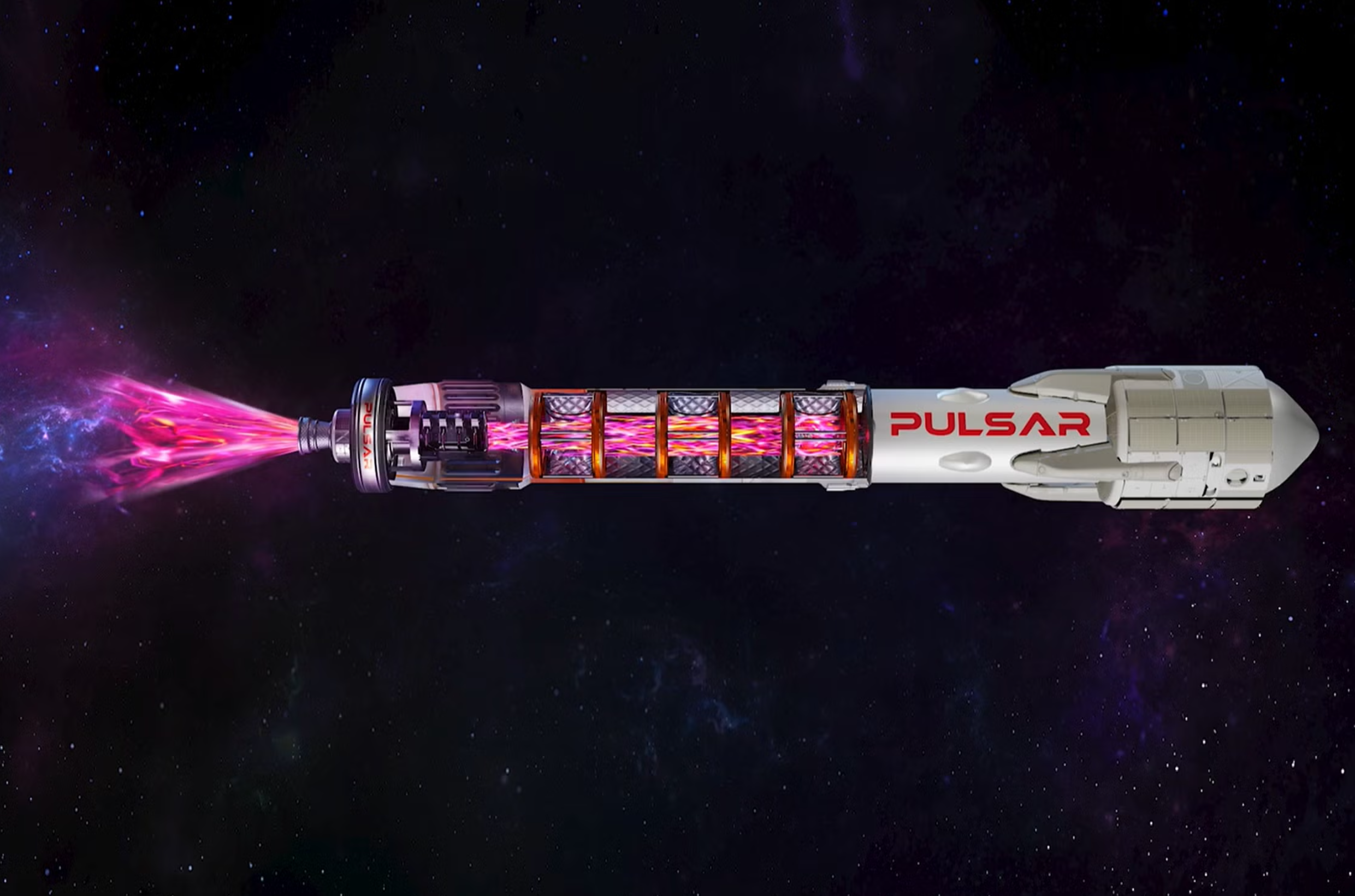
The rocket equation, written by Konstantin Tsiolkovsky in 1903, spells out the problem. A spacecraft needs fuel to speed up. That fuel adds mass. More mass means more fuel is needed to move the ship and its fuel together. That added fuel then adds still more mass. The requirement does not grow gently. It rises exponentially.
Feynman called it “an exponential curse.”
The example is extreme, but it makes the point clearly. Imagine trying to send a crewed mission to the nearest star and get there within 40 years. The ship has to accelerate to high speed and then slow down at the other end. It must carry fuel for both phases throughout the trip.
With chemical rockets, the fuel needed for a single human would exceed the mass of the observable universe. Freeman J. Dyson’s judgment was direct: “Chemical fuels are hopeless for interstellar travel.”
More advanced systems help, but only to a point. Fusion lowers the burden without eliminating it, and fuel mass would still dominate the spacecraft. Antimatter offers much more energy per unit mass, yet producing useful quantities would require humanity to devote its entire energy output for millions of years.
That kind of arithmetic changes the question. The issue is no longer whether a species could dream up a more powerful engine. It is whether any civilization, no matter how advanced, would choose to spend so much for so little return. As Feynman put it, “Interstellar travel is the definition of inefficiency.”
Science fiction usually escapes by changing the geometry of space itself.
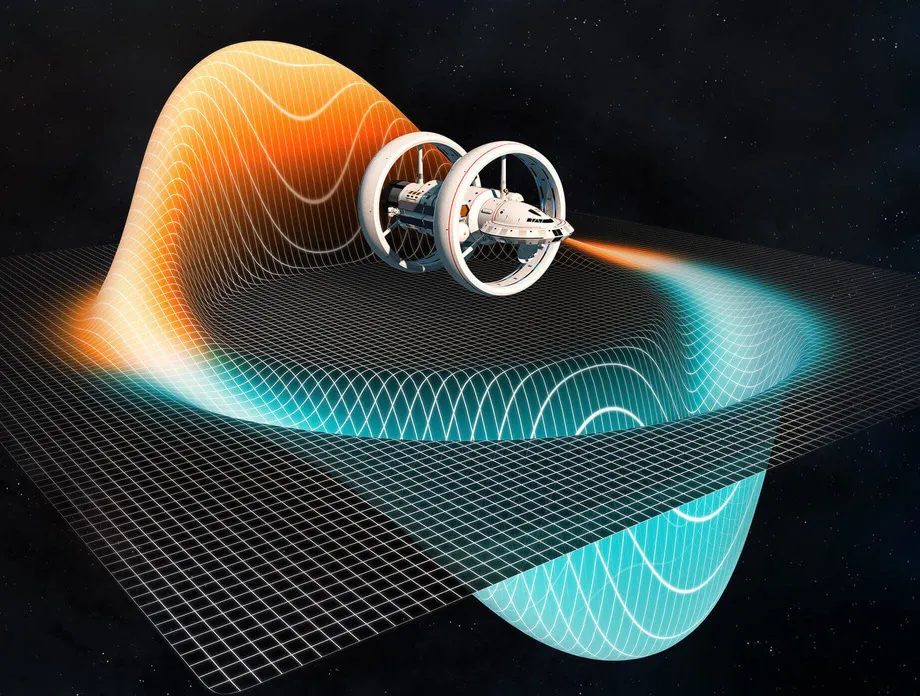
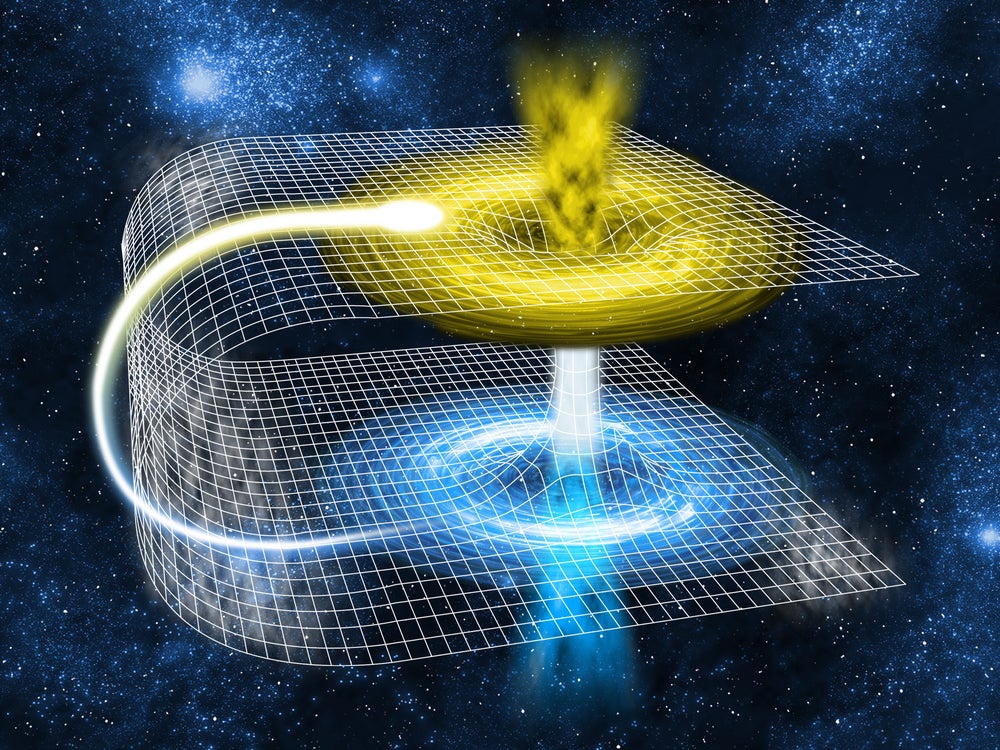
In 1994, Miguel Alcubierre proposed a warp-drive model in which a spacecraft could sit inside a “warp bubble” while space contracts in front of it and expands behind it. In that scenario, the craft would not outrun light in its own local region. Space would do the moving.
On paper, the math works.
Reality is less cooperative. The model requires enormous amounts of negative energy, and no known process can provide it in the needed quantities. Early estimates put the demand above the energy content of the observable universe. Later refinements lowered the requirement, but not to anything humans could approach.
The problems do not stop there. Tiny instabilities might collapse the bubble. Some analyses suggest radiation could build up at the front and erupt when the drive stops. More recent theoretical work argues that making such a bubble may violate quantum constraints.
Feynman never addressed warp drives directly because he died before Alcubierre’s paper appeared. Even so, he distrusted ideas that outran experiment and treated concepts that could not be tested, even in principle, as mathematical play.
Wormholes run into similar trouble. The idea is often traced to Albert Einstein and Nathan Rosen’s 1935 work, but the central obstacle remains the same: a natural wormhole would pinch shut too quickly to cross. Keeping one open would require negative energy or exotic matter, both still hypothetical. Extra dimensions appear in some versions of string theory, but no experiment suggests they are accessible or large enough to enter.
So the imaginative exits remain just that.
Even if physics and propulsion somehow lined up, biology would still argue against easy interstellar travel.
The human body developed under Earth’s gravity and magnetic shielding. Outside that environment, radiation becomes a serious threat. Cosmic rays carry high-energy particles that can penetrate spacecraft hulls and damage DNA. They can tear through a hull, cut through the body, and smash DNA “like a shotgun blast to a library.”
Shielding can help, but shielding means mass, and mass brings the rocket equation roaring back.
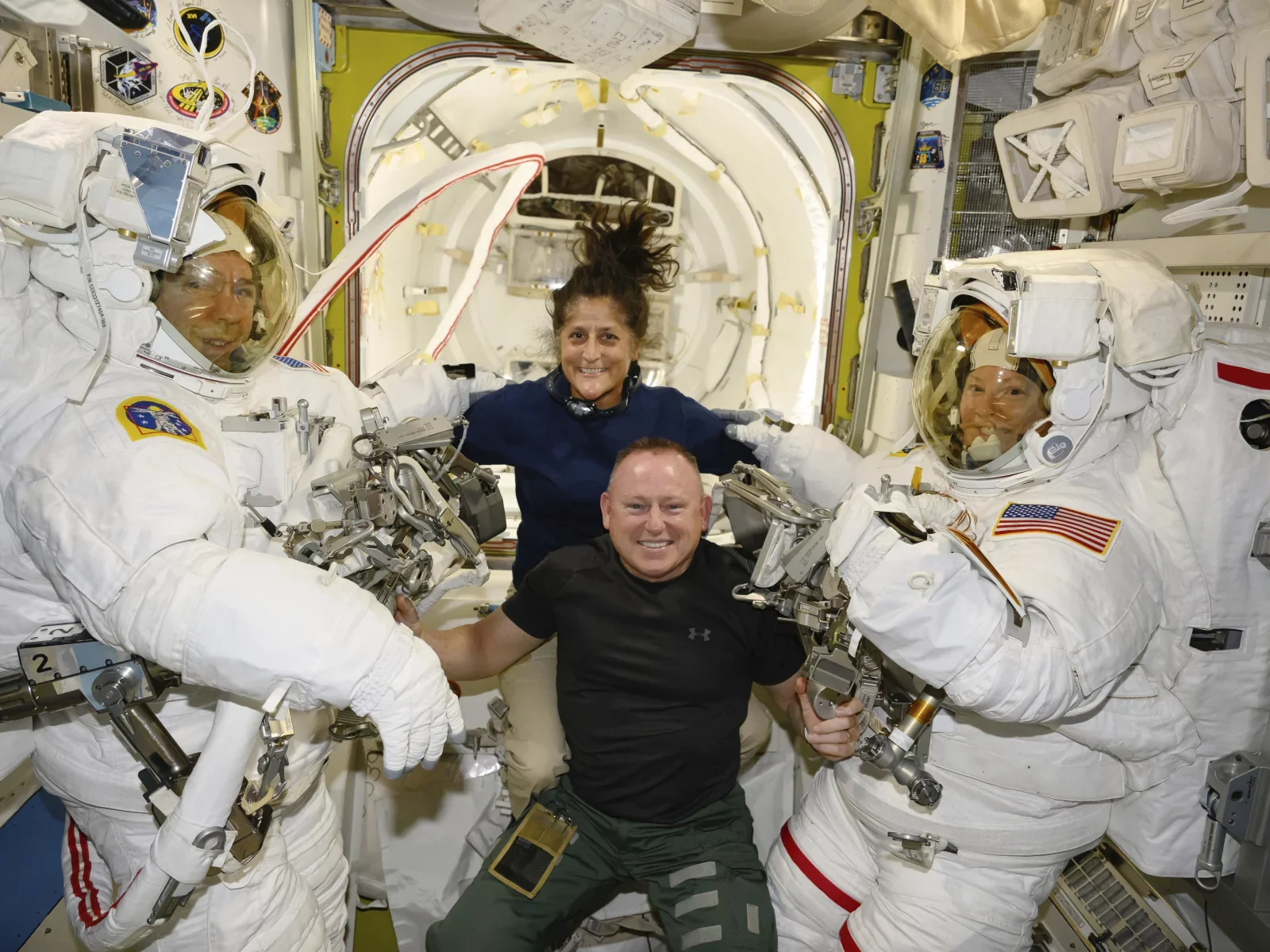
Microgravity creates another slow crisis. Bone density drops. Muscles weaken. The cardiovascular system changes in ways that make a return to gravity difficult. Astronauts who spend months in orbit already experience lasting effects. A voyage lasting centuries would multiply those burdens.
Then come the backup plans, none of them settled. Cryogenic preservation remains unsolved because ice crystals rupture cells. Generation ships carry their own hazards, including social instability, genetic risk, and cultural drift.
“Biology is the software of Earth,” Feynman said. “It does not run on the hardware of space.”
That line is followed by a remark from Dyson: “Biology is more powerful than physics.” In this context, the point is not that biology defeats the laws of nature. It means living systems bring a set of limits that engineering cannot casually wish away.
Machines do not solve everything either. Radiation wears down electronics. Micrometeoroids hit with tremendous force because of their speed. Entropy eats at every system given enough time.
Even robots age.
Then there is timing.
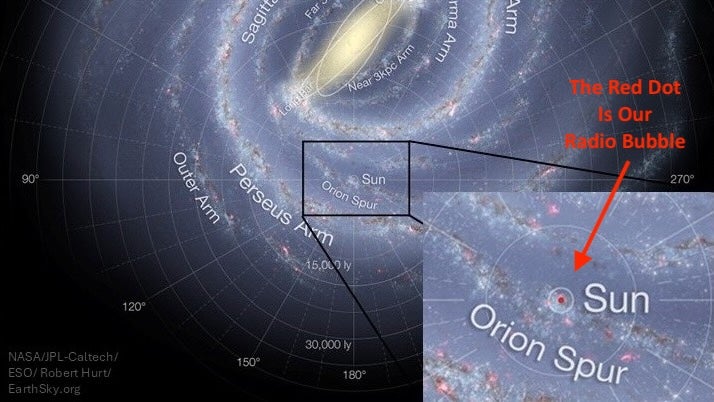
Human beings have broadcast radio for roughly a century. That creates a sphere of signals about 100 light years across. Against a galaxy 100,000 light years wide, that is barely a mark at all. Feynman’s line is memorable for its futility: “We are shouting into a hurricane.”
Contact needs more than life elsewhere. It needs overlap. Another civilization has to exist at the right distance, during the right era, using detectable signals on the right frequencies. A society might transmit long before another develops receivers. Or the signal might arrive after the sender has gone extinct. Civilizations could flare briefly and disappear without ever sharing the same moment.
Humanity has been technological for only about 200 years. Even if that stretch lasts thousands more, it remains tiny next to the universe’s 13.8-billion-year history.
Feynman compared civilizations to fireflies blinking on different nights in a dark forest. “The tragedy of the universe isn’t that it’s empty,” he said. “It’s that the party guests are arriving at different times.”
Jill Tarter of SETI offered a gentler version of the same idea: “If you dip a glass into the ocean, you’re not going to come up with a fish. That doesn’t mean there are no fish in the ocean.”
Silence, then, does not prove solitude. It may just mean the timing never lines up.
Talk of alien life often drifts toward unidentified flying objects.
Some reports describe objects making instantaneous turns or reaching enormous speeds in Earth’s atmosphere. The physical problem is that such motion would create crushing forces, enough to destroy biological occupants and strain the craft itself. Travel through air at those speeds would also produce intense plasma effects and sonic signatures.
Feynman’s response was unsparing: “You don’t see that in the videos. You see a blurry gray blob.”
He followed with a familiar standard: “Extraordinary claims require extraordinary evidence.”
By that measure, fuzzy footage is not enough.
Distance, light speed, fuel limits, biology, timing—together, they keep civilizations apart.
It sounds bleak.
But Richard Feynman saw the upside.
The same rules that block easy travel make the universe work. Light speed protects cause and effect. Stable atoms make chemistry possible. Stars build the elements life needs. Remove the speed limit, and causality collapses. So does history.
Silence isn’t emptiness. It’s structure.
Carl Sagan put it plainly: we’re made of star-stuff.
Civilizations may never meet. But they all come from the same fire.
The original story “Alien civilizations have not visited Earth and never will, physicist claims” is published in The Brighter Side of News.
Like these kind of feel good stories? Get The Brighter Side of News’ newsletter.
The post Alien civilizations have not visited Earth and never will, physicist claims appeared first on The Brighter Side of News.

