A glass of milk can still mark a line through humanity.
For most adults, drinking it brings discomfort because the body follows the older mammalian pattern, shutting down the enzyme lactase after childhood. Yet for millions of others, milk remains digestible for life because of a small genetic change that keeps that enzyme switched on. What looks like an ordinary food habit is really a record of human adaptation, written into the body over generations.
That change spread after people began herding animals. In hard seasons, milk offered a reliable source of food. Those who could digest it had an edge, and over time that advantage altered entire populations.
It is one of the clearest reminders that evolution did not end when humans settled down, built cities, and learned to reshape their surroundings. It kept moving, but the pressures changed. Nature still matters, yet so do diet, disease, technology, medicine, and the built world.

In other words, humans are still evolving, and in many cases, the forces driving that change are the very systems people created.
Some of the strongest evolutionary pressures do their work out of sight.
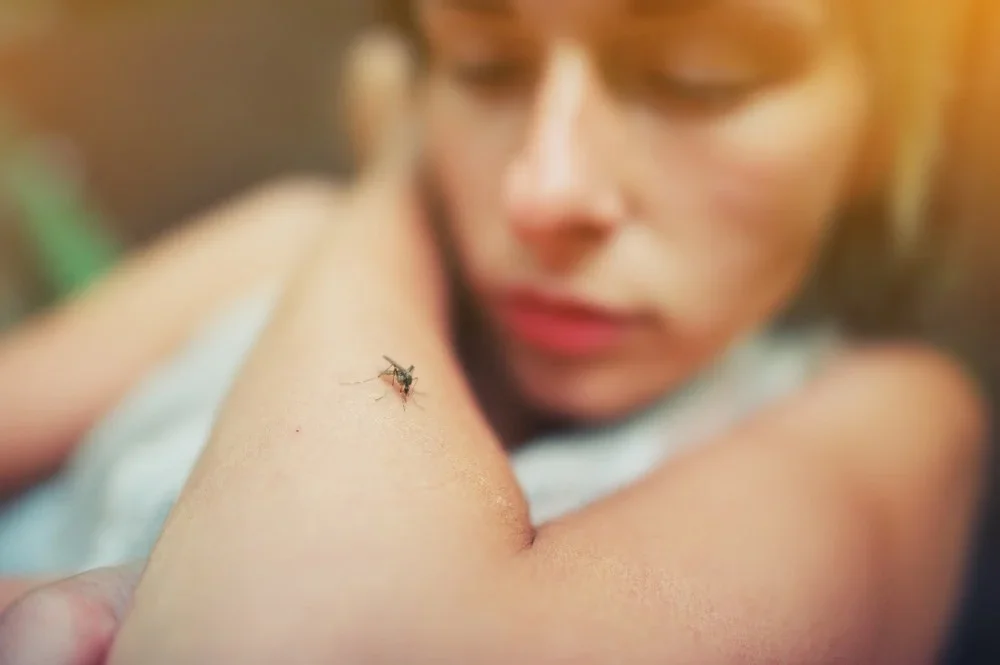
Malaria, spread by mosquitoes, invades red blood cells and multiplies until those cells burst. In places where the disease has long been common, a mutation in the hemoglobin gene became widespread because carrying one copy offers protection. Carrying two copies, though, can cause sickle-cell anemia, a serious and often deadly illness without treatment.
It is not an elegant answer. It is a tradeoff, one that shows how evolution often works through compromise rather than perfection.
A different example appears in the CCR5 delta 32 mutation, which interferes with how HIV enters immune cells. People with two copies are highly resistant to infection, and about 10 percent of Europeans carry it. HIV itself is too recent to explain that frequency. Older epidemics, possibly the Black Death or smallpox, likely played a part, though the exact cause remains uncertain.
That uncertainty matters because evolution does not usually hand over a clean narrative. It leaves clues, unevenly distributed across populations, and those clues have to be read with care.
Some changes, though, do not hide in genes alone. They show up in the body in plain sight.
A temporary artery forms in the forearm during fetal development to supply blood to the growing hand. It usually disappears before birth. Increasingly, it does not.
In the 1880s, about 10 percent of people retained this median artery into adulthood. Today, the figure is closer to 35 percent, and it may keep rising. No clear advantage explains the change. One possibility is that it reflects relaxed selection, the easing of older pressures that once made even small biological costs more important.
A similar story may be unfolding in the mouth. Human ancestors depended on large jaws and extra molars to chew tough foods. Cooking helped change that. Diets softened, jaws gradually became smaller, and the teeth did not keep pace. Many people still develop 32 teeth in jaws that no longer comfortably fit them, leading to crowding and impacted wisdom teeth.
Yet wisdom teeth themselves may be on the way out. In some populations, especially in parts of East Asia, more than 30 percent of people are born without them. What used to be standard anatomy is becoming less universal.
Not every evolutionary shift arrives with drama. Sometimes it appears as an artery that stays put, or a tooth that never forms.
At high altitude, adaptation becomes harder to ignore.
On the Tibetan plateau, oxygen levels sit about 40 percent lower than they do at sea level. Most people would struggle quickly in that environment. One common response to thin air is to produce more red blood cells, which helps carry oxygen but also thickens the blood and puts more strain on the heart. That pattern is seen among Andean high-altitude populations.
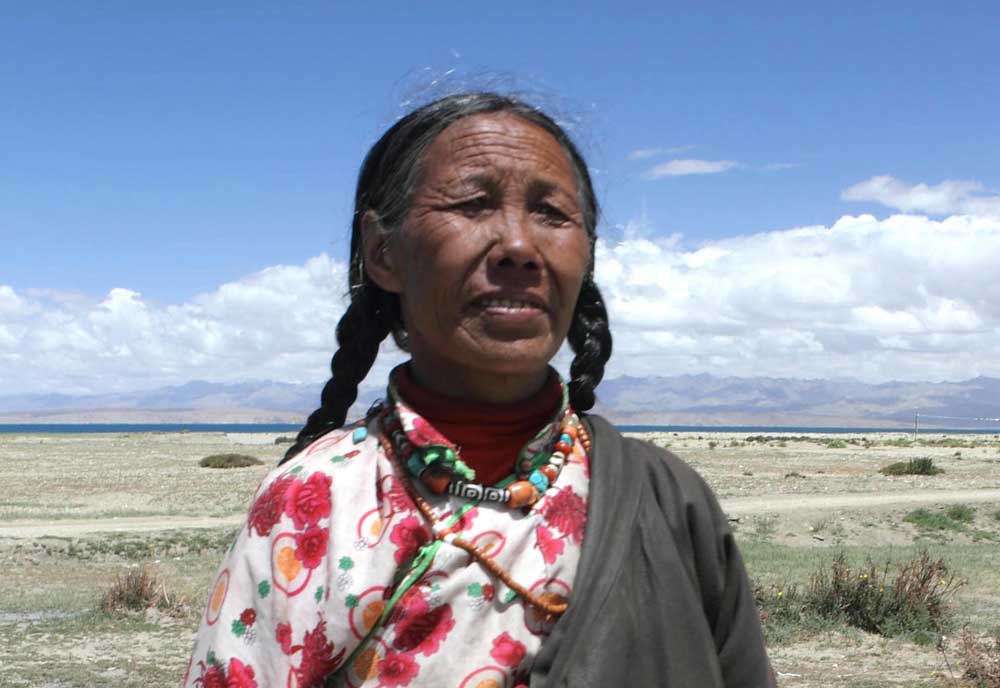
Tibetans rely on something different. A mutation in the EPAS1 gene helps regulate the body’s response to low oxygen, allowing oxygen to be used more efficiently without the same massive increase in red blood cells.
What makes that change even more striking is its apparent origin. The same genetic sequence appears in Denisovan DNA, inherited from an extinct human relative. Modern humans and Denisovans interbred, most of that genetic material faded, and one fragment remained useful enough to survive. Later, when humans settled in the Himalayas, that fragment became crucial.
An ancient encounter still shapes life at 15,000 feet.
That is one of the stranger truths about human evolution. Some of the traits helping people survive now are not purely modern at all. They are remnants of older branches of humanity, carried forward because they still work.
Evolution needs variation, inheritance, and reproduction. Those conditions have not disappeared.
Long-term health studies that follow multiple generations indicate that natural selection is still acting in modern populations. Certain traits are associated with having more children, and over time those traits become more common. Patterns in the data point toward earlier childbirth and later menopause, which together extend the reproductive window. Other trends suggest shifts in metabolism, including lower cholesterol and blood pressure.
The reasons behind those changes are not always obvious. The movement, however, is.

Mate choice is changing too. People increasingly sort themselves by education, occupation, and lifestyle, a pattern known as assortative mating. Cities, universities, and digital platforms bring similar people together in ways older geography once did. Gene flow used to depend heavily on distance and landscape. Now culture and technology often do the sorting.
Daily habits add another layer. Human vision evolved for distance and daylight, not long hours indoors focused on nearby screens. Myopia is rising sharply. In some urban parts of Asia, more than 80 percent of teenagers are affected. Numbers are climbing in Europe and the United States as well. Technology softens the penalty through glasses and surgery, which means the underlying tendencies can continue.
Food has changed even faster than vision.
Humans evolved to crave sugar and fat because those resources were rare. In modern settings, they are abundant and cheap. Bodies built for scarcity now live in environments of excess, and that mismatch has become one of the defining pressures of modern life.
The process no longer depends only on what survives.
CRISPR allows scientists to edit DNA directly. In a patient’s cells, that can mean treating a genetic disease in one person. In embryos, it affects future generations. That is a different level of power, and it raises a different level of concern.
The sharpest example comes from China, where a scientist altered the CCR5 gene in twin embryos in an attempt to make them resistant to HIV. The act triggered global criticism because of the medical risks and the ethical problems it raised. A gene that helps in one context may create vulnerability in another. Biology is interconnected, and changing one part does not guarantee a simple outcome.
The technology is real. Agreement about its limits is not.
Meanwhile, other lines of research are pushing at the boundaries of aging itself. Senolytic drugs aim to remove senescent cells, damaged cells that no longer divide but still release inflammatory signals. Rapamycin and metformin are under study because they affect pathways tied to metabolism, inflammation, and cellular repair. Partial cellular reprogramming goes further, trying to reset aspects of cellular aging without erasing a cell’s identity.
The evidence remains early. Much of the strongest support comes from animal models or small human trials. Even so, the conceptual shift is hard to miss. Aging is increasingly treated not only as decline, but as a biological process that might be modified.
That could reshape more than lifespan. It could alter reproductive timing, disease onset, and the pace of generational turnover.
The human story may also be changing through the nervous system.
Brain-computer interfaces suggest a future in which the internet feels less like a tool outside the body and more like an extension of thought. One early system, BrainNet, linked three people through brain signals so they could solve a shared task, using EEG to record activity and transcranial magnetic stimulation to send information back into another brain. Primitive as it was, the system showed that direct brain-to-brain communication, even in a simple form, had moved out of fiction.
Neuralink has drawn attention for a related reason. Its first human implant recipient, Noland Arbaugh, received the device in January 2024 and used it to control a computer through thought. Later reports described users browsing the web, posting online, playing games, and operating digital tools through neural signals. That is not instant knowledge transfer, but it narrows the distance between intention and access.
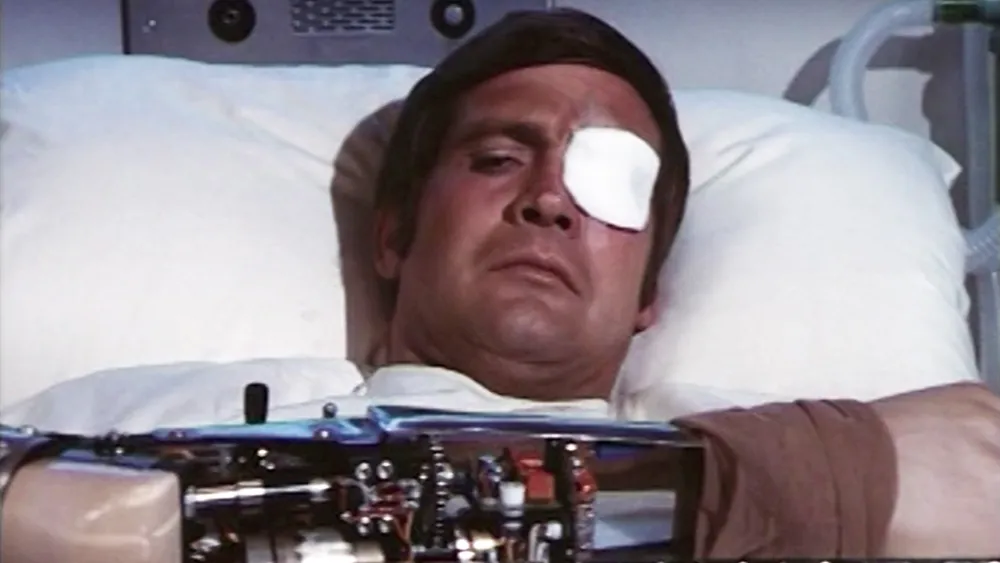
Bionics point toward similar changes in the body. Advanced artificial limbs can connect to nerves, allowing users to direct movement intentionally and receive limited sensory feedback. Researchers have also built systems in which artificial hands send signals back to the brain, restoring a sense of touch in controlled settings.
Work on implanted devices, functional electrical stimulation, and tissue-integrating materials suggests a future in which the boundary between biology and machinery grows less clear.
Then there is space.
NASA’s Twins Study followed Scott Kelly during a year on the International Space Station while his identical twin, Mark Kelly, stayed on Earth. Gene expression changed. Immune function shifted. Telomeres lengthened during flight and shortened after return.
Most of those effects reversed, but not all. Bone density can fall by about 1 to 1.5 percent per month in weight-bearing bones under microgravity. Muscles weaken. Fluids move toward the head, contributing to vision problems known as spaceflight-associated neuro-ocular syndrome. Beyond Earth’s magnetic field, radiation adds another danger by damaging DNA and raising cancer risk.
Researchers are exploring shielding, artificial gravity, pharmaceutical protection, and even biological strategies inspired by organisms such as tardigrades, whose protective proteins have been introduced into human cells in laboratory experiments. The work is still early, but the implication is plain. If humans live beyond Earth for long enough, the body may need more than protection. It may need to adapt.
That idea brings the story full circle. Human evolution has not ended. It has become tangled with medicine, culture, machinery, and environments no earlier human ever knew. The old pressures remain, but new ones are arriving fast, and some of them are being designed on purpose.
The original story “The next phase of human evolution is already underway” is published in The Brighter Side of News.
Like these kind of feel good stories? Get The Brighter Side of News’ newsletter.
The post The next phase of human evolution is already underway appeared first on The Brighter Side of News.

