Purple wings, orange-gold markings, and crisp white bands make the newly described moth hard to miss. That is part of what makes its late recognition so striking.
In the White Mountains of western Crete, researchers have identified a previously unknown species now named Pyralis papaleonei, or the Pope Leo moth. The insect is medium-sized, with a wingspan of about two centimeters, and belongs to a showy group of moths that entomologists have collected and studied for generations. Even so, this one had remained hidden in plain sight.
The name points in two directions at once. It reflects the moth’s regal look, and it honors Pope Leo XIV. Study leader Peter Huemer of the Tyrolean State Museum Ferdinandeum said the name also carries a broader appeal, linking the species to the need for environmental protection at a time of mounting biodiversity loss.
That mix of beauty, symbolism, and scientific surprise runs through the discovery.
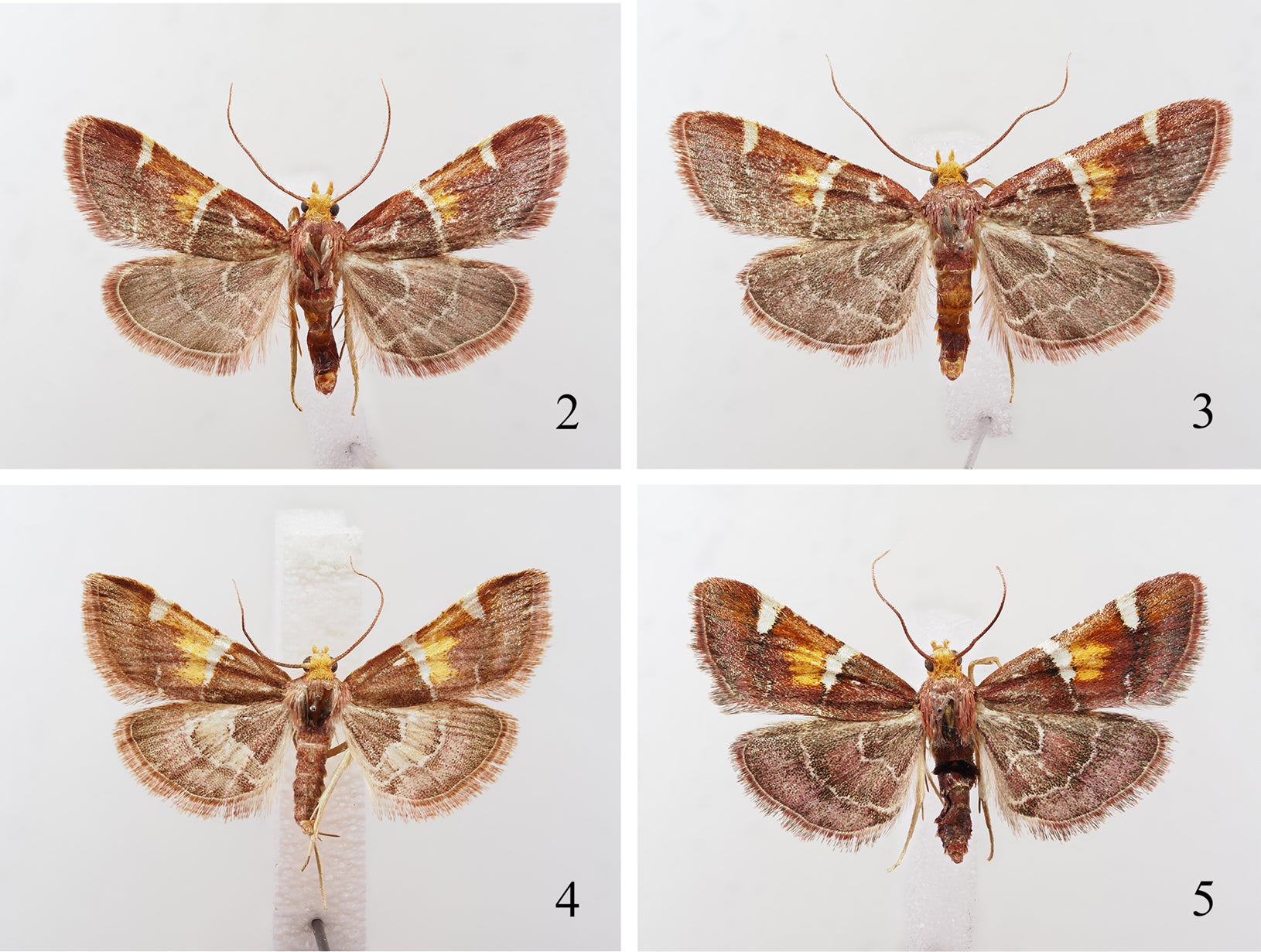
 ; 3. P. papaleonei sp. nov., paratype, ; 4. P. kacheticalis, , Georgia; 5. P. regalis. (CREDIT: Nota Lepidopterologica)
The moth belongs to the Pyralis regalis species group, a cluster already known for bright colors and ornate wing patterns. Some of its relatives carry names tied to rank and authority, including Pyralis regalis, Pyralis princeps, and Pyralis cardinalis. The new species fits neatly into that tradition.
Yet its discovery also shows how incomplete even Europe’s insect inventory remains. These moths are conspicuous by the standards of micro-moths, and many specimens from the group already sit in museum collections. For years, their taxonomy seemed mostly settled.
That confidence began to fray when earlier work pointed to suspicious variation within Pyralis kacheticalis, a related species. One DNA barcode sequence from Crete stood out as especially divergent, raising doubts about whether it had been identified correctly. Later fieldwork and sequencing gave researchers enough evidence to revisit the question.
They ended up describing an entirely new species.
The team included researchers from the Tyrolean State Museum, the Finnish Museum of Natural History, and the Bavarian State Collection of Zoology. Their findings appeared April 28, 2026, in the open-access journal Nota Lepidopterologica.
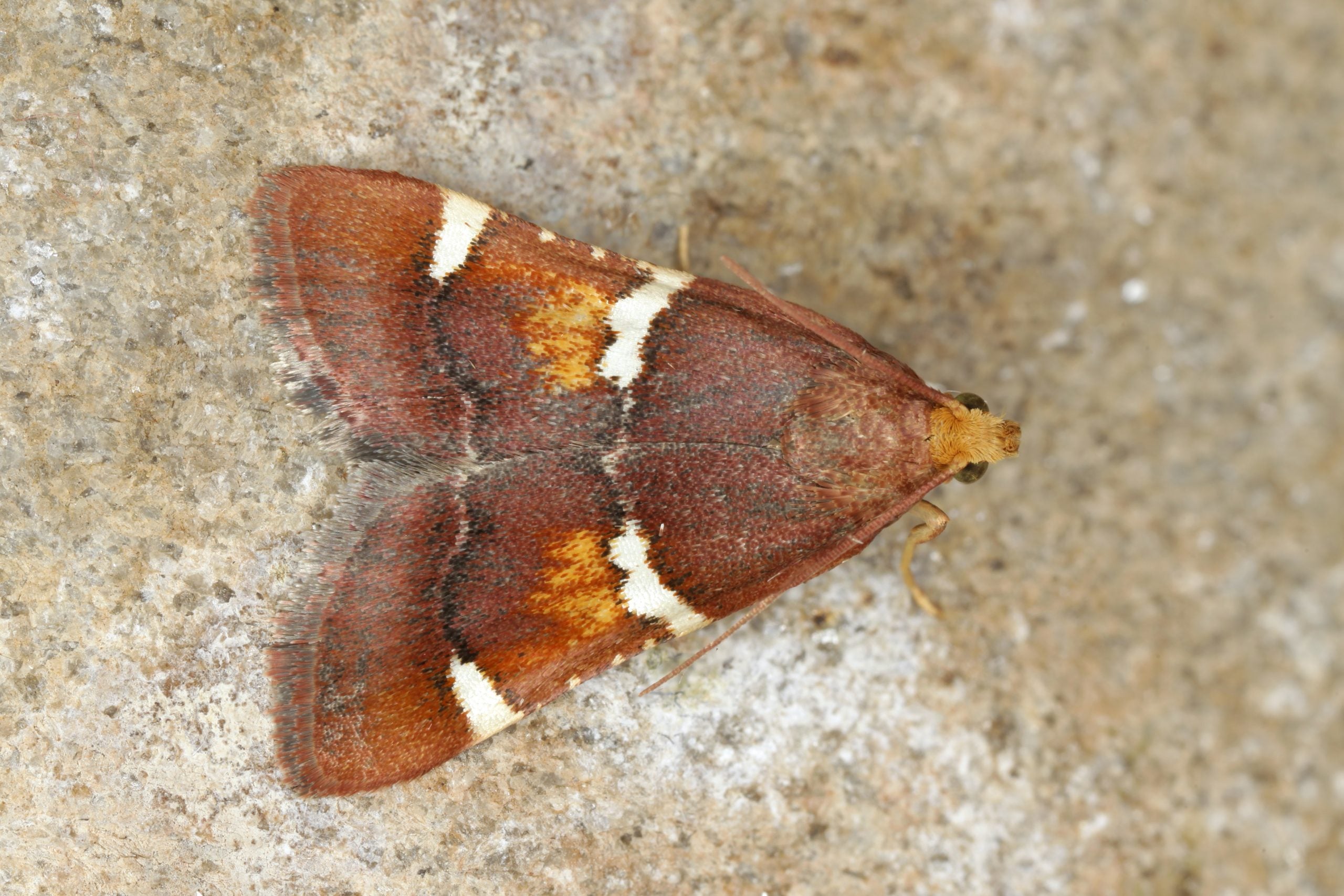
On the surface, Pyralis papaleonei stands out for its narrow white forewing markings and its purple forewings, which include a large orange patch. Its hindwings are pale grayish-purple and divided into three sections by two jagged whitish lines.
Those details mattered because the authors compared the Cretan moth closely with other members of the group, especially P. kacheticalis, P. regalis, and P. cardinalis. The differences were not limited to color and pattern. The team also examined male and female genital structures, a standard part of moth taxonomy, and found consistent diagnostic traits there as well.
In females, for example, the new species has a sclerotized signum, a feature absent in the other species of the P. regalis group discussed in the research. The male genitalia also showed a combination of characters that separated it from its relatives.
Genetics strengthened the case.
Researchers added 38 new samples to 90 previously published DNA barcode sequences and analyzed specimens from across the group. The nearest known relative to P. papaleonei was a cluster of P. kacheticalis populations from places including Samos, Ukraine, Armenia, and Iraq. Even there, the minimum genetic distance was 5.78 percent. The minimum distance to P. regalis was 9.4 percent.
The analysis found nine barcode index numbers corresponding to known species in the group, except for one species with no known barcode, plus two unnamed clusters from China. Those Chinese clusters likely represent undescribed species, though the authors did not formally describe them here.
For now, the Pope Leo moth seems to be a Cretan endemic. It is known only from a handful of localities in the Lefka Ori, or White Mountains, of western Crete.
Most specimens came from mountainous habitats at roughly 1,000 to 1,200 meters, especially around Omalos. Adults were mostly collected at light in June, though one specimen was found in October. That could point to a long flight season or perhaps a second generation.
Much else remains uncertain.

The host plant is unknown. Early life stages are unknown. No observations came from coastal areas. So while the species is visually distinctive, its ecology is still largely a blank page.
That gap matters because Crete has become an important place for this kind of work. According to the discussion section, 40 percent of the island’s 76 currently documented endemic Lepidoptera species have been described since the start of the millennium. The new moth joins a growing list of local endemics tied to the Omalos region and nearby mountain habitats.
The researchers suggest the species may have been overlooked partly because nearby regions already host other members of the group, and partly because the mountain areas where it occurs have been sampled less intensively.
The study places the discovery in a larger taxonomic and cultural frame. Naming species is a practical scientific act, but it also carries symbolic weight. The authors point to the biblical story of Adam naming animals as one expression of how old that human impulse is.
Huemer draws the point into the present. He says: “We are facing a global biodiversity crisis, yet only a fraction of the world’s species has been scientifically documented. Effective conservation of biodiversity requires that species are first recognized, described, and named.”
That logic sits at the center of the article. A species cannot be protected very well if it has not been clearly distinguished from its relatives.
The work also reminds readers that Europe is not taxonomically finished territory. Around 700 new moth species are described each year, mostly in the tropics, but roughly 200 previously unknown species have also been identified in the Alps in recent decades. Even well-studied regions still contain gaps.
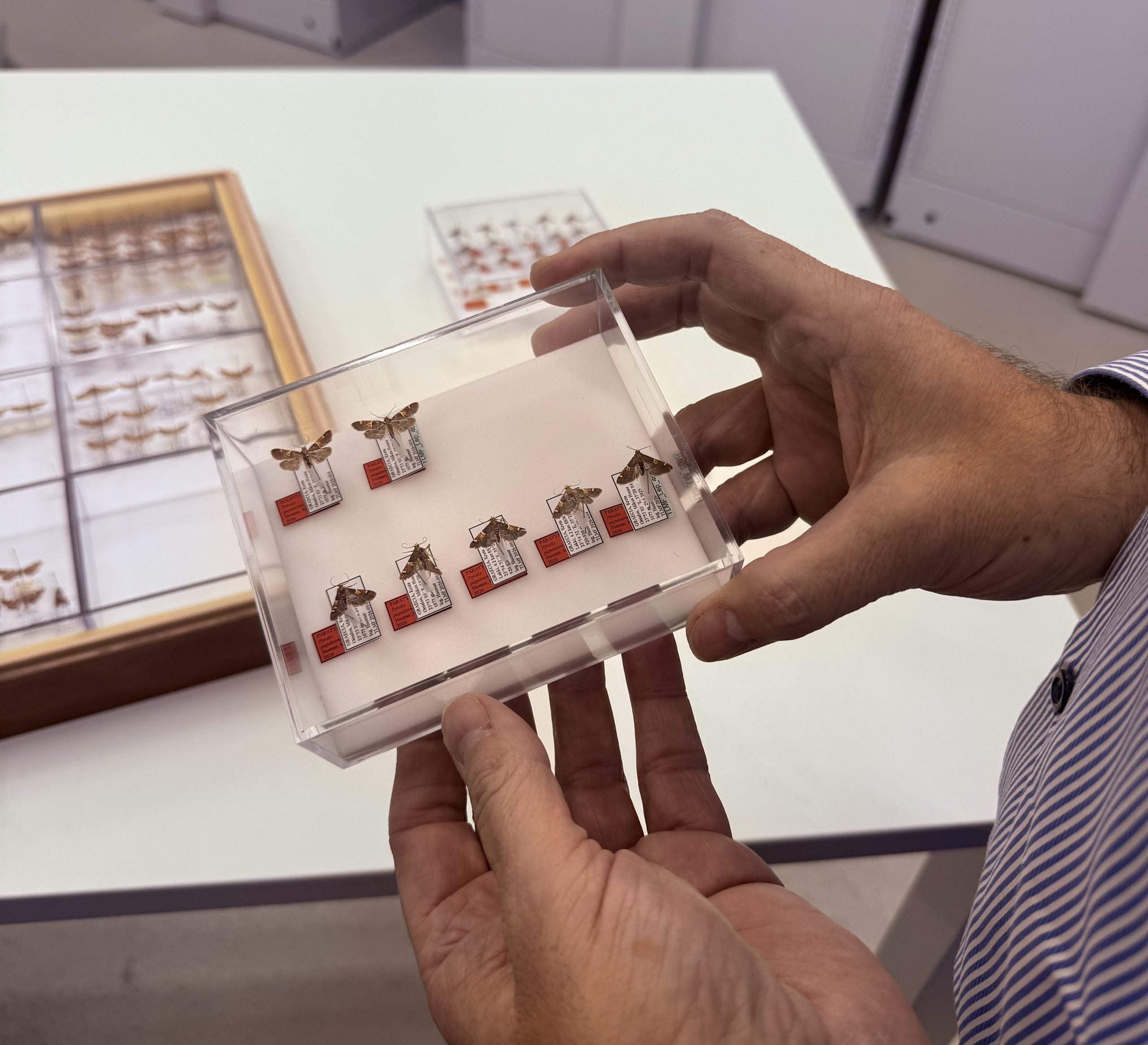
The Pope Leo moth is one of them, and perhaps not the last. The discussion notes that Pyralis kacheticalis still shows pronounced geographic variation that needs clarification, and two Chinese clusters currently assigned to known species probably represent more undescribed taxa. The tidy picture once assumed for this moth group is no longer so tidy.
A bright moth from a Greek mountain range has turned into a reminder that biodiversity science often advances in small, careful corrections, one specimen drawer and one DNA sequence at a time.
The discovery adds one more species to Crete’s endemic wildlife and sharpens the case for protecting the island’s mountain habitats. It also shows why taxonomy remains basic conservation infrastructure. Before scientists can track a species, assess its vulnerability, or design habitat protections, they need to know exactly what it is.
This case also exposes how much remains unresolved, even in Europe. The new moth was separated from its relatives through a combination of museum specimens, field collecting, morphology, and DNA barcoding. That kind of integrative approach will likely be needed again, both for problematic populations of Pyralis kacheticalis and for the unnamed clusters from China. In that sense, the Pope Leo moth is both a discovery and a signpost toward more unfinished work.
Research findings are available online in the journal Nota Lepidopterologica.
The original story “Newly discovered purple-winged moth named after Pope Leo XIV” is published in The Brighter Side of News.
Like these kind of feel good stories? Get The Brighter Side of News’ newsletter.
The post Newly discovered purple-winged moth named after Pope Leo XIV appeared first on The Brighter Side of News.

