Eggs have spent years in nutrition debates, praised for protein one moment and questioned for cholesterol the next. Now a large long-running study suggests they may also be tied to something else: a lower chance of being diagnosed with Alzheimer’s disease later in life.
Researchers at Loma Linda University Health found that adults 65 and older who ate eggs were less likely to receive an Alzheimer’s diagnosis than those who rarely or never ate them. The pattern held even after the team adjusted for diet, lifestyle, and a long list of health conditions.
“Compared to never eating eggs, eating at least five eggs per week can decrease risk of Alzheimer’s,” said Joan Sabaté, MD, DrPH, a professor at Loma Linda University School of Public Health and the study’s principal investigator.
The analysis drew on 39,498 participants from the Adventist Health Study-2 cohort who were linked with Medicare records between 2008 and 2020. Over an average follow-up of 15.3 years, 2,858 participants were clinically diagnosed with Alzheimer’s disease.
That scale matters. So does the group itself. The cohort includes Seventh-day Adventists, a population known for relatively healthy habits and a wide range of egg intake, from none at all to levels more typical of the broader U.S. population.
The clearest result was not limited to people eating eggs every day.
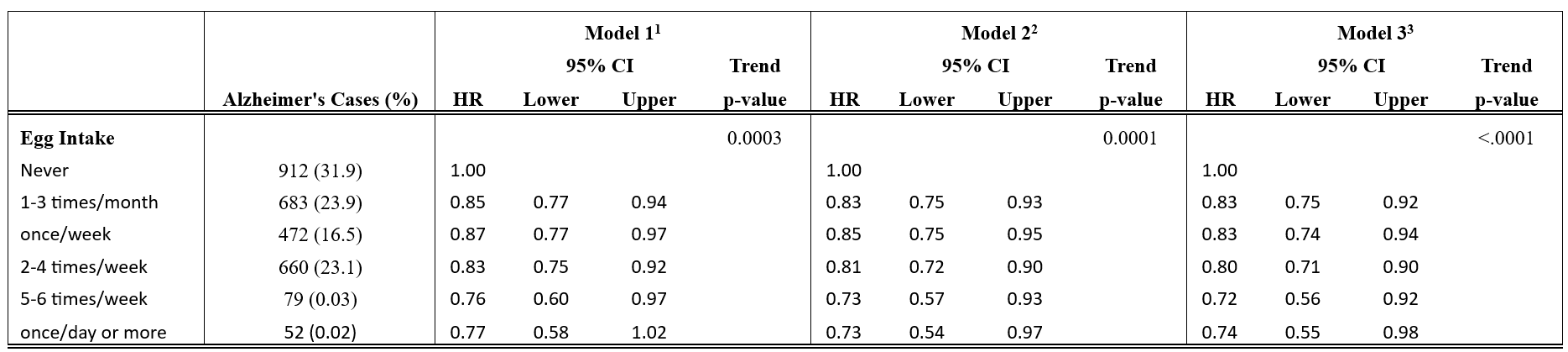
Compared with people who never or rarely ate eggs, those who ate them 1 to 3 times per month had a 17% lower risk of Alzheimer’s disease. Eating eggs once a week was also linked to a 17% lower risk. For those eating eggs 2 to 4 times per week, the reduction was 20%. The biggest drop appeared in the highest category, at 5 or more times per week, where risk was 27% lower.
In statistical terms, the hazard ratio for the most frequent group was 0.73, with a 95% confidence interval of 0.60 to 0.89.
The pattern stayed in place as the researchers tightened the analysis. They first adjusted for factors such as sex, race, education, body weight, smoking, alcohol use, sleep, physical activity, and total calorie intake. Then they added other food groups, including meat, fish, dairy, vegetables, fruits, grains, legumes, and nuts and seeds. A final model also accounted for conditions such as cardiovascular disease, hypertension, hyperlipidemia, respiratory disease, anemia, chronic kidney disease, hypothyroidism, and cancer.
The association remained.
That does not prove eggs prevent Alzheimer’s. It does suggest the link was not easily explained away by obvious differences in health or diet.
The authors point to several nutrients in eggs that could help explain the relationship.
Eggs are a source of choline, which helps the body produce acetylcholine and phosphatidylcholine, compounds involved in memory and synaptic function. They also contain lutein and zeaxanthin, carotenoids that build up in brain tissue and have been associated with better cognitive performance and lower oxidative stress. Other nutrients mentioned in the study include DHA, vitamin B12, phospholipids, and protein rich in tryptophan.
Taken together, the researchers argue, those nutrients may work in concert to support brain function and resilience.
That biological case has limits, but it is not thin.
The team also noted that egg yolks are especially rich in phospholipids, which make up nearly 30% of total egg lipids and play a role in neurotransmitter receptor function. The study further points to evidence that deficiencies in choline and DHA have been documented in the brains of people with Alzheimer’s disease.
“Research supports eggs as part of a healthy diet,” said Jisoo Oh, DrPH, MPH, an associate professor of epidemiology at Loma Linda University School of Public Health and the study’s lead author. “Seventh-day Adventists do eat a healthier diet than the general public, and we want people to focus on overall health along with this knowledge about the benefit of eggs.”
The Adventist Health Study-2 is unusually useful for this kind of question because participants vary widely in egg intake and tend to provide detailed dietary data. At enrollment, members completed a 50-page food frequency questionnaire covering more than 200 food items, along with information on medical history, medication use, physical activity, smoking, alcohol use, and other habits.
For this analysis, the team focused on U.S.-based participants who were at least 65 years old and enrolled in Medicare fee-for-service coverage. People with an Alzheimer’s diagnosis at enrollment or within six months afterward were excluded, along with those whose dietary data appeared implausible or whose Medicare records did not line up with demographic details.
The researchers examined eggs in visible forms, such as scrambled, fried, boiled, deviled, omelets, and egg salad, while also estimating total egg intake from hidden sources in mixed dishes, baked goods, and packaged foods.
That helped them look at both eating habits and total dietary exposure.
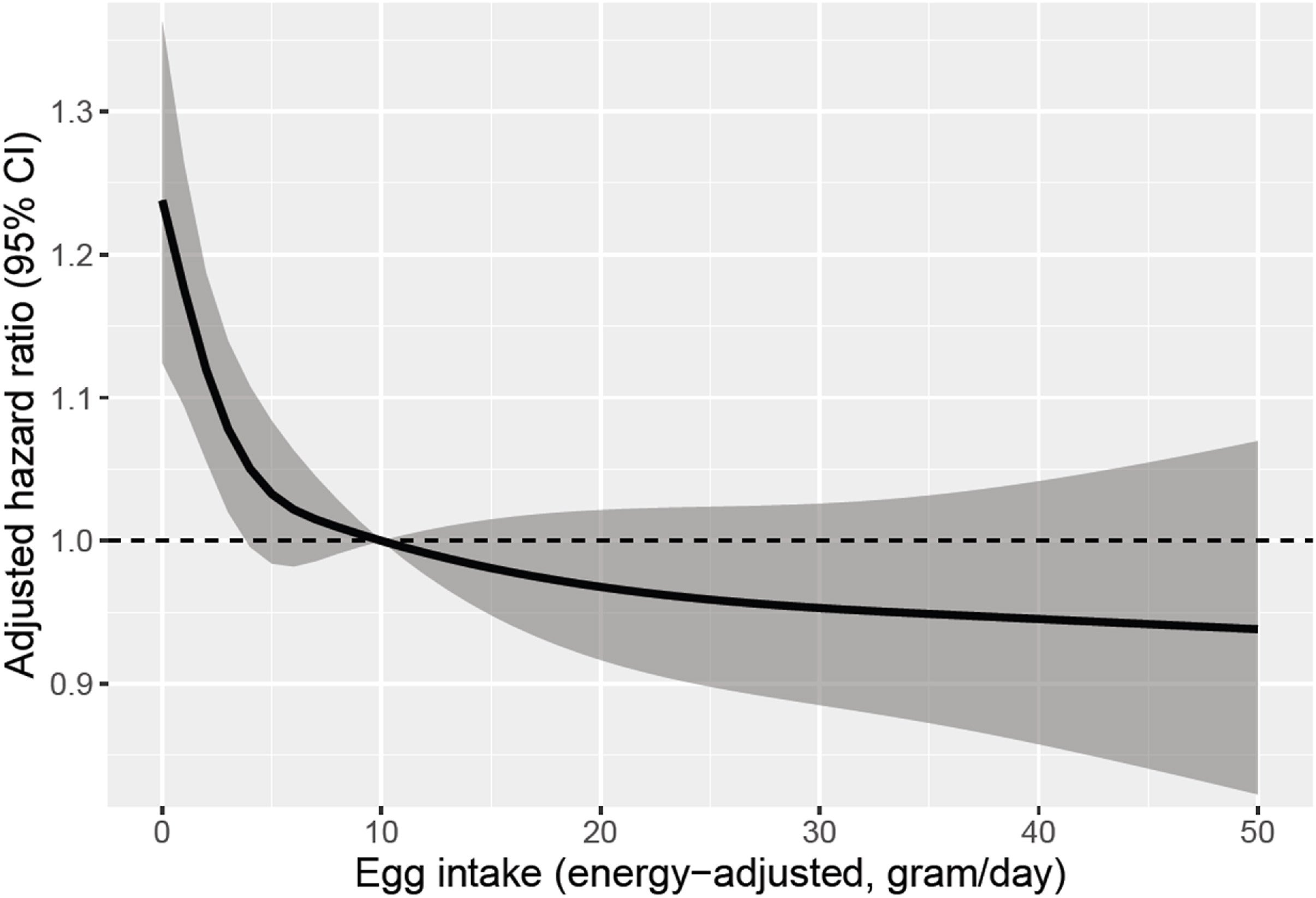
A spline analysis also suggested a nonlinear pattern. Compared with an intake of 10 grams per day, roughly equal to one large egg per week, participants with zero egg intake had a significantly higher risk, with an adjusted hazard ratio of 1.22.
Even with its size and long follow-up, this remains an observational study. That means it can detect associations, not cause and effect.
The authors are careful about that. They note that diet was measured only at baseline, so changes over time could have been missed. Reverse causation is another concern in dementia research, since subtle preclinical changes could alter eating behavior years before diagnosis. The researchers argue that diet in this cohort tends to stay fairly stable, especially among older adults, but the issue cannot be fully ruled out.
Medicare claims data also may miss some milder Alzheimer’s cases. And although the highest egg intake group showed the strongest reduction, there were relatively few people eating one or more eggs per day, which limited the team’s ability to examine higher intake levels in detail.
Residual confounding remains possible too. Even after extensive adjustment, people who eat eggs may differ from non-eaters in ways that are hard to capture fully.
One more wrinkle is that this was a particularly health-conscious cohort, with low smoking and alcohol use. That strengthens the internal analysis in some ways, but it may also limit how neatly the results apply to the general public.
The findings do not argue for treating eggs as a stand-alone defense against dementia. They do add to evidence that a familiar, inexpensive food may fit into a brain-supportive diet, especially for older adults.
That matters because Alzheimer’s disease carries a huge and growing burden. The study notes that it is the sixth leading cause of death in the United States, and national costs for managing the disease are projected to exceed $600 billion annually by 2050.
For now, the most grounded takeaway is modest. In this cohort, people who ate eggs regularly, especially in moderate amounts, were less likely to be diagnosed with Alzheimer’s disease over time. The result fits with what is known about several nutrients in eggs, but it does not settle the broader question of prevention.
It does, however, move a common breakfast food into a much bigger conversation about aging and brain health.
Research findings are available online in the Journal of Nutrition.
The original story “Eating one egg a day linked to lower Alzheimer’s risk in older adults” is published in The Brighter Side of News.
Like these kind of feel good stories? Get The Brighter Side of News’ newsletter.
The post Eating one egg a day linked to lower Alzheimer’s risk in older adults appeared first on The Brighter Side of News.

