A carbon plate and springy foam can shave precious seconds off a race. The same design may also nudge a runner’s stride in ways that raise new questions about injury.
That is the tension running through a new study from Mass General Brigham, where researchers tested elite distance runners in three kinds of shoes and found that advanced footwear technology, often called “super shoes,” altered several parts of running form tied to bone stress injuries. The performance upside of these shoes is well known. The tradeoff is less settled.
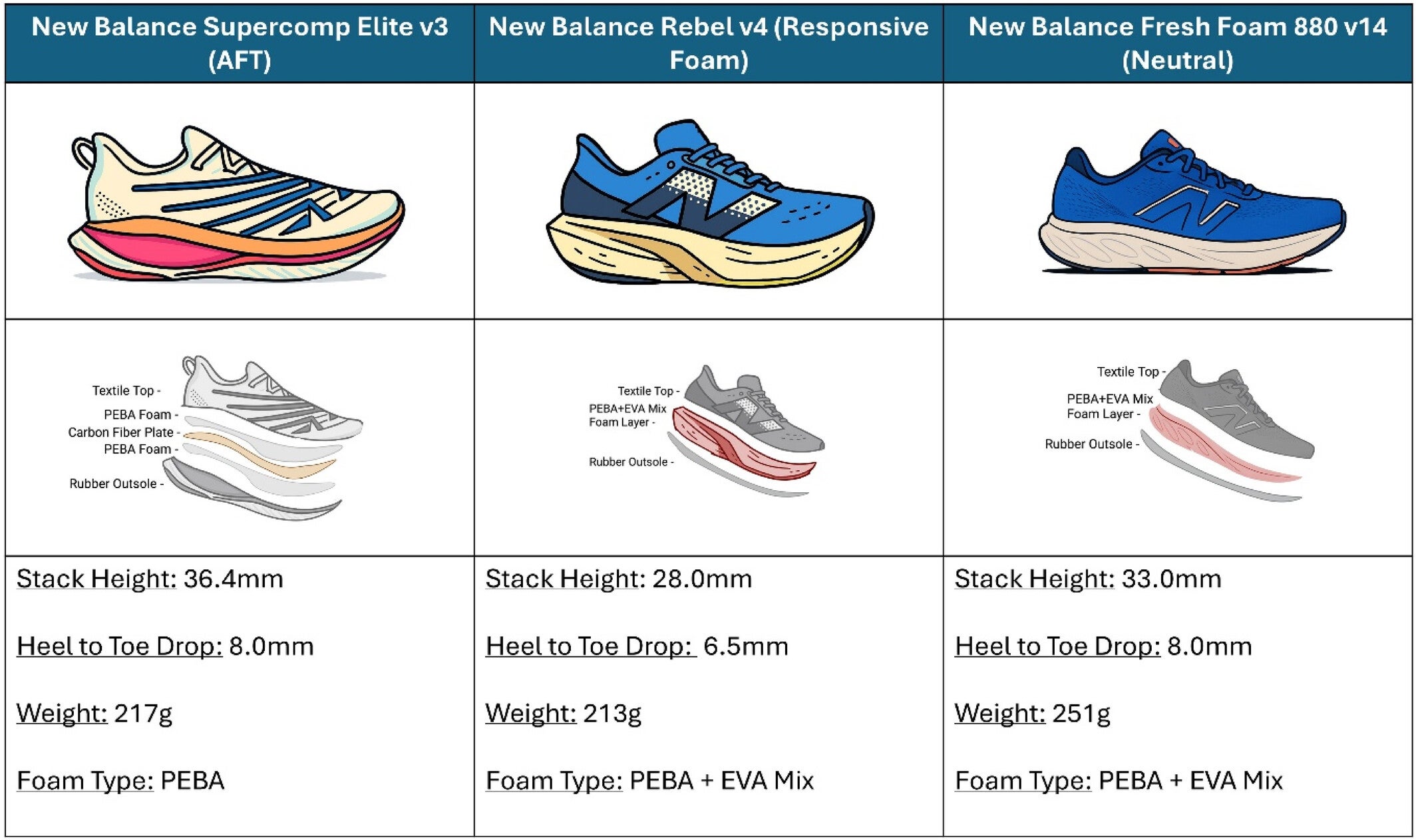
Published in PM&R, the analysis looked at 23 healthy elite runners, 11 women and 12 men, who ran in a neutral trainer, a lightweight foam shoe, and an advanced footwear shoe built with highly cushioned foam and a stiff embedded plate. The runners completed each trial at three self-selected efforts: an easy training pace, a tempo effort, and 5-kilometer race speed.
The shoes did not simply make people move faster. They changed how they moved.
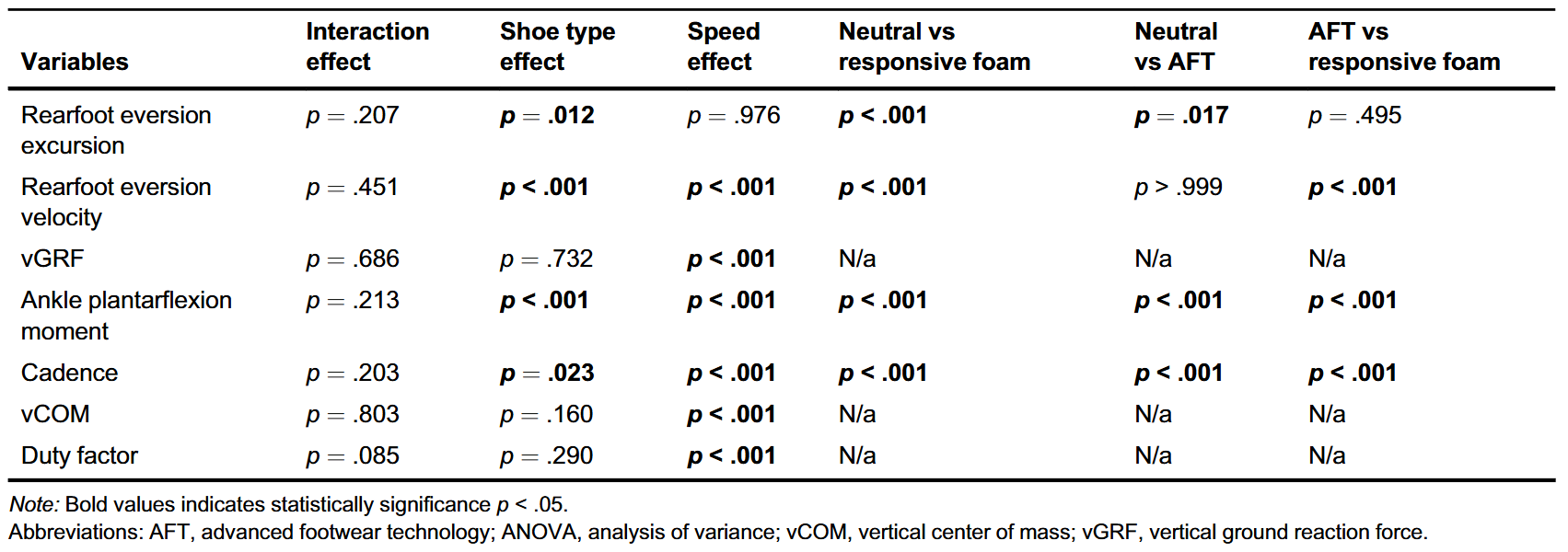
Across the group, runners wearing advanced footwear took slightly fewer steps per minute than they did in the neutral or lightweight foam shoes. That lower cadence matters because it can mean a longer stride, a pattern that has been linked in earlier work to bone stress injuries in the lower limbs.
The advanced shoes were also tied to greater rearfoot eversion excursion, a measure that describes how much the foot rolls inward. In plain terms, the arch collapsed inward more than it did in neutral shoes. That change has been associated in previous research with navicular bone stress injuries, a serious problem in the midfoot that can sideline runners for long stretches and sometimes require surgery.
Not every warning sign moved in the same direction.
The research team also found that runners in the advanced shoes pushed off less with their ankles. That lower ankle plantarflexion moment stood out because earlier work has linked higher ankle loading with a history of bone stress injuries. In this case, the super shoes appeared to reduce one force that could be relevant to injury, even while other variables shifted the opposite way.
That mixed picture is one reason the results resist an easy headline. The footwear did not produce across-the-board signs of higher risk, nor did it appear neutral.
“Our study highlights the need for careful integration of AFT into training and underscores the importance of further research to better understand long-term strategies to modify risk for injury while recognizing the exciting gains related to this footwear on performance,” said senior author Adam Tenforde, MD, director of Running Medicine at Mass General Brigham and an attending physician at Spaulding Rehabilitation.
Advanced footwear technology has transformed distance running over the past decade. These shoes usually combine lightweight, resilient foam with a stiff plate, often made of carbon fiber, and a curved sole designed to help roll the runner forward at toe-off.
The appeal is not subtle. According to the research team, every world best performance at distances of 5 kilometers and above over the last decade has been set in this type of shoe. Other studies have found that the design can improve running economy, meaning athletes use less energy to hold a given pace.
That performance boost has pushed the shoes from elite racing into wider use. But as more runners train and compete in them, sports medicine specialists have been trying to figure out whether the same mechanics that help with speed may also shift stress to different parts of the foot and leg.
Bone stress injuries happen when bone cannot keep up with repeated microdamage. The result can range from swelling and pain to a stress fracture. Among the most worrisome are navicular injuries, which are known for slow recoveries and a higher chance of complications because of the bone’s limited blood supply.
A small earlier case series described five runners who developed navicular bone stress injuries in connection with advanced footwear use. That report could not prove cause and effect, but it sharpened interest in what these shoes might be doing biomechanically.
To explore that question, the Mass General Brigham team recruited runners between 18 and 40 years old who had competed at the professional or collegiate level, or had qualified for national championships or Olympic trials. All were logging at least 30 miles per week, and all already had experience running in advanced footwear during training or racing.
Researchers placed 40 reflective markers on each runner’s body and foot, then tracked movement with 10 motion-capture cameras while measuring ground reaction forces on an instrumented treadmill.
Each participant ran in all three shoe types, with the order randomized. For every shoe, runners completed a 5-minute warmup at their training pace, followed by data collection. They then moved to tempo pace and race pace, with measurements taken during the final 30 seconds of each effort.
The team focused on seven variables linked in earlier literature to bone stress injuries: rearfoot eversion excursion, rearfoot eversion velocity, vertical ground reaction force, ankle plantarflexion moment, vertical center of mass excursion, cadence, and duty factor, which reflects how long the foot stays on the ground during each stride.
Some measures did not change by shoe type. Vertical ground reaction force, vertical center of mass excursion, and duty factor showed no significant difference between the advanced shoes and the other footwear. Rearfoot eversion velocity rose in the lightweight foam shoe compared with both the neutral shoe and the advanced model, but it was not significantly different between the neutral shoe and the advanced shoe.
So the clearest signals for the advanced footwear were lower cadence, greater inward foot collapse compared with neutral shoes, and reduced ankle push-off forces.
The runners in this study were already familiar with super shoes, and the measured changes were small. Even so, the authors argue that small changes repeated over many miles may matter, especially in athletes who train at a high level.
That point carries extra weight because nearly all participants had a prior running-related injury, and 11 of the 23 had a history of bone stress injury.
Still, the analysis leaves important questions open. It was cross-sectional, so it captured immediate responses in the lab rather than what happens after weeks or months of training. The sample was also small, drawn from healthy elite runners at a single site, and the team did not perform a subgroup analysis of those with a previous bone stress injury. Because 11 participants could not reach their true 5K race pace on the treadmill, their fastest trial was capped at 12 miles per hour.
The footwear itself also complicates the story. The shoes differed in more than just the presence of a plate. They varied in stack height, foam, rocker shape, weight, heel-to-toe drop, and stiffness. That means the observed differences cannot be pinned on advanced footwear technology alone as one isolated feature.
The authors also note other possible sources of bias, including incomplete blinding to shoe type, short accommodation periods, and factors they did not standardize.
For runners, coaches, and sports medicine clinicians, the findings argue for a measured approach rather than a simple embrace or rejection of super shoes. The performance benefits remain real, but the biomechanical picture is not purely favorable.
The results suggest that rotating footwear, easing into advanced shoes during training, and paying attention to athletes with a history of bone stress injury may be sensible areas to watch, though this study did not test injury prevention strategies directly.
The research also points to the need for prospective studies that follow runners over time, especially those new to these shoes, to see whether the subtle changes measured in the lab translate into actual injuries on the road or track.
Research findings are available online in the journal Wiley: PM&R.
The original story “‘Super shoes’ boost running speed but at an increased risk for injury” is published in The Brighter Side of News.
Like these kind of feel good stories? Get The Brighter Side of News’ newsletter.
The post ‘Super shoes’ boost running speed but at an increased risk for injury appeared first on The Brighter Side of News.

