Tiny robots face a brutal problem. The smaller they get, the harder it becomes to power them, guide them and keep them useful in messy places. A rigid machine may work well on a lab bench, but the human body is not a lab bench. Neither is a flooded tunnel, polluted river or collapsed building.
A new review argues that the answer may not come from better chips. Instead, engineers may need to partner with life itself.
Researchers are building living biohybrid miniature robots, or LBMs, by combining living organisms with synthetic tools. These systems use bacteria, algae, immune cells, sperm cells and insects as natural engines. They can move, sense, adapt and sometimes repair themselves.
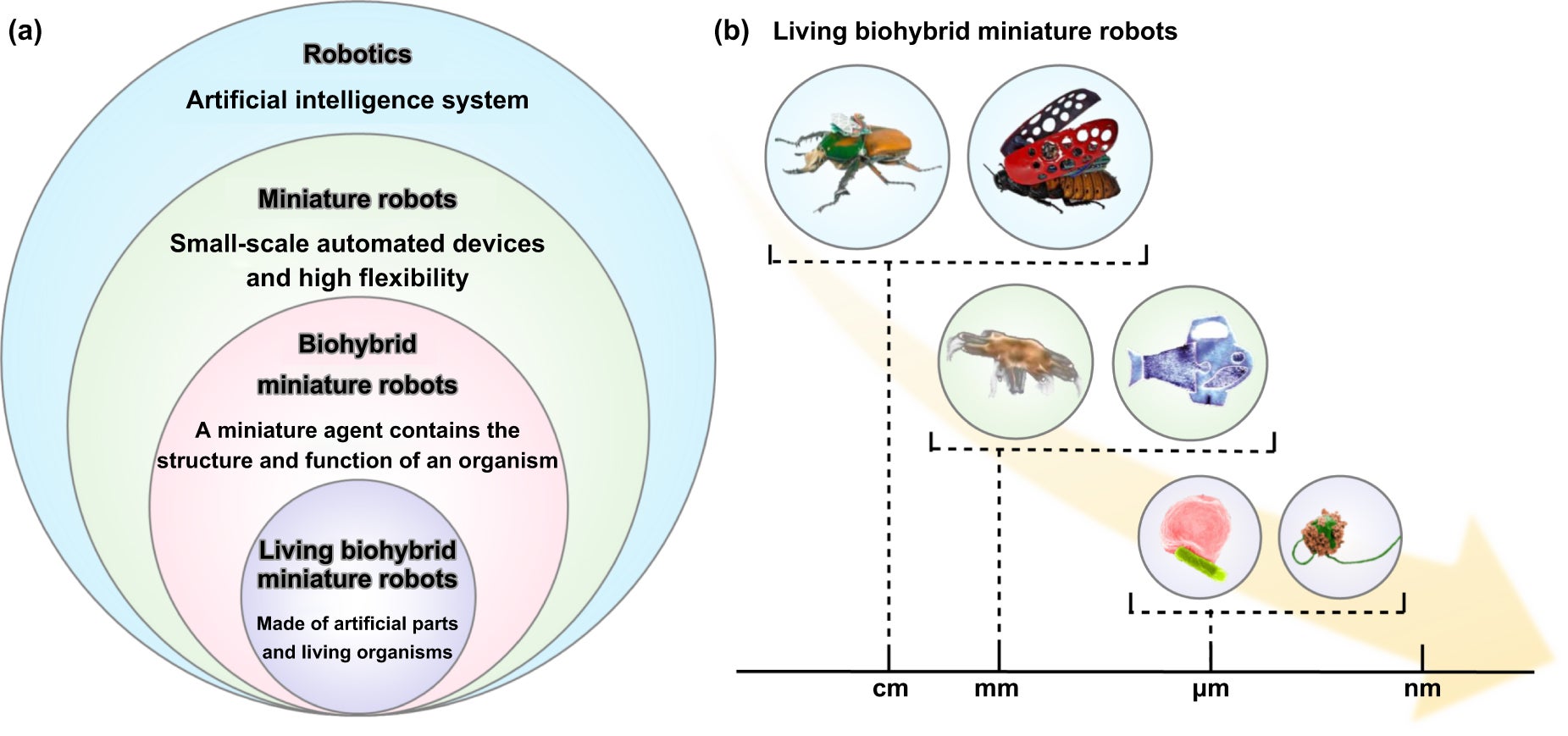
Traditional miniature robots can be precise, but they struggle in complex settings. They often need outside power. They may fail when terrain changes. Some materials also raise safety concerns inside the body.
Living organisms already solve many of these problems. Bacteria can swim through spaces only a few micrometers wide. Some respond to chemicals, light or magnetic fields. Algae can move and produce oxygen. Immune cells naturally travel toward disease signals.
Engineers call this “embodied intelligence.” Instead of programming every movement, they use behaviors biology already built. A microalga may swim toward light. A macrophage may move toward inflammation. A bacterium may follow a chemical trail.
That matters at very small scales. Bacterial motors, usually 1 to 3 micrometers wide, can pass through capillaries as narrow as 4 micrometers. Some bacteria swim up to 100 times their body length each second.
Different living parts offer different strengths. Bacteria can generate thrust forces from about 0.5 piconewtons in Escherichia coli to 4 piconewtons in Magnetospirillum species. That is tiny, but enough for microscopic work.
Microalgae add another advantage. They can swim, carry materials and make oxygen through photosynthesis. Algae-based robots have already shown promise for removing heavy metals, microplastics and viral agents from wastewater.
![Development roadmap of LBMs. Reproduced with permission from[47,48] John Wiley & Sons.](https://www.thebrighterside.news/uploads/2026/05/ri-3.jpg)
Some living robots use human or animal cells. Heart muscle cells can contract rhythmically and power tiny swimmers. Sperm cells can carry drug-loaded structures. Immune cells can cross biological barriers and move toward tumors or inflammation.
At a larger scale, engineers have placed wireless electronic backpacks on beetles, cockroaches and locusts. These devices can stimulate nerves or muscles and guide movement. In one case, cyborg beetles followed set paths through unknown obstacles with 94% success.
The hardest part is connecting synthetic payloads to living motors. Researchers use several attachment methods, each with trade-offs.
Electrostatic interaction works like Velcro. Many cell surfaces carry a negative charge. Positively charged nanoparticles can stick to them. This method is gentle, but the bond can be weak.
Covalent bonding works more like superglue. “Click chemistry” can form strong, lasting links between living surfaces and cargo. It can attach drug carriers or magnetic particles without destroying motion.
For insects, engineers use a harness. Miniature electronic backpacks can connect to the animal’s control systems. This lets researchers guide jumping, crawling or flight.
The field is also changing how robots may be manufactured. Instead of expensive silicon cleanrooms, future production may use bioreactors. Living systems can grow and reproduce, which could make large-scale production cheaper.
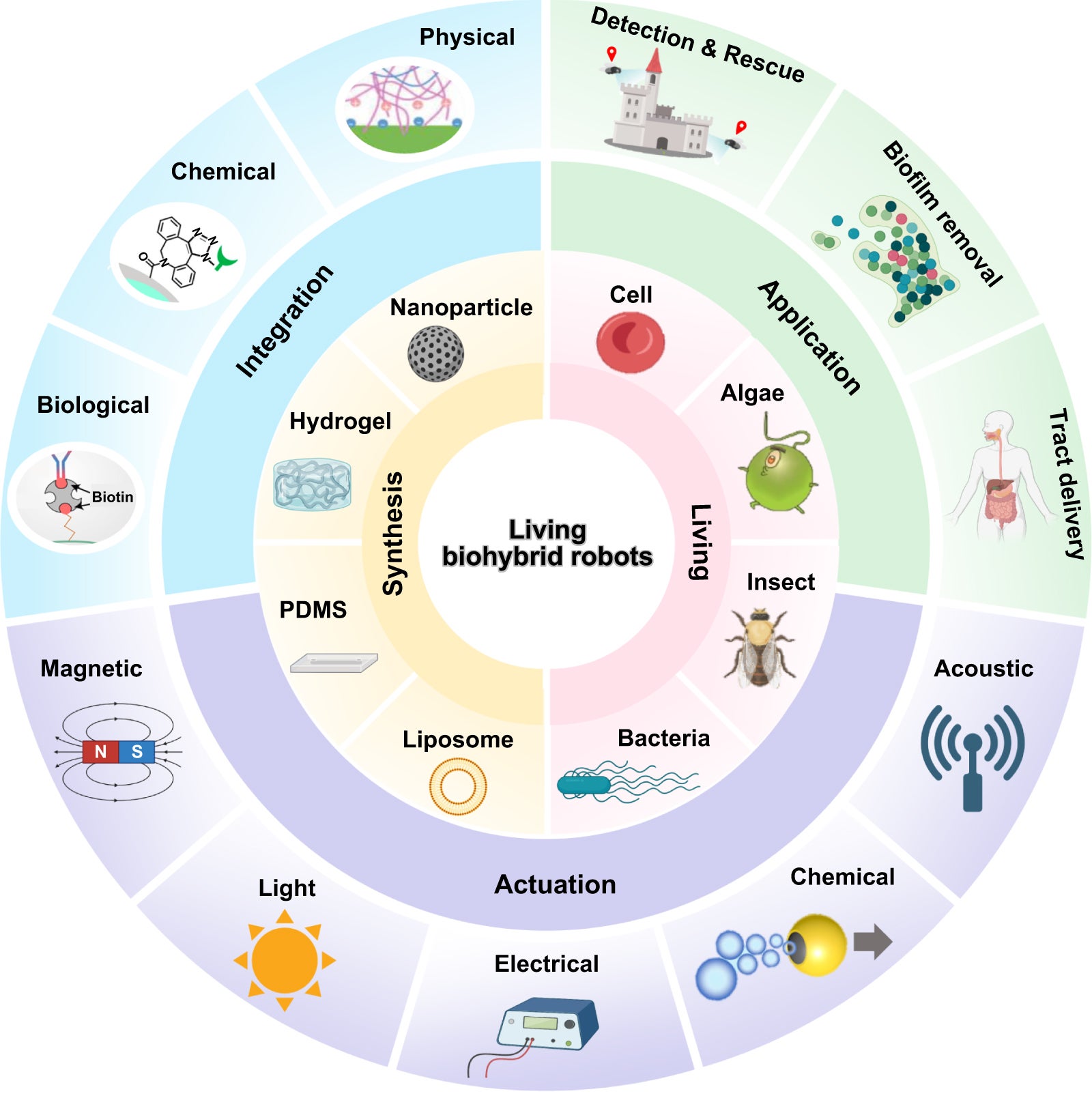
The most powerful promise may come in medicine. Living robots could one day deliver drugs where they are needed most. They could move through the stomach, blood vessels, lungs, joints or urinary tract.
In the gut, acid-resistant algae could survive harsh conditions. Some strains tolerate extremely acidic environments. That could make them useful for stomach or intestinal delivery.
In blood vessels, immune-cell robots could carry drugs toward tumors. Some systems have crossed the blood-brain barrier in animal models. That barrier blocks many treatments, so this could be valuable.
In the reproductive system, sperm-based robots may help deliver medicine or support fertilization. In the lungs, algae-based robots could carry therapies into deep tissue while limiting side effects.
These tools could make treatment more targeted. Instead of flooding the whole body with medicine, a living robot could carry a payload to one site.
Living biohybrid robots may also help outside the body. Algae and rotifer-based systems could clean polluted water. Some have captured heavy metals, microplastics or viral materials.
Insects with sensors could support search and rescue. Small cyborg insects can enter tight spaces where people and larger machines cannot. They could carry cameras, heat sensors or chemical detectors into rubble.
Environmental monitoring is another possible use. Swarms of small living machines could track pollution, water quality or toxic spills. Because they move through natural environments well, they may detect threats earlier than fixed sensors.
The field still faces serious obstacles. Living parts do not last forever. They can die, mutate or behave unpredictably. Their performance can change with temperature, pH, oxygen and nutrients.
Medical use raises major safety concerns. A patient’s immune system may treat a bacterial robot as an infection. Genetically modified organisms could also create regulatory and ethical challenges.
Researchers are testing stealth strategies. One idea involves hiding robots inside membranes from a patient’s own red blood cells. This could help them avoid immune attack.
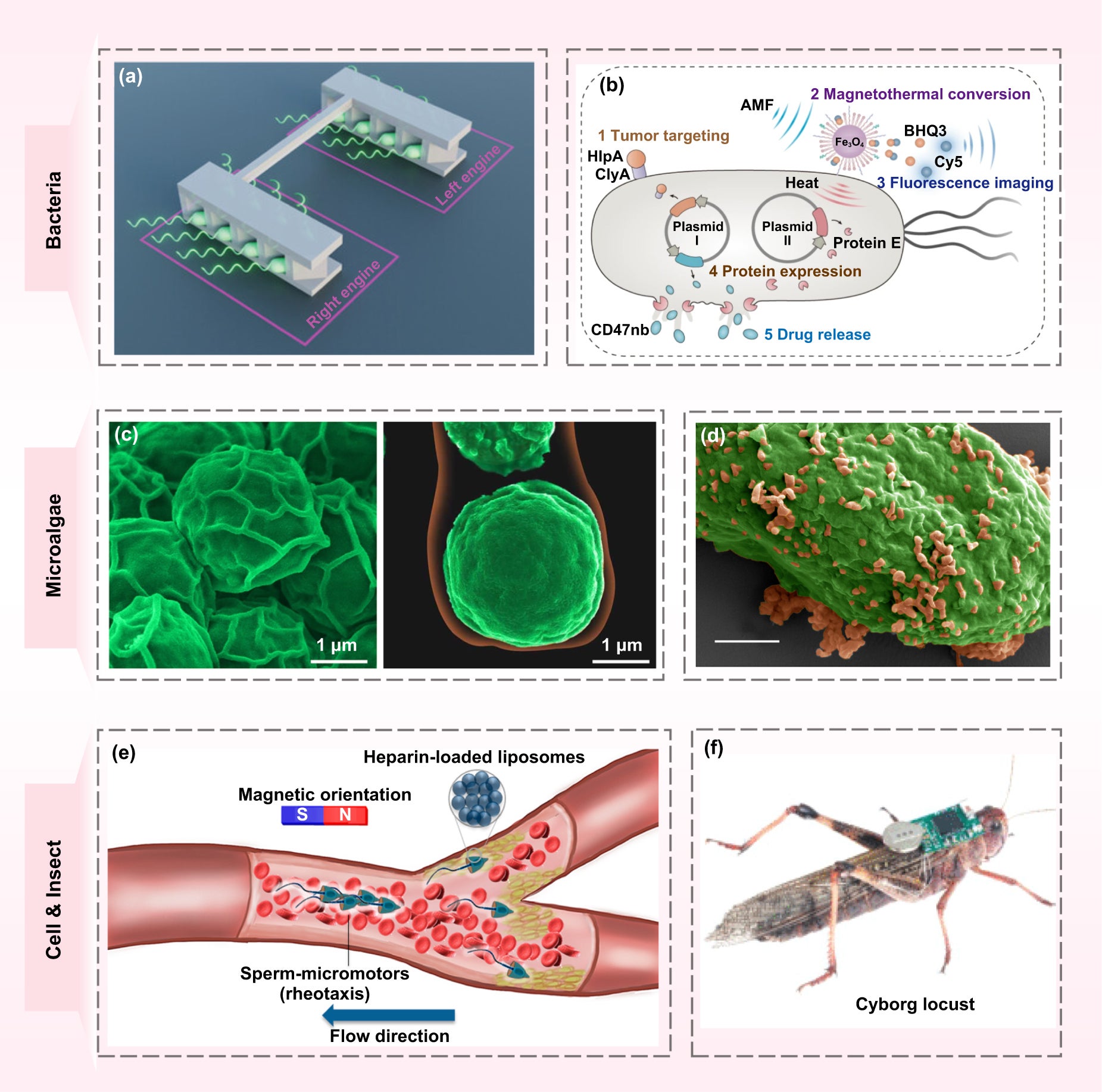
Insects create another ethical challenge. Guiding a living animal with electronics raises questions about welfare and consent. Scientists will need clear rules before these systems move beyond labs.
This research could reshape how people think about robotics. Instead of building every part from metal, plastic or silicon, engineers may use biology as a partner. That shift could produce machines that move better in the body, adapt to changing environments and use less external power.
In medicine, living robots could support more precise drug delivery. They may help treat cancer, infections, infertility, stroke or lung disease. If researchers solve safety concerns, these tools could reduce side effects by delivering medicine only where needed.
For the environment, living robots could improve cleanup of polluted water and contaminated sites. They may help remove microplastics, heavy metals and pathogens. In disaster response, insect-based systems could search dangerous spaces before human rescuers enter.
Research findings are available online in the International Journal of Extreme Manufacturing.
Like these kind of feel good stories? Get The Brighter Side of News’ newsletter.
The post Living robots could transform medicine, helping rescue missions appeared first on The Brighter Side of News.


Leave a comment
You must be logged in to post a comment.