The speed of light remains one of physics’ firmest assumptions, but scientists still test whether it ever shifts under extreme conditions. A new review draws together decades of observations, tightening the limits on possible departures from relativity and sharpening the next round of searches.
The speed of light is one of science’s most trusted constants, a value woven into modern physics so deeply that questioning it means probing the foundations of how nature works. Yet physicists keep returning to that question, not because relativity is failing, but because any tiny exception could point the way to a deeper theory of the universe.
A new review brings fresh order to that effort. By gathering and reanalyzing measurements from pulsars, active galaxies, and gamma ray bursts, the study offers a more consistent way to test whether photons of different energies might travel through space at slightly different speeds. The answer remains no, but the limits are now tighter and the path forward is clearer.
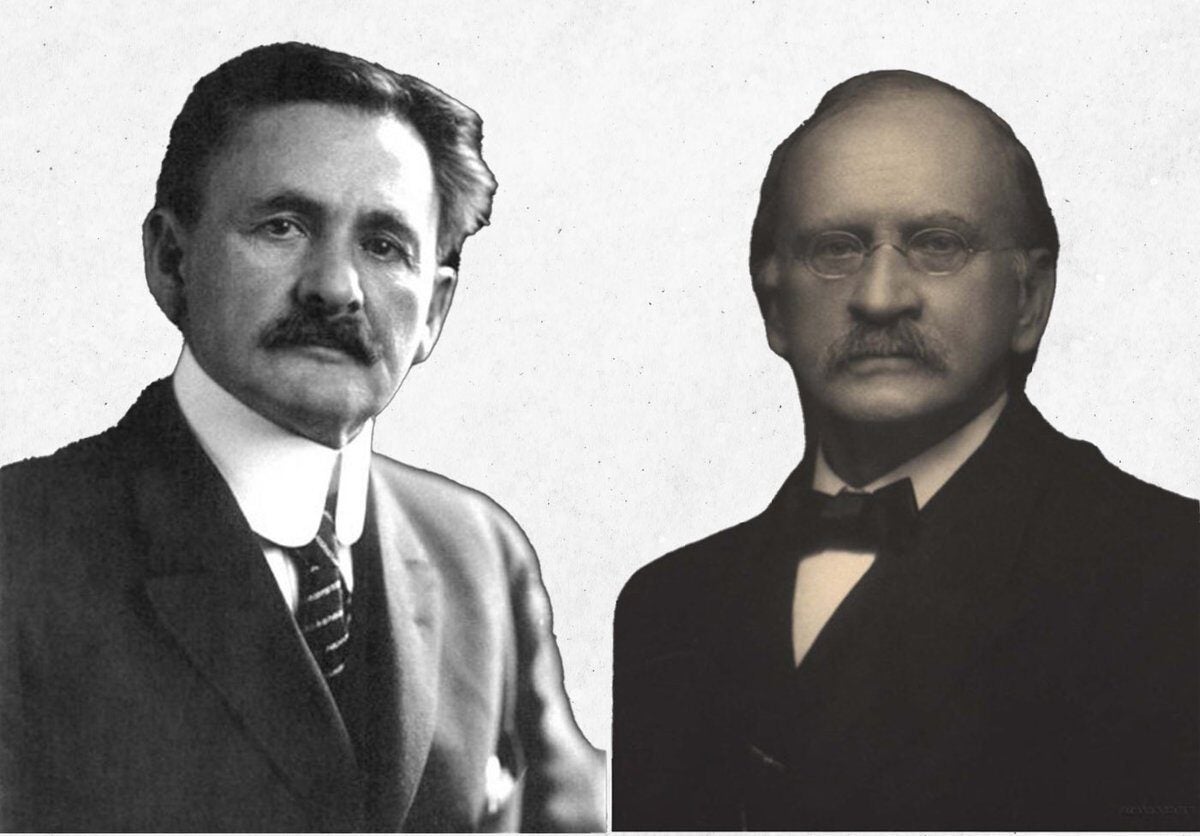
The issue reaches back to one of the best-known experiments in physics. In 1887, Albert Michelson and Edward Morley tried to detect whether Earth was moving through a hypothetical medium called the luminiferous ether by measuring changes in the speed of light. They found no such shift. That null result helped lay the groundwork for Albert Einstein’s special theory of relativity, which holds that the laws of physics are the same for all observers and that light in a vacuum travels at a constant speed.
That principle, known as Lorentz invariance, became one of the central supports of modern physics. It sits inside special relativity, quantum field theory, and the Standard Model, helping define how matter and forces behave. Few ideas in science have been tested so often, or held up so well.
Even so, there is an unresolved tension at the heart of physics. Quantum theory and general relativity remain extraordinarily successful, but they do not fit neatly together. Quantum theory describes particles and forces in terms of probabilities and wave behavior. General relativity describes gravity as the curvature of spacetime. At extremely small scales, those pictures begin to clash.
That mismatch has led many researchers to theories of quantum gravity, and some of those ideas allow for the possibility that Lorentz invariance could break down at very high energies. If that happened, even slightly, photons released at the same moment from a distant cosmic event might not all reach Earth at the same time.
This possibility has turned the universe into a natural testing ground. Pulsars, active galactic nuclei, and gamma ray bursts release light across a broad energy range. Some of those signals travel for billions of light years before reaching Earth. Over such distances, even a minute energy-dependent change in photon speed could grow into a measurable delay.
Earlier efforts used that logic to place limits on an energy scale associated with possible quantum-gravity effects. Lower-order deviations were pushed to very high limits, near or beyond the Planck scale. Higher-order effects proved more difficult to constrain, but stronger bursts and better detectors gradually improved those estimates.
The new review addresses a different problem as well: how to compare all those measurements in a consistent framework.

Over the years, theorists developed the Standard Model Extension, which describes possible Lorentz violations through many separate coefficients rather than a single energy threshold. Each coefficient represents a particular kind of deviation in photon behavior. In principle, that framework lets researchers describe possible violations in much greater detail. In practice, translating astrophysical time-delay measurements into those coefficients has been complicated.
Mercè Guerrero and colleagues set out to make that translation cleaner.
Working with teams at the Universitat Autònoma de Barcelona, the Institute of Space Studies of Catalonia, and the University of Algarve, the researchers reviewed the strongest published constraints and recast them in terms of the Standard Model Extension. Their focus was a family of nonbirefringent coefficients, which avoid additional complications tied to polarization effects.
The team showed that the photon-dispersion parameters often used in time-of-flight studies can be rewritten using spherical harmonics. That matters because the Standard Model Extension allows direction-dependent effects. A burst in one part of the sky does not test the same combination of coefficients as a burst in another.
The review also corrected several inconsistencies in earlier work. Some past analyses had left out important terms, while others did not include systematic uncertainties. Guerrero and her co-authors added updated instrumental uncertainties for observatories including the Fermi Large Area Telescope, LHAASO, and several ground-based facilities. They also converted older one-sided constraints into two-sided limits at the 95 percent confidence level so the full set of results could be compared more evenly.
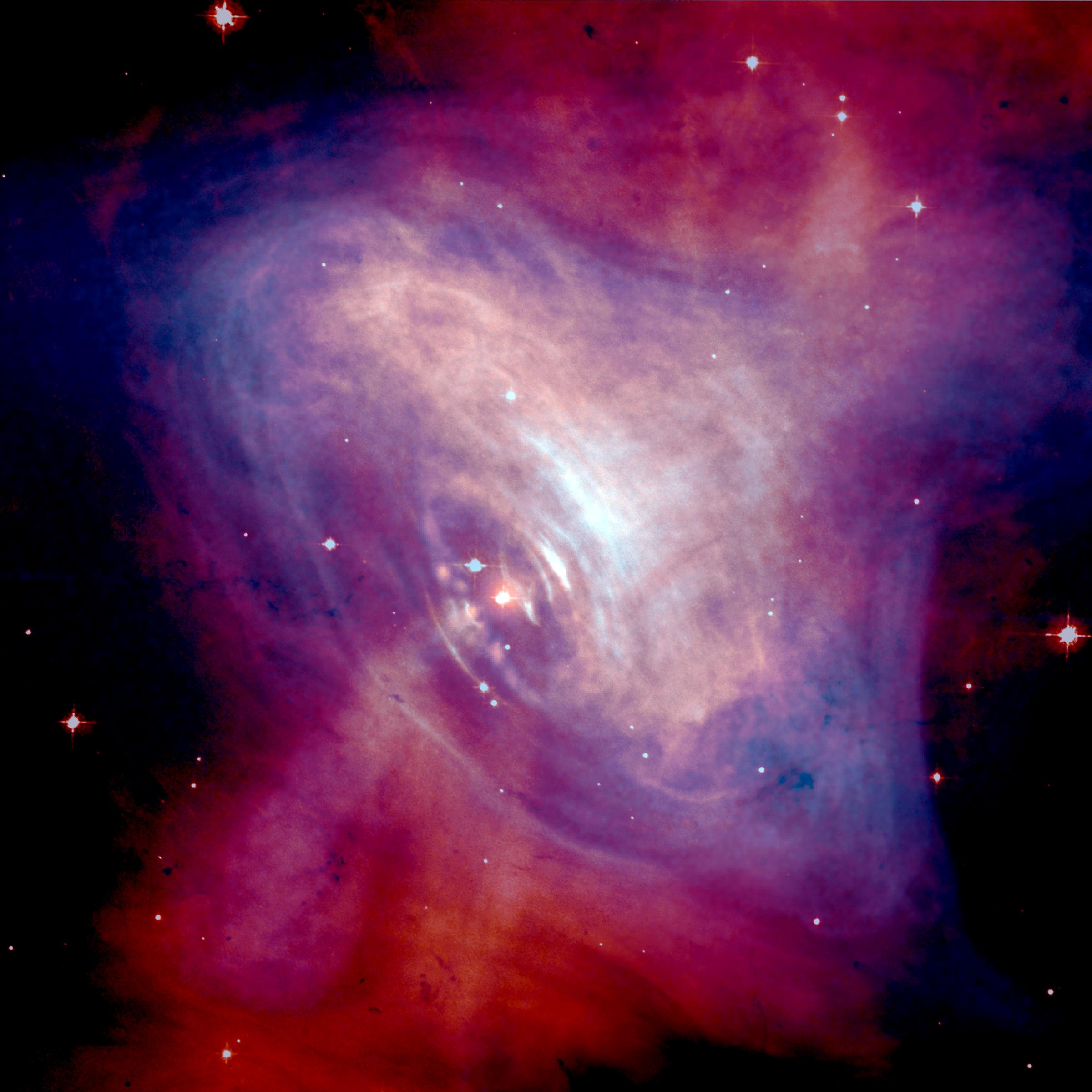
Several recent sources strengthened the analysis, including the Crab Pulsar, the active galaxy Mrk 421, and the gamma ray bursts GRB 190114C and GRB 221009A. GRB 221009A produced the strongest individual limit in the review, improving earlier constraints by more than a factor of ten.
Still, one burst is never enough.
A delay in photon arrival does not automatically come from new physics. It could arise inside the source itself, during the process that produced the light. That makes any single event difficult to interpret on its own. The only way to move toward firmer conclusions is to compare many sources across different regions of the sky.
That is what the authors did. They combined 65 measurements to solve for 25 different coefficients in the Standard Model Extension. Each measurement was treated as a probability distribution, then folded into a multidimensional Gaussian and rotated into an orthogonal basis. This allowed the team to extract separate limits for each coefficient rather than only broad combined bounds.
The result is a much clearer map of where Lorentz-violating effects could still be hiding. Across the set of coefficients, the limits improved by roughly an order of magnitude. Much of that gain came from stronger recent observations, but part of it also came from the review’s more complete treatment of uncertainties and its broader selection of sources.
The paper also makes a practical point for future work. Many published studies do not provide full likelihood curves, which forces later researchers to rely on approximations when translating results into the Standard Model Extension. The authors argue that more consistent reporting would make future constraints both stronger and easier to combine.
The deeper message of the review is not that relativity is in immediate danger. It is that the search for possible cracks in Lorentz invariance is becoming more organized, more quantitative, and more sensitive.
Michelson and Morley once looked for changes in light speed caused by Earth’s motion through a supposed ether. Today, astronomers search for tiny differences in the travel times of photons released by violent events billions of light years away. The methods are vastly different, but the underlying question remains closely related: does light always obey the same rules?
So far, the answer is yes.
Guerrero and colleagues report that with roughly a dozen more strong measurements, sensitivity to some coefficients could improve by another five orders of magnitude. That gives added importance to future instruments such as the Cherenkov Telescope Array Observatory, which should provide more precise data from high-energy astrophysical sources.
For now, Einstein’s theory remains intact. So does the legacy of Michelson and Morley, whose null result opened the door to one of physics’ most powerful ideas. What has changed is the precision of the challenge. Light that has crossed the universe is now being used to test one of nature’s most basic rules with a level of rigor earlier generations could hardly have imagined.
This study does not alter everyday technology, but it strengthens one of the main ways physicists search for new laws beyond today’s theories.
By giving researchers a cleaner method for converting astrophysical observations into limits on Lorentz violation, the review makes future measurements more useful and more comparable.
If any violation is ever confirmed, it would have major consequences for efforts to unify quantum theory and gravity. Until then, the work helps narrow the space where such new physics could still be hiding.
Research findings are available online in the journal Physical Review D.
The original story “New discovery rewrites what we know about the speed of light” is published in The Brighter Side of News.
Like these kind of feel good stories? Get The Brighter Side of News’ newsletter.
The post New discovery rewrites what we know about the speed of light appeared first on The Brighter Side of News.


Leave a comment
You must be logged in to post a comment.