Warp drive has long lived in science fiction, but physicists now treat it as a real, if deeply uncertain, question. The idea could shorten interstellar travel dramatically, yet every proposed path runs into harsh limits that have not gone away.
Warp drive sits in that strange space where pop culture, physics, and wishful thinking all meet. It sounds like pure fantasy, a shortcut to distant stars without waiting lifetimes to arrive. But behind the familiar sci-fi label is a real scientific idea, one that has pushed researchers to ask whether spacetime itself could do the traveling for us.
The basic appeal is simple. Einstein’s theory of relativity says nothing with mass can move through space faster than light. That limit seems final, and for ordinary spacecraft it is. A warp drive tries to get around it by changing the stage instead of the actor.
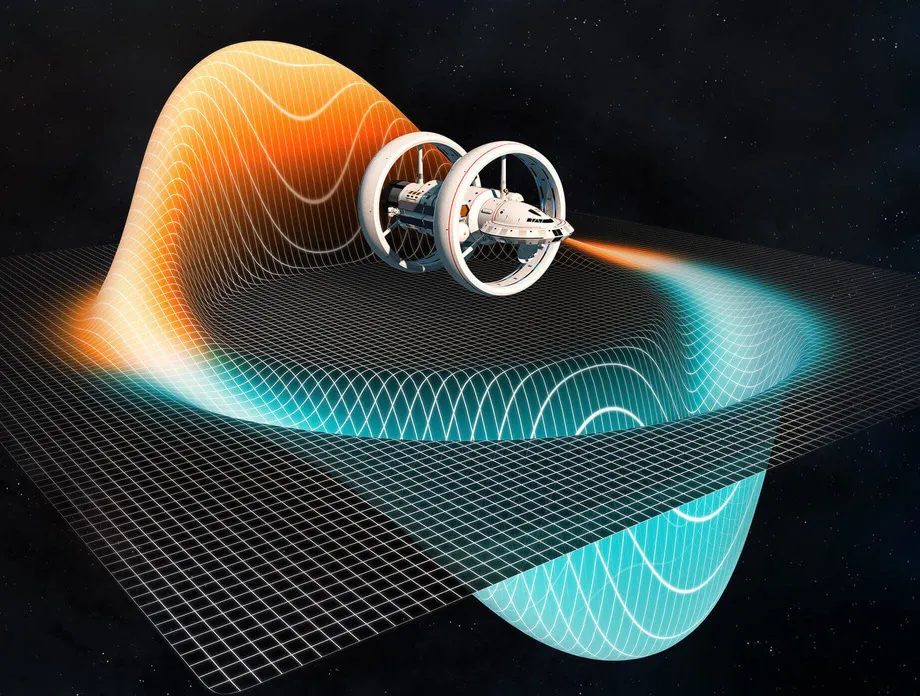
In 1994, physicist Miguel Alcubierre proposed a model in which a spacecraft would sit inside a kind of bubble. Space in front of the craft would compress, while space behind it would expand. Inside that bubble, the ship would not locally break the speed of light. Spacetime itself would shift, carrying the craft along.
Joseph Agnew, then an undergraduate at the University of Alabama, described the idea in plain terms: “Suppose you have a craft that’s in the bubble. You’d compress spacetime ahead of the craft and expand spacetime behind it.” In that picture, the passengers would not feel like they were racing through space. Their destination would simply move closer.
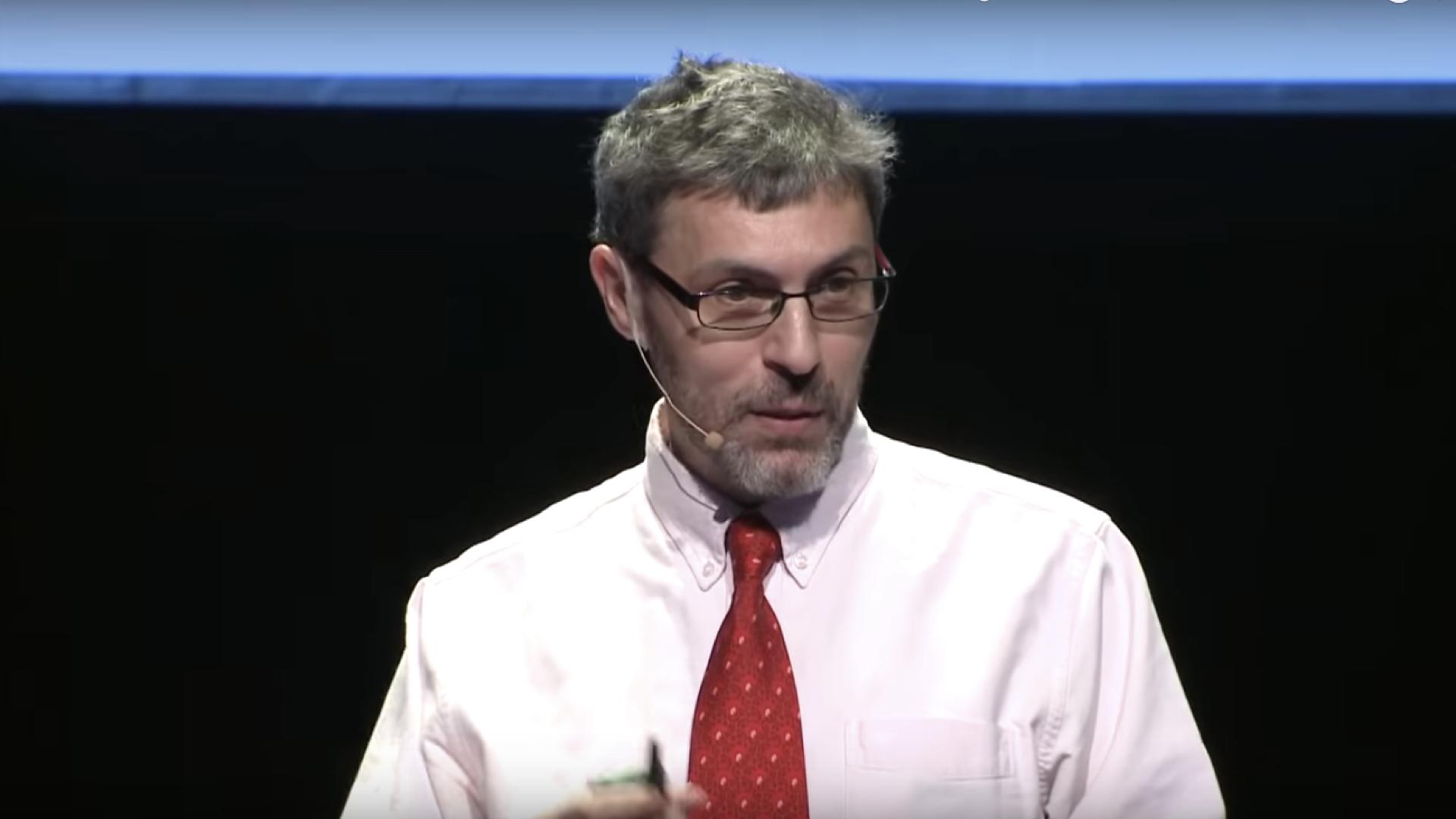
That distinction matters because relativity does not just dislike fast travel, it places a brutal price on it. The closer an object with mass gets to light speed, the more energy it takes to keep pushing. Reaching the speed of light would require infinite energy. Photons can do it because they have no mass.
A warp bubble tries to sidestep that problem. The spacecraft does not outrun light inside its local patch of space. Instead, the bubble carrying it could, in theory, move faster than light relative to distant observers.
That elegant idea runs into an ugly requirement. Alcubierre’s original model called for negative energy, sometimes described as negative mass, an exotic ingredient unlike anything people can produce in useful amounts. Rather than pulling spacetime the way ordinary mass does, it would help push space outward.
The scale of that requirement has always been one of the biggest shocks in the field. Early estimates suggested a need for negative energy comparable to the mass of Jupiter. That is not a difficult engineering target. It is a near absurd one.
Harold “Sonny” White, a NASA physicist, later argued that reshaping the bubble might slash the amount required. He suggested that a torus-like configuration could lower the mass-energy burden dramatically, to roughly 700 kilograms in one version of the estimate. Even that more optimistic framing did not make warp travel practical, but it changed the tone of the discussion from impossible on paper to maybe worth probing.
White’s team has worked on the White-Juday Warp Field Interferometer, an instrument meant to look for tiny distortions that could resemble the earliest hint of a warp-like field. It is nowhere near a starship engine. Still, it reflects a broader point: some researchers think the subject is serious enough to test at small scales.
The problems did not stop with energy demands. As physicists kept working through the equations, new obstacles piled up.
One is that quantum fields at the bubble’s boundary may become uncontrollably large. In some calculations, they blow up to infinity when the drive activates. That would make the bubble unstable before it ever carried anyone anywhere.
Other studies raised a different concern: the exotic matter needed to maintain the bubble might leak away faster than light, undermining the structure almost immediately. Even when theorists found ways to reduce the energy bill by changing the bubble’s shape, the answer still came back punishingly large. In some versions, the requirement dropped from impossible to merely stellar, closer to the energy output of a star than a planet-sized lump of negative mass, but still far beyond present technology.
There is also the problem of size. Even a modest bubble, roughly 30 feet across, appears to demand exotic conditions that dwarf anything accessible in a lab. That has kept warp drive in a strange category: mathematically interesting, physically provocative, and stubbornly detached from engineering reality.
Then comes causality. Tim Dietrich of Potsdam University has pointed to one of the deepest worries, that faster-than-light travel may tangle the order of cause and effect itself. “Using a warp drive might cause paradoxes once it crosses light speed,” he said. If a machine lets you outrun light in a meaningful way, the universe may answer with contradictions.
For all that, physicists have not shut the door completely. Geraint Lewis of the University of Sydney has argued that exotic matter may yet turn up in forms we do not fully understand. “We have hints these materials exist in the universe,” he said. “But whether we can build a warp drive, we still don’t know.”
He also offered the kind of long view that warp-drive talk almost demands: “Einstein’s theory is a hundred years old, but we’ve only scratched the surface. In the next 100 or 1,000 years, hyper-fast travel might become achievable.”
White has suggested that any future system would likely work alongside conventional propulsion. A spacecraft might launch with ordinary rockets, engage a warp system only once clear of Earth, then turn it off near its destination. In that vision, Alpha Centauri might be a months-long trip instead of a voyage measured in centuries.
Some researchers have pushed the idea in an even stranger direction. If humans never manage to build a warp drive, perhaps someone else already has. Katy Clough, a cosmologist at Queen Mary University of London, has explored whether a collapsing warp bubble could produce gravitational waves strong enough to detect.
Working with Dietrich, she examined what happens if the field containing the exotic matter fails. “The bubble becomes unstable, collapses, and creates ripples propagating outward,” Dietrich said. If those ripples reached Earth with the right signature, they could hint that a warp-like event had occurred somewhere in the cosmos.
Clough summed up the challenge with dry humor: “If anyone has a spare billion pounds for a high-frequency gravitational wave detector, please let us know!”
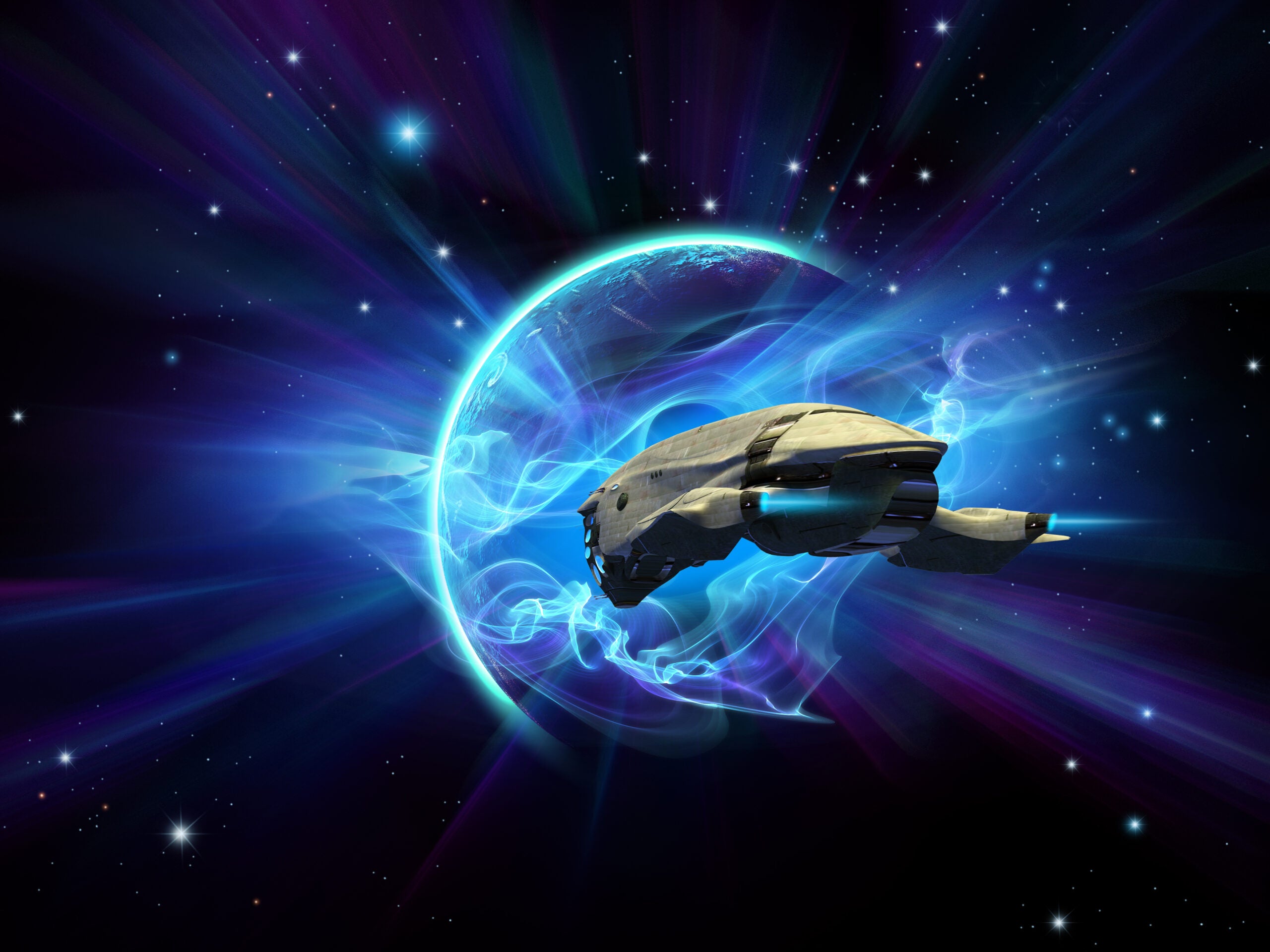
Warp travel, if it ever happened, would probably look nothing like the movie version. Instead of stars streaking past the windows, light ahead of the craft might shift toward blue, while light behind it would slide toward red. Objects could appear bent or warped, as if seen through curved glass.
Research by physics students at the University of Leicester suggested travelers might see a glowing disc rather than cinematic star trails, caused by background radiation shifting into visible light. Clough has said one of the better screen versions came from Star Trek Beyond. “The ‘bullet shot’ was loosely based on how light curves around a warp bubble.”
That may be the most honest place to leave the subject. Warp drive is not a machine waiting in a hangar. It is a live theoretical question with a stack of unanswered objections. Yet it remains useful science precisely because it pushes physics into uncomfortable territory. To ask whether warp travel is possible is also to ask what spacetime allows, what quantum theory can tolerate, and where today’s limits are real rather than assumed.
Aside from Joseph Agnew’s Alcubierre model theory, here are some other warp drive theories and concepts currently being explored:
Each of these theories faces significant obstacles due to the requirement for exotic matter, negative energy, or extremely advanced technologies that we do not yet possess. However, advances in quantum field theory, energy manipulation, and fundamental physics could potentially make warp drive—or something like it—more feasible in the far future.
The original story “Physicists believe that warp drive could exist in the next 100 years” is published in The Brighter Side of News.
Like these kind of feel good stories? Get The Brighter Side of News’ newsletter.
The post Physicists believe that warp drive could exist in the next 100 years appeared first on The Brighter Side of News.


Leave a comment
You must be logged in to post a comment.