The legacy of Neandertals in modern people has often been framed as a genetic gift for fighting infection. This time, the picture looks less flattering. A new analysis suggests some inherited archaic variants are tied to higher levels of common DNA viruses in people today. In particular, this is true for Epstein-Barr virus. This hints at a more complicated immune inheritance than earlier work suggested.
That matters because viruses have long been among humanity’s most persistent enemies. Many DNA viruses do not simply infect and leave. In fact, they can linger for life, usually quietly. Their levels rise and fall depending on how well the immune system contains them.
The new study focused on whether archaic human ancestry, mostly from Neandertals, helps explain some of that variation. In present-day non-African populations, roughly 2% of the genome traces back to Neandertals.
In Oceania, an added 2% to 4% comes from Denisovan ancestry. Those inherited fragments have already been linked to many traits, including immune function. However, their role in DNA virus defense has remained largely unclear.
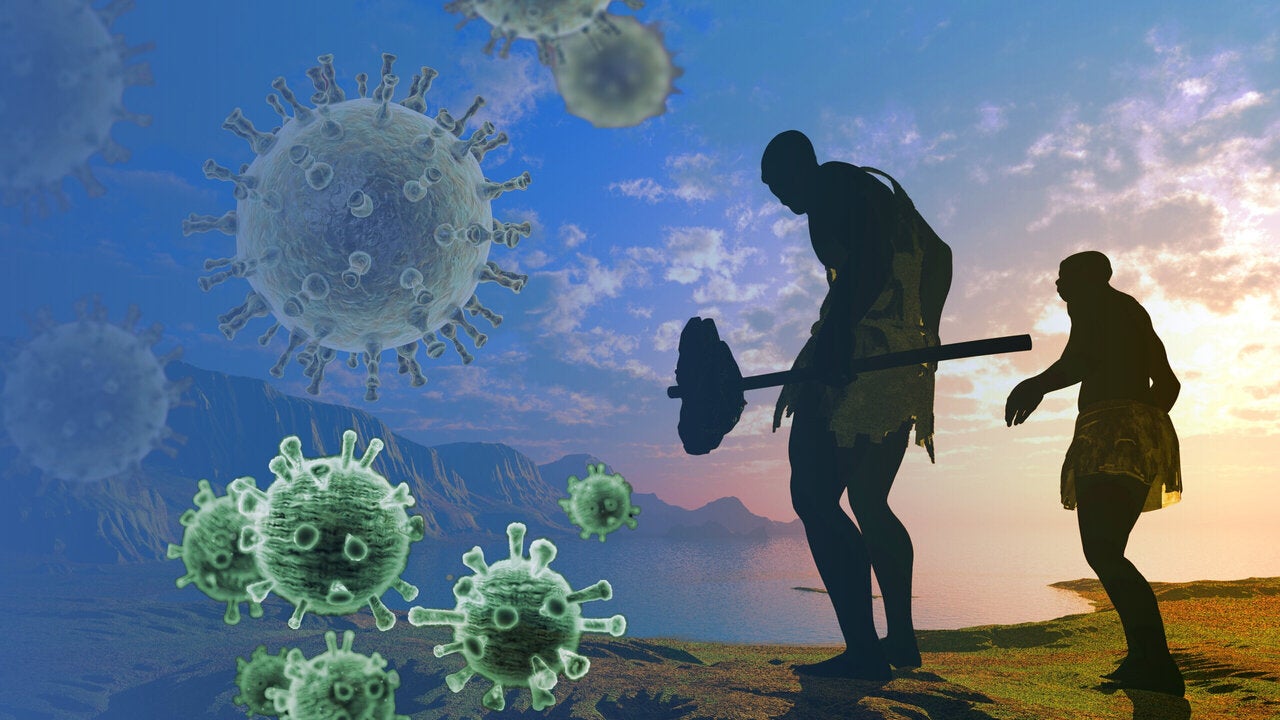
Earlier research had pointed in a more encouraging direction. Neandertal-derived variants have been disproportionately linked to immune responses against RNA viruses, suggesting that some archaic DNA may have helped modern humans adapt to viral threats. But DNA viruses play by different rules.
They differ from RNA viruses in how they replicate, how quickly they evolve, which tissues they target, and whether they tend to cause acute or long-lasting infections. As a result, those differences led the researchers to ask whether archaic ancestry might affect the two virus classes in different ways.
To test that, the team examined genome-wide association data tied to viral load measurements from whole-genome sequencing in the UK Biobank. They looked at five common DNA viruses with enough data for analysis: Epstein-Barr virus, Human herpesvirus 7, and three torque teno viruses, TTV1, TTV16, and TTV17.
These are not rare infections. They are widespread, often persist for long periods, and may cause no symptoms at all. However, the amount of viral DNA in blood or other fluids can still serve as a useful sign of how effectively the body is keeping infection under control.
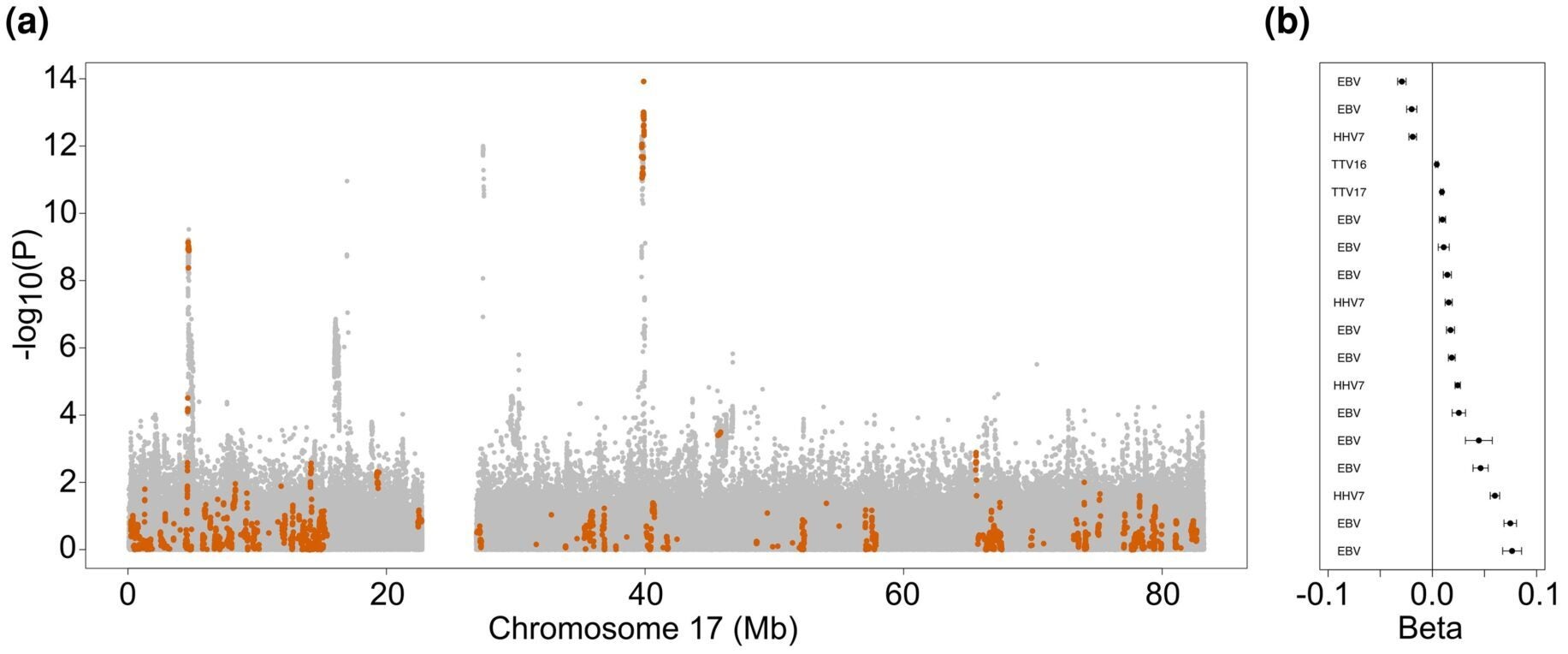
The researchers identified 18 genome-wide significant associations involving archaic haplotypes across 13 regions of the genome. Most of those signals involved Epstein-Barr virus. Most also pointed in the same direction: carriers of the archaic variants tended to show higher viral loads.
Many of the associated archaic haplotypes fell within the major histocompatibility complex, or MHC, a dense immune-related region of the genome known for its complexity. However, the study found that most of those MHC signals were probably not driven directly by archaic DNA itself. Instead, they often sat in moderate linkage with stronger non-archaic variants nearby. This makes the causal story harder to pin down.

Two regions on chromosome 17 stood out more clearly.
At both sites, the virus-associated archaic variants were tightly linked to the main Epstein-Barr virus signal, and both haplotypes were associated with higher EBV levels. One of them was connected to three genes, PELP1, ARRB2, and ALOX15. The other sat near GSDMB, IKZF3, LRRC3C, ORMDL3, and ZPBP2.
Several of those genes have plausible immune relevance. ARRB2 has roles in signaling, inflammation, and T-cell activity. ALOX15 is involved in inflammation resolution. GSDMB helps drive pyroptosis, a form of inflammatory cell death that can help eliminate infected cells. IKZF3 is important in B-cell biology. This is especially notable because Epstein-Barr virus infects B cells and can reshape their behavior.
The study also found evidence that some archaic variants at these sites may influence gene regulation across different tissues. In a few cases, they also altered protein sequence, although the predicted amino acid changes were mild.
“Our results suggest that Neandertal-derived variants may not provide effective defense against several DNA viruses in people today,” said Michael Dannemann, a co-author of the study. “This stands in striking contrast to their previously reported beneficial effects on RNA virus immunity.”
That does not mean these variants were bad news in the distant past.
“The pathogenic landscape faced by Neandertals tens of thousands of years ago would have been vastly different from the one we face today,” Dannemann said. “A variant that reduced viral burden in the past may increase it now.”
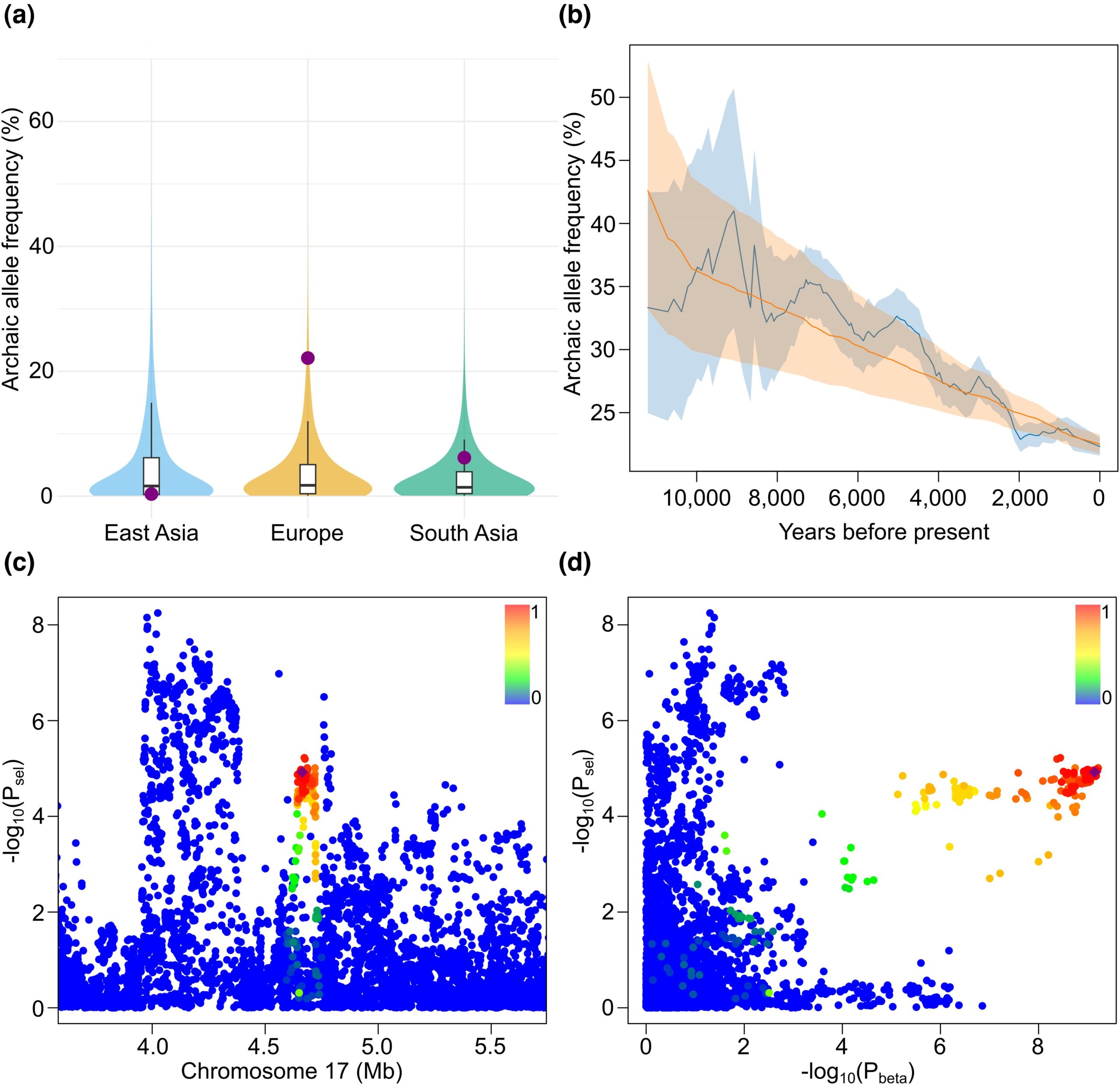
That idea runs through the study’s evolutionary analysis. One chromosome 17 haplotype tagged by the archaic variant chr17:4,664,269_T/C remains unusually common in Europeans today, at about 22.1%. This puts it among the highest-frequency archaic haplotypes in that population. Yet reconstructed ancient DNA data suggest it has dropped sharply over the past roughly 11,200 years, from an estimated 42.6% to 22.3%.
That decline was statistically significant, and the selection signal sat tightly alongside the same locus linked to higher EBV levels. Therefore, the authors argue that this pattern could reflect changing selective pressures over time. A haplotype that may once have been useful could later have become disadvantageous. This may have happened as environments, lifestyles, and pathogen exposure changed.
The timing is suggestive. The past 10,000 years span major shifts in human settlement, agriculture, and disease ecology. If viral threats changed, the value of inherited immune variants could have changed with them.
The second chromosome 17 archaic haplotype did not show the same strong evidence of recent decline. In addition, one Denisovan-like haplotype in the MHC linked to HLA-A*11:01 may even carry signs consistent with positive selection in East and South Asian populations. However, missing linkage data limited what the team could conclude.
The broader pattern, though, is what makes the study stand out. Of the 18 significant archaic associations the researchers identified, 15 were linked to higher viral loads. That directional bias does not prove every archaic variant is directly causal, and the authors note that the structure of viral load data can modestly favor positive effect estimates for rare variants. Even so, they argue the pattern is unlikely to be random.
The work also adds a note of caution to simple stories about Neandertal DNA as either good or bad. Its effects may depend on which pathogen is involved, which genes are affected, and when in history the question is being asked.
There are limits here. Several key datasets were dominated by people of European ancestry, which means much of the analysis was effectively restricted to archaic variants found in Europeans. As a result, that leaves a large share of Neandertal DNA, and most Denisovan DNA, still underexplored. It also means the findings may not capture the full global picture of how archaic ancestry shapes immune response.
The findings suggest that inherited archaic DNA may still influence how well the body keeps chronic DNA viruses in check, especially Epstein-Barr virus.
That could matter for future work on immune regulation, long-term infection biology, and disease risk tied to persistent viruses.
It also sharpens a broader lesson in human evolution: genetic variants that once helped our ancestors survive may not work the same way in today’s viral world.
Research findings are available online in the journal Genome Biology and Evolution.
The original story “Neandertal ancestry significantly affects our immune system today” is published in The Brighter Side of News.
Like these kind of feel good stories? Get The Brighter Side of News’ newsletter.
The post Neandertal ancestry significantly affects our immune system today appeared first on The Brighter Side of News.


Leave a comment
You must be logged in to post a comment.