The Late Triassic was full of animals that look almost familiar, right up until you place them on the evolutionary tree. One of the newest examples is Labrujasuchus expectatus, a lightly built, two-legged reptile with tiny forelimbs and a toothless beak, an animal that would not have looked out of place beside the ostrich-like dinosaurs of a much later age.
It was not a dinosaur.
Instead, Labrujasuchus belonged to the crocodile line of archosaurs, the branch that eventually gave rise to crocodilians. That makes it one of the stranger cases yet of Triassic convergence, when unrelated reptiles repeatedly stumbled into body plans that later became more familiar in dinosaurs, birds, and modern animals.
Described in the Journal of Vertebrate Paleontology, the animal comes from Ghost Ranch in northern New Mexico, a fossil-rich landscape already famous for preserving some of the era’s most unusual creatures. The new species adds another member to Shuvosauridae, a small group of bipedal, toothless pseudosuchians whose overall form strongly recalls ornithomimosaurs, the fast-running theropods of the Cretaceous.
“We see a lot of the successful strategies for modern animals and non-avian dinosaurs first arise in the Triassic, and shuvosaurs are a great example of that convergent evolution,” said lead author Dr. Alan Turner from Stony Brook University. “Bipedalism is certainly a unique path for crocodile relatives to take, but it’s a path well-trod by dinosaurs and later birds. It obviously worked for these animals.”
The resemblance is striking because the ancestry is so distant. Shuvosaurids were gracile, bipedal, and toothless, yet they sat within Poposauroidea, a branch of crocodile-line archosaurs rather than the dinosaur line. In life, Labrujasuchus expectatus would have stood apart from the heavy, toothy image that usually comes to mind when people think of crocodile relatives.
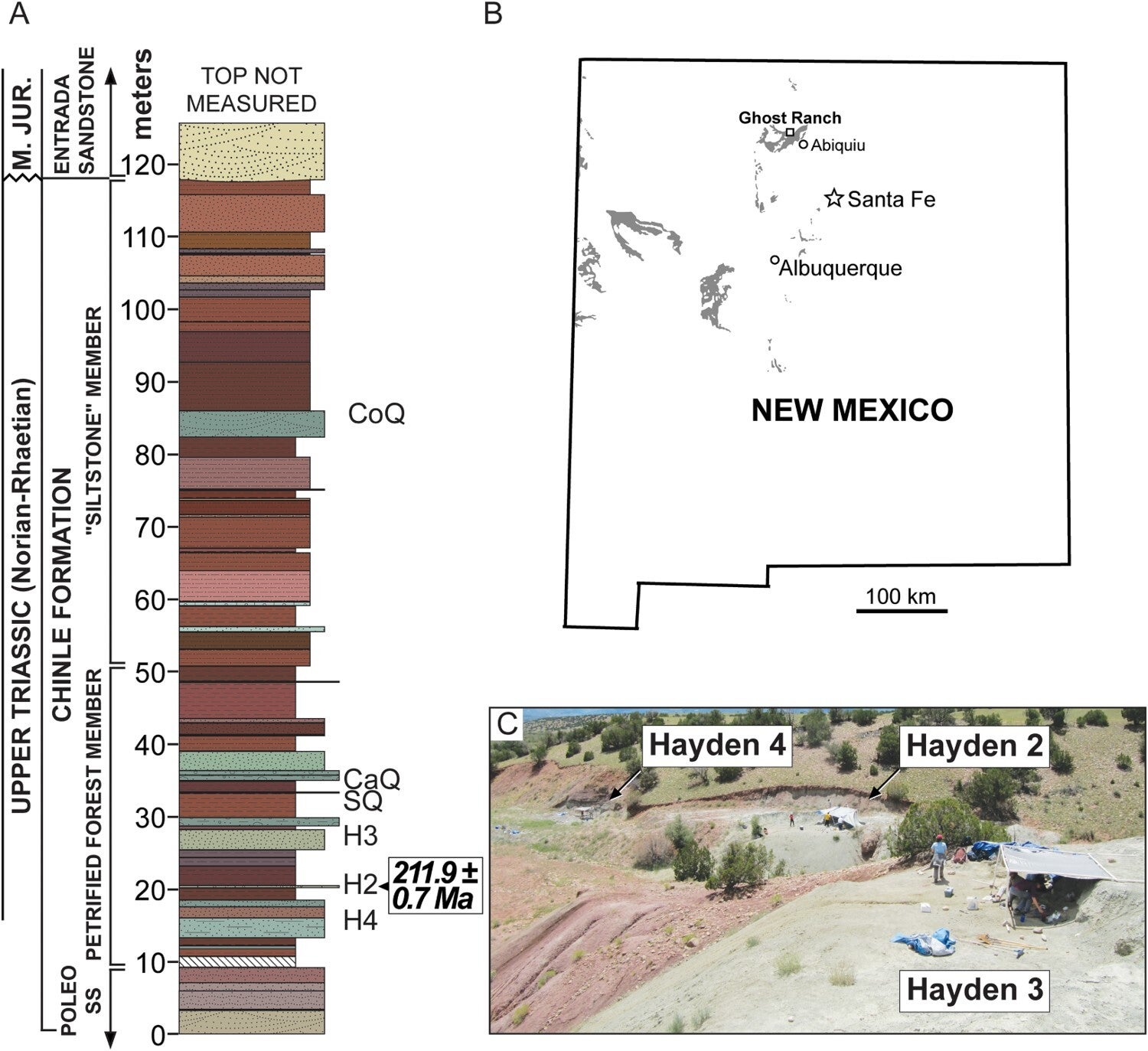
The new species is based on an associated partial skeleton from Hayden Quarry 2 at Ghost Ranch, preserved in the Petrified Forest Member of the Chinle Formation. The fossil bed has been dated to about 211.9 million years ago, placing it in the middle Norian of the Late Triassic. The holotype includes parts of the shoulder, forelimb, pelvis, hindlimb, and vertebral column, enough to show that the animal fit the shuvosaurid pattern while also carrying a few distinct features of its own.
Among those diagnostic traits are the shape of the humeral head, a hypertrophied ventral crest on the ischium, a groove on the fibula, and a dorsally curved postglenoid process on the coracoid. The animal could also be distinguished from close relatives such as Effigia okeeffeae and Shuvosaurus inexpectatus by details of the femur, humerus, tibia, and coracoid.
The species name, expectatus, comes from the Latin for expected or awaited, a nod to the fact that paleontologists had long suspected a shuvosaurid from this interval should turn up. Stratigraphically, the new animal sits between earlier and later North American shuvosaurids, filling part of a known gap in the record.
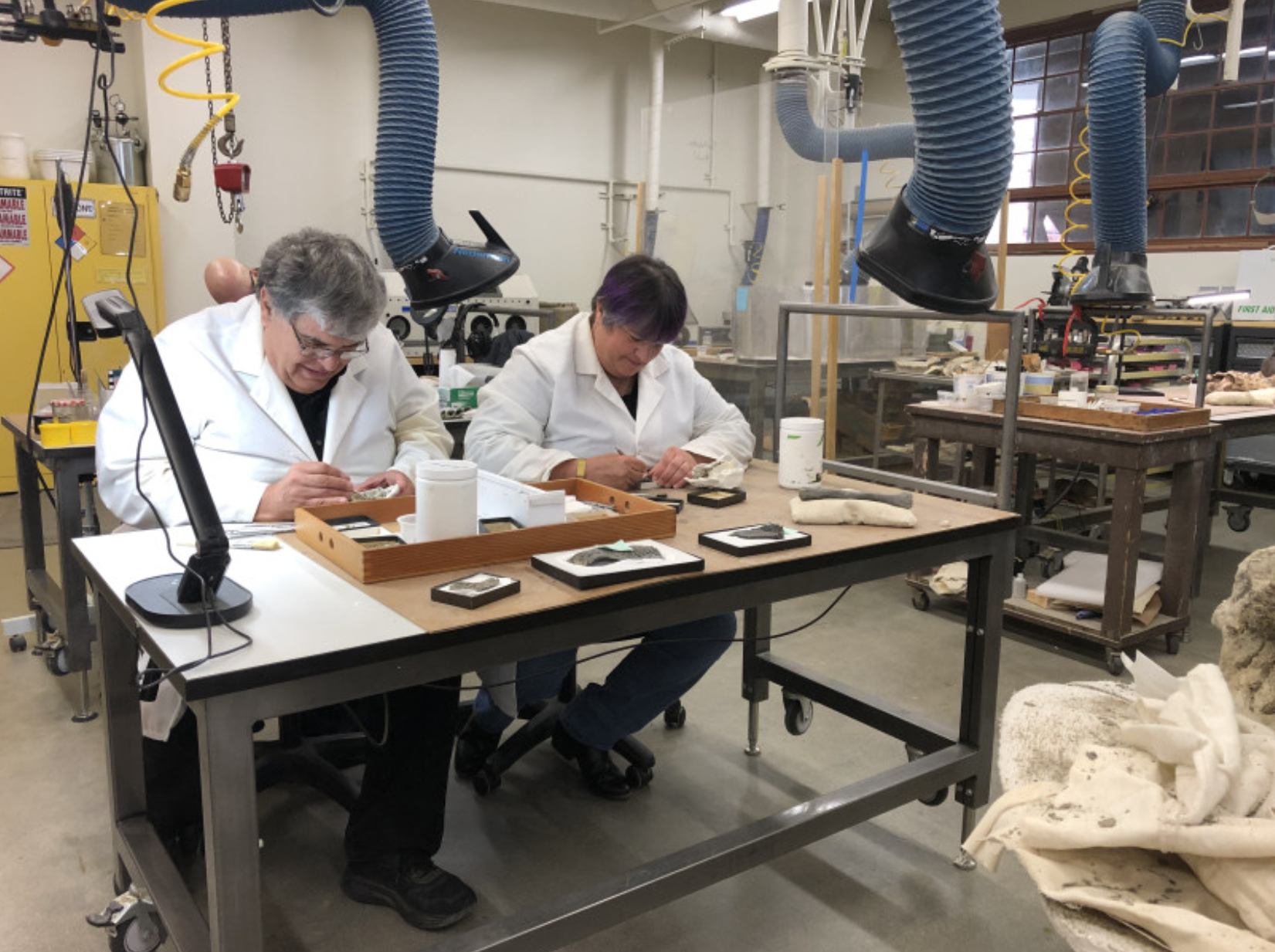
Ghost Ranch has already yielded a bizarre cast of Triassic reptiles, including lagerpetids, drepanosaurs, phytosaurs, aetosaurs, early dinosaurs, crocodylomorphs, and many other forms. The Hayden Quarry alone has produced more than 20,000 vertebrate fossils, making it one of the richest windows into this slice of time.
One reason Labrujasuchus matters is simple timing. The shuvosaurid Shuvosaurus inexpectatus is known from older strata in Texas, while Effigia okeeffeae comes from younger rocks at the nearby Coelophysis Quarry. Labrujasuchus now occupies the middle ground, exactly where the team suspected another form might exist.
“Legend has it, the local rancheros gave the site the name ‘Ranchos de Los Brujos’ to keep folks away from the cattle-rustling operations of the Archuleta brothers,” said co-author Dr. Nate Smith, Gretchen Augustyn Director & Curator of the NHMLAC Dinosaur Institute. “We wanted to give a nod to that colorful history, and honor the incredible role Ghost Ranch has played in expanding our view of the Triassic. We also wanted to highlight how the fossil record works, finding one shuvosaur from earlier in the Triassic and one from later meant that we paleontologists knew there were probably more from in-between waiting to be discovered and described.”
The genus name reflects that history. Labrujasuchus combines a reference to “Ranchos de los Brujos,” an old Spanish name for the Ghost Ranch area, with the Greek word suchus, meaning crocodile.
The discovery also sharpens an unusual pattern within shuvosaurids. Even though these animals had highly distinctive bodies compared with many other Triassic reptiles, their own anatomy appears to have changed relatively little over time. The authors argue that the new species fits a broader picture of morphological conservatism within North American shuvosaurids.
In practical terms, that means different species may have looked very similar for millions of years. The paper notes only subtle skeletal differences among named North American members of the group, even though they span roughly 10 million years, from around 218 million to about 205 million years ago.
That conservatism makes classification difficult. Shuvosaurid bones are found across the Chinle Formation and Dockum Group, but they usually appear as isolated remains rather than associated skeletons. Because the skeletons are so alike, many fragmentary fossils can only be assigned confidently to Shuvosauridae, not to a particular genus or species.
The phylogenetic analysis in the new study placed Labrujasuchus expectatus within a monophyletic Shuvosauridae and recovered the three Late Triassic North American shuvosaurids, Labrujasuchus, Shuvosaurus, and Effigia, as a clade separate from the larger Argentine form Sillosuchus longicervix. That result supports the idea of a North American branch of small-bodied shuvosaurids.
The paper also points to a biogeographic pattern. The named smaller-bodied shuvosaurids are all from western North America, especially the American Southwest, while Sillosuchus remains the only widely accepted member of the group from outside that range. That may suggest endemism, with these beaked, bipedal pseudosuchians evolving as a regional lineage.
At the same time, the authors are cautious. The pattern could reflect uneven preservation or uneven sampling rather than true geographic restriction. Possible shuvosaurid material from Zambia and India hints that related animals may eventually turn up elsewhere, but the evidence remains too limited to settle the question.
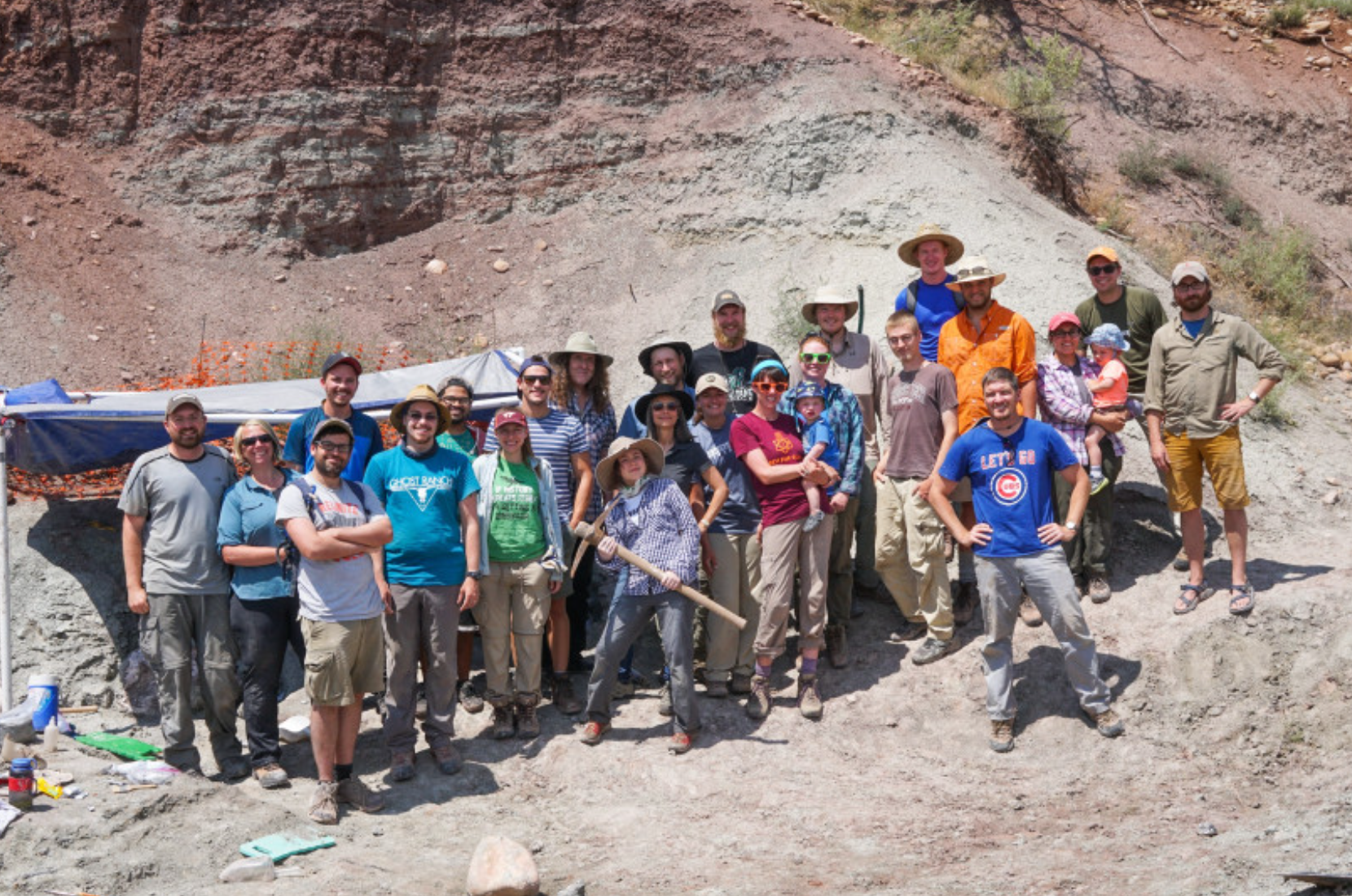
Ghost Ranch itself remains central to that effort. The site has hosted decades of excavation, including a long-running project co-led by Smith. This summer marks 20 years of collaboration there.
“This summer is the 20th anniversary of Nate and his colleagues coming out to do excavations at Ghost Ranch, and we’re so proud to play a central role in making that incredible research possible,” said Joanne Lefrak, Director of Experience and Social Impact at the Ghost Ranch Education and Retreat Center. “Whether visitors are seeking its iconic landscape and spiritual healing or digging into ancient history, Ghost Ranch is a place like nowhere else on the planet. We’re looking forward to collaborating with Dr. Turner, Dr. Smith, and all their colleagues to continue sharing this extraordinary place for years to come.”
The new fossil does more than add one more odd reptile to the Triassic record. It helps show how evolution repeatedly arrived at similar body plans in unrelated groups, long before the later dinosaurs that made those shapes famous.
It also gives paleontologists a clearer timeline for shuvosaurids in North America, strengthens the case that this group remained anatomically conservative for millions of years, and sharpens questions about whether these animals were truly regional specialists or simply under-sampled elsewhere.
Just as important, it highlights the continuing value of well-studied fossil sites like Ghost Ranch, where even heavily worked quarries can still produce species that change how an entire lineage is understood.
Research findings are available online in the Journal of Vertebrate Paleontology.
The original story “Triassic fossil reveals a beaked, bipedal reptile that looked like an ostrich dinosaur” is published in The Brighter Side of News.
Like these kind of feel good stories? Get The Brighter Side of News’ newsletter.
The post Triassic fossil reveals a beaked, bipedal reptile that looked like an ostrich dinosaur appeared first on The Brighter Side of News.


Leave a comment
You must be logged in to post a comment.