Amber usually brings to mind tropical forests, trapped insects, and warm landscapes. That is what makes the new Antarctic find so striking. Buried beneath the Amundsen Sea, tiny resin fragments now suggest that about 90 million years ago, near the South Pole, swampy conifer forests were growing in a much warmer world.
The material is the first fossil resin ever reported from Antarctica. Researchers found it in a thin lignite layer at the top of a roughly 3-meter-long carbonaceous mudstone sequence of mid-Cretaceous age, recovered from the Pine Island trough in West Antarctica.
The core came from Site PS104_20, at 73.57° south and 107.09° west, in 946 meters of water. It was drilled from the seafloor in early 2017 during RV Polarstern Expedition PS104 using the MARUM-MeBo70 seafloor drill rig.
Until now, amber had been described from every continent except Antarctica.
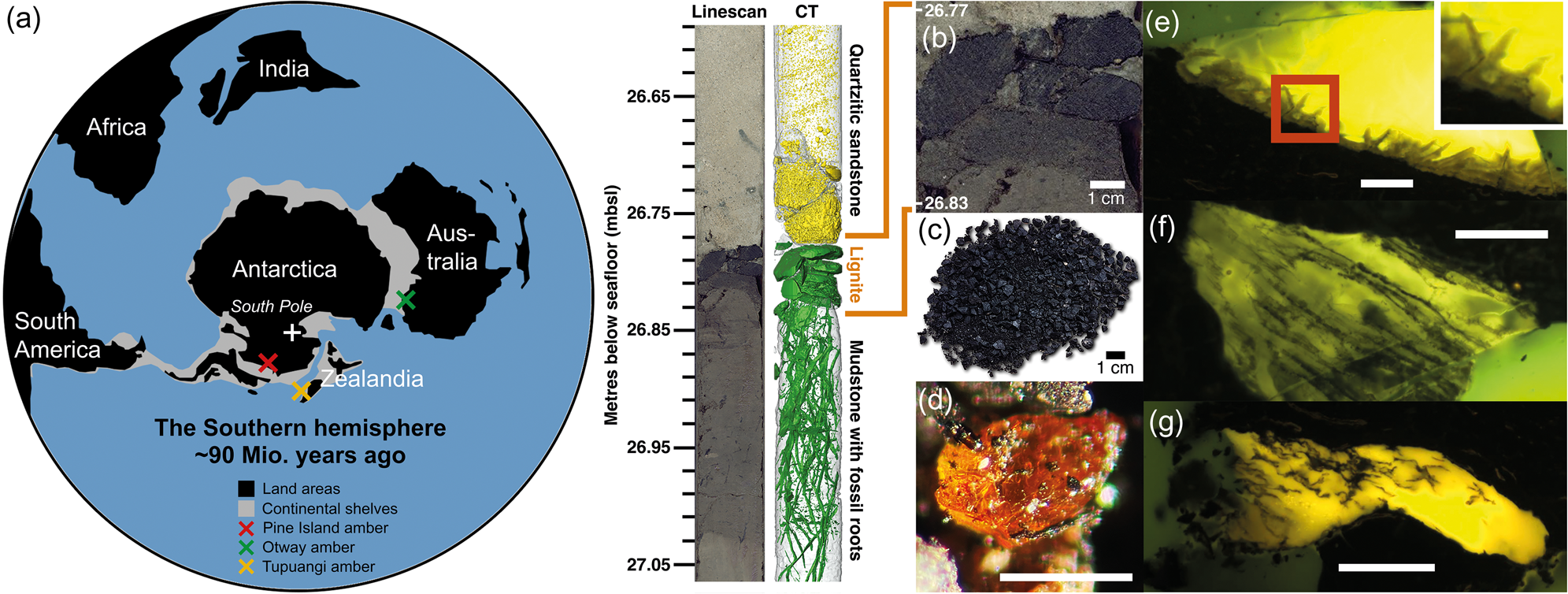
That absence always left a gap in the map of ancient resin deposits. The new find pushes amber’s known range farther south than earlier mid-Cretaceous discoveries in southern Australia and on New Zealand’s Chatham Islands.
The team refers to the material as “Pine Island amber,” after its locality.
The fragments are extremely small, about 0.5 to 1.0 millimeter across, but they carry a surprising amount of information. Under incident light and fluorescence microscopy, they appeared translucent, yellow to orange in color, and marked by the scalloped breakage pattern typical of amber.
They also showed intense yellow to brownish fluorescence. Some pieces contained internal structure, depending on the host plant, and one photomicrograph revealed what the authors described as micro-inclusions, “probably tree bark remains,” at the transition from lignite to amber.
That detail matters because it points to resin oozing onto a tree’s outer surface in open air before it was buried and fossilized.
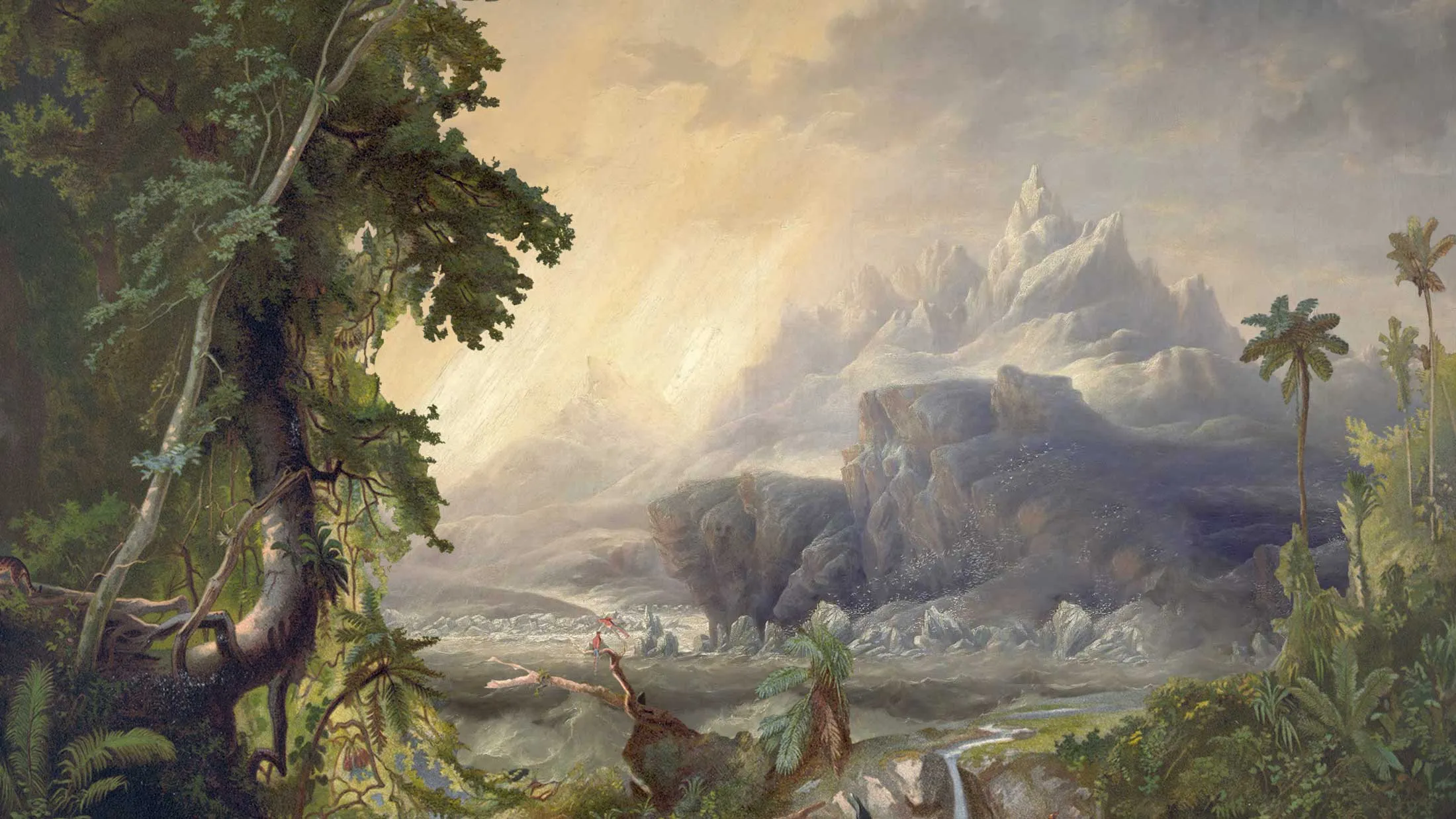
The broader setting was already known from earlier work on the same sedimentary sequence. Palynomorphs preserved in the mudstone indicate a mid-Cretaceous, roughly 92 to 83 million years ago, swampy temperate rainforest near the South Pole that was dominated by conifers.
Dr. Johann P. Klages of the Alfred Wegener Institute said the new find helps sharpen that picture. “Our discovery is another piece of the puzzle,” he said. “It helps us gain a better understanding of the swampy, conifer-rich rainforest environment that existed near the South Pole during the mid-Cretaceous.”
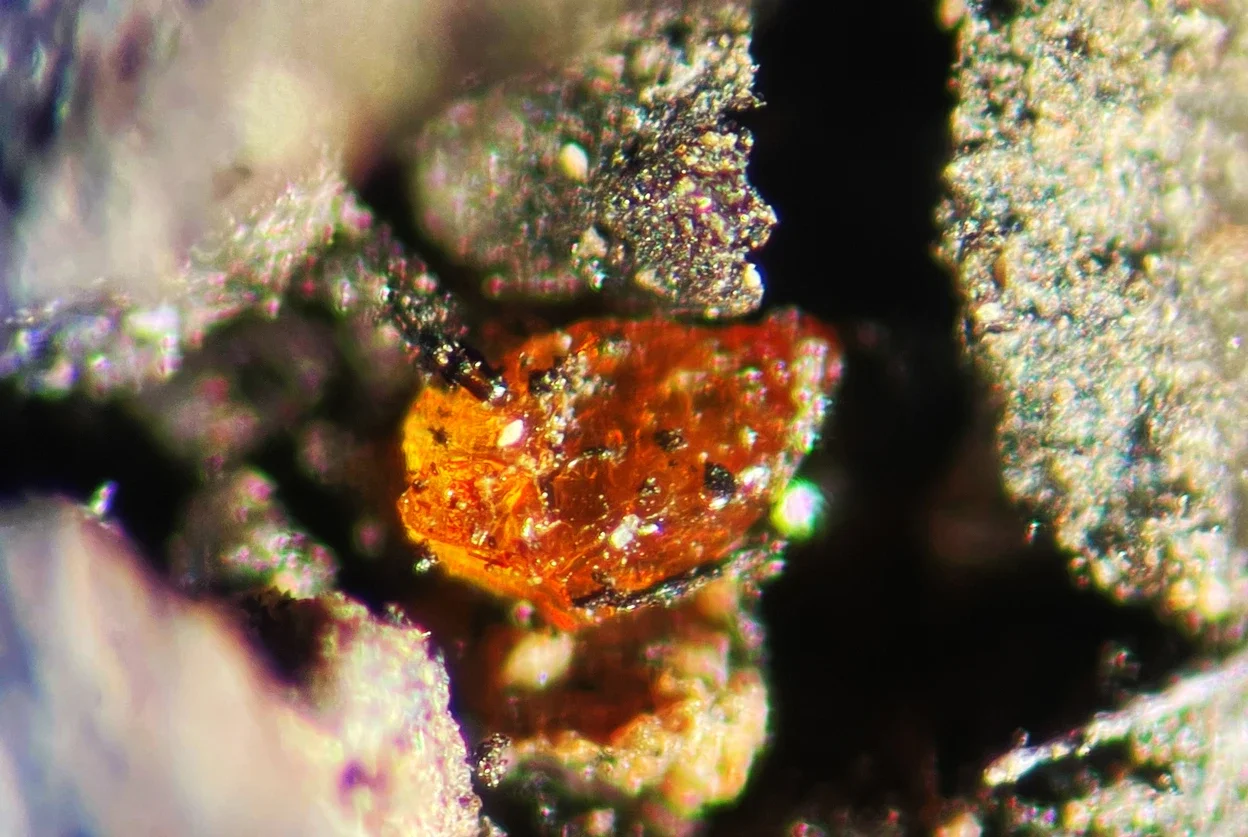
Resin is a direct plant product, a mixture of volatile and non-volatile compounds that usually seeps within a plant or onto its surface. It is produced mostly by gymnosperms. Under the right conditions, that resin can survive burial and geologic time, eventually becoming amber.
Those conditions appear to have existed in this Antarctic forest. The study notes that preserving resin requires both suitable trees and burial in oxygen-poor conditions. The swampy setting reconstructed for West Antarctica would have helped on both fronts.
The amber’s quality adds another clue. The particles were solid, clear, and translucent, with only rare signs of corrosion around their edges. According to the authors, that suggests shallow burial, because amber tends to break down under greater thermal stress at depth.
The surrounding environment likely protected it early on. High water levels probably covered the fresh resin quickly, shielding it from ultraviolet radiation and oxidation, both of which can degrade organic material before fossilization has a chance to take hold.
That helps explain why the pieces survived at all in a place better known for ice sheets than forest floors.
Klages said the fragments offer a direct look at conditions in West Antarctica 90 million years ago. “The analyzed amber fragments allow direct insights into environmental conditions that prevailed in West Antarctica 90 million years ago,” he said.
The amber does more than prove that resin-producing trees lived there. It also hints at the kinds of stress those trees faced.
Several fragments show signs of pathological resin flow linked to traumatic resinosis, a defensive response in which trees mobilize resin to seal bark injuries. In living forests, that kind of resin flow can follow attacks by parasites, insect damage, pathogens, or fire.
The paper notes that this process creates both a chemical and physical barrier against later insect attacks and infections.
That makes the amber an ecological record as much as a geological one. These trees were not simply growing in a mild polar greenhouse. They were responding to injury, defending themselves, and coping with disturbance.
One possible culprit is wildfire. Evidence of fires in late Cretaceous forests is common elsewhere, but it has been reported only rarely from polar biomes. The resin patterns seen here fit with the possibility that at least some trees in this Antarctic forest were reacting to fire damage.
That does not mean the forest was collapsing. If anything, the amber points to a living system capable of absorbing stress. Resin production is part of how conifer-dominated ecosystems persist through injury and attack, and these fragments preserve that response in miniature.
The find also fits into a larger reconstruction of ancient Antarctica as a much greener continent during one of Earth’s warmest intervals.
By the mid-Cretaceous, global temperatures were far higher than today’s, allowing forests to spread into polar latitudes. The Pine Island amber supports the idea that West Antarctica hosted temperate, swampy rainforest even under the unusual light regime near the pole, where darkness lasted for long stretches each year.
And the story may not be finished. The micro-inclusions are only a hint so far, but they raise the possibility that future work could uncover more traces of life preserved inside the resin.
Klages pointed to that next step directly. “Our goal now is to learn more about the forest ecosystem, if it burned down, if we can find traces of life included in the amber,” he said.
For now, the discovery stands as a rare physical link to a lost Antarctic landscape, one with roots, pollen, spores, conifers, standing water, and resin hardening on tree bark long before the continent froze into the world’s southern ice desert.
The amber gives scientists a new way to test how ancient polar forests functioned during a much warmer climate. Because it preserves signs of tree injury, burial conditions, and possibly even microscopic remains, it can help researchers refine reconstructions of past ecosystems rather than relying on pollen and sediment alone.
That matters beyond Antarctica. The mid-Cretaceous is often studied as a greenhouse world, and better evidence from polar environments can improve how scientists think about forest resilience, disturbance, and preservation under elevated global temperatures.
Even in fragment form, Pine Island amber adds a direct biological signal to the deep-time climate record.
Research findings are available online in the journal Antarctic Research.
The original story “First-ever amber discovery in Antarctica reveals lost prehistoric rainforest” is published in The Brighter Side of News.
Like these kind of feel good stories? Get The Brighter Side of News’ newsletter.
The post First-ever amber discovery in Antarctica reveals lost prehistoric rainforest appeared first on The Brighter Side of News.


Leave a comment
You must be logged in to post a comment.