A fossil bed in northwestern China has been telling a strange story for years. Scattered through its rocks are the remains of more than 100 prehistoric birds, some preserved as partial skeletons, others broken into dense clusters of crushed bones that resemble the pellets modern owls cough up after feeding.
Those shattered remains suggested that something larger was hunting the birds. Yet despite decades of work at the site, no one had found the likely culprit.
Now that may have changed.
In a paper published in the Annals of Carnegie Museum, researchers describe a new species of dinosaur from the Changma Basin, a feathered predator called Jian changmaensis. The animal belonged to the dromaeosaurs, a group of bird-like theropod dinosaurs that included Velociraptor, and the team says it is the best candidate yet for the missing predator in this bird-rich fossil bed.
“Scientists have found these weird, broken-up clusters of bird bones at this site, and we didn’t know what made them. This new microraptor dinosaur, Jian changmaensis, is our best guess,” says Jingmai O’Connor, the associate curator of fossil reptiles at the Field Museum in Chicago and senior author of the paper describing the new species. “It’s the only dinosaur found at this site that wasn’t a bird, it was a carnivore, and it was much bigger than everything else that we’ve found there.”
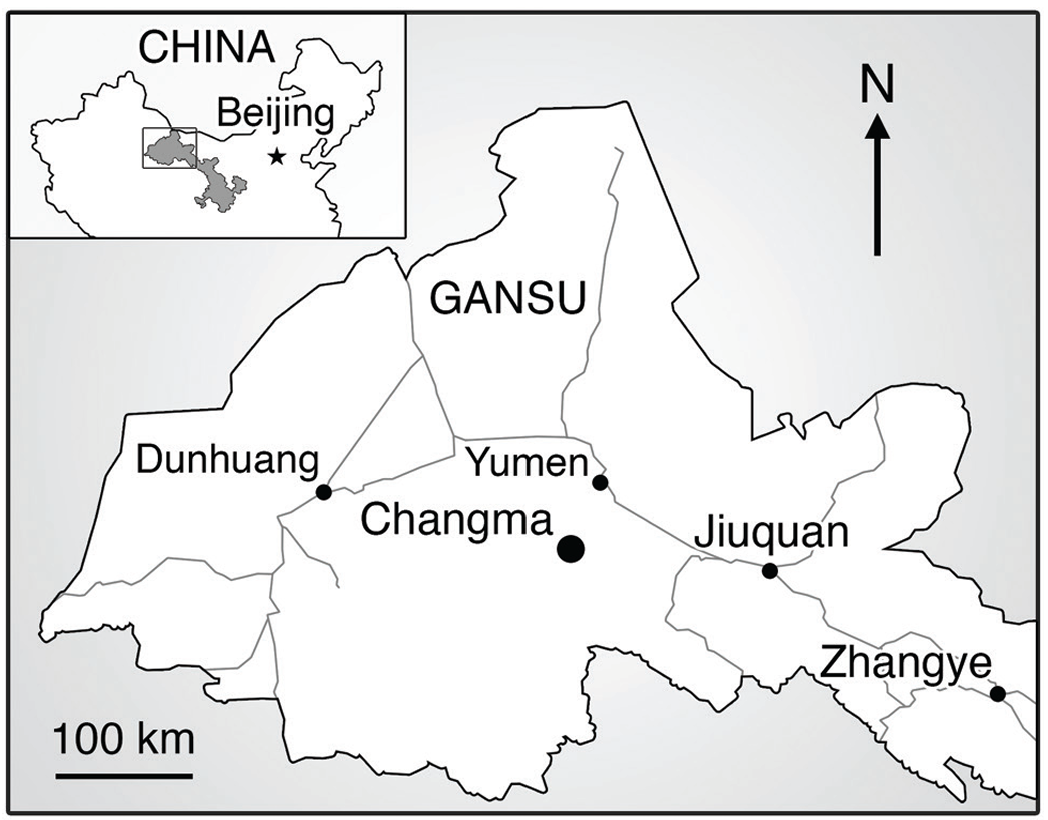
The fossils come from the Lower Cretaceous Xiagou Formation near the village of Changma in Gansu Province. The sediments were laid down in a lake environment and have produced an unusually rich collection of early bird fossils, including more than 100 partial skeletons. Many preserve traces of soft tissue such as feathers and skin.
That abundance has made Changma famous among paleontologists studying early birds. Most of the avian material belongs to Gansus yumenensis, a species that helps define the site’s fossil fauna. But until now, no skeletal remains of a non-avian dinosaur had been formally described from the basin.
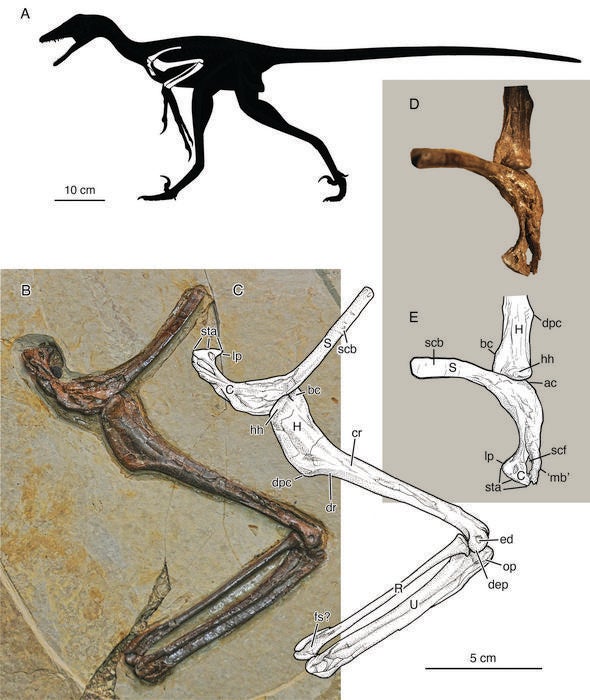
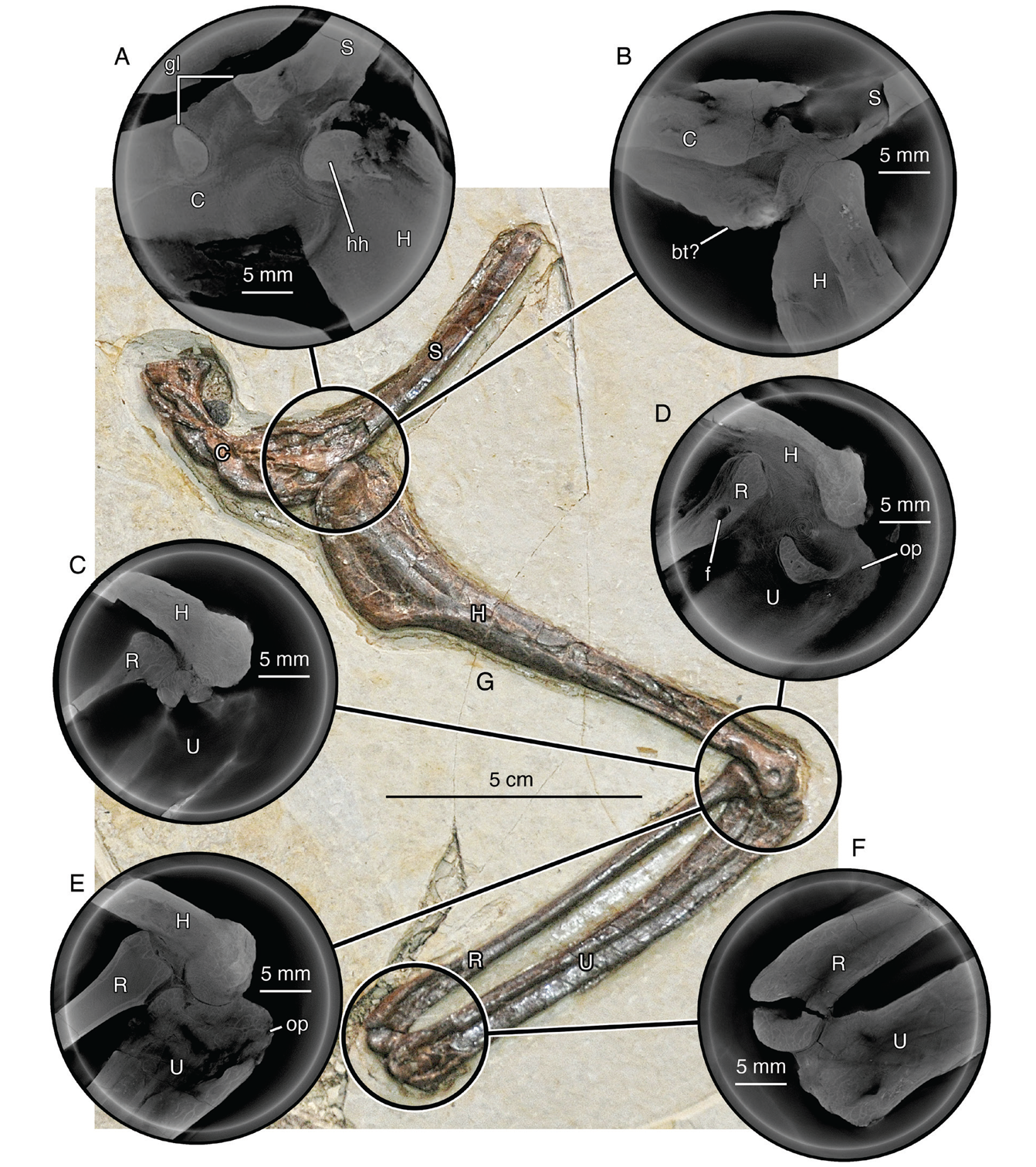
The new fossil changes that picture. It consists of an articulated left pectoral girdle and forelimb, though the wrist and hand are missing. Even with such limited material, the bones carry enough distinctive features for the researchers to identify it as a new species.
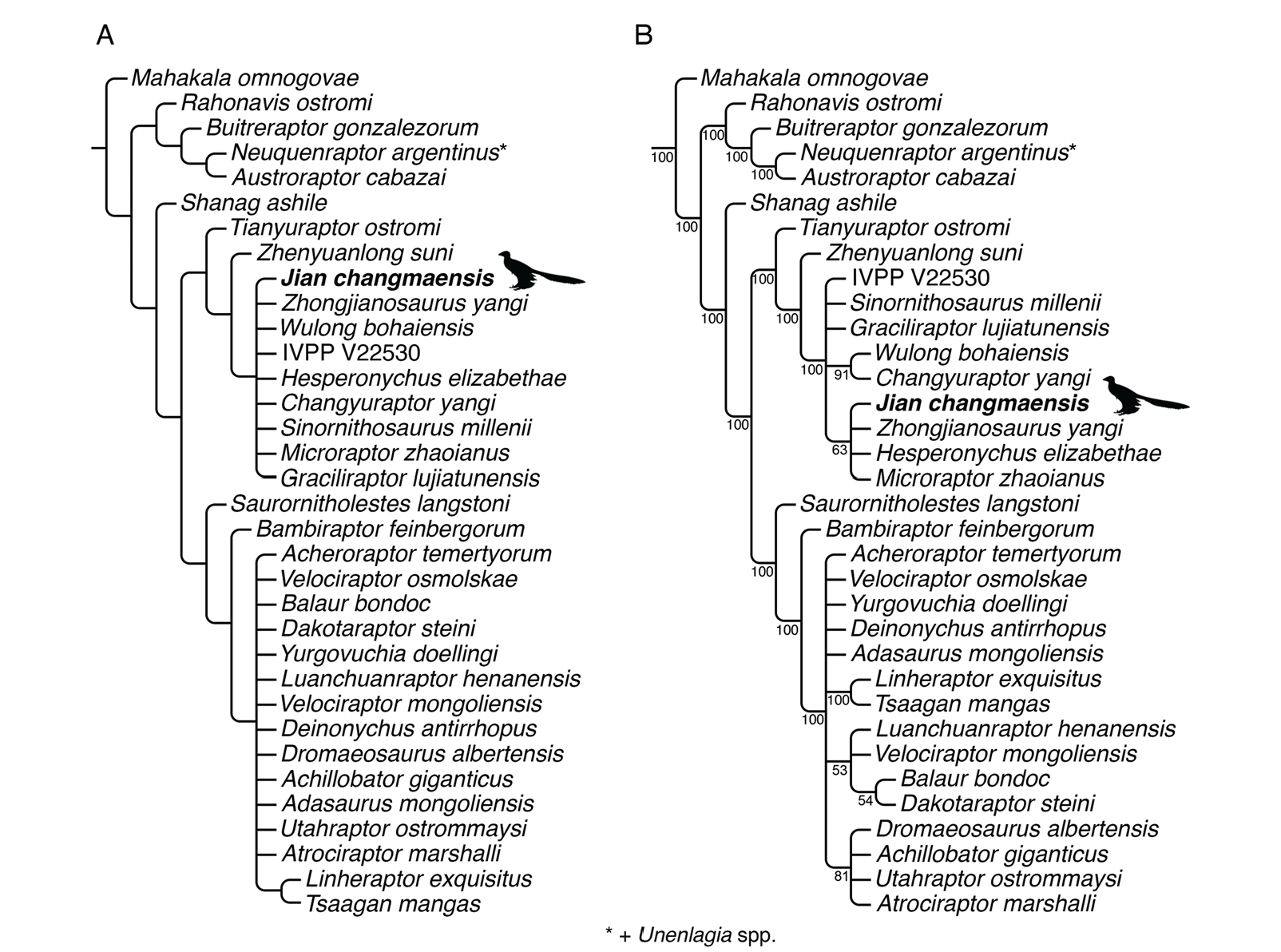
The study places Jian changmaensis within Microraptorinae, a branch of the dromaeosaur family. That finding expands the confirmed fossil record of microraptors into northwestern China and links the Changma fauna more closely to roughly similar-aged fossil sites in northeastern China’s Jehol Group.
“Jian changmaensis reveals that non-avian dinosaurs lived in what is now the Changma Basin, an area famous for its fossil birds,” says Matt Lamanna, corresponding author of the study and Carnegie Museum of Natural History’s Mary R. Dawson Curator of Vertebrate Paleontology and senior dinosaur researcher. “Our team has recovered more than a hundred bird fossils at Changma, but only this single non-avian dinosaur specimen. Jian provides critical new insight into the biological history of the Changma region and the ecological context of the ancestors of today’s birds.”
Microraptors were small, feathered dromaeosaurs and close cousins of birds. The best-known species was about the size of a crow. They are especially famous for having long feathers not only on their arms but also on their legs, creating the appearance of four wings.
O’Connor says the new fossil points to a much larger animal.
“Jian is one of the biggest microraptor specimens that has ever been found,” says O’Connor. “The piece of its upper arm bone that we have is about 4 inches long, so the entire dinosaur probably had something like a four-foot wingspan, around the size of a barn owl.”
The species diagnosis rests on several unusual features, including a coracoid that is proportionally longer relative to the humerus than in any other known microraptorine, humeral distal condyles developed on the cranial surface of the bone, and a well-developed foramen on the ventral side of the humerus. Those details set Jian changmaensis apart from its close relatives.
The name reflects both its appearance and its origin. Jiān, or 鹣, is a winged creature in Chinese mythology, and the species name refers to Changma, the place where the fossil was found.
Although the researchers recovered only part of the shoulder and arm, they suspect Jian resembled other microraptors in life, with long feathers on both the forelimbs and hindlimbs.
“Jian and the other microraptors probably weren’t capable of true, powered flight, but they could probably glide like a flying squirrel,” says O’Connor.
That gliding, predatory animal fits neatly into a fossil site that has long seemed to be missing one of its main ecological players.
The Changma Basin has yielded enormous numbers of birds, but not the broader mix of dinosaur fossils seen at many other sites. The discovery of Jian suggests that non-bird theropods were present there after all, even if they were rare in the known fossil record.
The paper notes another intriguing parallel. The theropod fauna at Changma resembles that of the Sihedang locality in the Jehol Group, where microraptorines also appear alongside bird faunas dominated by a single ornithuromorph taxon. That similarity raises the possibility that the two regions formed under comparable environmental conditions, a point that remains poorly represented among known Jehol localities.
The new fossil does not prove directly that Jian made the bird-bone clusters. The study stops short of that. But at a site full of small birds and strange pellet-like accumulations, a feathered carnivore with a roughly four-foot wingspan becomes hard to ignore.
That makes Jian changmaensis important not only as a new species, but also as a possible ecological clue, a predator finally entering a scene that had long seemed crowded with prey and little else.
“You cannot understand life on the planet today without looking at its origins,” says O’Connor. “Birds are arguably the most successful group of land-dwelling vertebrate animals on Earth today. Learning about early birds and their close non-bird dinosaur relatives gives us a better understanding of what made the group of birds that survived so special.”
Several other “raptor” dinosaurs, or dromaeosaurids, have helped scientists understand how diverse Velociraptor’s relatives really were.
One of the most famous is Deinonychus antirrhopus, discovered by Yale paleontologist John Ostrom in Montana in 1964 and formally described in 1969. It lived during the Early Cretaceous and likely preyed on plant-eating dinosaurs such as Tenontosaurus. Its large sickle-shaped claw, stiff tail, and active hunting body plan helped launch the “Dinosaur Renaissance,” changing the old view of dinosaurs as slow, sluggish reptiles.
Another close cousin was Utahraptor ostrommaysi, first found in Utah in 1975, with more important fossils discovered in 1991 and the species named in 1993. Unlike the turkey-sized image many people have of raptors, Utahraptor was huge, reaching about 18 feet long. It was a powerful meat-eater that may have hunted large plant-eating dinosaurs, making it one of the largest known dromaeosaurids.
In China, fossils revealed the tiny Microraptor, discovered around 2000. About the size of a crow, it ate small animals such as fish, lizards, and possibly insects. Its most remarkable feature was its four-winged body, with feathers on both its arms and legs, suggesting it could glide or perhaps fly short distances.
Mongolia produced one of the strangest raptor cousins, Halszkaraptor escuilliei, described in 2017. This small dinosaur had a long neck, sharp teeth, and features that suggest it may have hunted near or in water, possibly catching fish.
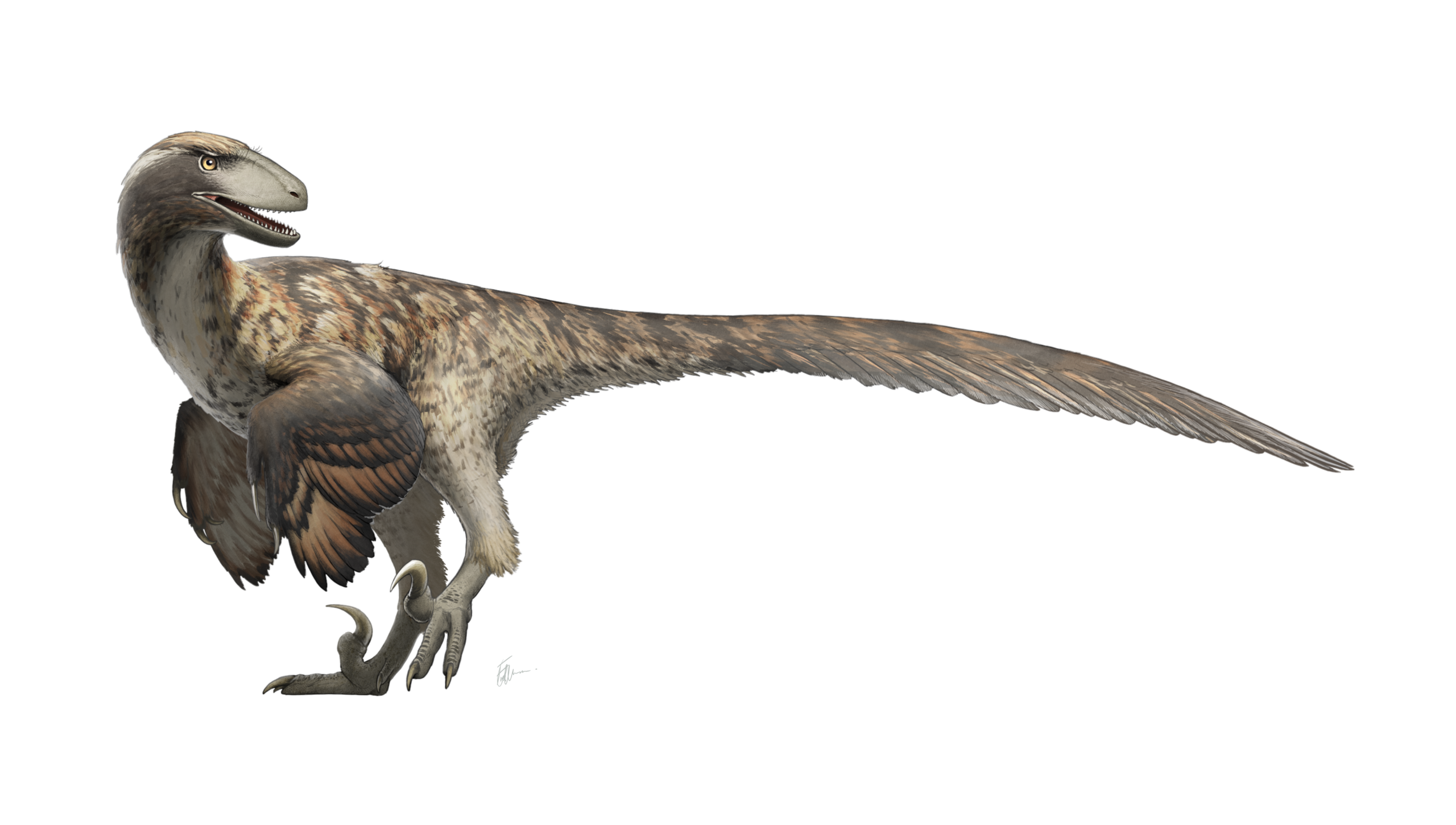
North America also had Acheroraptor temertyorum, described in 2013 from fossils found in Montana’s Hell Creek Formation. Living near the end of the dinosaur age, it was a small predator with sharp teeth and is special because it is one of the clearest dromaeosaur records from the same world as Tyrannosaurus rex.
The discovery helps fill in a missing part of an Early Cretaceous ecosystem by showing that the Changma Basin was not just a refuge for birds. It also housed at least one larger feathered predator, which gives scientists a better sense of how these animals lived together.
More broadly, the fossil offers a new point of comparison between bird-rich sites in northwestern and northeastern China, which could help researchers reconstruct the environments that shaped the early history of birds and their close dinosaur relatives.
Research findings are available online in the journal Annals of Carnegie Museum.
The original story “Ancient Velociraptor cousin glided on four wings and hunted birds” is published in The Brighter Side of News.
Like these kind of feel good stories? Get The Brighter Side of News’ newsletter.
The post Ancient Velociraptor cousin glided on four wings and hunted birds appeared first on The Brighter Side of News.


Leave a comment
You must be logged in to post a comment.