A giant slingshot sounds more like a county fair stunt than a serious space plan. Yet one California company is trying to turn that simple idea into a new way to send satellites skyward, replacing fire and fuel with electric power and motion.
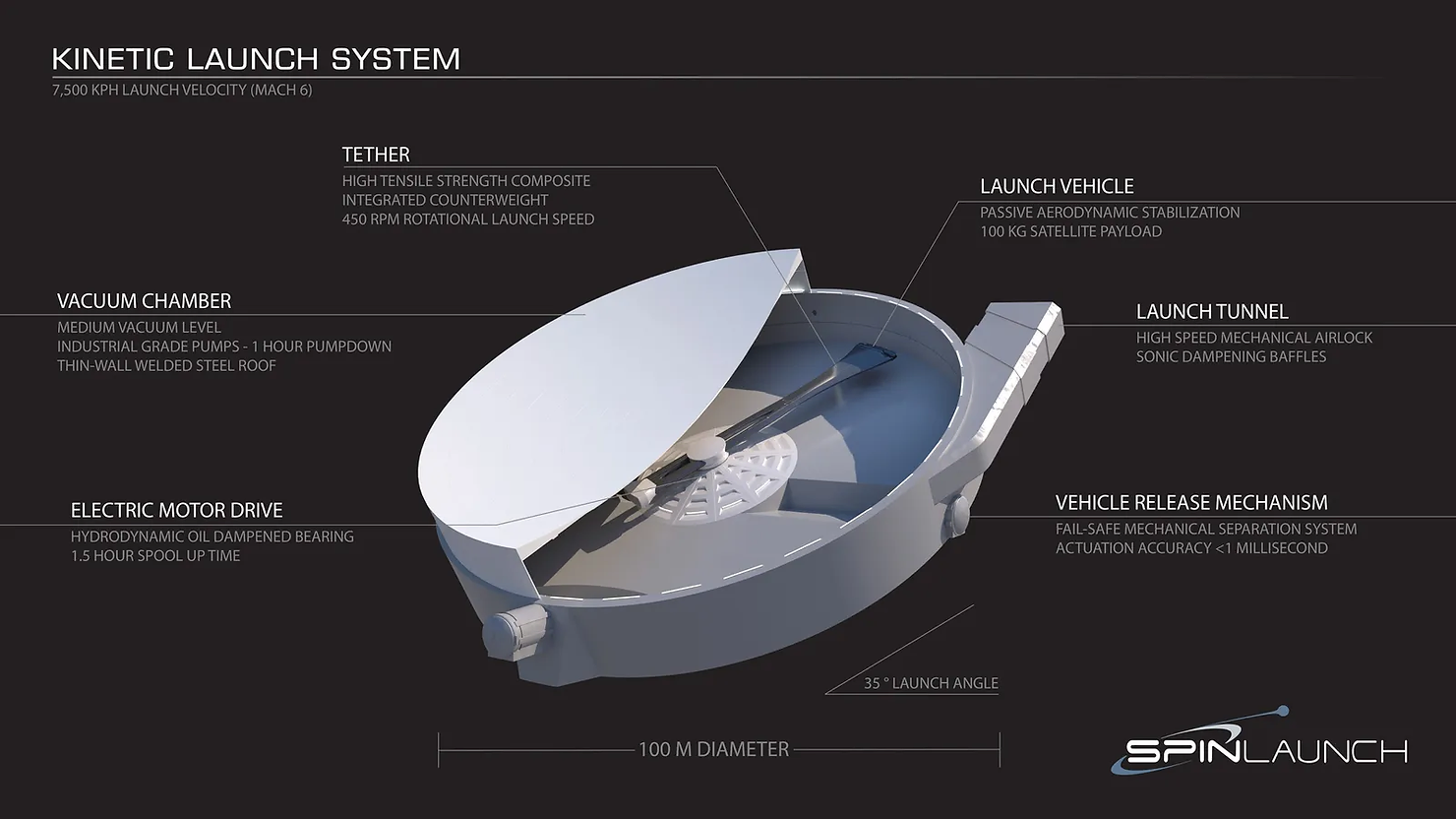
SpinLaunch, founded in 2014, has built a launch system that skips the dramatic blastoff people usually associate with rockets. Instead of burning propellant on the ground, the company uses a rotating arm inside a vacuum chamber to hurl payloads at extreme speed. The goal is to reach low Earth orbit with small satellites while cutting both launch costs and pollution.
“This is not a rocket,” said Jonathan Yaney, SpinLaunch’s founder and CEO. “And clearly our ability to perform in just 11 months this many tests and have them all function as planned really is a testament to the nature of our technology.”
He made that remark after the company’s 10th successful test flight, part of a steady push to prove that the concept can work outside theory and animation.
The underlying physics are not new. Long before modern spaceflight, siege weapons used stored energy to launch heavy objects over walls. Trebuchets and other machines turned force into motion with brutal efficiency. SpinLaunch is working from that same basic principle, though with materials, electronics, and engineering that belong to the 21st century.
That link to the past is part of what makes the company’s approach so striking. The method has even drawn comparisons to pumpkin-launching contests, where hobbyists use giant machines to send gourds flying for sport. The difference here is that the payload is not a pumpkin, and the target is not a field. It is orbit.
To make that leap possible, the company depends on high-strength carbon fiber and increasingly compact satellite hardware. Smaller electronics give payloads a better chance of surviving the violent trip. SpinLaunch says, “Modern electronics, materials, and simulation tools allow for satellites to be adapted to the kinetic launch environment with relative ease.”
That does not make the challenge gentle. Any satellite riding this system must survive crushing acceleration and then keep working in space.
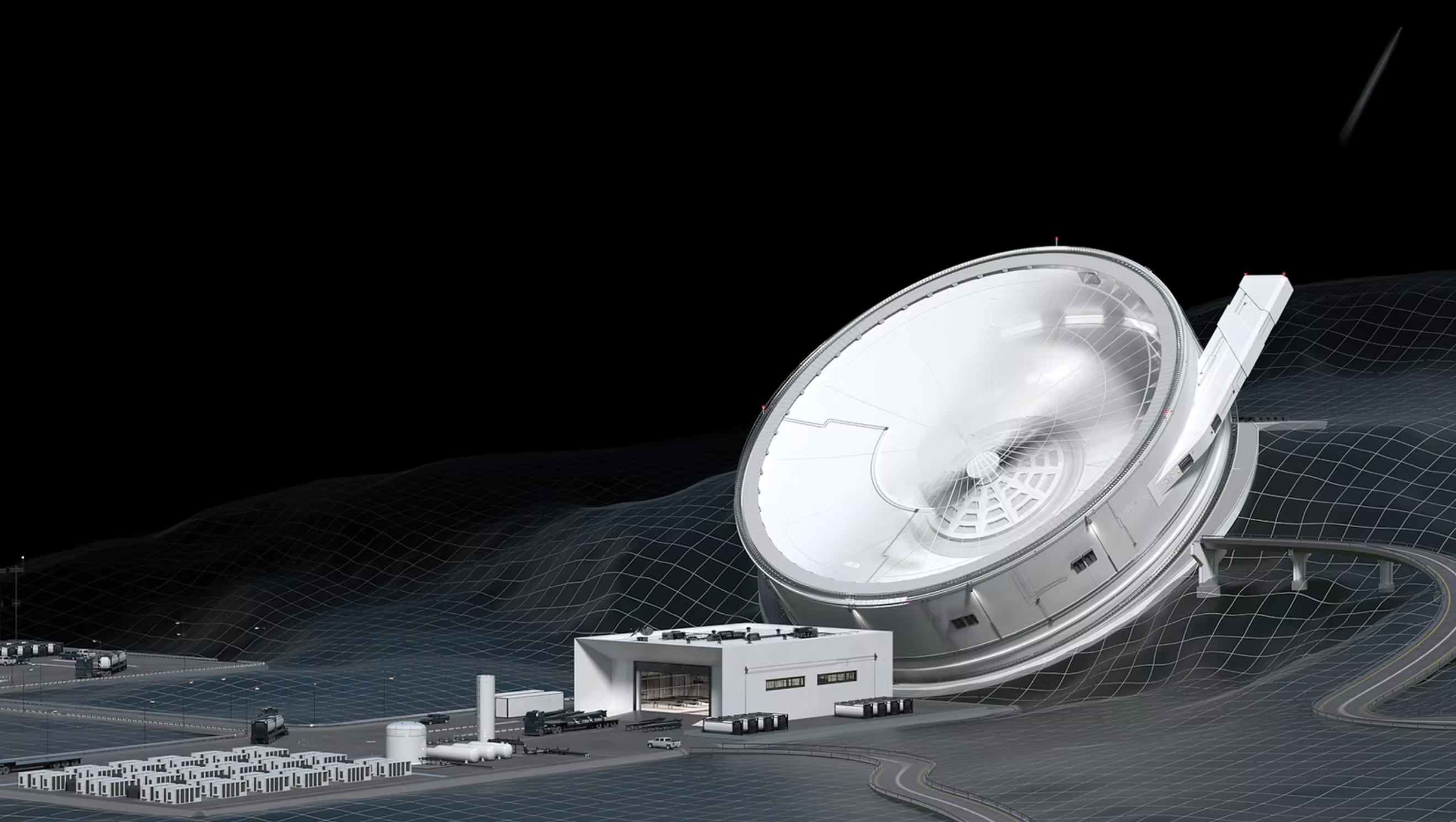
At its New Mexico test site, the company has carried out a series of launch demonstrations that look more like controlled shock experiments than traditional liftoffs. In one video, a sleek capsule disappears from the chamber almost instantly, moving so fast that it is hard to follow with the naked eye.
The forces involved are enormous. SpinLaunch says its system has already handled loads of 10,000 Gs, or 10,000 times Earth’s gravity. That is enough to expose weak points in almost any design. So far, the company says, the hardware has held together.
That performance has helped attract backing and cooperation from major names, including NASA, Airbus, and Cornell University. Their equipment has played a role in testing, giving the effort outside validation as SpinLaunch tries to move from experimental launches to a working orbital system.
The company’s stated target is ambitious: launching satellites into orbits below 600 miles by 2026. A coastal orbital launch site is already in development, a sign that SpinLaunch sees this as more than a string of eye-catching tests.
“It has proven that it’s a system that is repeatedly reliable,” Yaney said.
That promise matters for more than engineering reasons. Traditional rockets burn vast amounts of fuel, and the environmental cost has become harder to ignore as launch activity grows. SpaceX’s Falcon 9, for example, used more than 900,000 pounds of propellant per launch as of 2016. Even as launch technology improves, the scale of fuel use remains enormous.
Rocket exhaust can release chemicals that harm the ozone layer, the thin atmospheric shield that helps block dangerous solar radiation. Any launch system that reduces those emissions would offer an environmental advantage before the vehicle even leaves the ground.
SpinLaunch argues that its electric system does exactly that. Because the initial launch relies on rotational force rather than fuel combustion, it avoids the usual liftoff emissions associated with conventional rockets.
That cleaner profile is part of a broader shift now taking shape in the small-satellite market, where companies are looking for ways to make access to space cheaper, more flexible, and less wasteful.

SpinLaunch is not alone in trying to rewrite the launch playbook. In Singapore, Equatorial Space Systems is also developing launch vehicles for small satellites, with an emphasis on affordability and sustainability.
Founder and CEO Simon Gwozdz described the potential market in practical terms: “The total addressable market for suborbital launch from our research can be as high as USD 150 million a year.”
The details of the two companies’ systems differ, but the direction is similar. Both reflect a space industry that is moving away from the idea that bigger rockets and bigger fuel loads are always the answer. Smaller payloads, cleaner technologies, and lower costs are becoming more attractive as more governments, universities, and private groups seek regular access to orbit.
For SpinLaunch, the broader appeal lies in how strangely familiar the idea feels. The system combines ancient mechanics with modern materials, turning a principle once used in war and sport into a possible tool for communications, Earth observation, and scientific work.
What sounds at first like a stunt may end up becoming a serious piece of launch infrastructure. But that depends on whether satellites can keep surviving the punishment long enough to make the trip worthwhile.

Over the past decade, satellite launching technologies have evolved significantly, driven by the need for cost-effective, efficient, and environmentally friendly methods. Here are some of the most innovative satellite launching technologies developed in recent years:


These innovative technologies mark a shift toward more cost-effective, flexible, and sustainable methods of launching satellites, opening up new opportunities for space exploration and commercial applications.
The original story “SpinLaunch looks to slingshot satellites into space” is published in The Brighter Side of News.
Like these kind of feel good stories? Get The Brighter Side of News’ newsletter.
The post SpinLaunch looks to slingshot satellites into space appeared first on The Brighter Side of News.


Leave a comment
You must be logged in to post a comment.