A short burst of daily movement may be enough to reshape how aging bodies maintain strength and independence. New research from Penn State College of Medicine shows that just four minutes of resistance exercise each day can lead to meaningful gains in mobility and balance for older adults.
The findings challenge long-held beliefs that only long and intense workouts improve physical health. Instead, the study suggests that consistency and simplicity may matter more than duration.
For many older adults, this insight arrives at a critical time. Mobility loss remains one of the strongest predictors of declining independence, injury, and long-term health risks.
Physical movement plays a central role in daily life as people age. Tasks like standing up, walking across a room, or climbing stairs can become harder over time. These changes often signal deeper health concerns.

According to the Centers for Disease Control and Prevention, falls and related injuries rank among the leading causes of death for adults over 65. Reduced strength and balance increase this risk.
Researchers say many older adults remain inactive because traditional exercise feels overwhelming. Long routines, physical discomfort, and uncertainty about proper technique can all discourage participation.
Christopher Sciamanna, a professor at Penn State and lead author of the study, believes this barrier can be lowered. “The human body is designed to improve very quickly,” he said. “And just a few repetitions of an exercise performed regularly can lead to huge improvements.”
The research team developed a program called FAST-2, short for Functional Activity Strength Training. The idea was to create a routine that is brief, practical, and easy to follow.
Participants performed four exercises each day. These included push-ups, chair stands, two-arm rows, and stair stepping. Each movement lasted 30 seconds, followed by a 30-second rest period.
The entire routine took just four minutes.
To ensure accessibility, exercises could be adjusted based on ability. Push-ups could be done against a wall or countertop. Chair stands could include hand support. Resistance bands and a small stepper were provided to participants.
Smita Dandekar, a co-author of the study, emphasized the importance of simplicity. “Exercise is actually really complicated,” she said. “If we can make it short, we’re part way there.”
The study followed 97 adults aged 65 and older, with an average age of 74. Participants were randomly divided into two groups. One group followed the FAST-2 program, while the other group continued their usual routine.
Before the study began, participants reported low activity levels. On average, they exercised only about 18 minutes per week, far below recommended guidelines.
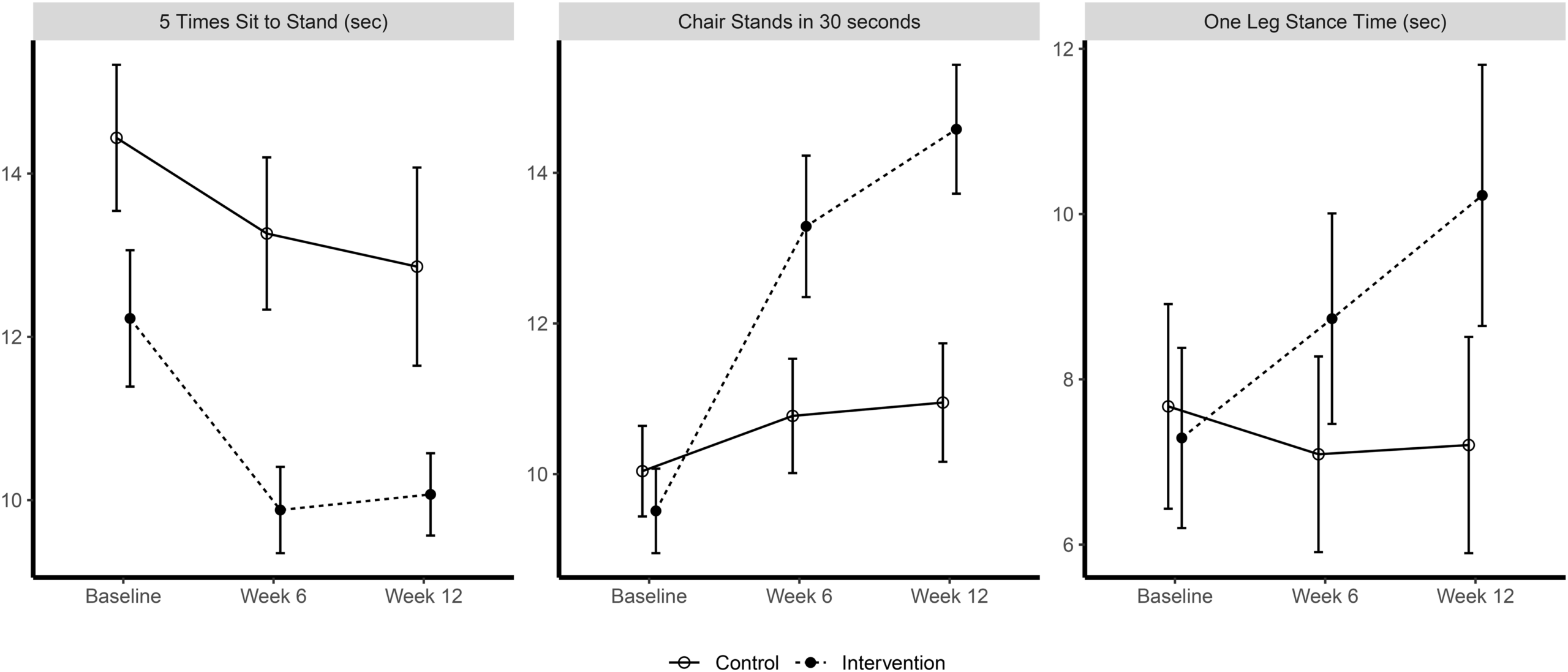
Researchers tracked progress over 12 weeks using tests that reflect everyday movement. These included measuring how quickly participants could stand up from a chair, how long they could balance on one leg, and how many times they could stand within 30 seconds.
These tests provide insight into real-world function, including walking ability and fall risk.
After three months, participants who followed the four-minute routine showed clear improvements.
They completed an average of 4.2 more repetitions in the 30-second chair stand test. They also improved their one-leg balance time by 3.6 seconds. In addition, they reduced the time needed to stand up repeatedly by 2.3 seconds.
These changes may seem small, but they reflect meaningful progress in daily life. Improved strength makes it easier to rise from a chair. Better balance reduces the chance of falling. Faster movement supports independence.
Sciamanna noted the broader impact of these results. “These indicators predict your future ability to go into a nursing home, your future likelihood of falling and of developing difficulty walking,” he said.
One of the most striking findings was how consistently participants followed the program. On average, they completed the exercises on 81 percent of days.
This level of adherence is higher than many longer exercise programs. Researchers believe the short duration made it easier for participants to stay committed.
Participants also increased their performance over time. They completed more repetitions of each exercise as the weeks progressed. Despite these gains, most reported only moderate effort.
This suggests that the routine was challenging but manageable, a key factor for long-term success.
The success of the FAST-2 program reflects a shift in how scientists think about exercise. While longer workouts can be effective, they are not always necessary for improvement.
Early gains in strength often come from small amounts of consistent effort. The body adapts quickly, especially when exercises target key muscle groups.
Short routines also remove common barriers. They require less time, reduce fatigue, and can be done at home without special equipment.
This approach may help reach people who would otherwise avoid exercise altogether.

Safety was a central focus of the study. Participants received clear instructions on how to perform exercises properly. Modifications allowed individuals to adjust movements to their comfort level.
Across nearly 3,000 exercise sessions, only a small number of minor issues were reported. Most involved mild discomfort rather than serious injury.
The program was also designed for remote use. Participants completed exercises at home and received guidance through virtual sessions. This made it easier to participate without traveling to a gym or clinic.
While the findings are promising, researchers caution that the study has limitations. The sample size was modest, and all participants had internet access. This may limit how broadly the results apply.
The study also lasted only 12 weeks. It remains unclear whether participants will maintain their progress over longer periods.
Future research may explore how to keep routines engaging and whether similar benefits apply to other groups.
The study offers a hopeful message. Physical decline is not inevitable, and improvement does not always require major effort.
Small, consistent actions can lead to meaningful change. For older adults, this may mean regaining the ability to move with confidence and independence.
Sciamanna framed the idea in simple terms. “Exercise is the key to freedom,” he said. “Freedom is the ability to be able to do what you want to do.”
For many, that freedom could begin with just four minutes a day.
This research could reshape how exercise is recommended for older adults. By showing that short routines can improve strength and balance, it offers a more accessible path to staying active.
Healthcare providers may use these findings to encourage simple, daily movement rather than complex workout plans. This could increase participation among older adults who feel discouraged by traditional programs.
The study also highlights the importance of consistency. Small daily habits may be more effective than occasional intense workouts. This insight could influence public health strategies aimed at reducing falls and maintaining independence.
In the long term, widespread adoption of short exercise routines could reduce healthcare costs. Fewer falls and injuries would mean fewer hospital visits and less need for long-term care.
For individuals, the benefits extend beyond physical health. Improved mobility supports confidence, independence, and quality of life. Even a few minutes each day can help preserve the ability to move freely and safely.
Research findings are available online in the journal PLOS One.
The original story “Four-minute daily exercise boosts strength and mobility in older adults” is published in The Brighter Side of News.
Like these kind of feel good stories? Get The Brighter Side of News’ newsletter.
The post Four-minute daily exercise boosts strength and mobility in older adults appeared first on The Brighter Side of News.


Leave a comment
You must be logged in to post a comment.