In California’s White Mountains, a bristlecone pine called Methuselah has held on for nearly 4,800 years, outlasting kingdoms, droughts, and whole eras of human history. Its battered trunk poses a basic question that still pulls scientists uphill: how does a tree live this long?
It does not look built for grandeur. Methuselah is not especially tall, and it does not command attention the way a giant sequoia does. But age, not size, is what sets it apart. It is widely accepted as the world’s oldest known non-clonal tree, a single living organism rather than one that survives by cloning or regrowing from itself.
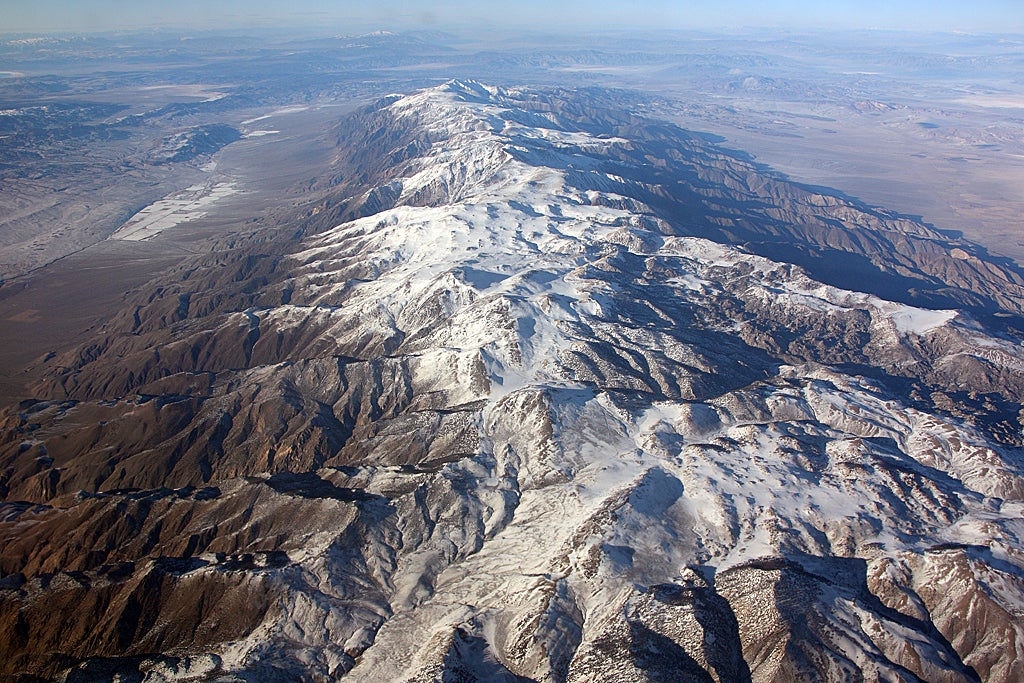
That distinction has made the tree a symbol of endurance, but its survival is tied to a hard, stingy place. Methuselah grows just below the tree line in a subalpine zone marked by thin soil, bitter winds, and freezing temperatures. Where richer forests reward speed, this landscape rewards restraint.

Great Basin bristlecone pines survive by doing almost everything slowly. Their short growing season and poor soil produce dense, resin-filled wood that resists insects, fungi, and decay. Their growth rings can be so tightly packed that some measure only a fraction of a millimeter across.
That slow pace reaches the needles, too. Some of Methuselah’s needle clusters, known as fascicles, can remain on the tree for up to 45 years, a record among conifers. Most other pines lose theirs after just two to four years. Holding onto needles that long saves energy, which matters in a place where little comes easily.
Its shape tells the same story. Centuries of fierce wind have twisted the trunk into an uneven form, and only a thin strip of living tissue may connect the roots to a handful of active branches. Much of the trunk can die without killing the tree, turning older wood into a kind of protective armor.
That mix of thrift and toughness helps explain why bristlecones are often described as extremeophiles, organisms able to endure harsh conditions that defeat others.
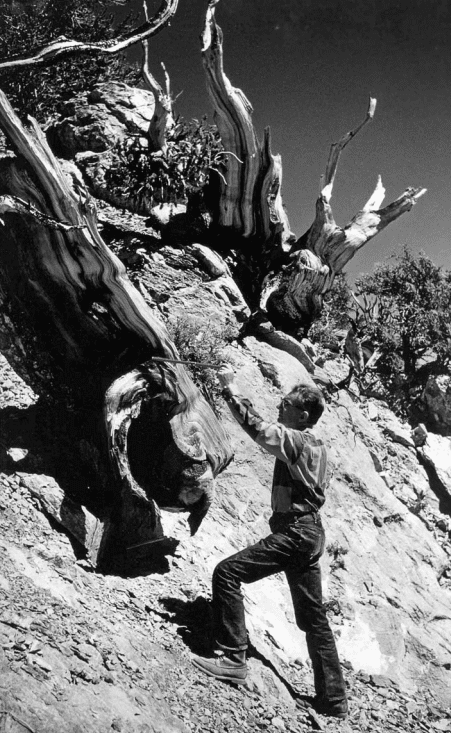
Methuselah’s wider fame began in 1953, when dendrochronologist Edmund Schulman took a detour into the White Mountains after more than a decade spent searching for the oldest trees on Earth. In a high-elevation grove near the dry forest line, he used an increment borer to remove a slender core of wood without seriously harming the tree.
The rings told the story. Schulman concluded the pine was at least 4,800 years old, and later samples taken in 1957 confirmed the estimate. Methuselah became the oldest living non-clonal tree ever documented.
That discovery also changed how such trees were treated. The U.S. Forest Service kept Methuselah’s exact location secret to protect it from vandalism, and for years the tree remained hidden in plain sight along the 4.5-mile Methuselah Trail in Inyo National Forest. In 2021, photographs leaked online that appeared to reveal the tree’s location, but the agency still has not confirmed which tree it is.
The caution was not abstract. Ancient trees had already shown how easy they were to lose.
Methuselah’s claim to fame has not gone entirely unchallenged. In Chile, a Fitzroya cupressoides known as Gran Abuelo, or Great-Grandfather, has stirred debate over whether it may be even older. Climate scientist Jonathan Barichivich estimated its age at 5,484 years using a partial core sample and statistical modeling.
That figure remains unverified because a full core has not been obtained, in part because decay at the tree’s center makes that difficult. Still, the estimate has pushed ancient trees back into public conversation, especially as symbols of climate resilience and vulnerability.
Methuselah also stands in the shadow of a loss. In 1964, a bristlecone pine called Prometheus was cut down near Wheeler Peak in Nevada during research tied to glacial history. Only after it was felled did scientists learn it had lived for at least 4,862 years, and possibly longer. The mistake became a lasting warning about the cost of treating ancient organisms as disposable research material.
Long before Schulman arrived, Indigenous communities had already learned what these trees could endure. The Paiute people entered the White Mountains around 4,000 years ago and valued bristlecone pines for their staying power and unusual wood, which was hard to burn and better suited for shelter than for fire.
The Shoshone also held the trees in high regard. In their traditions, bristlecone resin was believed to have healing value and was warmed and placed on wounds, boils, and skin ailments. The trees stood as symbols of survival and nature’s persistence.
That older knowledge sits alongside the modern scientific picture rather than outside it. The same traits that inspired respect, endurance, hardiness, and usefulness under extreme conditions, are the traits now studied in detail.
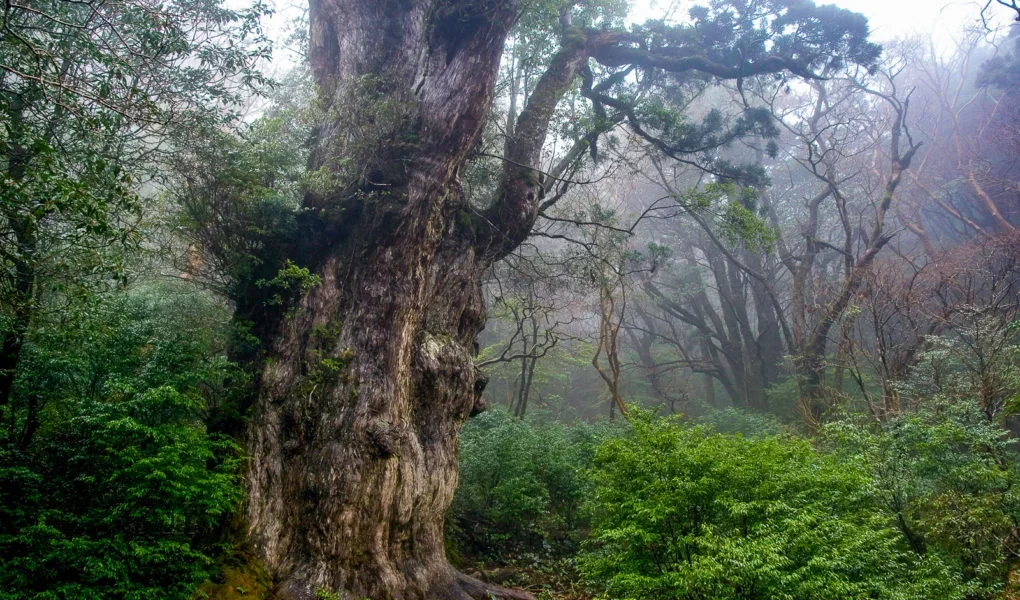
Methuselah is not alone in old age, either.
For all its age, Methuselah is not beyond danger. The very conditions that helped bristlecones persist for millennia are changing. Rising temperatures, severe drought, bark beetles, and wildfire now threaten even remote high-elevation forests.
The material describes recent heat and the worst drought in 1,200 years as forces already killing nearby pines. Scientists warn that extreme heat, prolonged drought, and pests could combine into a “perfect storm” for trees once thought almost untouchable.
That is part of what gives Methuselah its modern force as a symbol. It is not simply old. It is a living witness to how durability works, not through speed or abundance, but through limits, patience, and careful use of resources.
The original story “At 4,800-years-old, Methuselah is the world’s oldest living tree – predates the Egyptian pyramids” is published in The Brighter Side of News.
Like these kind of feel good stories? Get The Brighter Side of News’ newsletter.
The post At 4,800-years-old, Methuselah is the world’s oldest living tree – predates the Egyptian pyramids appeared first on The Brighter Side of News.


Leave a comment
You must be logged in to post a comment.