Some of the universe’s heaviest elements are born in chaos, in matter flung outward when neutron stars collide or massive stars explode. But one stubborn problem has limited how well scientists can model those events: the heat released while those new elements form is hard to calculate in full detail, and leaving it out can skew the result.
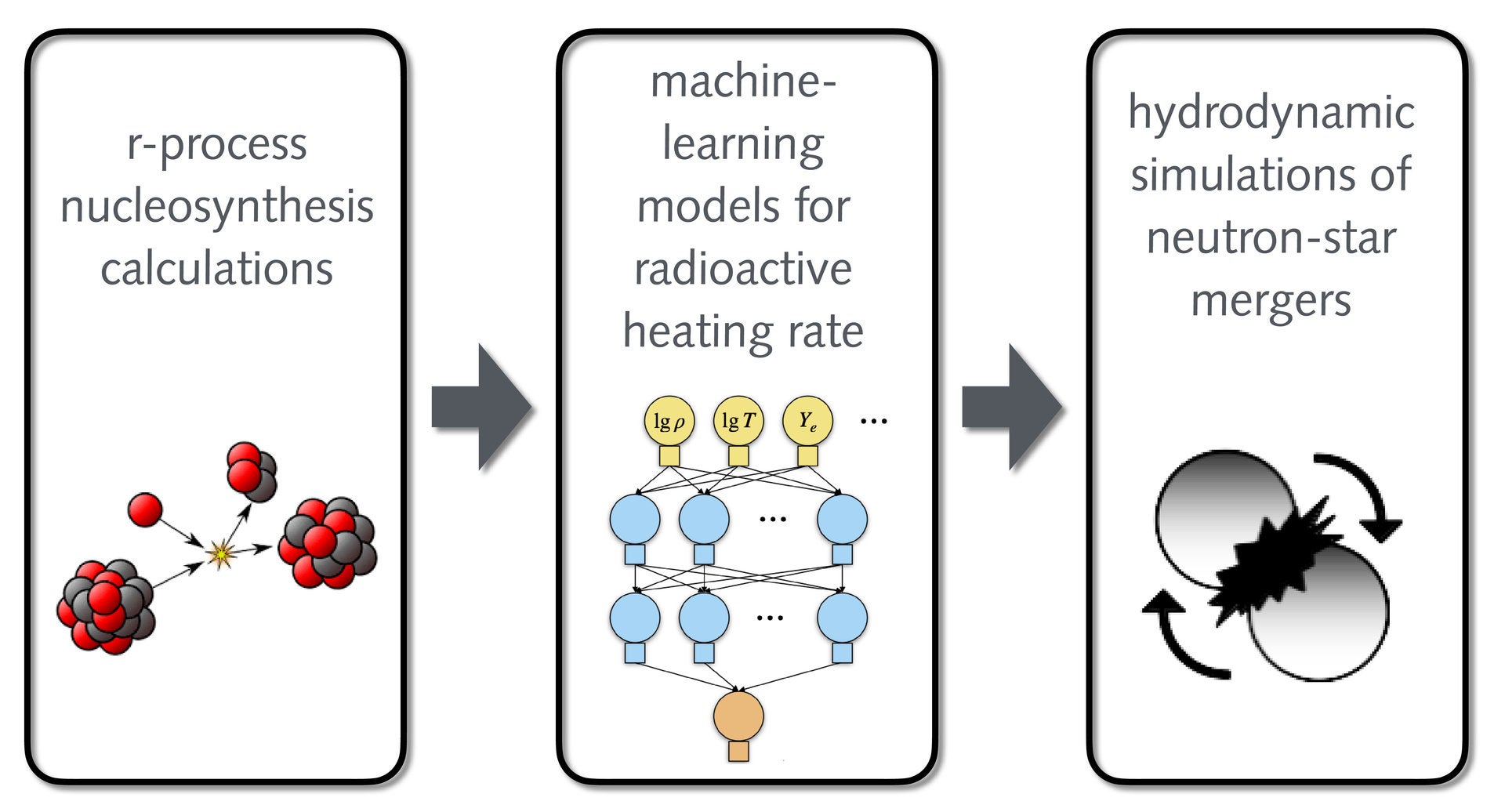
A team led by researchers at GSI/FAIR says it has now found a way around that bottleneck. Using a deep-learning system called RHINE, the group built a machine-learning model that can estimate the energy released during rapid neutron-capture nucleosynthesis, better known as the r-process, while a hydrodynamic simulation is running.
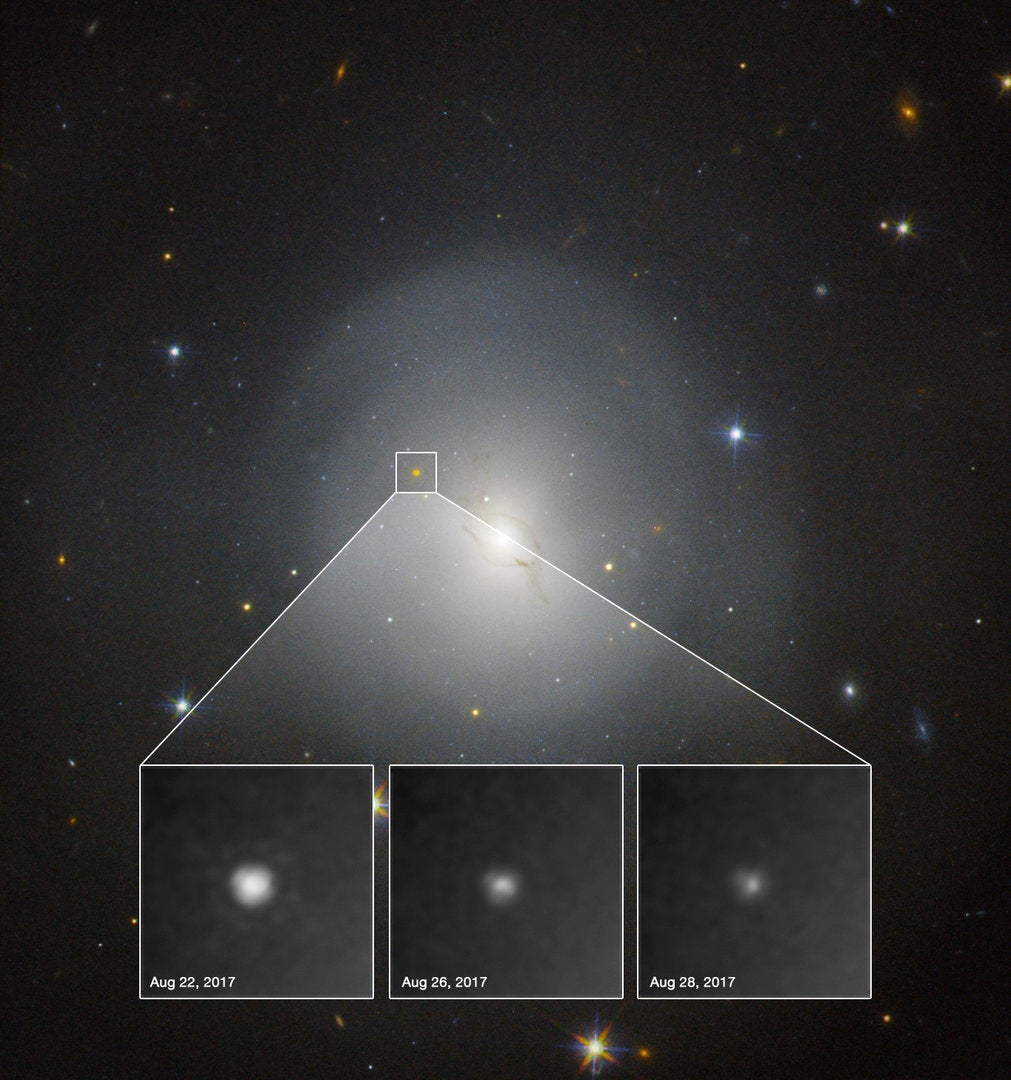
That matters because the heat is not just a bookkeeping detail. It can change how fast matter moves, how it spreads through space, and how bright the aftermath becomes. In neutron star mergers, that aftermath shows up as a kilonova, the brief electromagnetic glow produced by freshly forged heavy elements.
“Researchers around the world strive to make these complex reactions understandable through theoretical simulations. However, modeling all parameters requires incredible computing power, which is why the models often have to be simplified,” said Dr. Oliver Just, first author of the study and a researcher in the Nuclear Astrophysics & Structure department at GSI/FAIR. “Our new model RHINE, which uses artificial intelligence, offers an efficient alternative.”
The r-process is one of nature’s main ways of building heavy atomic nuclei. In these extreme environments, free neutrons are captured by existing nuclei, then converted into protons, allowing larger and heavier nuclei to form.
Capturing that process exactly is difficult because it means following the behavior of thousands of isotopes at once. In full nuclear-network calculations, each isotope adds another equation, and the cost quickly becomes overwhelming, especially in multidimensional simulations of violent astrophysical events.
The new approach trims that burden sharply. Instead of tracking thousands of species directly, RHINE follows a much smaller set of quantities, including the mass fractions of free neutrons, protons, alpha particles, heavy nuclei, the average mass number of heavy nuclei, and the average mass excess per baryon. Neural networks trained on detailed nuclear-network calculations then estimate the source terms needed to evolve those quantities during the simulation.
“First the ML models are trained using a large number of reference calculations produced with a full set of nuclear reactions. Subsequently, the models are adopted in running hydrodynamical simulations to approximate the heating rates during the r-process with minimal effort,” said Dr. Zewei Xiong, a GSI/FAIR scientist who helped design the machine-learning models.
The researchers describe this as the first use of machine learning to approximate nuclear reaction rates inside multidimensional hydrodynamical simulations of this kind.
The team focused on a long-recognized issue in merger modeling: postprocessing. In many simulations, the fluid motion is computed first, and the detailed nuclear reactions are added later along extracted trajectories. That saves time, but it also means the fluid never “feels” the extra heat while it is moving.
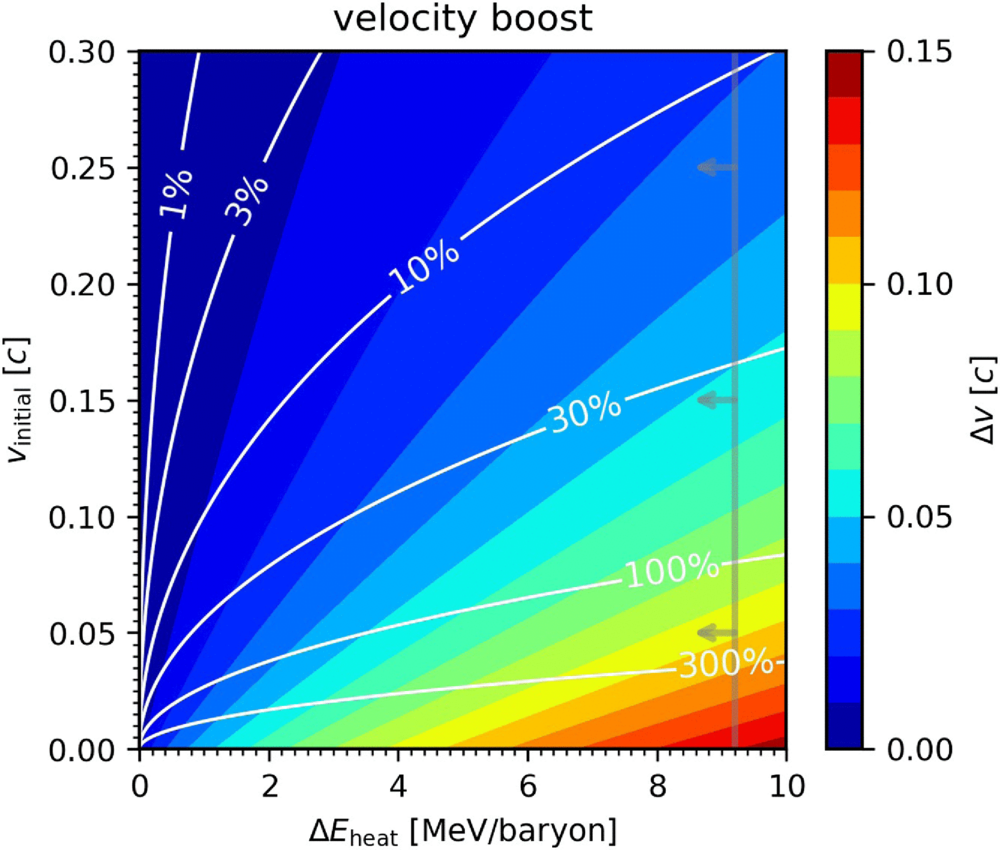
According to the study, that can matter a great deal, especially for slower ejecta. Several MeV of heat per baryon can be released during the r-process. If the material is already moving very fast, that energy gives only a modest boost. But slower material can be changed dramatically.
In one set of wind tests, about 3 MeV per baryon had little effect on outflows already moving at 0.3 times the speed of light. In contrast, a similar heat input nearly tripled the final speed of material that would otherwise have reached just 0.03 times the speed of light. The pattern follows basic energy conservation: slower ejecta are easier to accelerate.
The group validated RHINE against full nuclear-network postprocessing in both idealized spherical wind models and long-term neutron star merger simulations. In most cases, the net heating energy agreed within about 10 percent, though the fraction of energy lost to beta-decay neutrinos was harder to predict accurately.
The paper notes that this uncertainty matters less for the overall dynamics because neutrino losses make up a relatively small share of the total energy budget.
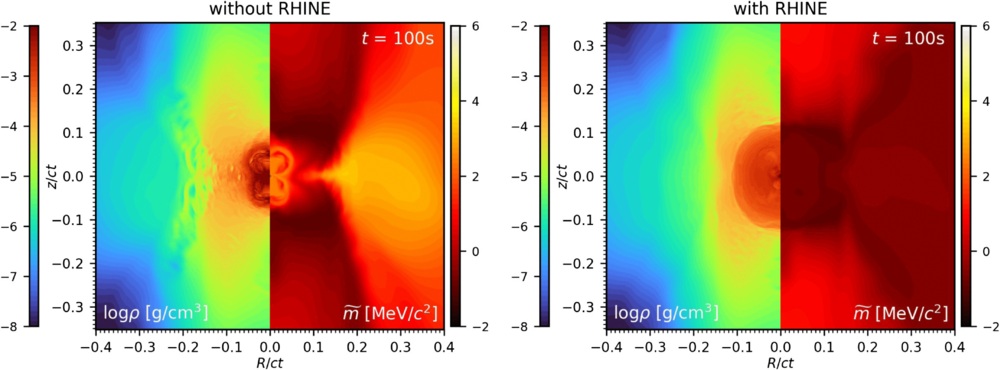
In the merger simulations, the clearest changes appeared in the slow BH-torus ejecta, matter expelled later from the black hole and surrounding torus left behind after the merger. That material gained an average of about 2.1 MeV per baryon from r-process heating, and its average velocity rose by about 40 percent.
The mass of that ejecta component also increased. In the model without RHINE, the BH-torus ejecta mass was 4.929 × 10^-2 solar masses. With RHINE, it rose to 6.000 × 10^-2 solar masses.
The faster dynamical ejecta behaved differently. They gained slightly more heating energy, about 2.3 MeV per baryon, but their average velocity changed only modestly because they were already moving much faster. NS-torus ejecta, which had a higher average electron fraction, received less heating, about 0.7 MeV per baryon, and showed smaller dynamical changes.
The simulations also suggest that r-process heating smooths the ejecta and nudges slower material toward a more spherical shape. Still, the effect was not strong enough to make the higher-velocity ejecta nearly spherical, leaving open questions about the geometry inferred from early observations of the kilonova linked to GW170817.
For element yields, the changes were real but not sweeping. The overall abundance pattern stayed much the same, though individual nuclei could shift by factors of a few in some cases. The bigger impact came in the predicted kilonova signal. The study found that including r-process heating can make the kilonova significantly brighter, by about a factor of 2, largely because the slow BH-torus ejecta become both more massive and faster.
The authors argue that RHINE is useful not because it overturns the big picture of neutron star mergers, but because it improves the details without the crushing computational expense of a full nuclear network embedded everywhere in the simulation. The scheme is self-contained, avoids extra tracer-particle machinery, and is designed to add only a modest computational burden.
The code is publicly available, and the project was co-funded in part by the European Research Council. The researchers say the method could eventually help link future experiments at FAIR with observations of stellar explosions and neutron star mergers.
They also frame RHINE as a broader proof of concept. If machine learning can stand in for parts of a nuclear reaction network without losing the crucial physics, similar methods might be used for other hard-to-compute ingredients in astrophysical simulations.
This work gives astrophysicists a more practical way to include r-process heating in merger simulations that would otherwise be too expensive to run in full detail.
That should improve predictions of ejecta speed, mass distribution, geometry, and kilonova brightness, especially for slow-moving outflows where the heating matters most.
In the longer term, a tool like RHINE could help tighten the connection between nuclear physics experiments, merger theory, and telescope observations by making more realistic simulations feasible on a routine basis.
Research findings are available online in the journal Physical Review D.
The original story “AI helps scientists model kilonova-producing neutron star mergers” is published in The Brighter Side of News.
Like these kind of feel good stories? Get The Brighter Side of News’ newsletter.
The post AI helps scientists model kilonova-producing neutron star mergers appeared first on The Brighter Side of News.


Leave a comment
You must be logged in to post a comment.