For decades, nuclear propulsion has been a fixture of aerospace engineering proposals and government studies, always promising, never quite leaving the laboratory. That changes in 2028.
NASA announced that it will launch a spacecraft called Space Reactor-1 Freedom, described by the agency as the first nuclear-powered interplanetary spacecraft, on a trajectory to Mars before the end of that year. The mission, called Skyfall, will carry a fleet of small helicopters to the Martian surface. But the helicopters may end up being the secondary headline. The reactor powering the journey could reshape how humanity moves through deep space.
The propulsion technology onboard SR-1 Freedom is known as nuclear electric propulsion, or NEP. It operates through an onboard fission reactor that generates heat, which is then converted into electricity to drive highly efficient electric thrusters.
This is distinct from the radioisotope thermoelectric generators that have powered instruments aboard probes like Voyager for decades; those systems use the heat from radioactive decay for power but play no role in propulsion. NEP is an active drive system, and unlike solar panels, it functions at any distance from the sun, making it particularly suited for missions heading toward the outer solar system.
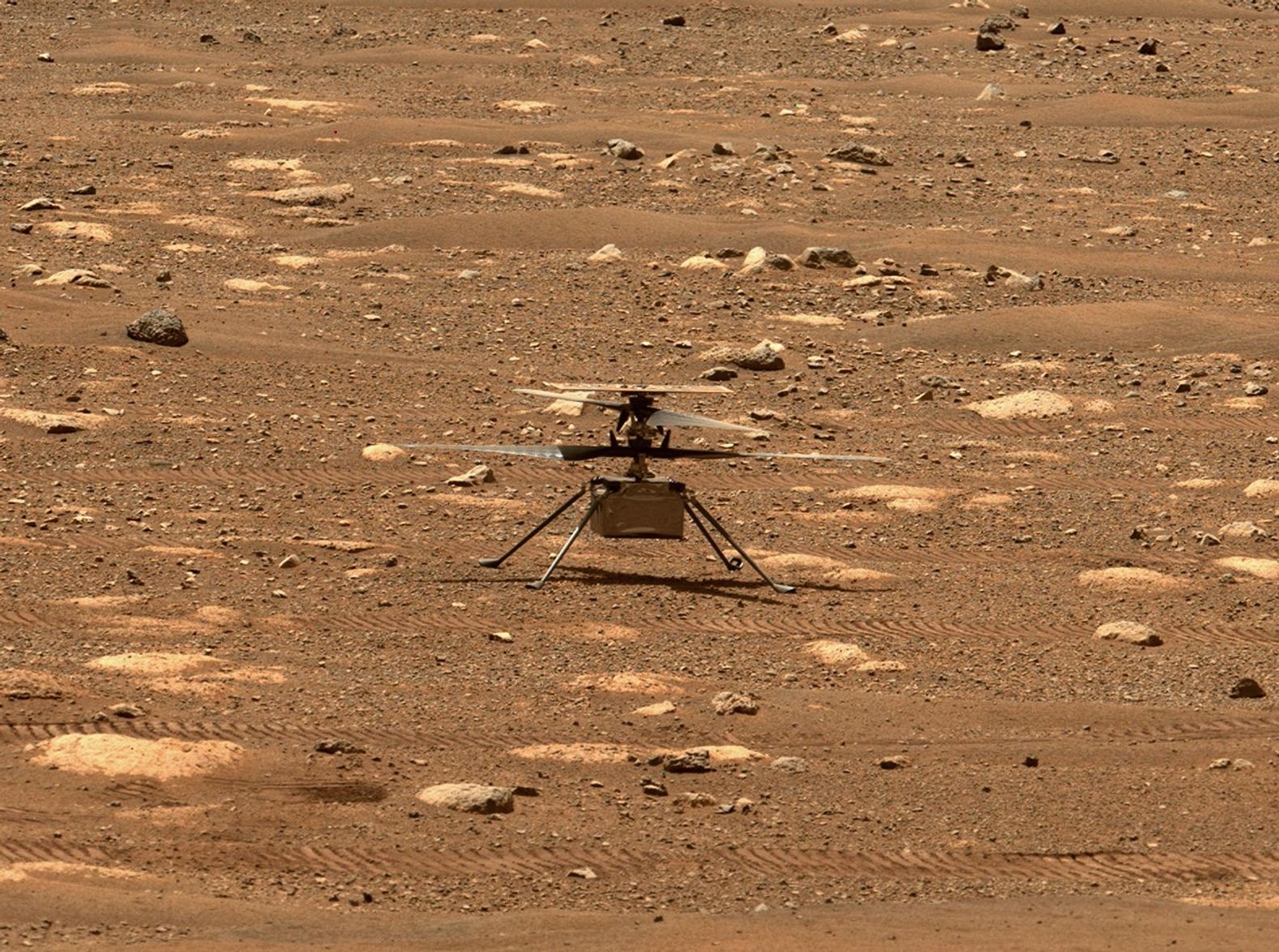
The Skyfall helicopters will be similar in design to Ingenuity, the small rotorcraft that arrived at Mars with the Perseverance rover in February 2021 and went on to complete 72 flights before operations ended in January 2024. Ingenuity was built as a technology demonstrator. The Skyfall fleet has a more focused job.
Three helicopters will scout a potential human landing site, using cameras and ground-penetrating radar to map terrain, assess hazards, and characterize deposits of subsurface water ice. The location of that water, and details about its depth and distribution, will be critical information for any future crewed mission to the surface.
“They will also map and characterize the subsurface water ice to find out where the water ice deposits are, along with the size, depth and other important characteristics,” said Steve Sinacore, program executive for NASA’s Space Reactors Office.
If the mission timeline holds, SR-1 Freedom will launch in December 2028 and reach Mars roughly a year later. After deploying the Skyfall helicopters, the spacecraft may continue outward into the solar system, though that part of the mission architecture has not been finalized.
NASA views NEP as something well beyond a single mission. “SR-1 Freedom will establish flight-heritage nuclear hardware, set regulatory and launch precedent, and activate the industrial base for future fission power systems across propulsion, surface and long-duration missions,” the agency said in a statement.
That language points toward a longer ambition. Nuclear electric propulsion is considered essential for efficiently moving large payloads to the outer planets, where solar power becomes impractical, and for sustaining high-power systems on crewed spacecraft during multi-year journeys.
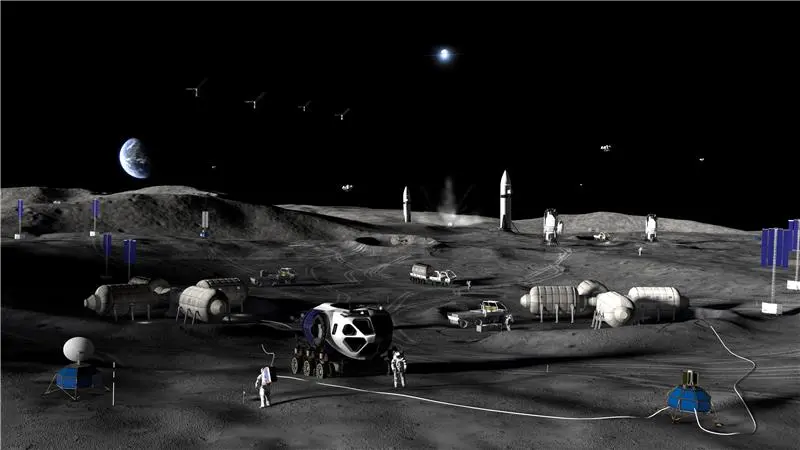
The Skyfall announcement was part of a larger event NASA called “Ignition,” held March 24, during which the agency outlined a series of sweeping changes to its exploration strategy.
Among the most significant: NASA is pausing development of Gateway, the planned moon-orbiting space station, to redirect focus toward building a permanent base on the lunar surface. Some of Gateway’s hardware will be repurposed for that outpost.
The lunar base plan is structured in three phases, beginning with early infrastructure using small habitats, then progressing toward semi-permanent facilities with contributions from international partners including Japan, Italy, and Canada, and eventually arriving at continuous human presence on the surface.
NASA Administrator Jared Isaacman framed the moment in stark terms. “The clock is running in this great-power competition, and success or failure will be measured in months, not years,” he said.
In low Earth orbit, NASA announced it is exploring a new strategy to transition away from the International Space Station without creating a gap in American human presence. The proposal involves attaching a government-owned core module to the current station, then gradually adding commercial modules that would eventually detach and operate independently. An industry request for information opened March 25.
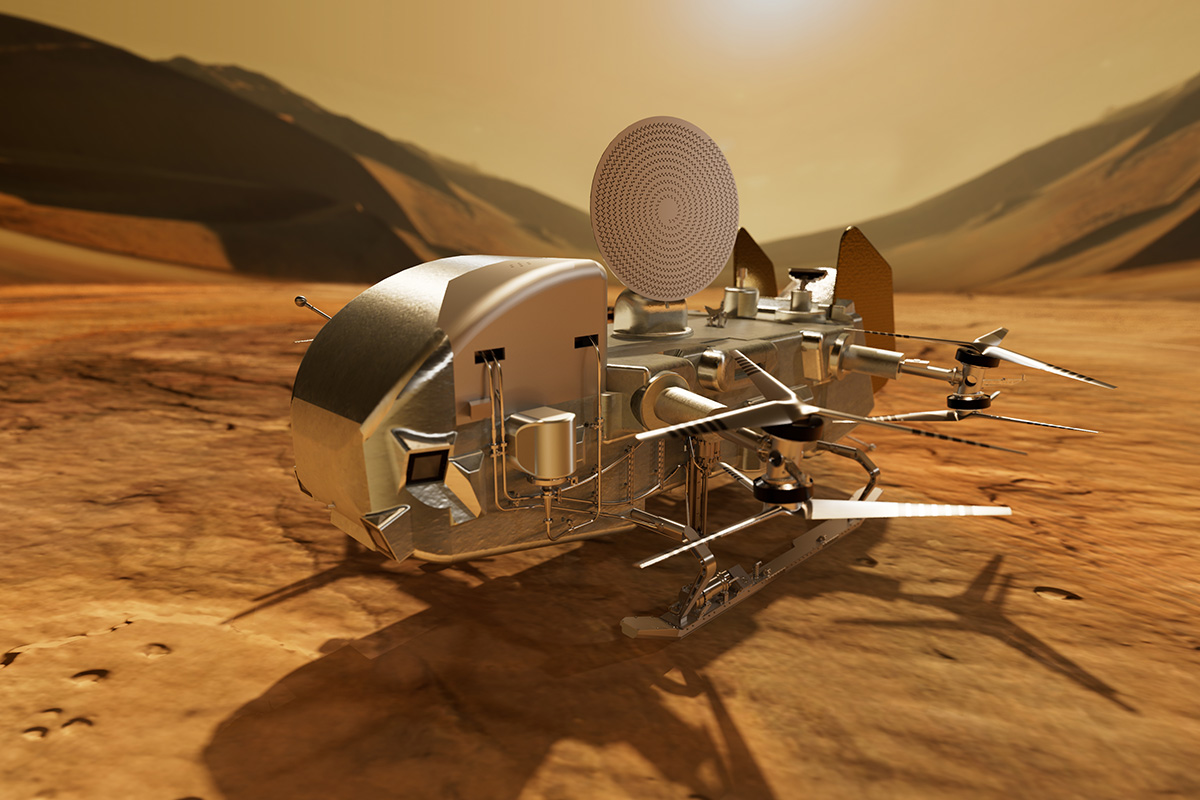
Several other missions received notable mentions during the announcements. The Dragonfly mission, a nuclear-powered octocopter, remains on schedule to launch in 2028 and arrive at Saturn’s moon Titan in 2034 to study its organic-rich environment. NASA also confirmed it will deliver the European Space Agency’s Rosalind Franklin Rover to Mars in 2028, equipped with a mass spectrometer designed to search for organic matter.
The Nancy Grace Roman Space Telescope, aimed at advancing understanding of dark energy, is set to launch as early as this fall. A new Earth science mission launching next year will, for the first time, measure the internal dynamics of convective storms in real time, with the goal of improving extreme weather prediction by up to six hours before an event.
NASA also announced plans to expand its Commercial Lunar Payload Services program, targeting up to 30 robotic lunar landings beginning in 2027, with payloads open to contributions from industry, academia, and international partners.
The practical weight of SR-1 Freedom extends past its specific mission objectives. Nuclear electric propulsion makes large-scale cargo transport across deep space far more efficient than anything currently available. Beyond Mars, it becomes the only viable propulsion option for high-power missions near Jupiter and beyond, where solar arrays cannot generate adequate energy.
By demonstrating the technology in flight, establishing regulatory frameworks for nuclear hardware in space, and building out the industrial supply chain needed to support future systems, this mission is designed to function as infrastructure for everything that comes after it. Crewed Mars missions, outer planet robotic explorers, sustained lunar operations requiring constant high power, all of them depend on solving the propulsion problem first.
The Skyfall helicopters will scout Mars. SR-1 Freedom will, if all goes as planned, scout a path for the rest of the solar system.
The original story “America’s nuclear spacecraft is heading to Mars, and it’s bringing helicopters” is published in The Brighter Side of News.
Like these kind of feel good stories? Get The Brighter Side of News’ newsletter.
The post America’s nuclear spacecraft is heading to Mars, and it’s bringing helicopters appeared first on The Brighter Side of News.


Leave a comment
You must be logged in to post a comment.