Initially, much uncertainty surrounded the flight path of the space rock known as 2024 YR4, a small asteroid that has recently become an object of much scientific attention.
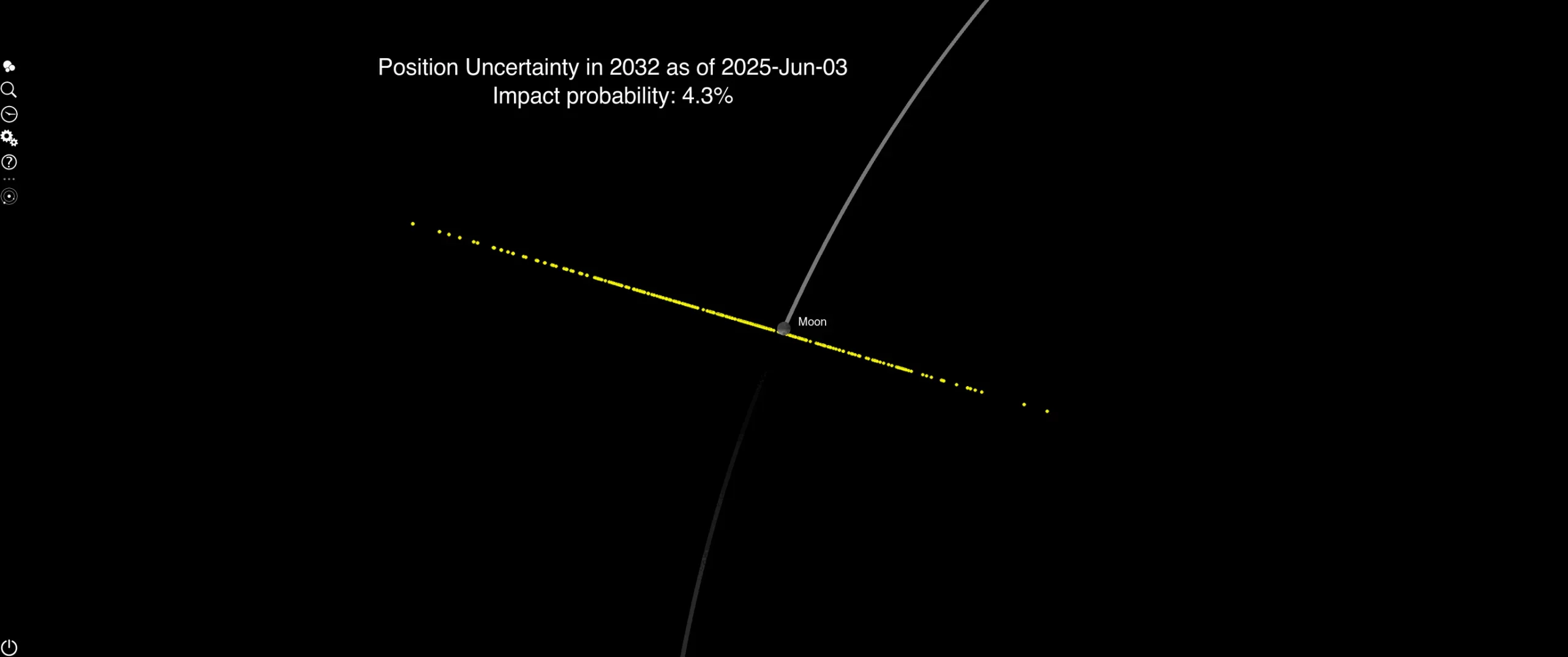
2024 YR4, measuring between 174 and 220 feet, was once thought likely to collide with Earth’s Moon in December 2032. Early estimates showed around a 4.3% chance of impact. However, through consideration of new observations made with the James Webb Space Telescope (JWST), scientists have since eliminated this potential collision.
The JWST’s measurements show that the asteroid will safely fly by the Moon in December 2032, missing by approximately 13,200 miles (or about 21,200 km).
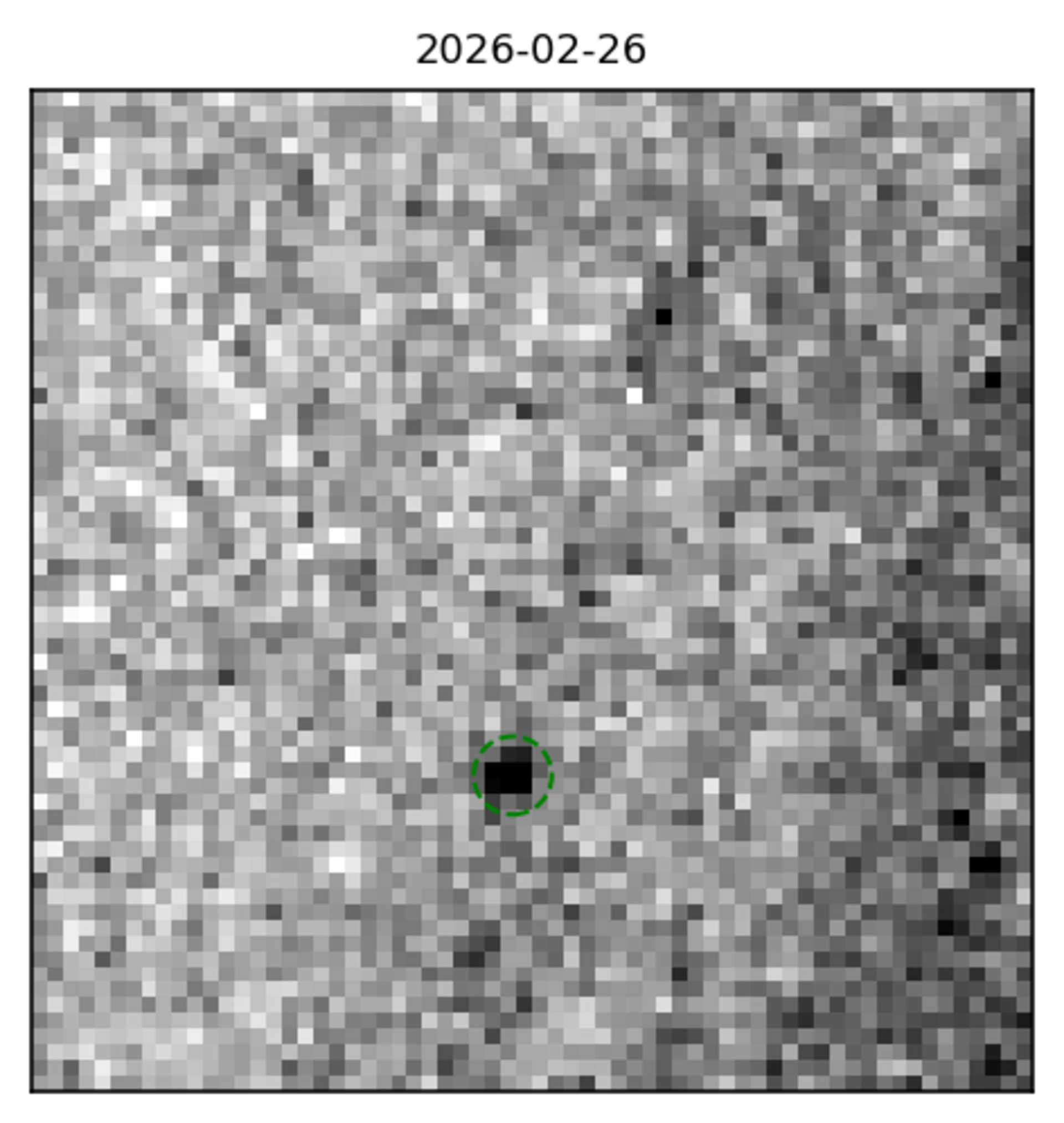
Using two sets of data taken by the JWST’s Near-Infrared Camera (NIRCam) on February 18, 2026, and February 26, 2026, scientists from NASA’s Center for Near-Earth Object Studies at the Jet Propulsion Laboratory were able to refine the asteroid’s trajectory and eliminate the possibility of impact with either the Moon or Earth.
The asteroid will pass by the Moon without impacting it on 22 December 2032.
Locating the asteroid again was not guaranteed. It was thought that after it had disappeared from view in Spring 2025, it would not be visible to any Earth-based or most space-based telescopes. It would be too faint to locate until approximately 2028, when it would again become observable.
An international team of researchers had identified two short periods during February 2026 when they thought the JWST would still be able to detect the remarkably dim asteroid. These observations were made possible by using data from the European Space Agency’s (ESA) Gaia mission, which provided extremely precise measurements of the positions of background stars for reference.
Despite the incredible power of the JWST, it was still a formidable challenge to locate this almost invisible object.
Primarily, the Webb telescope was created to observe extremely distant objects billions of light years away with a very small field of view. As such, Webb requires extremely precise measurements to locate a dim asteroid or comet within its field of view.
NASA has indicated that these observations of asteroid 2024 YR4 using JWST were some of the faintest ever made of this type of object.
The campaign to observe 2024 YR4 was led by the Johns Hopkins University Applied Physics Laboratory in Laurel, Maryland. The effort was conducted in conjunction with ESA’s Near-Earth Object Coordination Centre, NASA’s Center for Near-Earth Object Studies, and the Webb mission team.
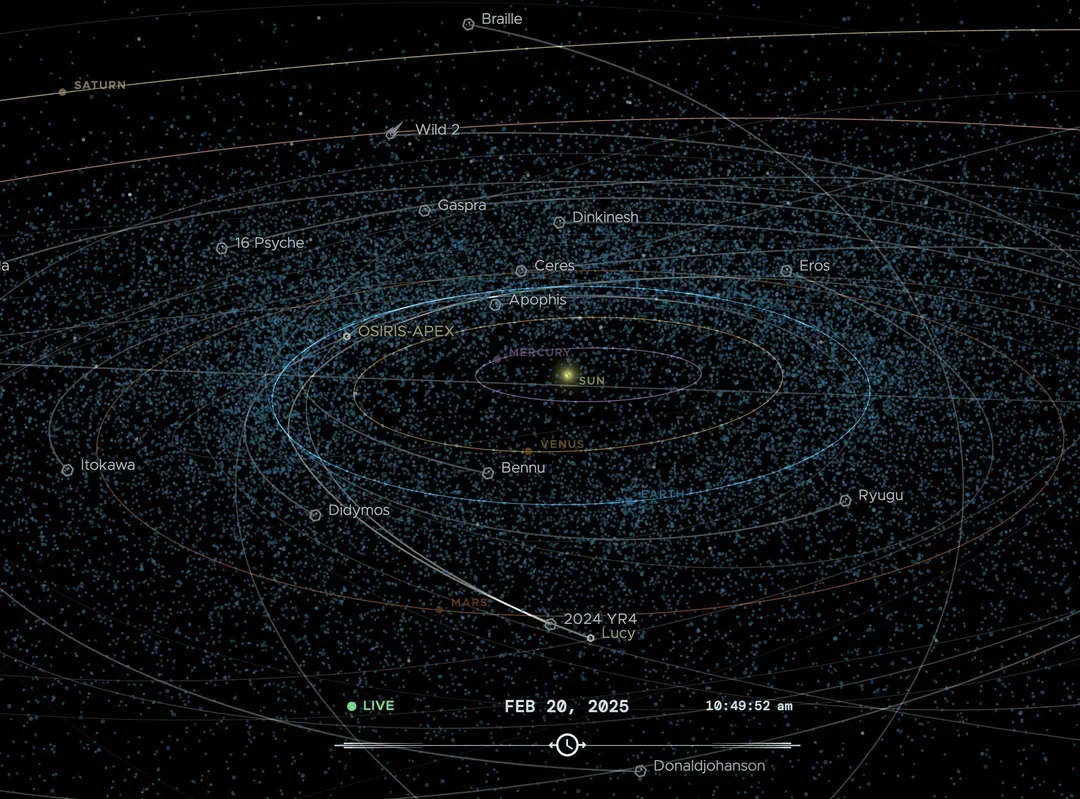
Asteroid 2024 YR4 was first observed in late 2024 with a telescope in Chile as part of NASA’s funded Asteroid Terrestrial-impact Last Alert System.
The early predictions regarding the trajectory of 2024 YR4 raised concerns. Initially, there was thought to be a small probability that it would impact Earth during a close approach in the year 2032.
Eventually, after further observations of 2024 YR4, the estimated probability of that event peaked at 3.1%. This was the highest probability ever recorded for a potential asteroid impact.
However, after additional observations were made, those probabilities were greatly reduced. NASA concluded in early 2025 that asteroid 2024 YR4 would not impact Earth in 2032 or at any time during the next century.
On the other hand, 2024 YR4 still presented a chance of hitting the Moon. There remained a level of uncertainty around that prediction until Webb’s latest observations allowed for much greater accuracy in predicting the future path of this asteroid.
The asteroid’s trajectory itself has not changed. The new data have made it easier for scientists to track the asteroid.
By comparing the asteroid’s location against stars in the celestial sphere, astronomers can now determine where it will be located in seven years with a greater degree of certainty.
This has resulted in a decrease in the probability of the asteroid colliding with the Moon from 4.3 percent to zero.
The latest model places the asteroid at an altitude greater than 20,000 km above the lunar surface. Although this altitude is within the range of some satellites circling Earth, it is far enough above the Moon to avoid a collision.
European Space Agency (ESA) representatives have remarked on the difficulty of tracking such a small and fast-moving object located millions of kilometers away. Doing so with one of the most complex scientific instruments ever created, while accurately predicting where it will be located in seven years, remains a significant technical challenge.
The impact of an asteroid of this size would be catastrophic if it were to hit Earth.
The energy produced from an object with a diameter of 174 to 220 feet is comparable to approximately 500 Hiroshima bombs. Because of this, asteroids of this diameter have been referred to as “city killers,” due to the damage they could cause to a large metropolitan area.
If the asteroid had struck the Moon, it may have generated a visible explosion. Some astronomers have speculated that the flash could have been observed with the naked eye from Earth.
Others have speculated that debris created from the collision could have produced a temporary meteor shower.
This scenario can now be ruled out.
The object did not represent a danger to either Earth or the Moon. However, it provided a useful example of how planetary defense systems operate in real time.
Near-Earth objects are continuously discovered with uncertain orbits. With each additional observation, the predicted risk changes.
In this case, the James Webb Space Telescope observed the asteroid, which is one of the faintest objects of this type ever detected. The data from the telescope allowed scientists to make predictions about the asteroid’s orbital path well in advance of its next close encounter with Earth.
NASA will collect additional data on asteroid 2024 YR4 with the James Webb Space Telescope in 2028 during its next favorable observation window in the inner solar system.
Space agencies continue to monitor near-Earth objects such as this one. Both ESA’s Space Safety Programme and NASA’s Planetary Defense Program track thousands of near-Earth objects to ensure that any real threats are detected as early as possible, allowing adequate time for potential mitigation.
Research findings are available online in the journal Cell.
The original story “Asteroid 2024 YR4 once feared to strike the Moon now appears harmless” is published in The Brighter Side of News.
Like these kind of feel good stories? Get The Brighter Side of News’ newsletter.
The post Asteroid 2024 YR4 once feared to strike the Moon now appears harmless appeared first on The Brighter Side of News.

