Understanding how the Milky Way formed means looking far beyond the bright spiral you see in the night sky. A new study led by Dr. Vivian Tan, who completed her doctorate at York University under the supervision of Prof. Adam Muzzin, offers the most detailed picture yet of how our galaxy may have grown from a chaotic youth into a stable spiral. Working with an international team, Tan traced the Milky Way’s past by studying hundreds of galaxies that resemble it at earlier stages of cosmic history.
The research draws on observations from the James Webb Space Telescope and the Hubble Space Telescope, using data from the Canadian NIRISS Unbiased Cluster Survey, known as CANUCS. This program relies on massive galaxy clusters to magnify distant objects through gravitational lensing, allowing astronomers to study faint galaxies that would otherwise remain hidden.
The work also reflects Canada’s major role in Webb through the NIRISS instrument, built by the Canadian Space Agency with partners at the Université de Montréal, the National Research Council Herzberg Centre for Astronomy and Astrophysics, and Honeywell.
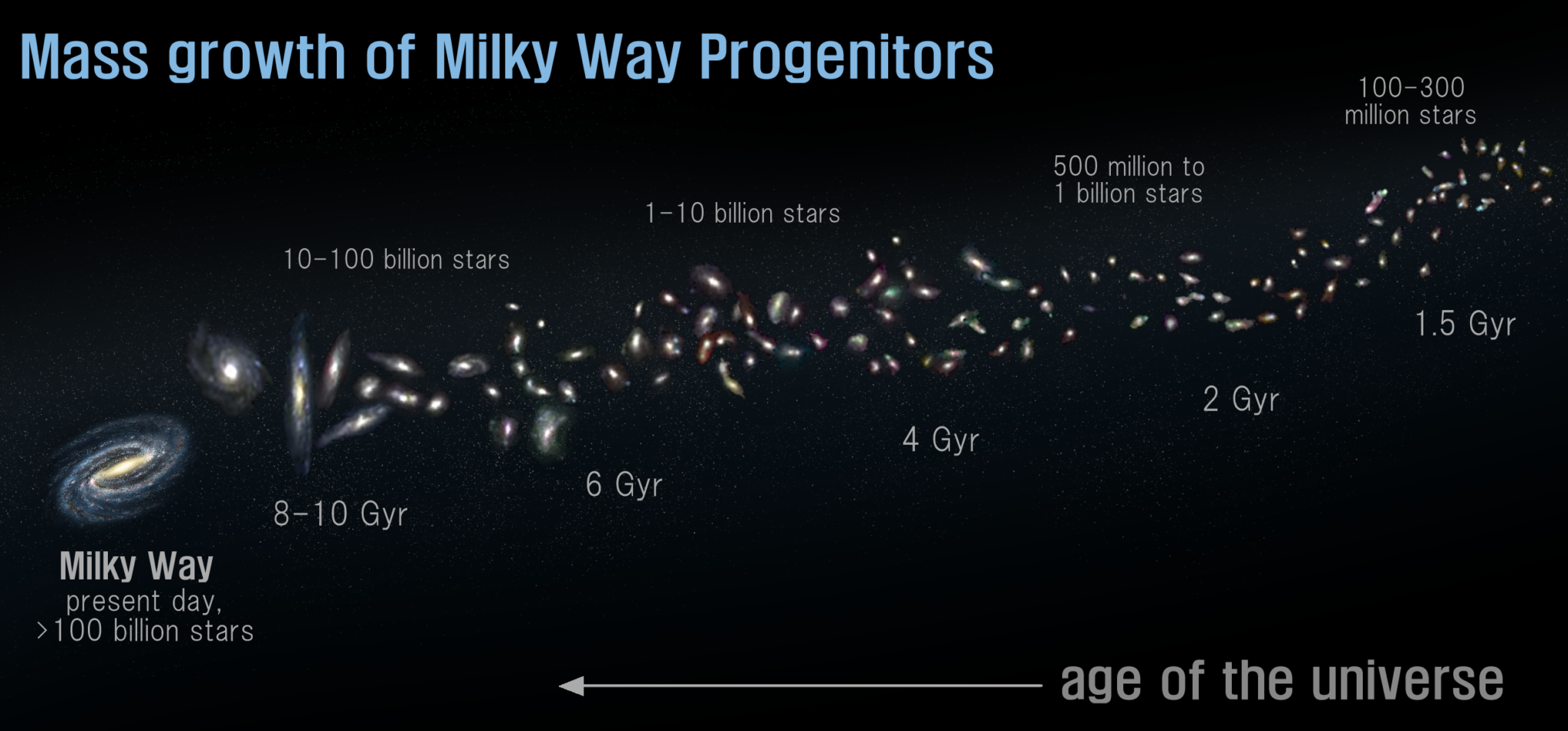
Today, the Milky Way contains about 50 billion solar masses in stars. It has a thin disk where stars still form, an older and thicker disk, and a central bar and bulge. Streams of stars in its halo show that smaller galaxies were absorbed long ago. What has remained unclear is whether this path was common for galaxies of similar size, or if our galaxy followed an unusual route.
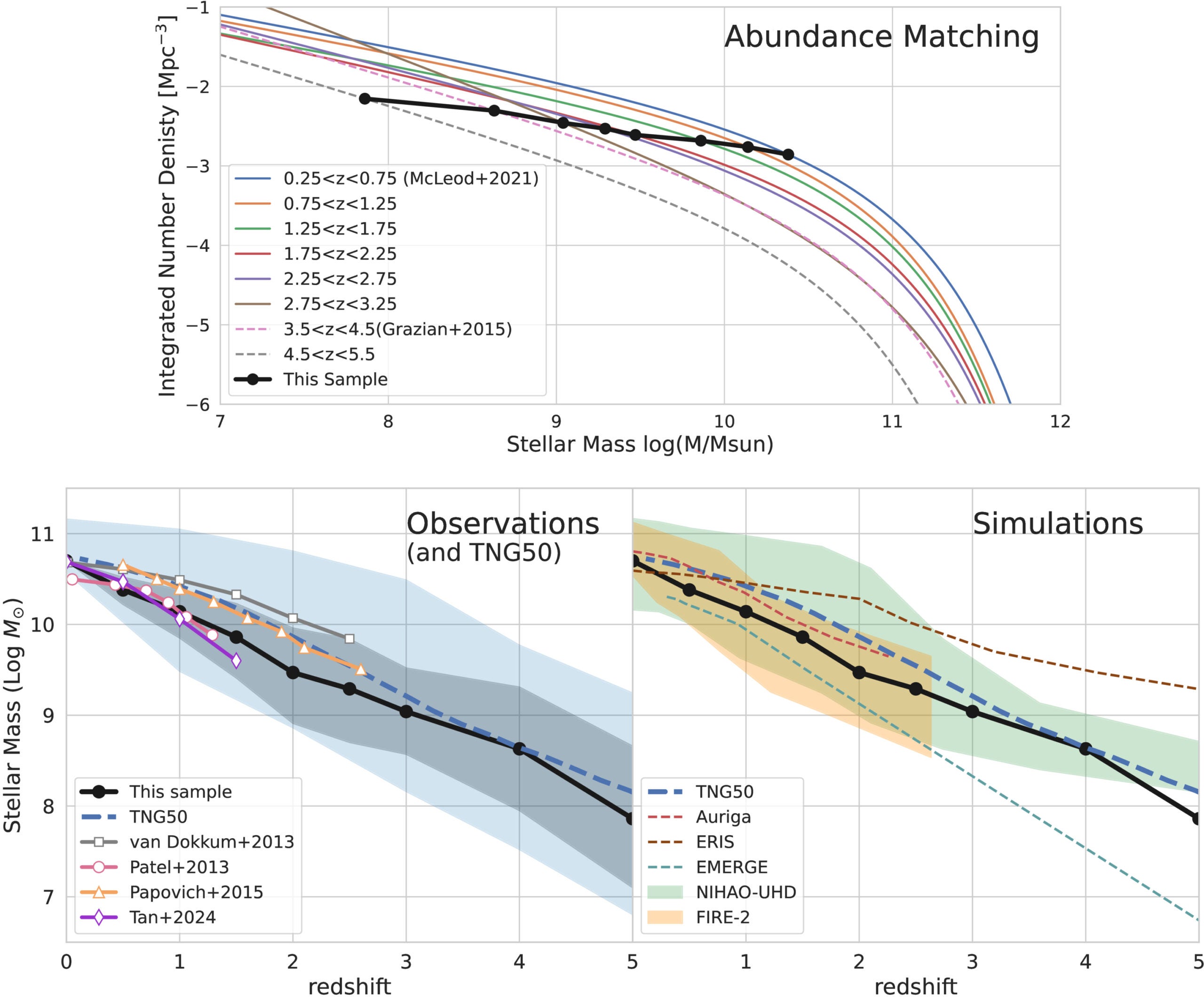
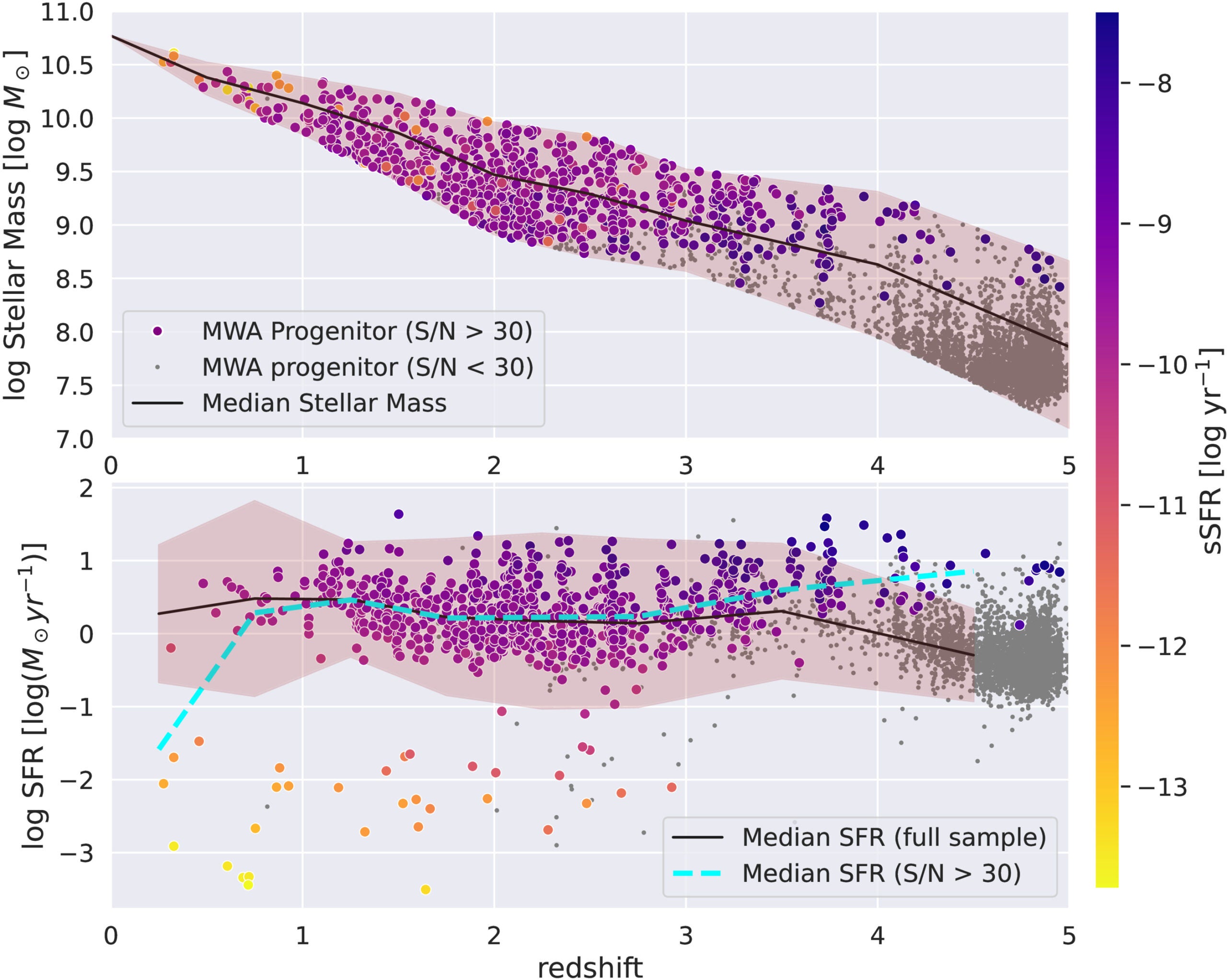
To answer that, the team studied 877 “Milky Way twins.” These galaxies match what astronomers expect the Milky Way would have looked like at different ages. Because looking farther away also means looking further back in time, the sample spans an era when the universe was only about 10 percent of its current age up to several billion years later. This period marks a turning point when young galaxies transformed from irregular systems into orderly disks.
The CANUCS survey combines Webb’s near infrared vision with Hubble’s sharp imaging. In some fields, astronomers used up to 21 different filters, ranging from ultraviolet to infrared light. That coverage allowed the team to measure how stars and star formation are spread across each galaxy, rather than treating each system as a single point of light.
Only galaxies with very strong signals were used for the most detailed work. After correcting for lensing effects and filtering out inactive systems, the team focused on hundreds of star forming galaxies that could realistically evolve into a Milky Way type spiral.
With Webb’s resolution, the researchers mapped stellar mass and star formation pixel by pixel. These maps reveal a clear trend. Early Milky Way like galaxies grew mainly in their outer regions. Between about 12 and 10 billion years ago, the outskirts gained mass far faster than the central cores. Star formation was strongest several thousand light years from the center, showing that disks were spreading outward over time.
After about 10 billion years ago, this pattern changed. Inner and outer regions began growing at similar rates. This shift marks a calmer phase when galaxies settled into more stable structures, with bulges and disks maturing together.
“Astronomers have been modeling the formation of the Milky Way and other spiral galaxies for decades,” Tan said. “It’s amazing that with the JWST, we can test their models and map out how Milky Way progenitors grow with the Universe itself.”
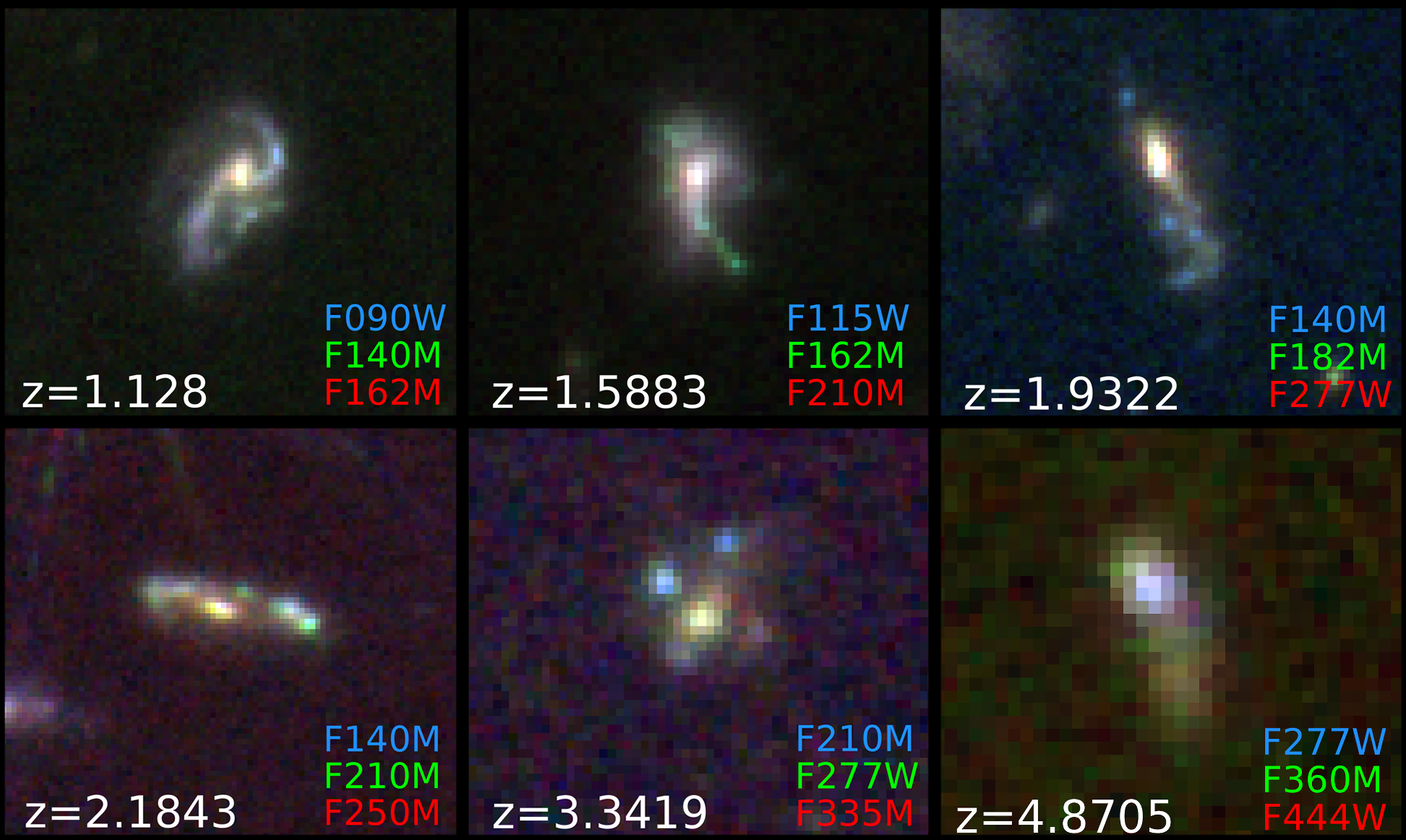
“The youngest galaxies in our study sample look nothing like today’s Milky Way. Many show distorted shapes, bright clumps, and strong asymmetries. These features point to frequent collisions and mergers in the early universe. Measurements suggest that up to half of the youngest systems show signs of disturbance, and a significant fraction appear to be actively merging,” Dr. Tan shared with The Brighter Side of News.
“As time passed, these signs faded. Later galaxies look smoother and more orderly, with star formation spread more evenly across their disks. This contrast suggests that the Milky Way went through a turbulent adolescence before settling into a quieter adulthood,” Dr. Tan continued.
When the team compared how much mass should have formed through star formation alone with how much mass is actually observed, they found a shortfall. Even after accounting for material recycled back into space, star formation could not explain all the growth. Only by including mass gained through mergers, even very small ones, did the numbers line up.
This result confirms that mergers played a central role in building galaxies like the Milky Way. They did not just add stars, but also reshaped structure and triggered bursts of star formation during the galaxy’s early years.
The researchers compared their findings with advanced computer simulations of galaxy growth. The models broadly matched the inside out growth pattern and early chaos. However, the models often underestimate how compact the earliest galaxies were and how quickly mass built up in the outer regions later on. These gaps highlight where theory still needs improvement.
“This study is a significant step forward in understanding the earliest stages of the formation of our Galaxy,” Muzzin said. “In the coming years, with the combination of JWST and gravitational lensing, we can move from observing Milky Way twins at 10 percent their current age to when they are a mere 3 percent of their current age.”
By linking early, distant galaxies to systems like the Milky Way, this research helps explain how common spiral galaxies form and evolve. It provides real data to test and refine simulations that are used across astronomy.
In the long term, understanding how galaxies assemble stars, gas, and structure helps scientists place our own solar system in a broader cosmic context.
As the JWST continues to observe even younger galaxies, this work will guide future studies of star formation, dark matter, and the processes that shape galaxies throughout the universe.
Research findings are available online in the journal The Astrophysical Journal.
Like these kind of feel good stories? Get The Brighter Side of News’ newsletter.
The post Astronomers reveal how the Milky Way’s violent youth forged a calmer spiral giant appeared first on The Brighter Side of News.

