Astronomers using the NASA and European Space Agency’s Hubble Space Telescope have identified what appears to be a long-predicted but never before confirmed cosmic object: a gas-rich cloud dominated by dark matter that contains no stars. The object, known as Cloud-9, sits near the spiral galaxy Messier 94 and offers rare, direct evidence of a “failed galaxy,” a structure that began forming billions of years ago but never completed the process.
The research was led by Alejandro Benitez-Llambay of Milano-Bicocca University in Milan, Italy, with major contributions from scientists at the Space Telescope Science Institute in Baltimore. The findings were published in The Astrophysical Journal Letters and combine deep optical observations from Hubble with earlier radio detections from some of the world’s most powerful ground-based telescopes.
“This is a tale of a failed galaxy,” Benitez-Llambay said. “In science, we usually learn more from the failures than from the successes. In this case, seeing no stars is what proves the theory right. It tells us that we have found in the local Universe a primordial building block of a galaxy that hasn’t formed.”
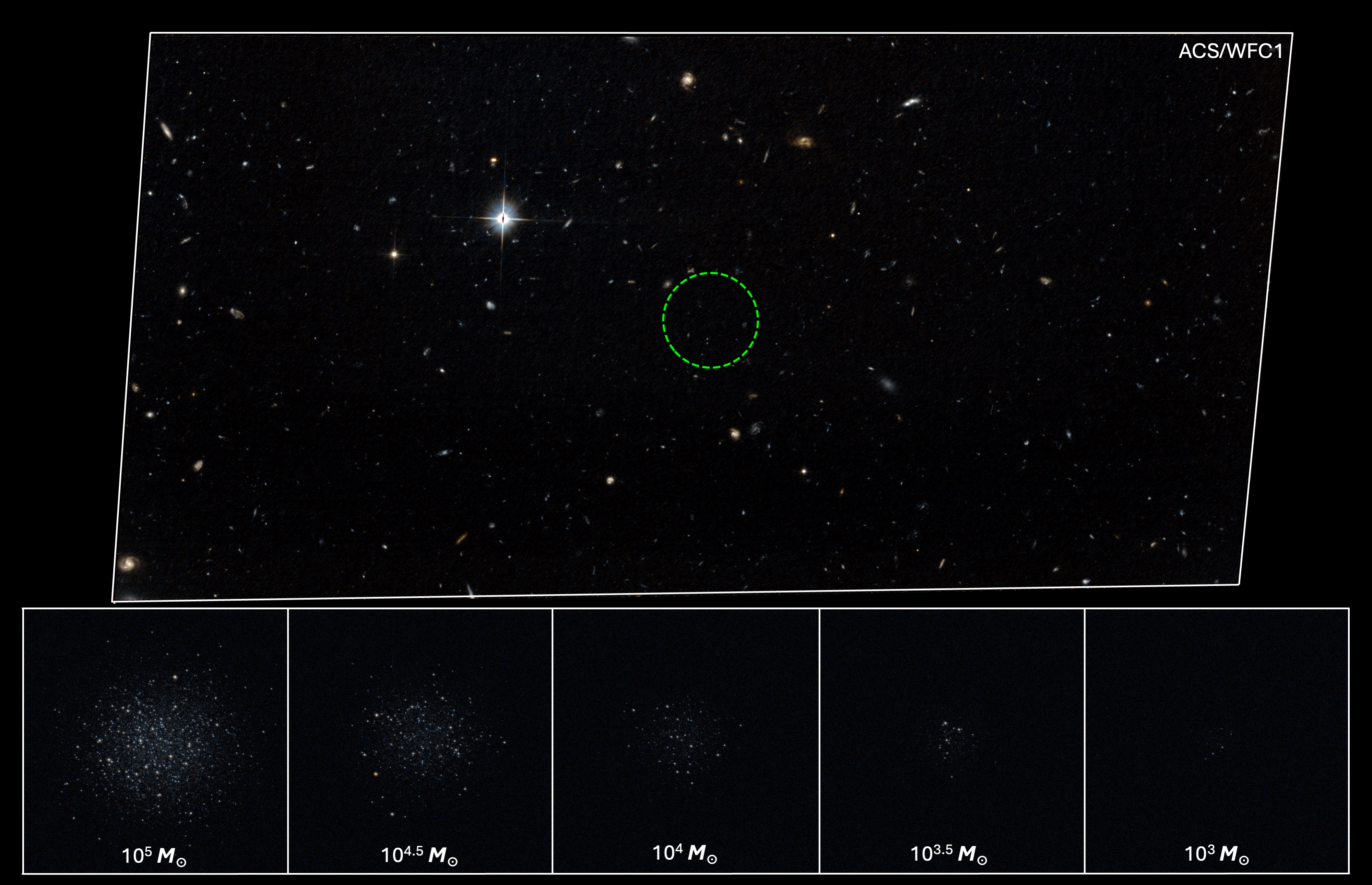
Cloud-9 first appeared three years ago in a large radio survey carried out by the Five-hundred-meter Aperture Spherical Telescope, or FAST, in Guizhou, China. Follow-up observations with the Green Bank Telescope in West Virginia and the Very Large Array in New Mexico confirmed the signal. Radio data revealed a compact cloud of neutral hydrogen gas moving at nearly the same speed as Messier 94, suggesting a physical link.
The cloud lies roughly 4.4 million parsecs from Earth and spans about 4,900 light-years. It contains close to one million times the mass of the Sun in hydrogen gas. Its radio signal is unusually narrow and shows no sign of rotation, unlike even the smallest known galaxies.
Because early images showed no obvious stars, astronomers questioned whether Cloud-9 might simply be an extremely faint dwarf galaxy. That uncertainty drove the decision to use Hubble, which can detect individual stars at far greater sensitivity than ground-based observatories.
Gagandeep Anand of the Space Telescope Science Institute led the effort to examine Cloud-9 with Hubble’s Advanced Camera for Surveys. The team observed the region using two optical filters designed to reveal both old and young stars. Each filter required more than 9,000 seconds of exposure time.
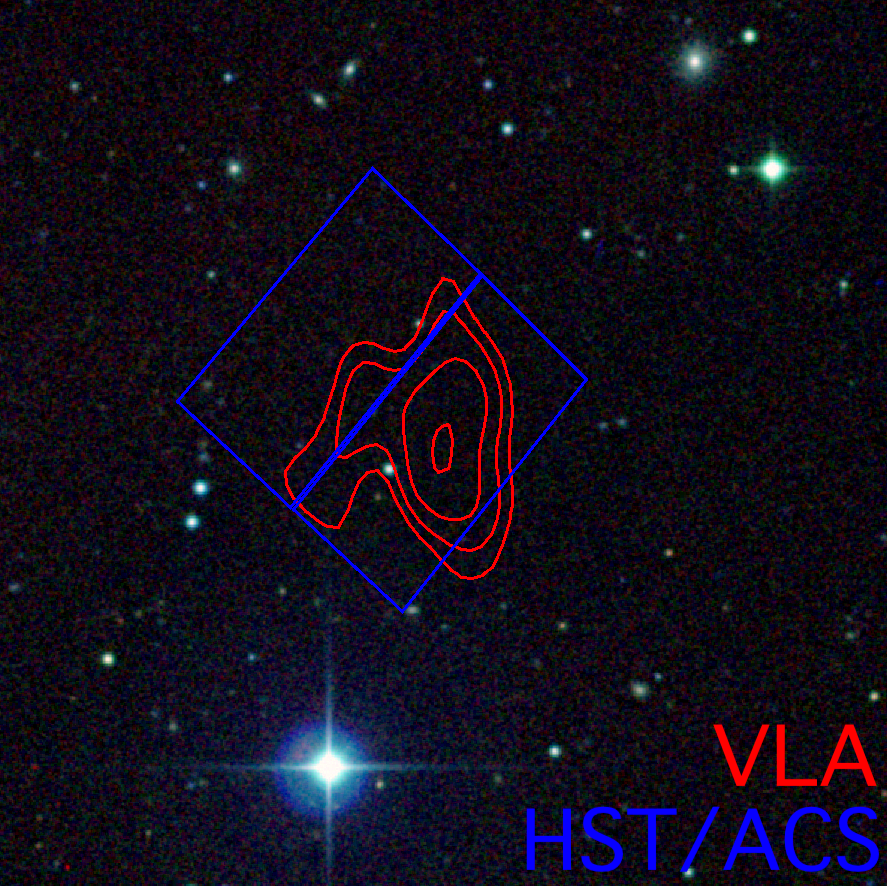
“Before we used Hubble, you could argue that this is a faint dwarf galaxy that we could not see with ground-based telescopes,” Anand shared with The Brighter Side of News. “They just didn’t go deep enough in sensitivity to uncover stars. But with Hubble’s Advanced Camera for Surveys, we’re able to nail down that there’s nothing there.”
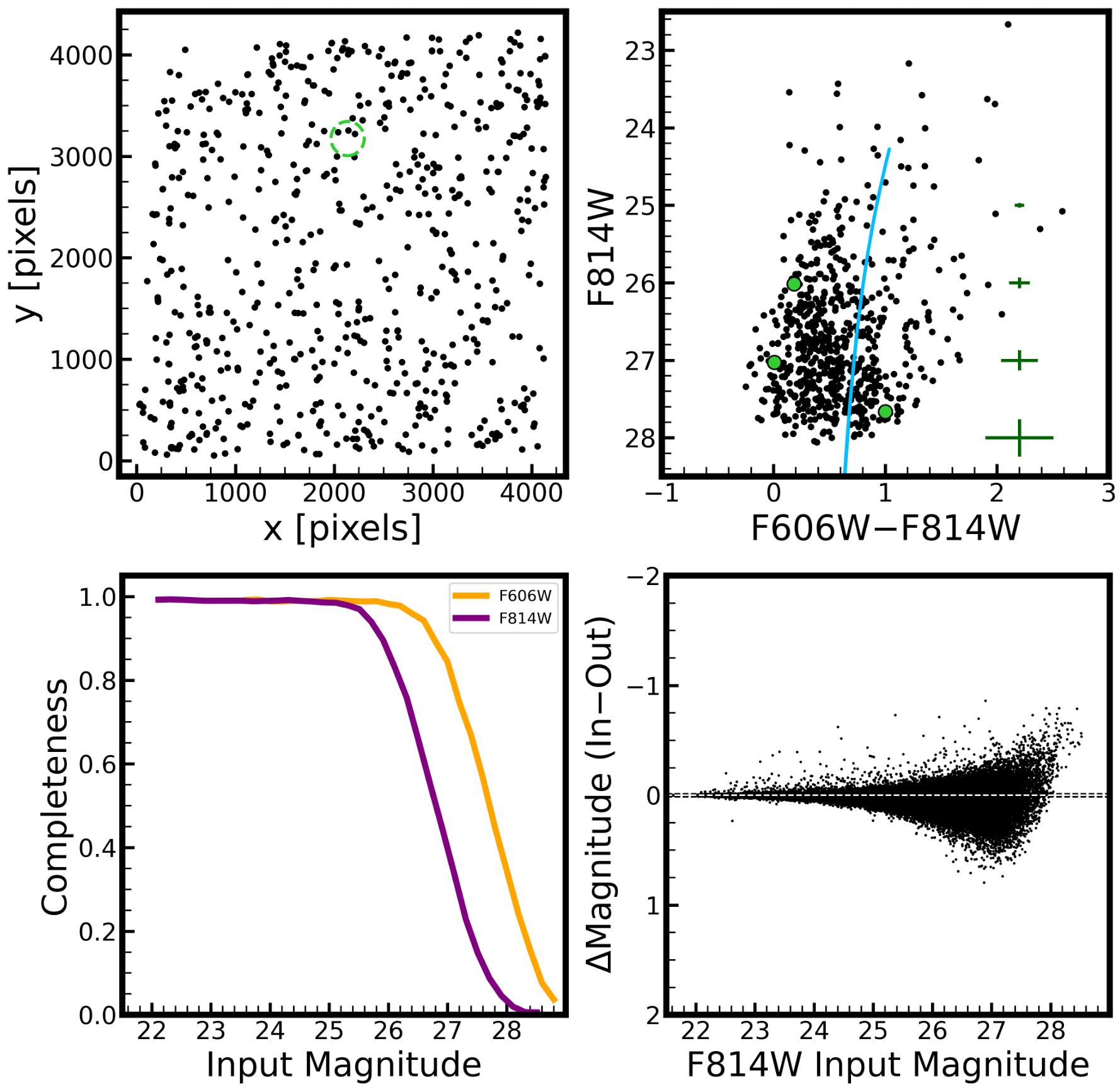
“The final images showed a blank field. Although 667 point-like sources appeared across the broader view, careful analysis revealed that these objects were either distant background galaxies or foreground stars within the Milky Way. None formed a coherent group aligned with Cloud-9’s densest gas,” he continued.
To test the result, the team inserted simulated dwarf galaxies into the images. Even the faintest mock systems produced clear stellar groupings. Nothing comparable appeared in the real data.
The researchers compared Cloud-9 with known gas-rich dwarf galaxies such as Leo T, which contains both stars and hydrogen gas. If Cloud-9 had a similar stellar mass, Hubble would have detected dozens of stars. It did not.
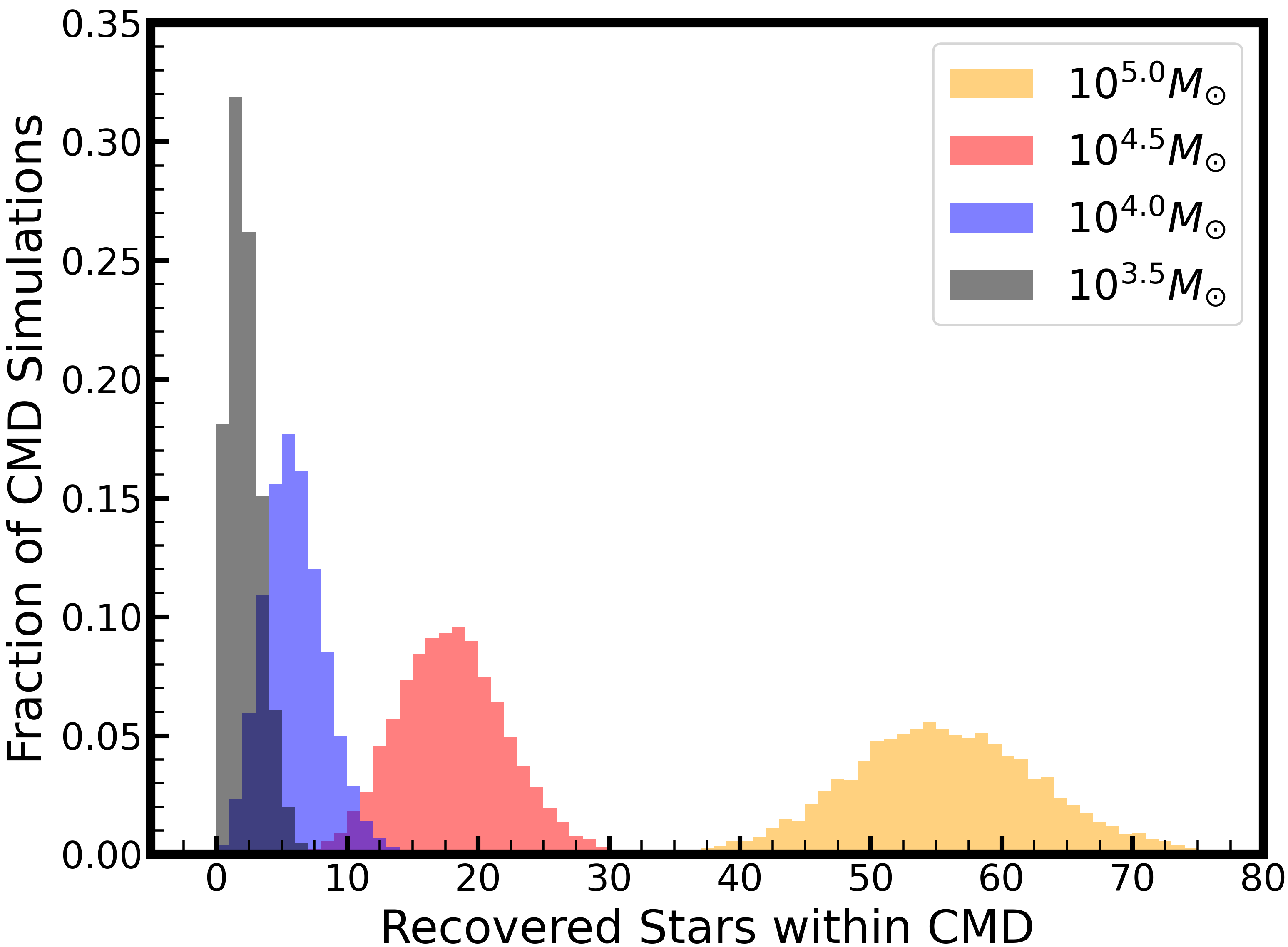
Monte Carlo simulations strengthened the case. After running 10,000 trials that accounted for observational limits, the team found that a stellar population of 10,000 Suns could be ruled out with 99.5 percent confidence in the cloud’s core. Even under conservative assumptions, the data limited any hidden stars to fewer than about 3,100 Suns in mass.
“These findings strongly indicate that Cloud-9 is either nearly starless or entirely devoid of stars,” said Rachael Beaton of the Space Telescope Science Institute, a co-author on the study. “Among our galactic neighbors, there might be a few abandoned houses out there.”
With typical explanations excluded, astronomers turned to theory. Modern cosmology predicts that the universe should contain many small dark matter halos that never grow into visible galaxies. After the era of reionization, intense ultraviolet radiation stripped gas from the smallest halos. Only those in a narrow mass range could retain gas without forming stars.
These predicted objects are known as Reionization-Limited H I Clouds, or RELHICs. Cloud-9 closely matches those expectations. Its gas appears stable and spherical, suggesting confinement by a dark matter halo rather than external pressure.
Although the hydrogen mass is modest, the balance between gas pressure and gravity implies a total mass of about five billion Suns. That means dark matter dominates the cloud by an enormous margin.
“This cloud is a window into the dark Universe,” said Andrew Fox of AURA and the Space Telescope Science Institute. “We know from theory that most of the mass in the Universe is expected to be dark matter, but it’s difficult to detect this dark material because it doesn’t emit light. Cloud-9 gives us a rare look at a dark-matter-dominated cloud.”
Hydrogen clouds near the Milky Way have been studied for decades, but they tend to be larger, irregular, and shaped by their surroundings. Cloud-9 is smaller, compact, and nearly spherical. Its form and isolation make alternative explanations, such as tidal debris or stray galactic gas, unlikely.
The cloud’s name carries no special meaning. It was simply the ninth object cataloged in the FAST survey near Messier 94. Yet its significance may be lasting.
If Cloud-9 is truly a RELHIC, it would be the first confirmed example of a dark matter halo that captured gas but never formed stars. That would offer direct support for long-standing predictions about the smallest building blocks of galaxies.
Research findings are available online in the journal The Astrophysical Journal Letters.
Like these kind of feel good stories? Get The Brighter Side of News’ newsletter.
The post Cloud-9: Astronomers spot a gas-rich cloud dominated by dark matter that contains no stars appeared first on The Brighter Side of News.

