In the serene surface of the Gulf of California, a harrowing spectacle is developing. Near the surface ridden with confusion and gushing blood, a juvenile great white shark struggles. A pod of killer whales is swimming above it in unison. In the blink of an eye, it has been turned upside down, immobilized, and its massive liver has been removed and shared amongst the whales.
For the researchers perched above, it is both horrific and captivating. They have identified the first instance of orcas preying on juvenile white sharks in Mexican waters. Headed by marine biologist Jesús Erick Higuera-Rivas of Conexiones Terramar A.C., the research documented two hunting events in August 2020 and August 2022 and is revealing a new understanding about these apex predators.
On August 15, 2020, five female orcas were documented swimming in the southwestern Gulf of California. Watching from the research boat, biologists, utilizing drone and underwater cameras, observed one of the younger females push a juvenile white shark – roughly 2 meters long – to the surface. Subsequently, the other four quickly joined the hunt, swimming around the shark like a synchronized swimming event.
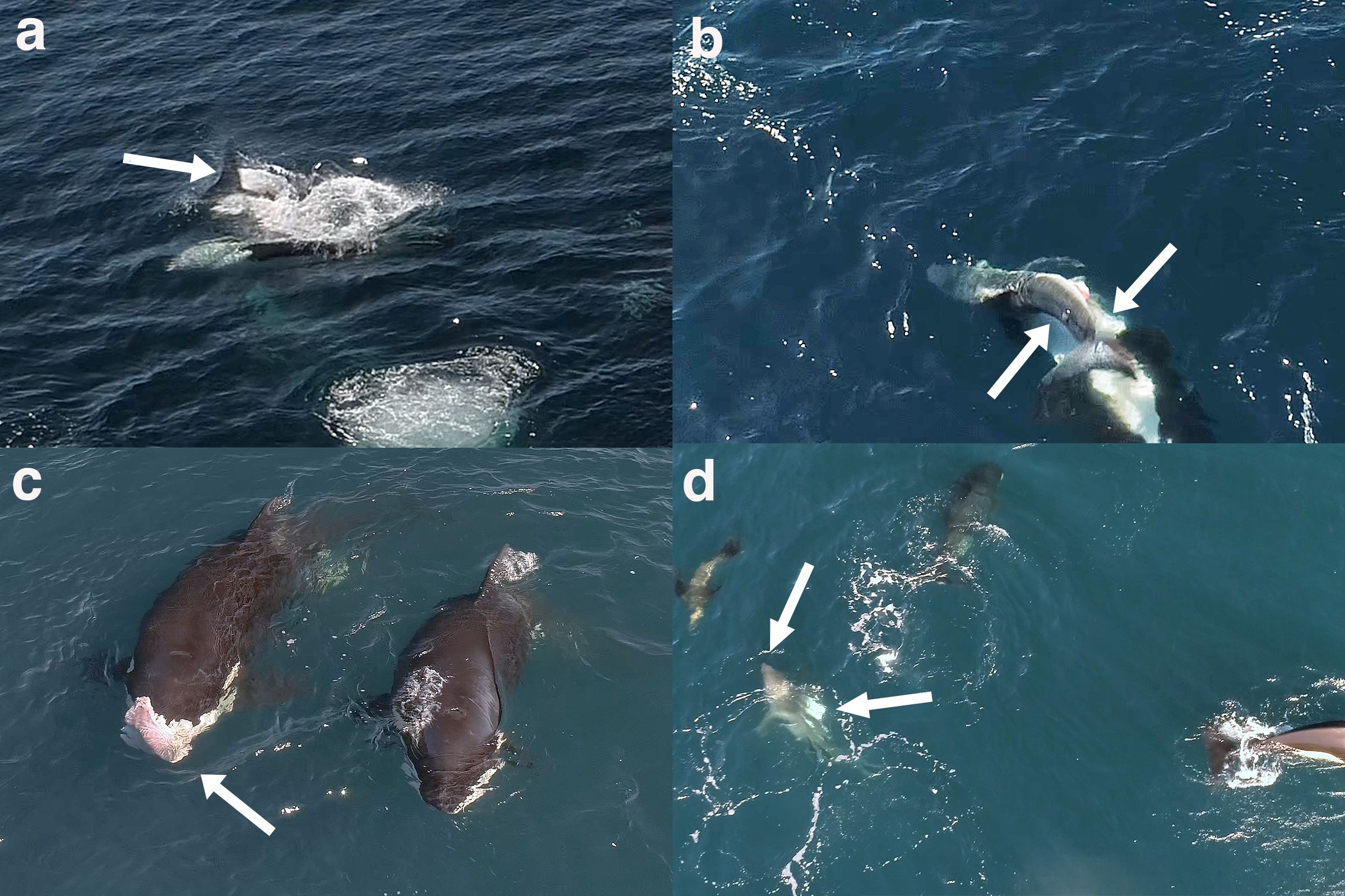
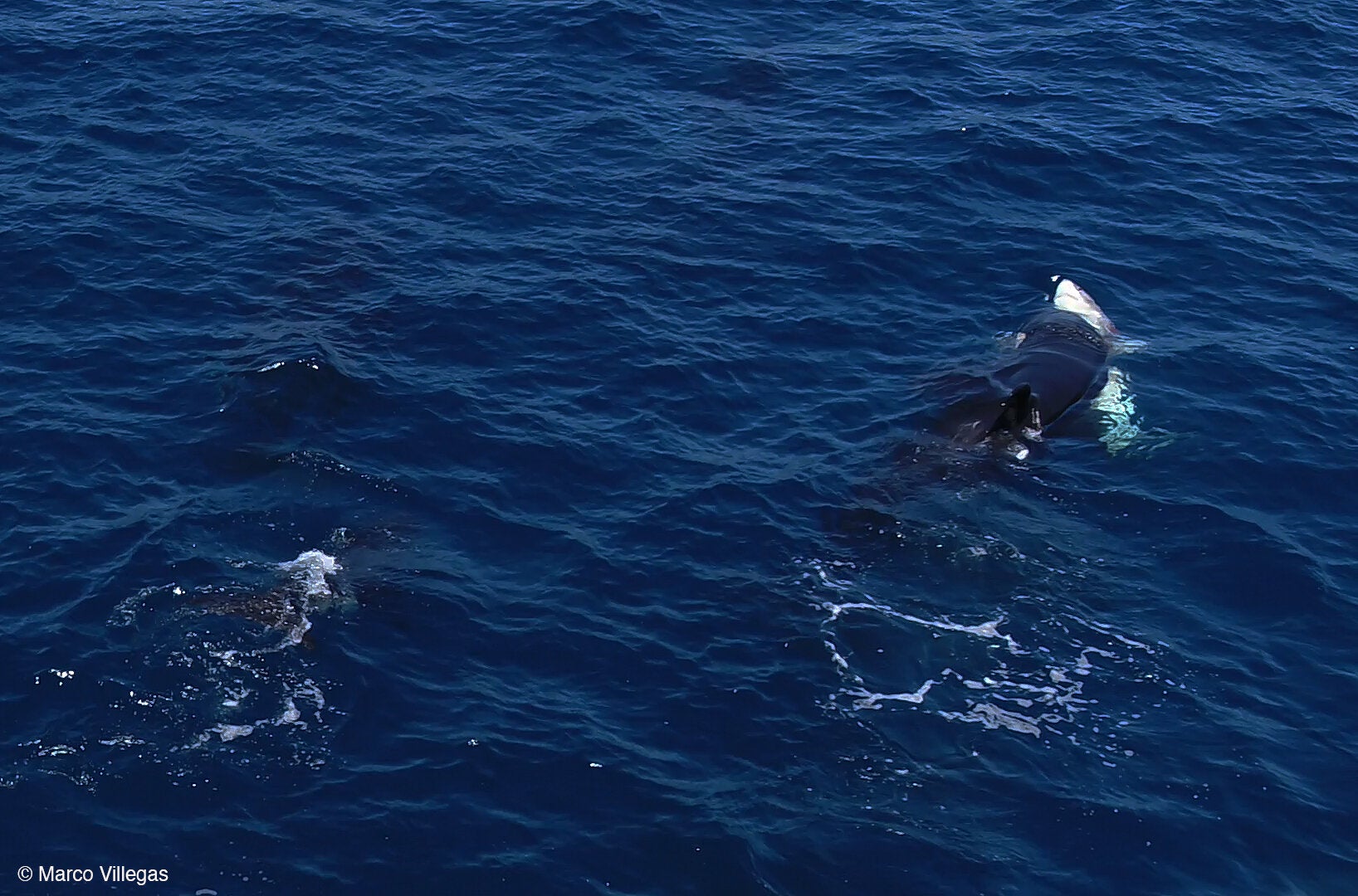
The killer whales flipped the shark upside down, causing it to slip into a temporary paralysis termed tonic immobilization. “This temporary state leaves a shark completely defenseless while the orca removes the liver, filled with nutrients” stated Higuera-Rivas. In minutes, the whales devoured the liver and began to pass it to one another. It even had limited access to it, before a brave sea lion attempted to take it from it, but was unsuccessful.
Moments later, the same pod attacked another juvenile white shark in a similar fashion. Both sharks became mutilated, livers stripped, and bodies floating lifelessly below.
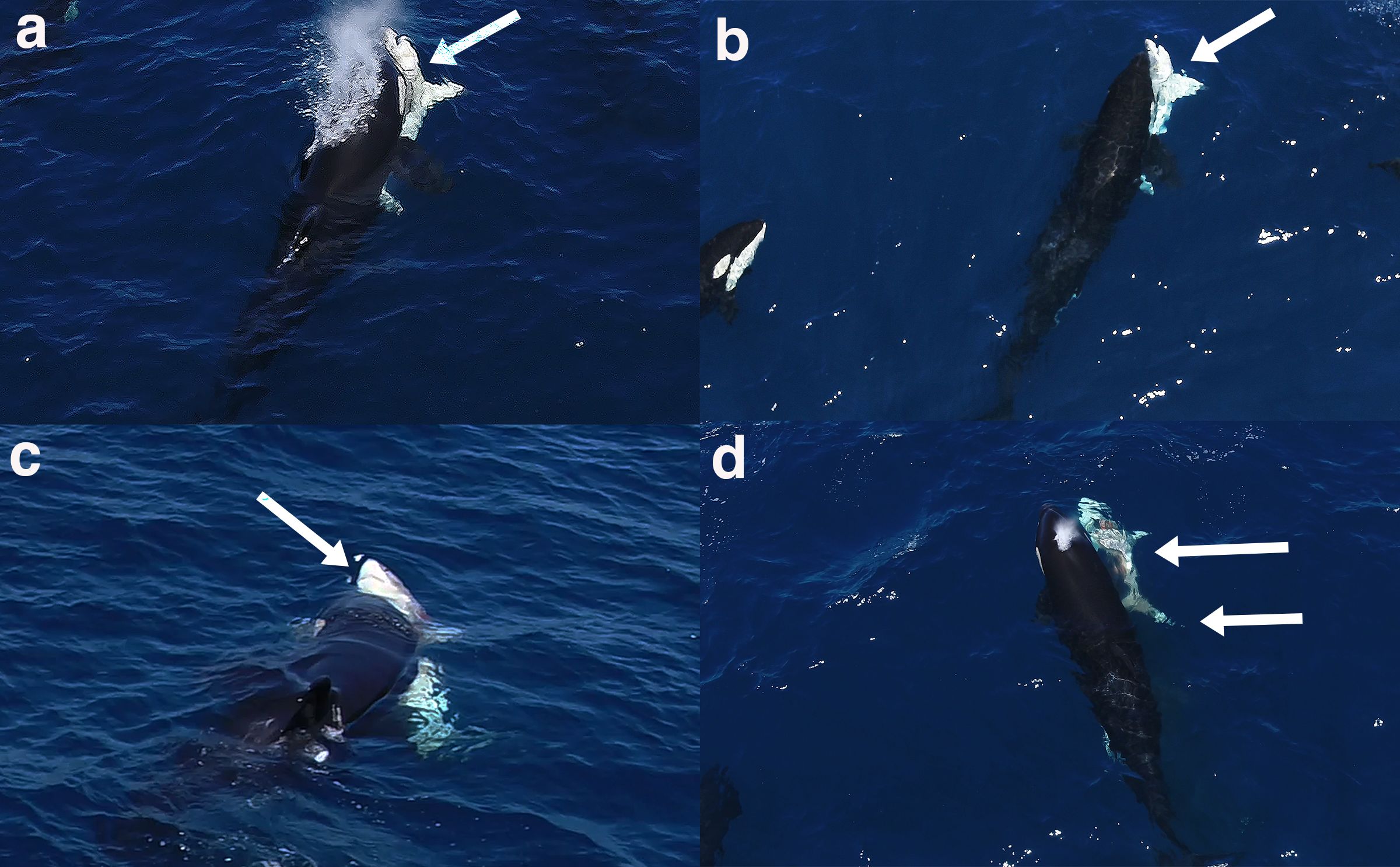
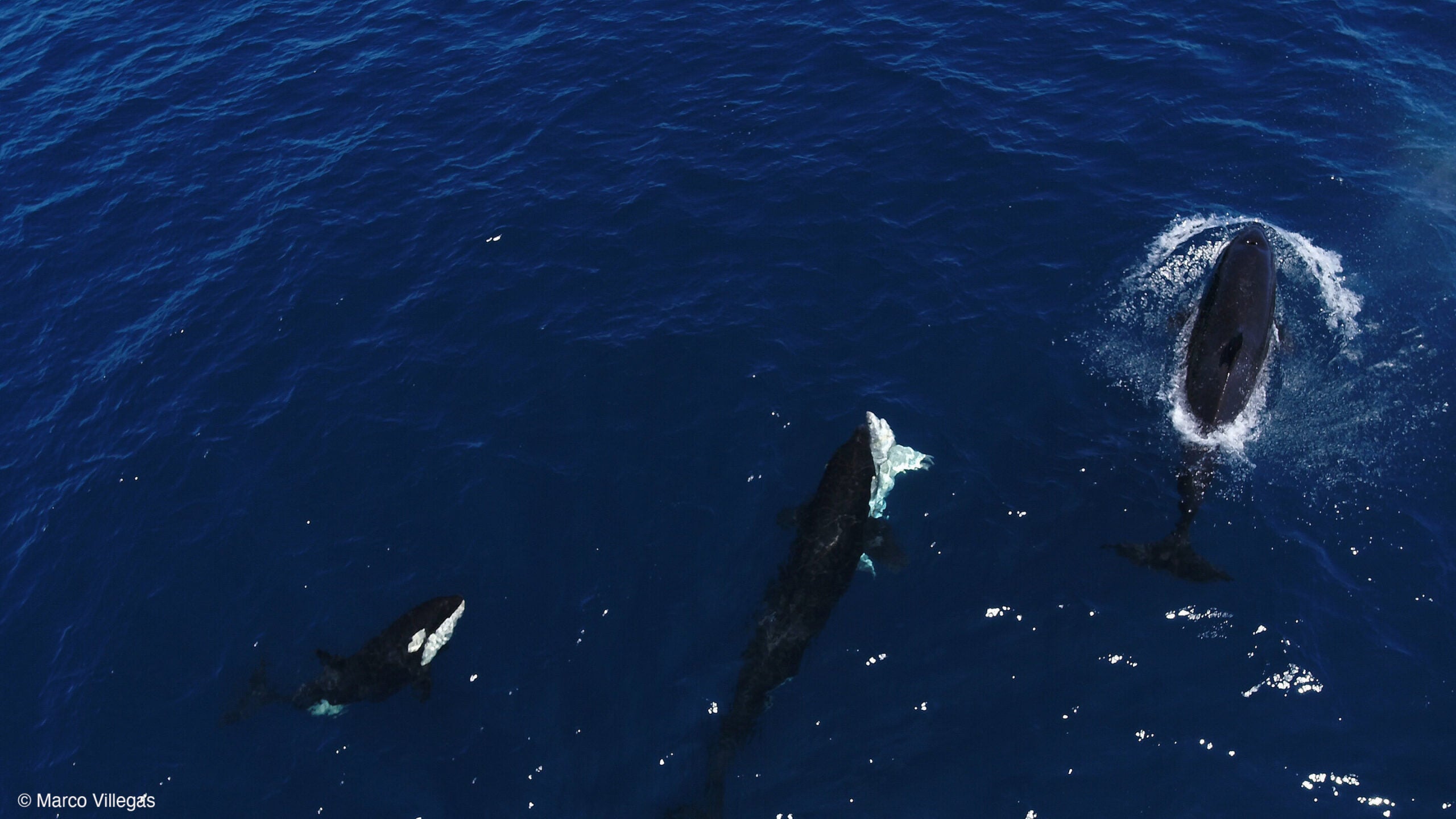
On August 3, 2022, another group of five orcas—this time with an adult male, female, two subadult whales, and a calf—was filmed from a drone, performing the same behavior. The adult female held a juvenile white shark upside down while her calf fed on the liver.
Seabirds had been seen overhead, snatching at floating bits of flesh. Again, only the liver was consumed. “This behavior highlights the cognitive capacity of orcas, as well as their ability to think strategically, even as a social unit,” Higuera-Rivas said.
The pod in both events was identified as Moctezuma’s pod. It had previously been documented hunting rays, bull sharks, and whale sharks in the same area. Each event appears to consist of learned behavior that is transmitted culturally.
The presence of a calf appears to mean the whales are actively teaching a younger member of the pod this specialized trap. The study acknowledged, “These killer whales exhibited very effective maneuvering capabilities in trying to flip the shark.”
They also noted how precise they were to minimize potential injury to themselves, as juvenile white sharks can bite with a force over 3,000 newtons, which could do serious damage to a killer whale. By flipping or turning the prey first, the whales eat safely and efficiently.
Dr. Salvador Jorgensen of California State University, a co-author of the article, stated, “When hunting orcas are present, adult white sharks recall the pursuit and they flee from their seasonal foraging areas and don’t return for months. A juvenile white shark may be more naive to orca. We don’t yet know if white shark anti-predator flight response is inherited or learned behavior.”
Climate change may inadvertently be assisting this new predator-prey relationship. Warming ocean events, such as El Niño and the North Pacific “Blob,” have shifted the distribution of some Pacific white sharks’ nursery areas northward and juvenile white sharks have expanded into new areas including the Gulf of California.
In the case of Moctezuma’s pod, these new conditions may have created an opportunity. “Changes in the distribution of white sharks in the Pacific may have given a chance for this pod,” said Dr. Francesca Pancaldi with the Instituto Politécnico Nacional. “Because generating information about this unusual feeding behavior could be valuable to identify suitable habitats and future plans for their conservation.”
Juvenile white sharks may be less likely to recognize killer whales as a threat, especially while swimming into an apex predator without a previous experience of orca.
Although orcas have been observed to kill adult white sharks in South Africa, this is only the second confirmed predation of juvenile white sharks worldwide. The consistency of the predation in the waters in Mexico offers concerns that the killing behavior may become seasonal.
If orcas begin to prioritize juvenile white sharks, the population of the already threatened species is susceptible to more change. White sharks reproduce periodically, and removing juvenile white sharks from the population reduces the future population. “So far we’ve only observed this pod to feed on elasmobranchs,” Pancaldi said, “but there may be more. Understanding their behavior helps to protect both sharks and whales.”
The accuracy in precision and partner cooperation in learning to flip the shark are part of a learned behavior shared through orca culture, generations of orca learning. Each flip and bite is a moment to capture attention into social learning and one of the oceans more intelligent creatures.
Research findings are available online in the journal Frontiers in Marine Science.
Like these kind of feel good stories? Get The Brighter Side of News’ newsletter.
The post Filmed for the first time: Killer whales attack and kill great white sharks appeared first on The Brighter Side of News.

