Understanding how the brain creates conscious experience remains one of science’s most difficult challenges. Brain scans and behavior studies have linked awareness to certain neural patterns, but those links rarely show cause and effect. Activity can appear alongside a conscious experience without actually producing it. A new paper argues that progress now depends on tools that can directly test which brain structures generate conscious perception.
That argument comes from researchers at the Massachusetts Institute of Technology, the University of Florida, Brigham and Women’s Hospital, and Harvard Medical School. The team outlines how an emerging technology, transcranial focused ultrasound, could allow scientists to move beyond correlation and begin testing causality in healthy human brains. Their work appears in the journal Neuroscience and Biobehavioral Reviews.
The authors include Daniel Freeman of MIT Lincoln Laboratory, Brian Odegaard of the University of Florida, Seung-Schik Yoo of Brigham and Women’s Hospital and Harvard Medical School, and Matthias Michel of MIT’s Department of Philosophy and Linguistics. Together, they describe the paper as a roadmap for using ultrasound to probe the biological roots of conscious perception.
“Transcranial focused ultrasound will let you stimulate different parts of the brain in healthy subjects, in ways you just couldn’t before,” Freeman says. “This is a tool that’s not just useful for medicine or even basic science, but could also help address the hard problem of consciousness.”
Most modern consciousness research relies on tools such as electroencephalography, functional MRI, or invasive recordings during surgery. These methods have revealed neural correlates of consciousness, or activity patterns that reliably appear when someone is aware of a stimulus. Still, they cannot prove that those patterns actually cause conscious experience.
EEG captures brain activity with excellent timing, but it struggles to pinpoint precise locations. fMRI offers detailed spatial maps but measures slow blood flow changes rather than direct neural firing. Both methods also face a major problem known as report confounds. Brain activity may reflect the act of reporting an experience, not the experience itself.
Other stimulation tools offer some causal insight but have limits. Transcranial magnetic stimulation cannot reach deep brain structures and lacks fine spatial precision. Electrical stimulation during surgery often activates wide networks beyond the intended target. These constraints have fueled long-running debates about whether consciousness depends on higher brain areas, such as the prefrontal cortex, or arises more locally in sensory regions.
“There are very few reliable ways of manipulating brain activity that are safe but also work,” says Michel. “That’s what makes this technique so exciting.”
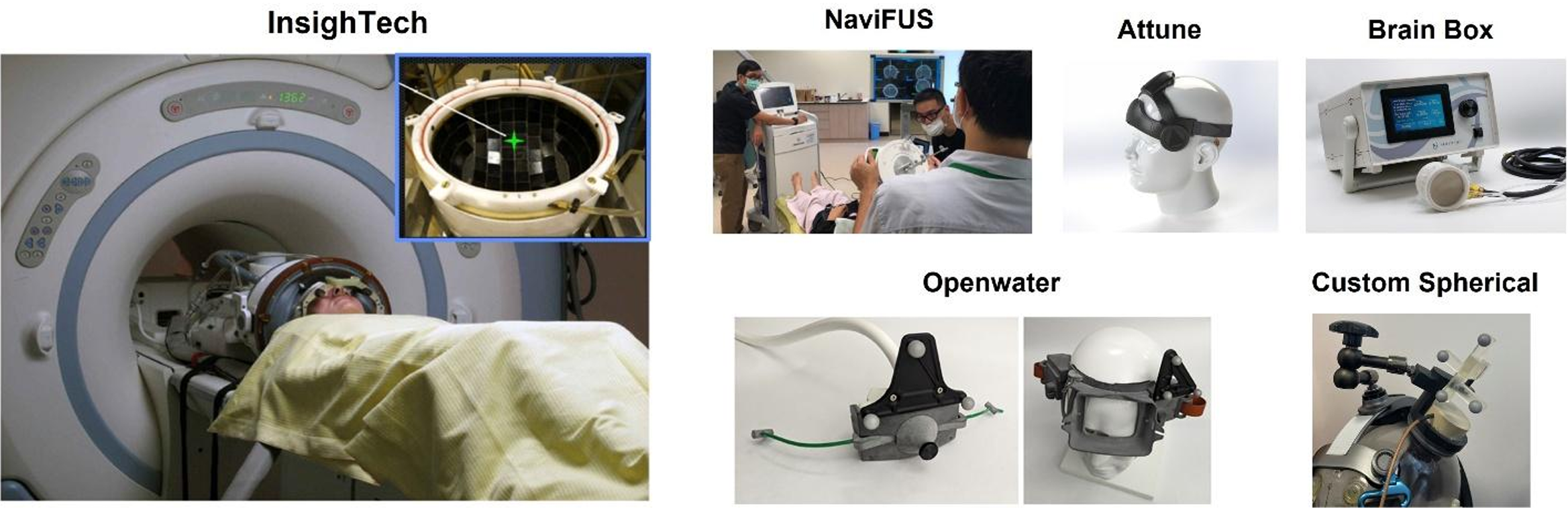
Transcranial focused ultrasound works by sending acoustic pressure waves through the skull and concentrating them on a small brain region. Unlike electrical or magnetic stimulation, ultrasound can reach structures several centimeters beneath the scalp. The targeted area can be just a few millimeters wide.
At the low intensities used in research, the method does not damage tissue or cause harmful heating. Instead, the sound waves mechanically influence neurons, likely by affecting ion channels in their membranes. Depending on how the ultrasound is delivered, neural activity can increase or decrease.
Precision remains a technical challenge. Skull thickness and shape can distort sound waves, enlarging the affected area. To address this, researchers often rely on CT scans to model how ultrasound travels through each individual skull and then adjust the beam.
“It truly is the first time in history that one can modulate activity deep in the brain, centimeters from the scalp, examining subcortical structures with high spatial resolution,” Freeman says. “Until now you couldn’t manipulate them outside of the operating room.”
“One striking feature of focused ultrasound is that its effects can persist well after stimulation ends. Studies in animals and humans show changes in brain activity and connectivity lasting from minutes to over an hour,” Freeman explained to The Brighter Side of News.
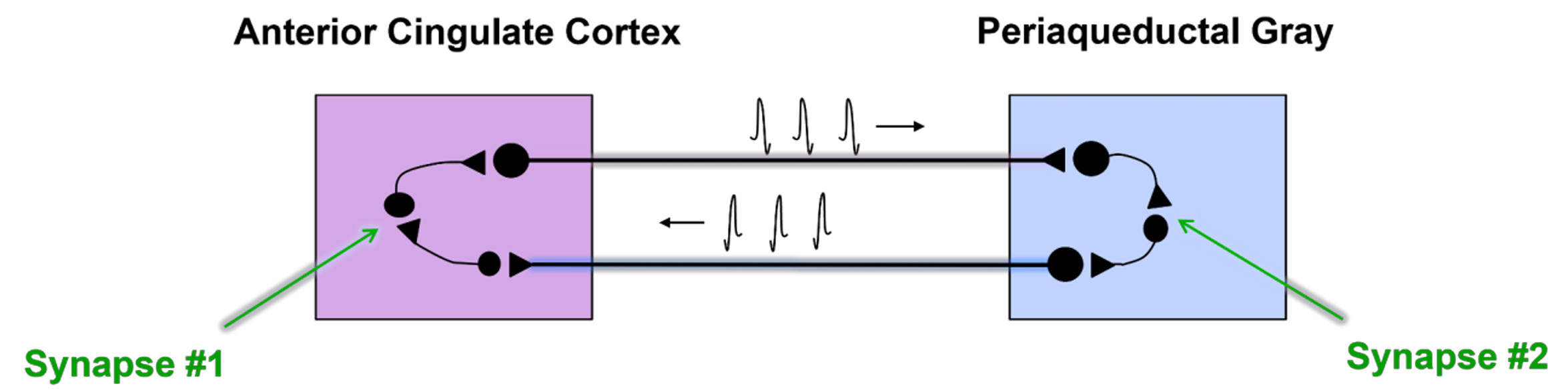
“These lasting effects may reflect changes in how brain networks function, not just brief neural reactions. Calcium entering neurons during stimulation could drive synaptic plasticity, altering how regions communicate. That possibility matters for consciousness research, which focuses on coordinated activity across networks rather than isolated neuron firing,” he continued.
“At the same time, ultrasound does not always trigger clear sensations when applied to sensory cortex. Unlike electrical stimulation, it may not reliably produce flashes of light or other percepts. This limitation underscores the need for careful experiment design and realistic expectations,” he concluded.
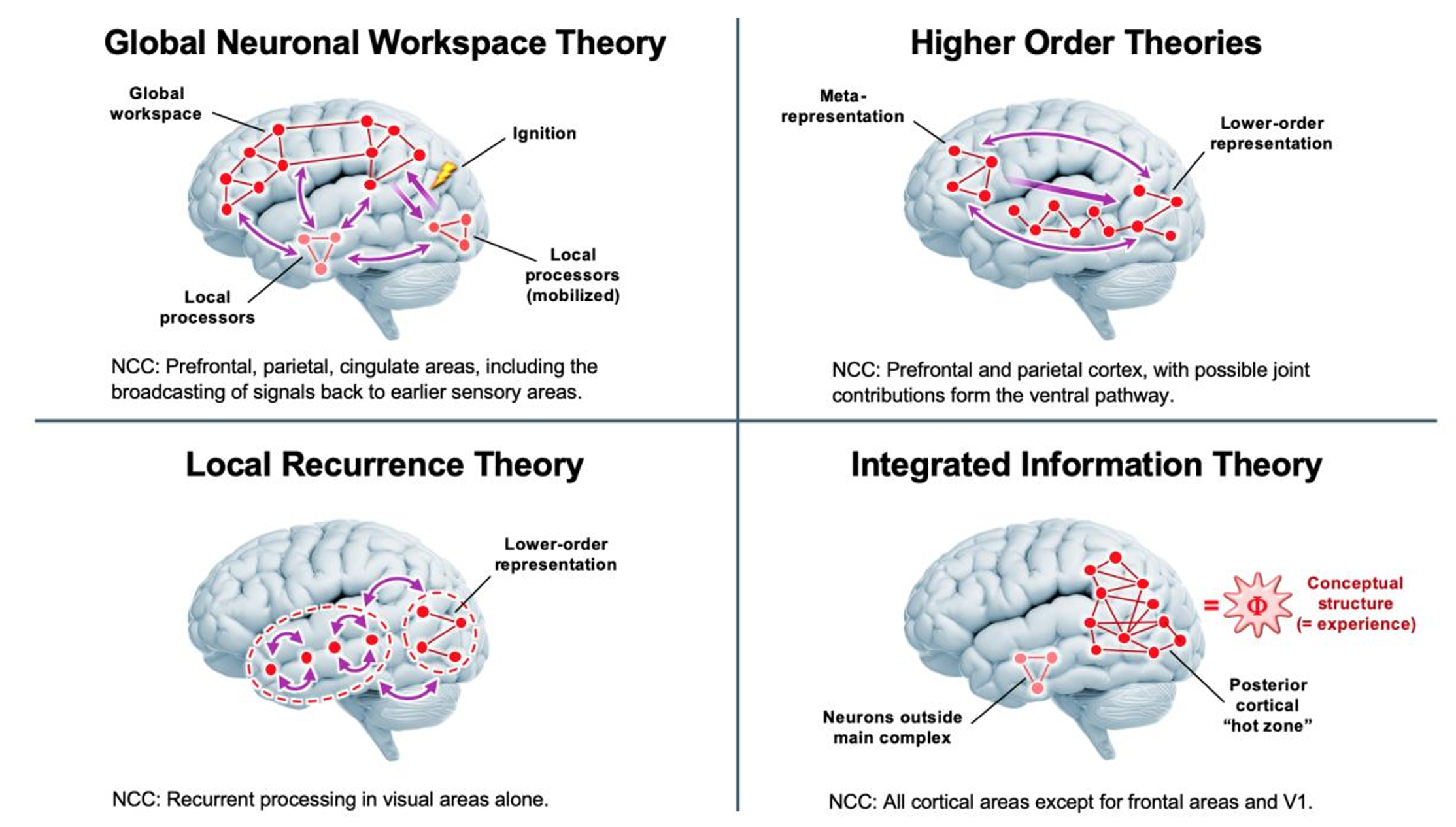
The roadmap focuses on how ultrasound could help resolve long-standing theoretical disputes. Some theories, including Global Workspace Theory and Higher Order Theories, argue that conscious perception depends on higher-level cognitive processes. These models emphasize brain-wide networks and often highlight the prefrontal cortex.
Other approaches take a different view. They suggest that conscious experience arises directly from local neural activity in sensory or posterior brain regions, without requiring complex reflection or reasoning.
Focused ultrasound allows researchers to test these claims directly. By selectively suppressing or enhancing activity in targeted regions, scientists can ask whether those regions are necessary for awareness. Bilateral stimulation, affecting both hemispheres, is especially valuable because one side of the brain can often compensate for disruption in the other.
The authors also describe experiments inspired by blindsight, a condition in which people respond to visual information without conscious awareness after damage to visual cortex. Using ultrasound to create similar dissociations in healthy individuals could clarify how conscious and unconscious processing differ.
Perhaps the most distinctive advantage of focused ultrasound is its access to deep brain structures. Many consciousness theories focus on the cortex, but subcortical regions may also play critical roles.
Structures such as the thalamus, amygdala, and brainstem are evolutionarily ancient and central to emotion and arousal. Electrical stimulation studies show that activating them can produce vivid experiences. Yet it remains unclear whether they generate conscious content or simply modulate cortical activity.
The roadmap proposes experiments targeting specific subcortical nuclei. For example, stimulating the pulvinar region of the thalamus while participants perform perception tasks could reveal whether it contributes to confidence or awareness without changing basic performance.
“Pain could stem from cortical areas, or it could be deeper brain structures,” Freeman says. “That’s a hypothesis. But now we have a tool to examine it.”
The authors are not only proposing ideas for others. Freeman and Michel are planning their own experiments, starting with visual cortex stimulation and later moving to frontal regions. Their goal is to link neural manipulation directly to subjective experience.
“It’s one thing to say if these neurons responded electrically,” Freeman says. “It’s another thing to say if a person saw light.”
Michel is also helping build a broader research community around these questions. Along with neuroscientist Earl Miller, he co-founded the MIT Consciousness Club to encourage cross-disciplinary work on consciousness across the Boston area.
For Michel, the promise of focused ultrasound justifies the uncertainty. “It’s a new tool, so we don’t really know to what extent it’s going to work,” he says. “But I feel there’s low risk and high reward. Why wouldn’t you take this path?”
This research could reshape how scientists study the brain basis of awareness. By offering a way to test causality in healthy people, focused ultrasound may resolve debates that have persisted for decades. Clear answers about where and how consciousness arises would strengthen theories across neuroscience, psychology, and philosophy.
Beyond theory, the findings could influence medicine. A better understanding of how pain, vision, or emotion become conscious experiences could guide new treatments for chronic pain, mood disorders, or disorders of consciousness. Targeted stimulation might eventually complement drugs or surgery with fewer side effects.
The work also sets standards for responsible use of the technology. By outlining experimental designs and limitations, the roadmap helps ensure that future studies use focused ultrasound carefully and effectively.
Research findings are available online in the journal Neuroscience & Biobehavioral Reviews.
Like these kind of feel good stories? Get The Brighter Side of News’ newsletter.
The post Focused ultrasound could reveal how consciousness works appeared first on The Brighter Side of News.

