A California-based company, SpinLaunch, is making waves with its innovative satellite launch system, drawing particular interest from the Punkin Chunkin community.
Instead of relying on traditional rocket fuel, SpinLaunch uses a massive rotating arm to propel satellites into low Earth orbit, powered solely by electricity. This approach could significantly reduce the cost and environmental impact of satellite launches.
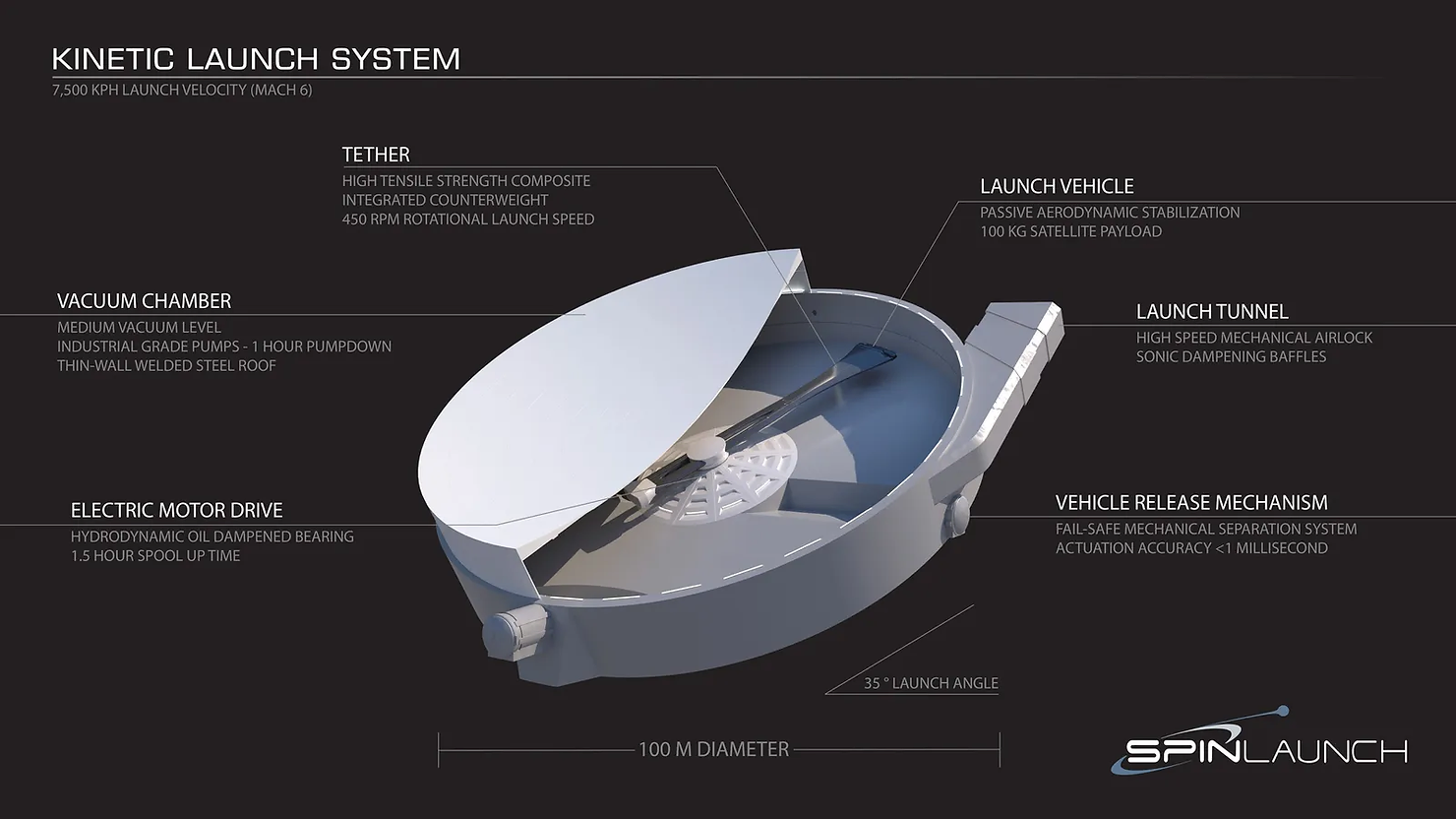
The company has already completed multiple successful test flights. “This is not a rocket, and clearly our ability to perform in just 11 months this many tests and have them all function as planned really is a testament to the nature of our technology,” said SpinLaunch founder and CEO Jonathan Yaney following the company’s 10th successful launch. SpinLaunch aims to deploy satellite constellations into orbits below 600 miles by 2026.
Satellites play a vital role in monitoring Earth’s health, detecting methane leaks, and supporting various scientific endeavors. A cleaner, more efficient launch system could advance these capabilities while reducing reliance on traditional rocket propulsion.
While SpinLaunch’s concept is groundbreaking in modern spaceflight, the underlying physics dates back centuries. Medieval siege engines, such as trebuchets, similarly used kinetic energy to hurl heavy objects over long distances.
Related Stories
Modern-day Punkin Chunkin contests, which involve launching pumpkins using similar mechanics, showcase kinetic and potential energy in action. SpinLaunch’s system might leave some of these enthusiasts wondering how many pumpkins they could send into space with such a machine.
The company’s groundbreaking innovation is made possible by modern materials and miniaturized electronics. High-strength carbon fiber and compact electronic systems are crucial to the technology’s success.
“Modern electronics, materials, and simulation tools allow for satellites to be adapted to the kinetic launch environment with relative ease,” SpinLaunch explains on its website. This technology must withstand extreme conditions, including the vacuum of space and rapid acceleration.
A video from one of SpinLaunch’s test launches in New Mexico shows the excitement and precision involved. Engineers monitor screens, and the launch scene resembles that of a NASA mission control room. When the satellite exits the launch barrel, it happens so quickly that it’s easy to miss if you blink.
Founded in 2014, SpinLaunch has secured significant funding and has collaborated with major organizations like NASA, Airbus, and Cornell University, using their equipment in various tests. The technology has successfully withstood forces of up to 10,000 Gs, equivalent to 10,000 times Earth’s gravitational pull, demonstrating its robustness.
If SpinLaunch’s technology proves reliable and scalable, it could dramatically reduce the fuel required for satellite launches. For comparison, SpaceX’s Falcon 9 rocket used over 900,000 pounds of propellant for each launch as of 2016. Although fuel efficiency might have improved since then, the sheer volume of fuel required for traditional launches remains substantial.

The environmental impact of traditional rocket launches has come under increasing scrutiny. Each launch contributes to the depletion of the ozone layer, which protects life on Earth from the sun’s harmful radiation. SpinLaunch’s method offers a potential solution, as it can breach the ozone layer without damaging it.
Looking ahead, SpinLaunch plans to build on its early successes by developing a coastal orbital launch site. This next step is crucial for advancing their technology and making it a viable alternative to conventional rocket launches. “It has proven that it’s a system that is repeatedly reliable,” Yaney stated, underscoring the promise and potential of SpinLaunch’s approach.
In Singapore, space technology startup Equatorial Space Systems is among the first-movers carving out space in this niche. The Singapore-based company develops modular, low-cost launch vehicles tailored specifically to send lightweight payloads to LEO. Its unique selling points overlap with SpinLaunch, similarly emphasizing cost, safety, and sustainability.

“The total addressable market for suborbital launch from our research can be as high as USD 150 million a year,” said Simon Gwozdz, founder and CEO of Equatorial Space Systems.
SpinLaunch’s technology could mark a significant shift in how we think about and execute satellite launches, combining environmental responsibility with innovative engineering. As the company continues to develop and test its systems, the future of satellite deployment might soon become cleaner, more efficient, and more accessible than ever before.
Over the past decade, satellite launching technologies have evolved significantly, driven by the need for cost-effective, efficient, and environmentally friendly methods. Here are some of the most innovative satellite launching technologies developed in recent years:


These innovative technologies mark a shift toward more cost-effective, flexible, and sustainable methods of launching satellites, opening up new opportunities for space exploration and commercial applications.
Note: Materials provided above by The Brighter Side of News. Content may be edited for style and length.
Like these kind of feel good stories? Get The Brighter Side of News’ newsletter.
The post Giant catapult sends satellites into space without rocket fuel appeared first on The Brighter Side of News.

