Roads, cities and farms have reshaped much of the natural world. For decades, scientists believed those physical changes explained most wildlife behavior near people. But a new large-scale study suggests animals react not only to altered landscapes, but also to the simple presence of humans moving through them every day.
The findings reveal that even small shifts in human movement can change how animals use space, search for food and move through habitats. In some cases, wildlife shrinks its territory to avoid people. In others, animals travel farther or exploit human activity in surprising ways.
The research was led by scientists from the Yale Center for Biodiversity and Global Change and involved more than 50 academic and government organizations worldwide. Researchers tracked 37 species across the United States, collecting about 11.8 million GPS location points from more than 4,500 animals.
“Our findings provide an important nuance in our understanding of wildlife in a rapidly changing world,” said Walter Jetz, professor of ecology and evolutionary biology at Yale University and director of the research center.
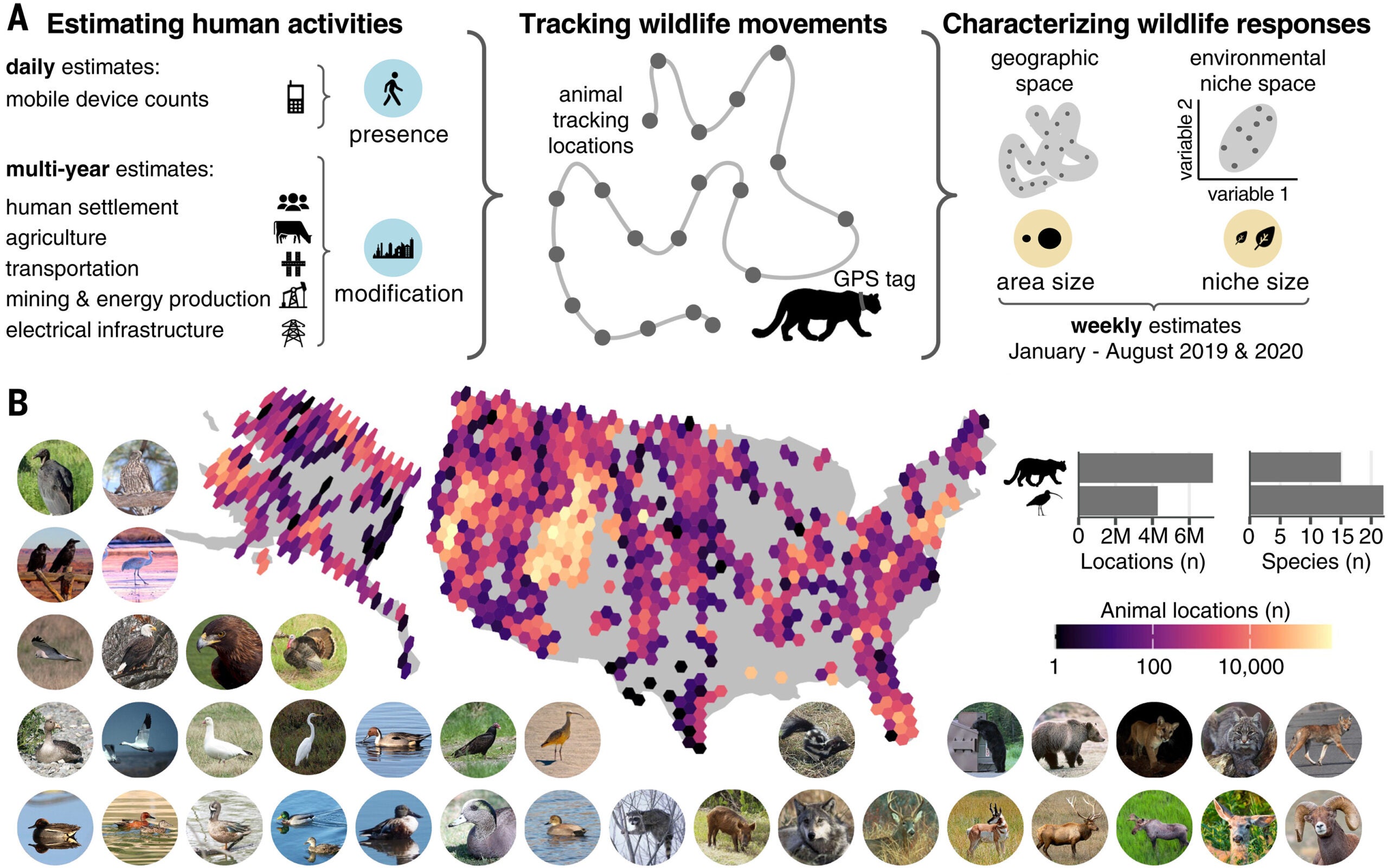
“Animals are affected by both direct human presence and by human-caused changes to the physical environment, such as agriculture and urbanization,” Jetz said. “This study is the first to directly assess at scale how both causes, separately and in combination, impact wildlife habitat usage.”
To understand how wildlife responds to people, researchers combined several technologies rarely used together at this scale. GPS collars tracked birds and mammals across the continental United States. Scientists then paired those movements with satellite-based measures of habitat disturbance and mobile phone data that estimated human presence.
The study included 22 bird species and 15 mammal species. Animals ranged from white-tailed deer, coyotes and wolves to ravens, cranes, hawks and vultures.
Researchers focused on two major drivers of animal behavior. The first was landscape modification, meaning long-term physical changes such as urban development and agriculture. The second was direct human presence, which refers to where and when people physically moved through those landscapes.
For years, scientists struggled to measure that second factor. Maps can show roads or cities, but they cannot easily reveal how many people are actually present at a given moment. Mobile phone data changed that.
“It has been challenging to capture the impact of human presence on wildlife,” said Ruth Oliver, formerly a Yale postdoctoral scientist and now an assistant professor at the University of California Santa Barbara.
“Mobile device data are typically not available, but our study was made possible thanks to a unique partnership that made estimates of human presence available to researchers during the COVID-19 pandemic,” Oliver said.
The COVID-19 pandemic unexpectedly created ideal conditions for the research. Lockdowns and travel restrictions dramatically changed how people moved through public spaces between 2019 and 2020.
Normally, highly developed places also contain high human activity. During the pandemic, many busy areas suddenly became quieter. This temporary separation allowed researchers to distinguish the effects of habitat modification from the direct effects of human movement.
Scientists measured the amount of space animals used each week and analyzed the variety of habitats they occupied. They then used statistical models to connect those patterns with human activity and environmental conditions.
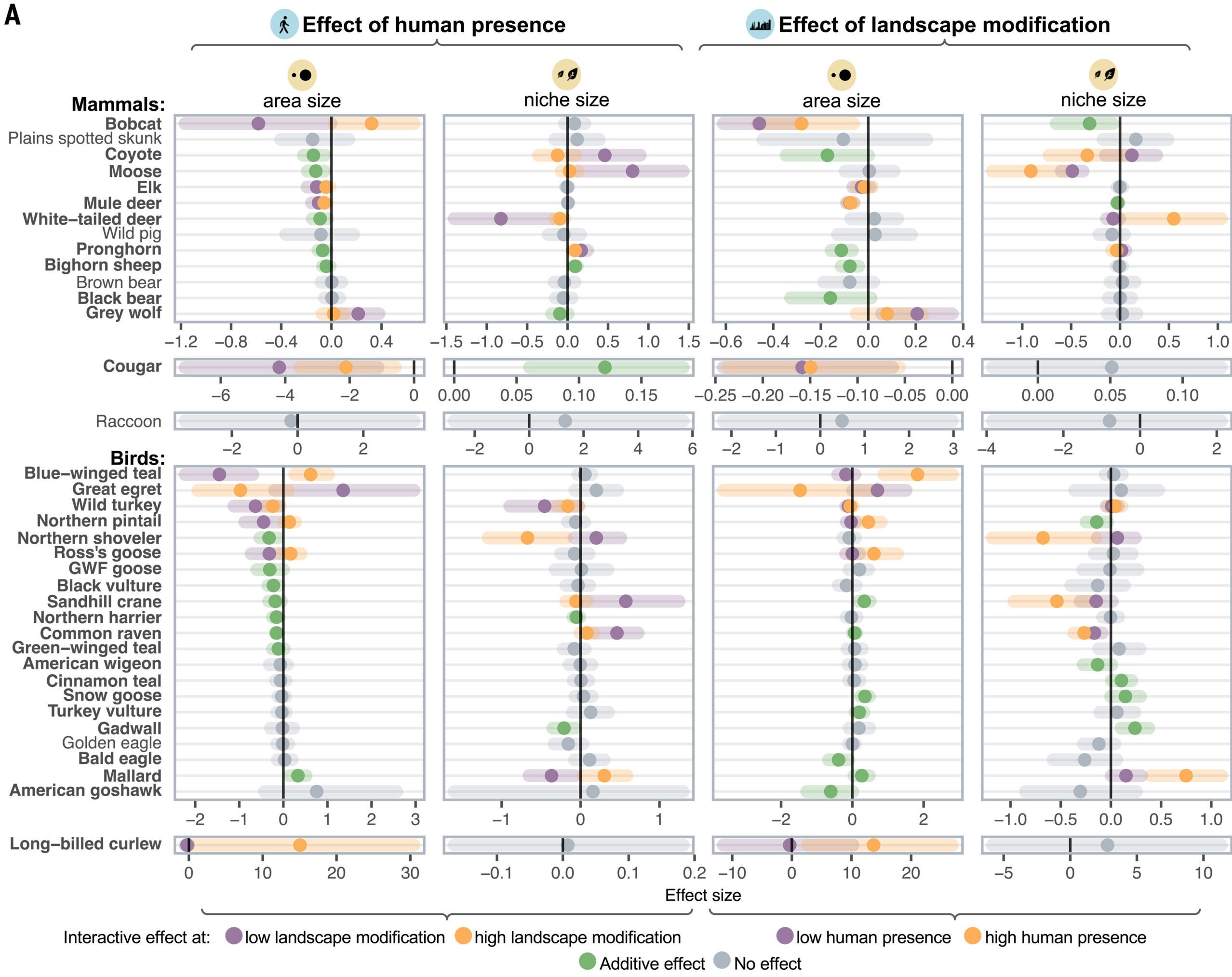
The results showed that more than 65% of species changed their behavior based on human presence alone. Researchers also found that the strongest effects often occurred in less-developed natural areas rather than highly urbanized ones.
That finding surprised scientists. It suggests many animals living in heavily developed places may already be somewhat accustomed to people, while wildlife in quieter regions reacts more strongly when humans appear.
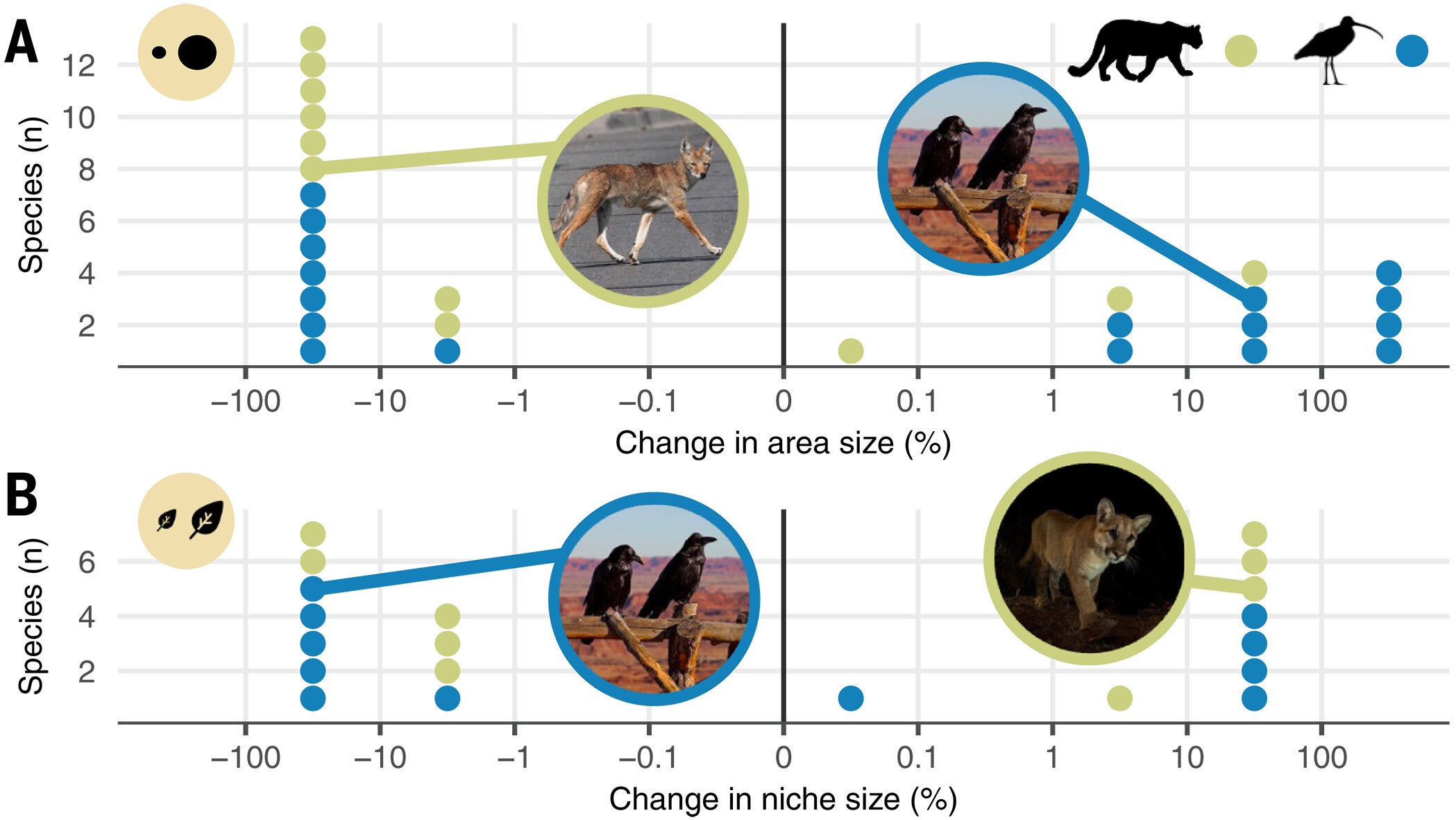
Many mammals reduced the amount of space they used when human activity increased. Coyotes, for example, tended to restrict their movements. Scientists estimated they used about 11 fewer square kilometers each week under high human activity conditions.
Other species responded very differently.
Gray wolves expanded the amount of territory they covered, possibly traveling farther to avoid people. Wolves have historically faced heavy persecution in North America, making them highly sensitive to human presence.
Birds also showed mixed responses. Some species reduced their movement ranges, while others appeared to benefit from human-related resources.
Common ravens expanded the space they used, likely searching for food sources connected to people. Researchers estimated ravens covered about 26 additional square kilometers per week under high human activity.
The study also examined environmental niche size, which reflects how broad or narrow the range of habitats an animal uses becomes.
White-tailed deer expanded their habitat use in developed areas but narrowed it when human presence increased directly. That suggests deer may tolerate modified landscapes while still responding cautiously to nearby people.
Sandhill cranes showed the opposite pattern, highlighting how different species develop distinct survival strategies around humans.
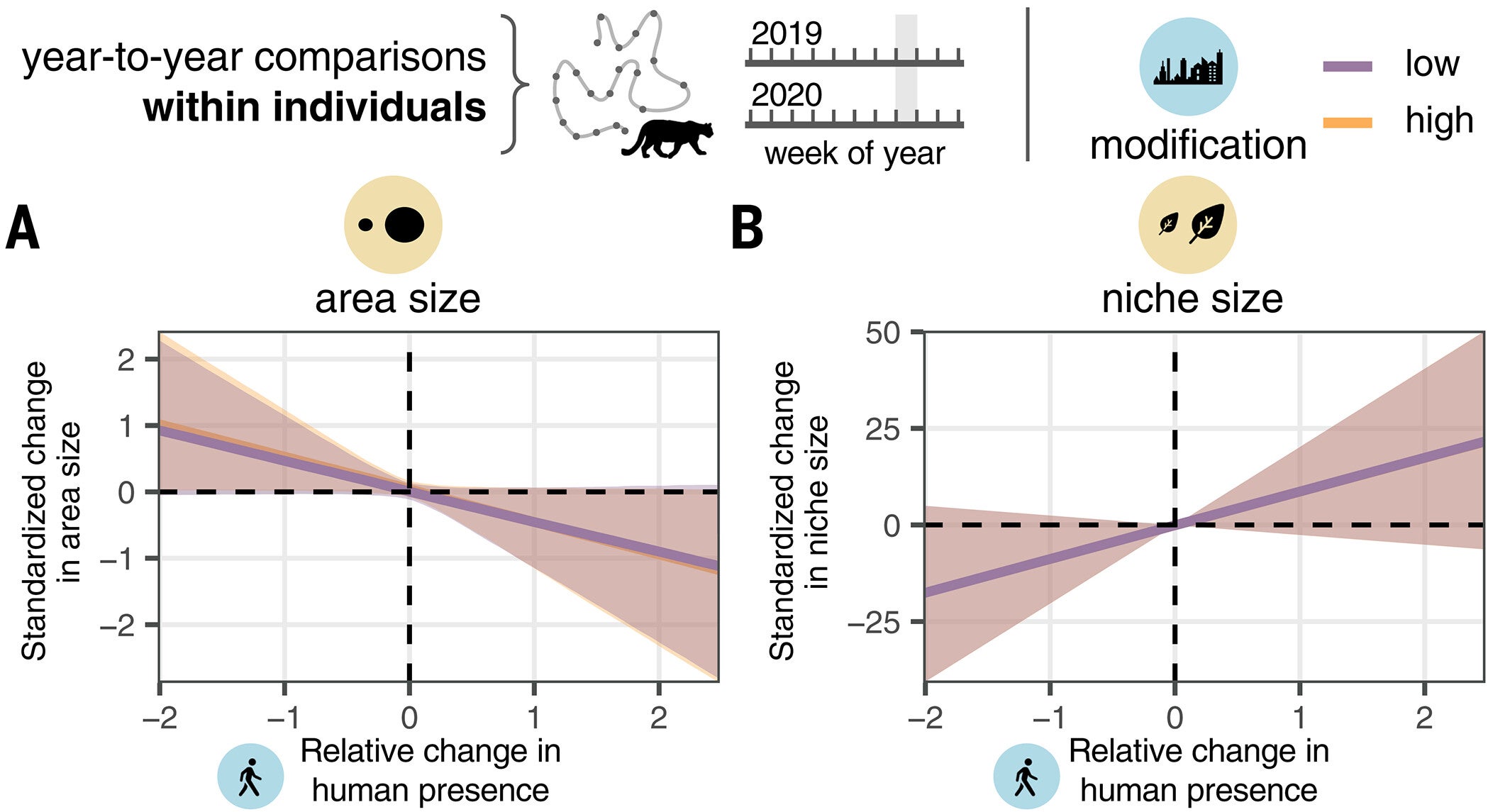
One of the study’s most important findings involved behavioral flexibility. Some animals changed their movements from one year to the next as human activity shifted during the pandemic.
Researchers analyzed nearly 20,000 individual-week comparisons from animals tracked in both 2019 and 2020. Many individuals adjusted their territory size and habitat use as human presence increased or decreased.
That adaptability offers some hope for conservation. Wildlife behavior is not always fixed. Some species can modify how they move through landscapes when conditions change.
Still, scientists caution that behavioral change does not always mean animals are thriving. A smaller territory may signal stress or restricted access to resources. A larger range could mean animals must travel farther to find food or avoid danger.
The study could not determine whether these changes ultimately help or harm animal populations over time.
For decades, conservation efforts largely focused on preserving land and reducing habitat destruction. The new findings suggest that approach may not fully capture how wildlife experiences human activity.
“Habitat loss is the key driver of biodiversity loss, but as we show, human’s direct use of the landscape, say for recreation, also mediates this effect,” Jetz said.
“Depending on the quality of remaining habitat, animals make behavioral adjustments that either amplify or dampen the negative effects of habitat loss.”
Researchers say future conservation strategies may need to manage not only where development occurs, but also how and when people use shared spaces.
For example, reducing traffic during migration periods or limiting recreation in sensitive habitats at critical times could help wildlife without completely excluding people.
“The cutting-edge technology used in this study allows us to see, with unprecedented detail, how variable wildlife responses to human activities really are,” said Scott Yanco, now with the Smithsonian National Zoo and Conservation Biology Institute.
“This means that conservation strategies need to be very targeted, not one-size-fits-all,” Yanco said.
This study could reshape how scientists and policymakers approach wildlife conservation in crowded landscapes. Instead of focusing only on protecting land from development, conservationists may also need to consider when and how humans move through natural areas.
The findings suggest that carefully managing recreation, traffic and other human activity could reduce stress on wildlife while still allowing people to access outdoor spaces. This approach may prove especially important as climate change and expanding development place additional pressure on ecosystems.
The research also demonstrates the power of combining GPS tracking, satellite observations and human mobility data. Future studies could use these tools to better understand migration, habitat use and species survival in rapidly changing environments.
Most importantly, the study highlights that humans and wildlife constantly influence one another. Understanding those interactions more clearly may help create landscapes where both people and animals can coexist more successfully in the future.
Research findings are available online in the journal Science.
The original story “GPS study tracks how animals respond to people across America” is published in The Brighter Side of News.
Like these kind of feel good stories? Get The Brighter Side of News’ newsletter.
The post GPS study tracks how animals respond to people across America appeared first on The Brighter Side of News.

