For many decades, textbooks taught that hippos vanished from the center of Europe upon the onset of the Ice Age. However, a new study is rewriting that history. Utilizing ancient DNA and reliable radiocarbon dating, scientists discovered that common hippos populated Germany’s Upper Rhine valley tens of thousands of years later than initially believed — living in short, warm intervals during the last glacial period before they were lost forever.
The international research team, whose coordinators were University of Potsdam scientists and the Reiss-Engelhorn-Museen Mannheim, published their results in Current Biology. The research offers the first European hippo paleogenome and confirms that hippos during the Ice Age were the very same species as the ones soaking up the sun in Africa’s rivers today.
Scientists had long believed hippos had lived in Europe only at the time of the Eemian interglacial, roughly 129,000 to 115,000 years ago, when Europe’s climate was warmer. The new evidence cuts against that. Radiocarbon ages of hippo remains at Mannheim and Mainz fall between about 49,000 and 31,000 years ago — the very center of the last Ice Age.
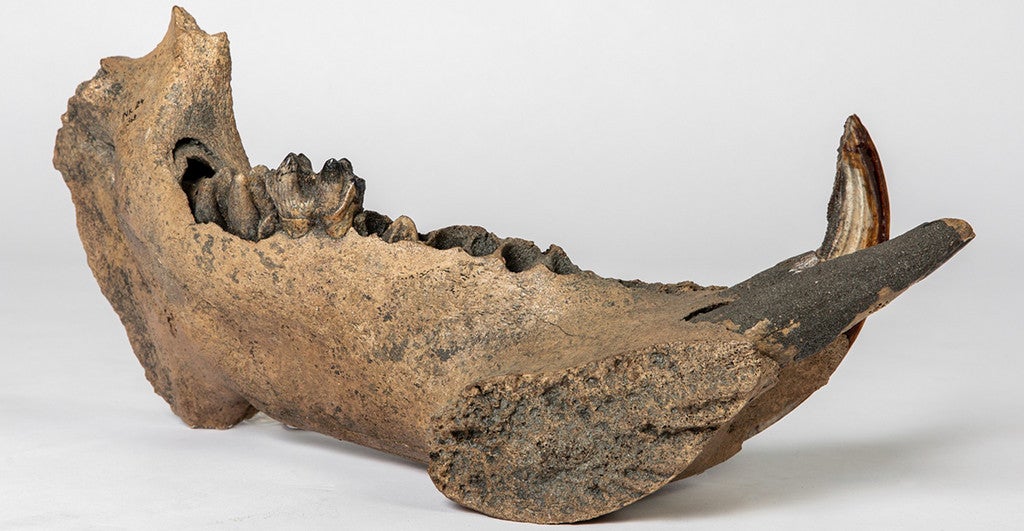
These hippos did not just tough it out in the cold. They thrived during warmer times known as “interstadials,” when glaciers briefly retreated and free-flowing rivers again. They were found with woolly mammoths and woolly rhinoceroses, and that meant temperate and cold-adapted species cycled through the region on surprisingly short timescales.
Dr. Patrick Arnold, lead author of the research, explained that the results upend a long-held presumption. “The results indicate that hippos did not become extinct from mid-Europe at the end of the last interglacial, as was previously thought,” he said.
How did a tropical megaherbivore survive in Ice Age Europe? The answer might lie in the unique topography of the Upper Rhine Graben. This huge rift valley, stretching from France to Germany, was a natural sanctuary. Even when the land around it was frozen, the valley floor’s low elevation and groundwater-sustained streams likely stayed warm enough to support open water and vegetation.
The wood fragments and fossil pollen in the same bed give the same story. Together in the same horizons occur pine and oak — two trees thriving in very different climates. That pair is indicative of changing sequences of cold steppe and temperate woodland, which could have supported hippos in temporary periods of warmth.
Prof. Wilfried Rosendahl, the overall director of the Reiss-Engelhorn-Museen Mannheim, believes this finding shows how diverse the Ice Age really was. “The research supports that the ice age was distinct everywhere,” he commented. “Regional idiosyncrasies added together create a sophisticated picture as a whole, like puzzle pieces.”
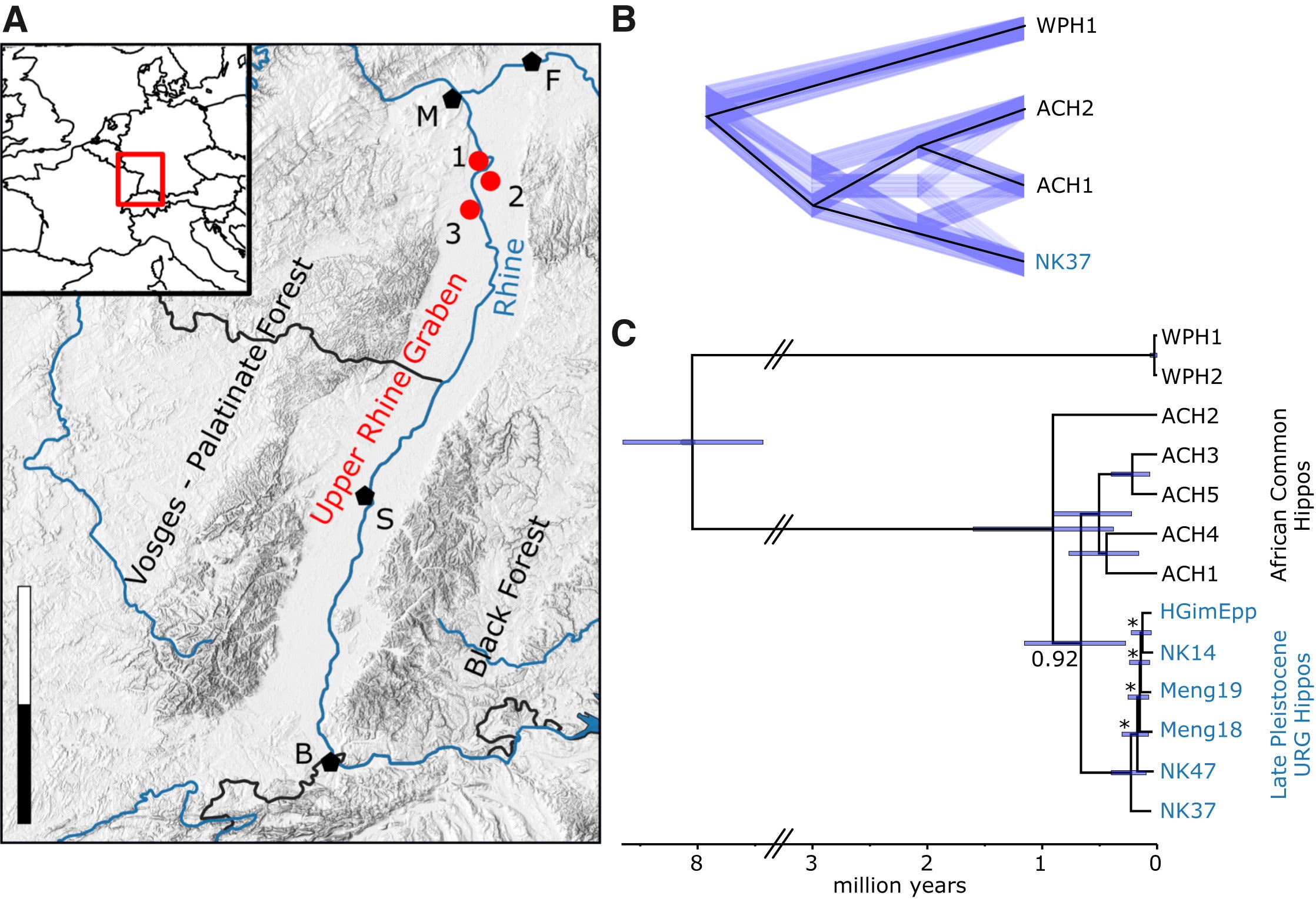
The researchers analyzed 19 hippo fossil bones for fragments of ancient DNA. Six gave them partial mitochondrial genomes, and one — called NK37 — gave them a low-coverage nuclear genome, the first ever recovered from a European hippo. Genetic comparisons showed those Ice Age hippos were indeed Hippopotamus amphibius, the same species that now ranges across sub-Saharan Africa.
Mitochondrial DNA profiles even placed them within the range of contemporary African populations. The similarities show that European hippos were not an extinct lineage but African migrants that dispersed northwards during warmer climates.
Bayesian analysis placed their shared ancestry with African hippos at approximately 834,000 years ago, well before their brief incursion into Europe. Within the German group itself, the shared ancestor is at about 228,000 years ago, which suggests that the animals likely arrived in waves over time and not continuously survived.
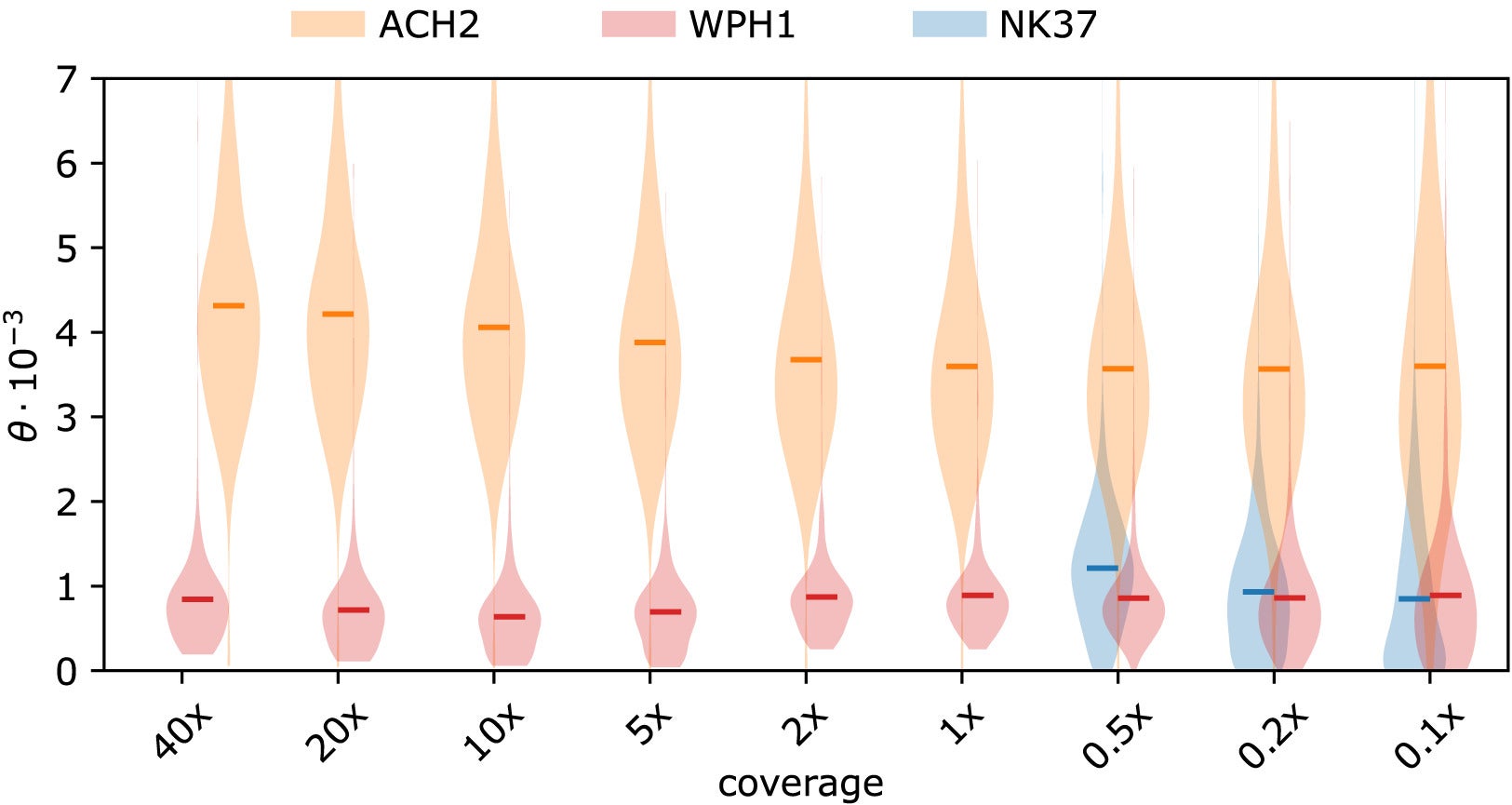
Genetic diversity tells another chapter in the tale. Unlike recent hippos from Africa, the Upper Rhine hippo population had much lower genetic diversity — up to that of the pygmy hippos today, which exist in small, fragmented groups. This helps support the conclusion that the European hippos formed a limited, isolated population at the north end of their species’ range.
During brief warm phases, small numbers of individuals likely drifted along river valleys northwards, settled along the Rhine, and vanished when the climate reverted to cold again. These expansions and deaths may have been repeated many times as temperatures within the Ice Ages wildly rose and fell.
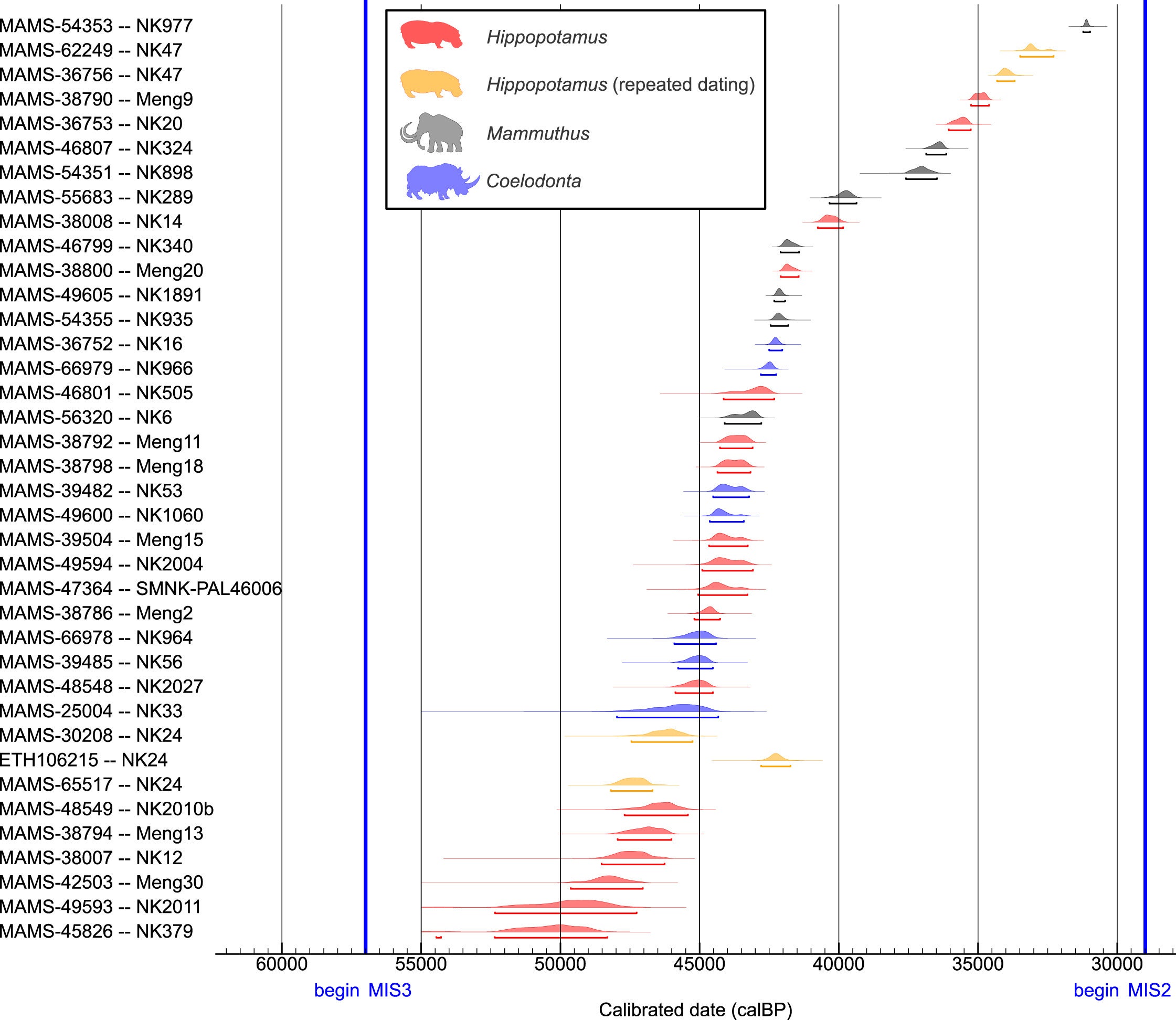
Dr. Ronny Friedrich of the Curt-Engelhorn-Zentrum Archäometrie, an expert in analyzing ancient material, described how amazed he was at the state of the bones. “At many of the skeletons, it was possible to collect samples suitable for analysis — that is not always certain after so many years,” he described.
The most striking discovery is likely to be that their world was shared with animals one would expect in a cold, arid environment. Hippos, woolly mammoths, and woolly rhinos all co-existed in the Upper Rhine valley, according to radiocarbon dating.
Rather than pointing to separate stages of climate, this overlap suggests the region experienced rapid oscillations — short warm spells succeeded by chilling returns. During those short intervals, rivers melted and plants grew, and hippos would have splashed through waters close at hand from grazing mammoths.
The rocks that held these bones have no discernible warm or cold layers, supporting the theory of sudden climate change. To confirm the timing, researchers retested results with a number of different methods of dating, including amino acid geochronology, which supported the hypothesis that these fossils are significantly younger than initially believed.
The “Eiszeitfenster Oberrheingraben” research, funded by the Klaus Tschira Stiftung in Heidelberg, engages geologists, archaeologists, and geneticists in recreating the evolution of climate and ecosystems over the last 400,000 years in southwestern Germany. The interdisciplinary approach to research by the study — radiocarbon dating, isotope analysis, and ancient genomics in conjunction — provides one of the most acute visions yet of Ice Age life in the center of Europe.
Researchers now wish to attempt testing other hippo remains elsewhere in Europe, specifically in the Netherlands and western Germany, where formerly-named “Eemian” samples might indeed be part of these later, Ice Age remnant populations.
As Dr. Arnold described, “We should re-examine other continental European hippo fossils that have long been dated to the final interglacial period.” That could show whether small, isolated hippo populations repeatedly recolonized portions of Europe before finally disappearing.
This research not just re-writes the history of hippos — it re-maps the manner in which scientists conceptualize Ice Age Europe. The study reveals how rapidly ecosystems adapted to short climate changes and how adaptable large mammals were when the situation opportunistically benefited them for a short time.
Witnessing these sudden shifts educate scientists to create better models of how species are likely to react to today’s accelerating climate changes. If hippos could migrate back to central Europe during brief warmings, existing species could likewise move quickly as habitats open and close.
These findings also underscore the importance of local refuges — small, stable habitats that can sustain species even in times of global cooling or warming. Knowledge of where those refuges are now may be key to conservation planning in a changing world.
Research findings are available online in the journal Current Biology.
Like these kind of feel good stories? Get The Brighter Side of News’ newsletter.
The post Hippos in the Ice Age: Ancient DNA rewrite Europe’s wildlife story appeared first on The Brighter Side of News.

