Skin does more than wrap your body like a protective layer. It works as a living boundary that links your inner organs to the outside world. Across nearly 20 square feet, it helps you hold heat, release it, and judge what is safe to touch. A growing body of research now shows that this same system also shapes how you feel about your own body.
A review in the journal Trends in Cognitive Sciences pulls together decades of work in neuroscience, psychology and medicine. The paper argues that sensing warmth and cold is not just about comfort. It is tied to emotion, identity and mental health. The review was written by Dr. Laura Crucianelli of Queen Mary University of London and Professor Gerardo Salvato of the University of Pavia.
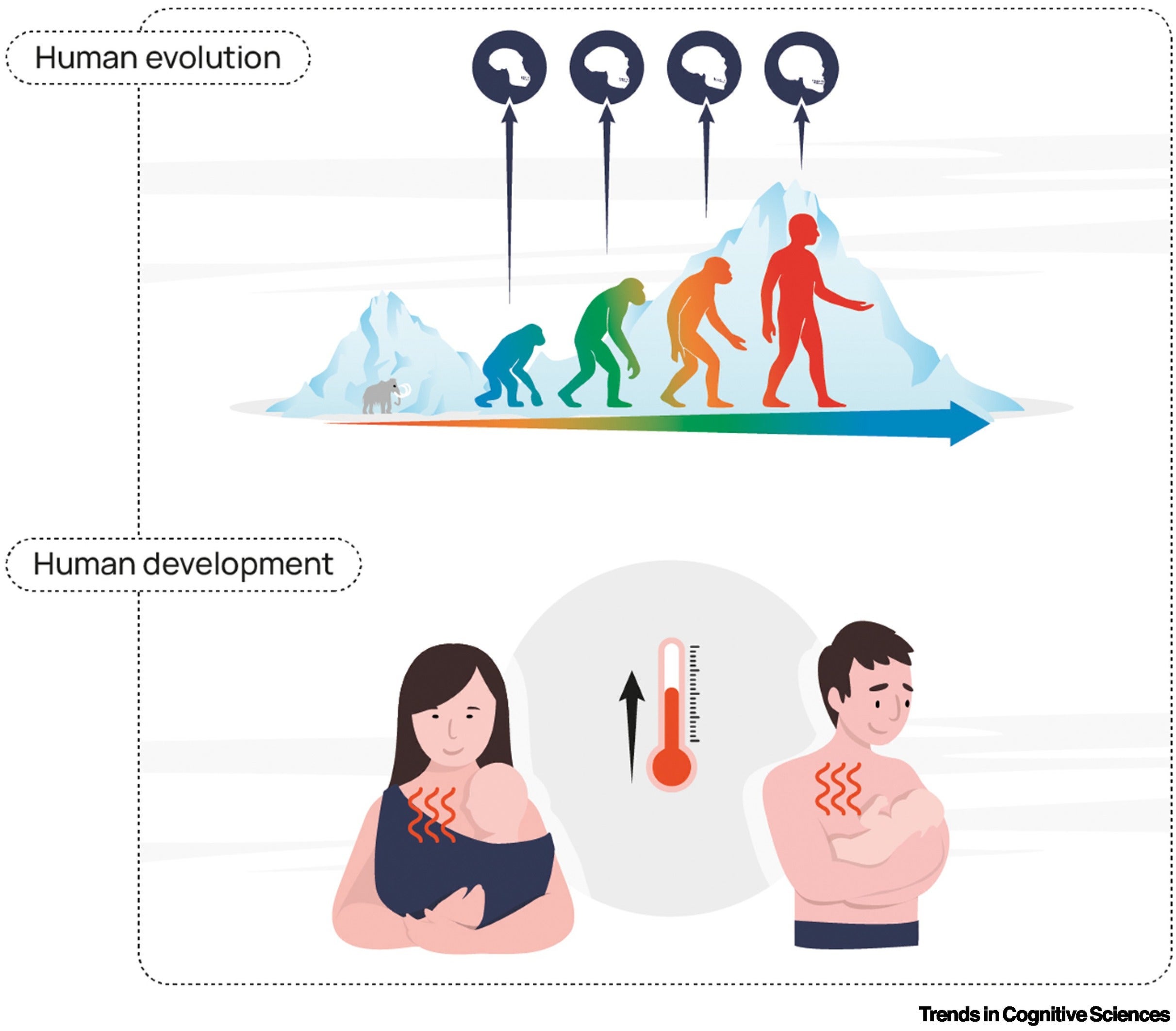
“Temperature is one of our most ancient senses,” Crucianelli says. “Warmth is one of the earliest signals of protection. It keeps us alive, but it also helps us feel like ourselves.”
Not all skin plays the same role. Most of your body is covered by hairy skin, which mainly keeps your temperature steady and sends background signals to your brain. Your palms and soles are different. This smooth skin is packed with blood vessels that can open wide to shed heat or narrow to save it. Those areas also help you judge the heat of a coffee mug or the chill of metal in winter.
Your brain uses these signals to hold core temperature within safe limits. It does this with automatic reactions like sweating or shivering, and with choices you make, such as pulling on a jacket or moving into shade.
The system behind this control is layered. Deep brain structures maintain basic balance. Higher regions, including the insula and parts of the frontal cortex, blend body signals with thought and emotion. Together, they help you decide what feels safe, pleasant or dangerous.
Scientists call temperature sensing “thermoception.” It sits at the heart of interoception, your awareness of what is happening inside your body. This includes your heartbeat, breathing and hunger. It also includes the warmth of a hug and the sting of cold air on your face.
Those feelings matter. Warmth often brings comfort. Cold can warn of danger. That emotional tone pushes you to act. You move closer, pull away, or change your setting.
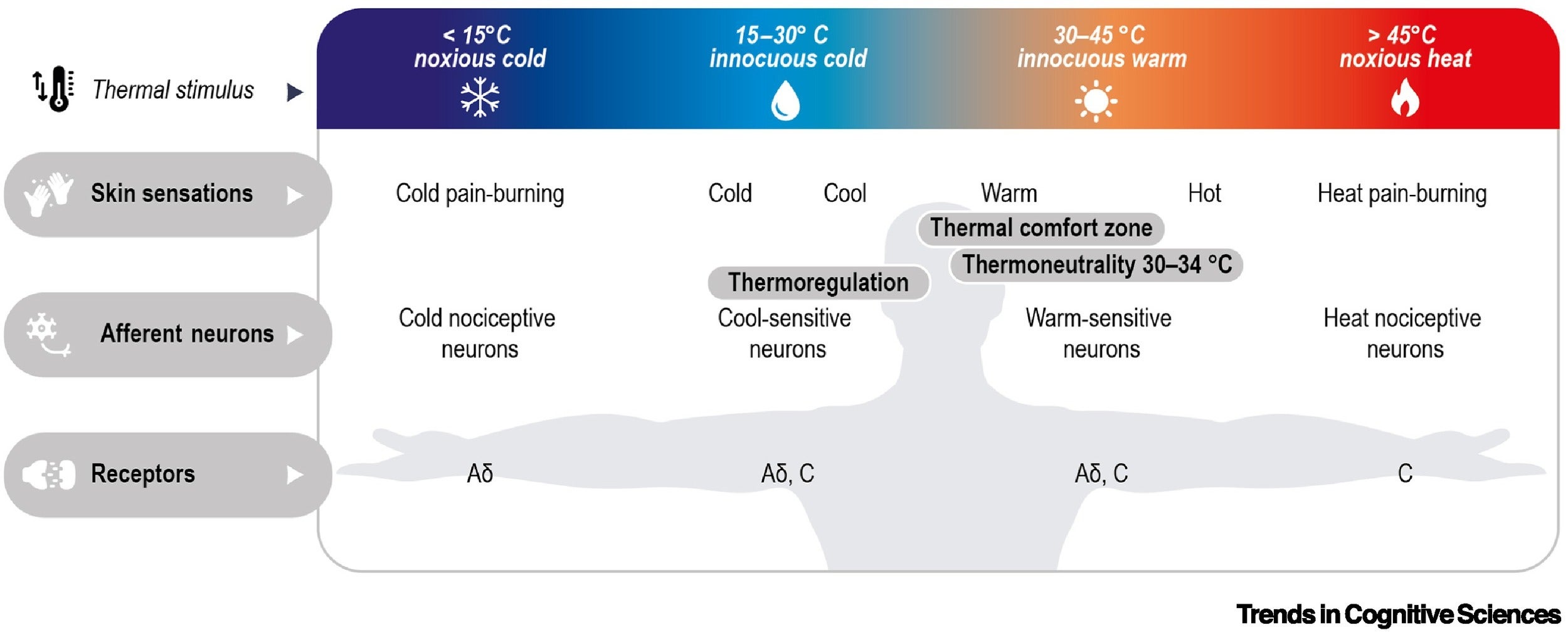
Signals from the skin travel along fast and slow nerve fibers to the spinal cord, then up through the thalamus to the brain. You can notice shifts as small as one tenth of a degree. Exposed areas like your hands and face are especially precise, which is why you rely on them to test the world.
Inside the brain, a back section of the insula seems to handle basic temperature input. A front section helps you become aware of how that input feels. It works with areas tied to emotion and decision-making. Together, they give temperature its power over mood and behavior.
Heat and cold also affect how well you think. Studies show that icy water can hurt memory. Very cold air can cloud attention and slow problem-solving. High heat can also dull focus, though some simple reactions may speed up.
These effects help explain why extreme climates are so draining. They also hint that temperature might change how you experience your own body.
Researchers study body ownership with clever illusions. In one test, you watch a fake hand while your real hand is stroked the same way. Many people start to feel that the rubber hand belongs to them. Other tricks use mirrors or virtual reality to shift that sense for the whole body.
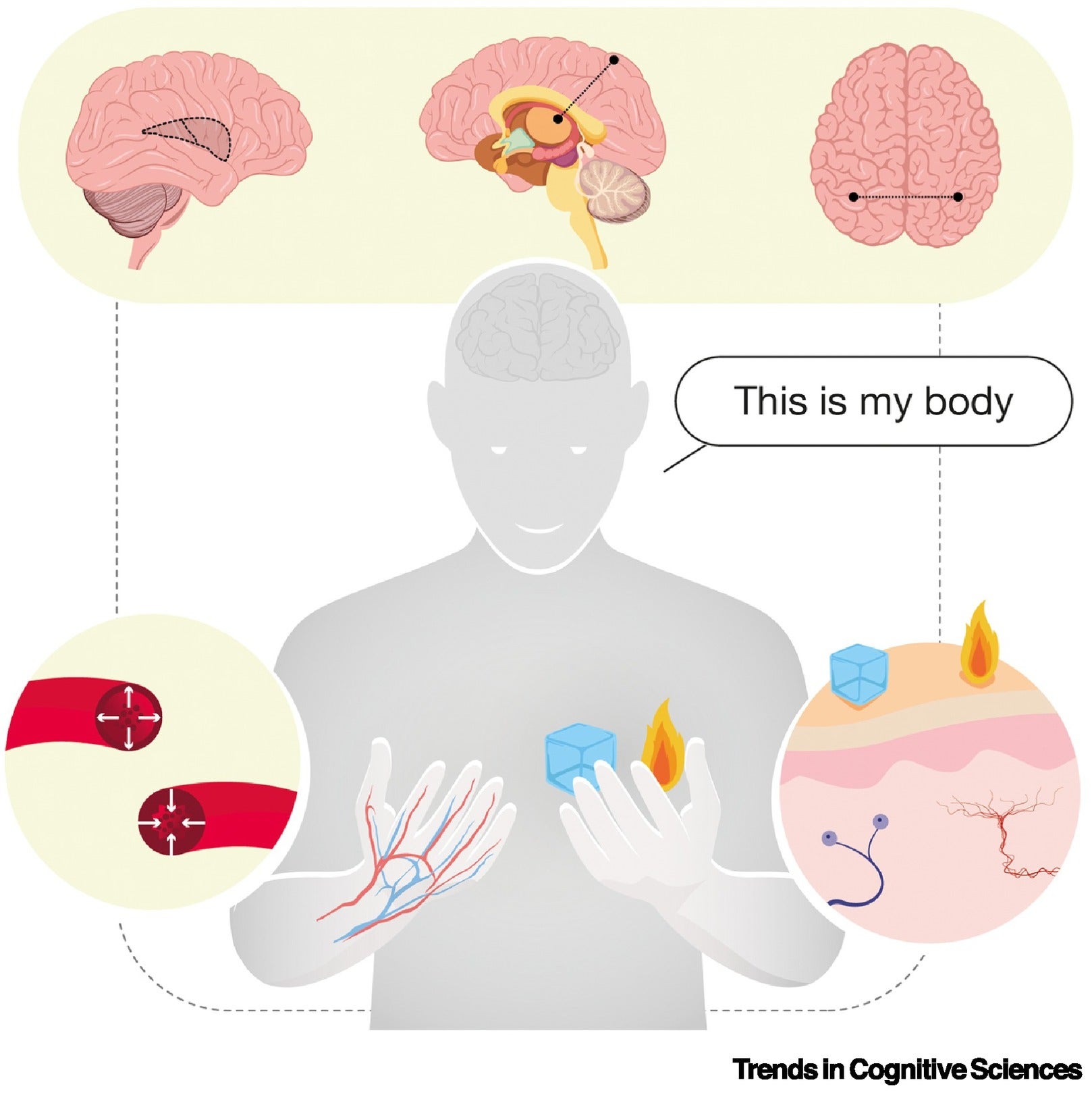
Early work found that the “owned” hand could cool during the illusion. Later studies did not always agree. Some found no change, others saw warming instead. Small details mattered. Room temperature, caffeine use and even lotion on the skin could sway results.
To go beyond correlation, scientists turned to patients with brain injury. People who had suffered right-side strokes and denied ownership of a paralyzed hand showed lower hand temperatures on both sides. Their feet were normal. Brain scans pointed to damage in the right insula and nearby connections.
Other conditions tell a similar story. In complex regional pain syndrome, moving a painful hand across the body can warm it and strengthen the feeling that it belongs. In body integrity dysphoria, people who feel a limb does not belong to them show unusual cooling when they focus on that leg. In anorexia nervosa, patients show cooling even without illusions, suggesting trouble blending inner and outer signals.
“People with altered temperature regulation after a stroke may stop recognizing part of their bodies as their own,” Salvato says.
The review also explains why warmth from another person feels so powerful. Holding someone sends touch and heat together into the brain. That input flows through the insula and systems linked to safety and calm. It is often tied to oxytocin release and lower stress.
“When we hug, the mix of touch and warmth strengthens body ownership,” Crucianelli says. “You feel grounded. You feel, this is my body.”
Understanding how heat and cold shape body awareness points to new treatments. Gentle warming or cooling could help patients who feel detached from their bodies after a stroke or injury. It may guide care for eating disorders, anxiety and trauma, where people often report feeling “not in themselves.”
Prosthetic design stands to gain too. Engineers already build artificial limbs that can sense pressure. Adding realistic warmth and coolness could boost acceptance and ease distress, which may cut rejection rates and costs.
The findings also raise questions about daily life. Workers in extreme heat or cold may experience shifts in focus and self-awareness. As climate change brings more temperature extremes, knowing how heat and cold affect mood and identity could guide public health and safety plans.
In the end, this line of research reminds you that the boundary between body and mind is thin. A warm hand on your back or a cold wind on your face is not just a feeling. It is a message about who you are.
Research findings are available online in the journal Trends in Cognitive Sciences.
Like these kind of feel good stories? Get The Brighter Side of News’ newsletter.
The post How a warm hug changes the way you feel about yourself appeared first on The Brighter Side of News.

