The ocean works quietly every day to protect life on Earth. It absorbs heat from the atmosphere, stores massive amounts of carbon dioxide and produces much of the oxygen humans breathe. Much of that work depends on organisms so small they cannot be seen with the naked eye.
These microscopic marine algae, called phytoplankton, drift near the ocean’s sunlit surface. Despite their tiny size, they carry out nearly half of all photosynthesis on Earth. They absorb carbon dioxide, use sunlight for energy and help move carbon deep into the ocean through a process known as carbon sequestration.
Now, researchers at the Norwegian University of Science and Technology, or NTNU, say this fragile system faces a growing threat from microplastics.
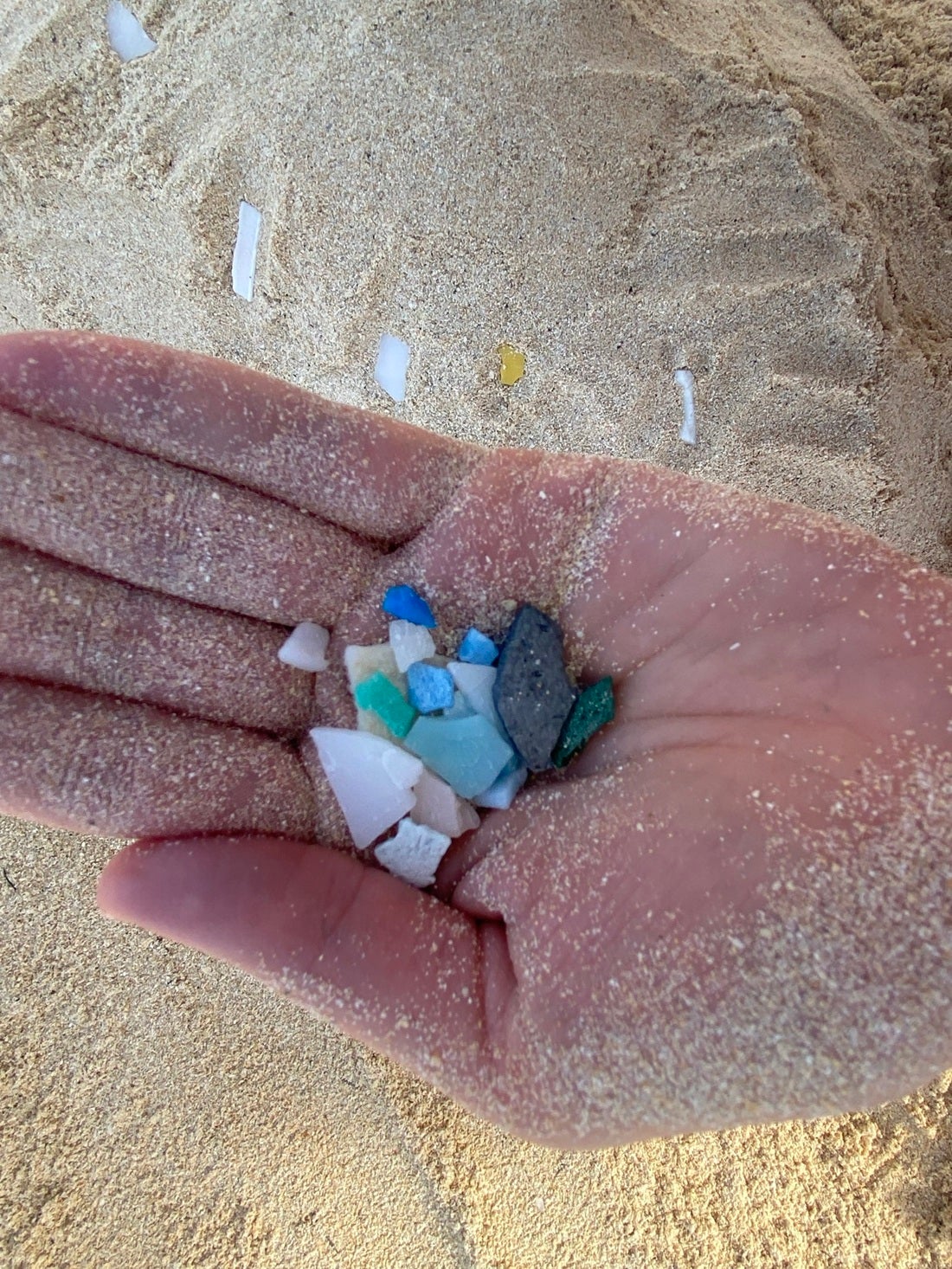
Tiny plastic fragments have spread across nearly every marine environment, from crowded coastlines to remote Arctic waters. Scientists already knew these particles could harm marine life. The new research suggests they may also weaken the ocean’s ability to absorb carbon from the atmosphere.
“The ocean plays a crucial role in absorbing carbon from the atmosphere. Between 25 and 30 per cent of all human-generated CO2 is absorbed by the ocean,” said researcher Francesca Verones of NTNU’s Department of Energy and Process Engineering. “Phytoplankton plays an important role in this process. So, what happens if marine microplastics affect the plankton?”
Phytoplankton form the foundation of the ocean’s biological carbon pump. During photosynthesis, they convert sunlight, water and carbon dioxide into oxygen and energy-rich sugars. Some of that captured carbon later sinks into deeper ocean layers, where it can remain stored for hundreds or even thousands of years.
This process helps slow climate change by removing carbon dioxide from the atmosphere.
Researchers estimate the ocean absorbs about two billion tonnes of carbon each year. Even a small disruption to this system could have long-term environmental consequences.
Microplastics, which are plastic particles smaller than five millimeters, now float throughout the ocean. These particles come from broken-down plastic waste, synthetic fibers and industrial pollution. Because plastic breaks down slowly, concentrations continue rising year after year.
“All the plastic that is discarded in the natural environment will eventually end up in the ocean,” Verones said. “So the concentrations are going to keep on increasing.”
The NTNU team studied how microplastics affect algae growth in different climate zones worldwide. They combined laboratory experiments with global phytoplankton data to estimate how plastic pollution changes marine carbon uptake.
The researchers found that microplastics interfere with algae in several ways. Some plastics release toxic chemicals. Others physically damage cells or create oxidative stress, which harms cellular function.
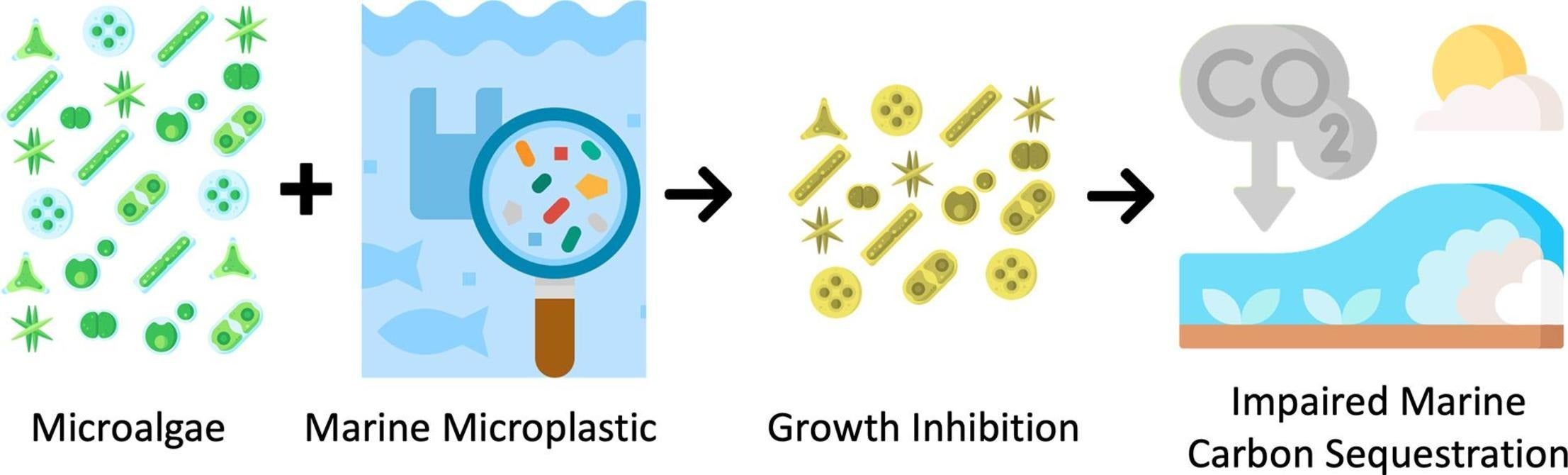
Plastic particles can also block sunlight from penetrating deeper into the water column. Since phytoplankton depend on sunlight for photosynthesis, reduced light means reduced growth.
“Microplastics affect algal growth in various ways,” Verones explained. “The toxicity of certain types of plastics, such as PVC, is a problem in its own right, but plastic can also reduce the amount of sunlight that penetrates deeper into the water column.”
Laboratory studies showed that microplastics can reduce photosynthetic activity, slow growth and change algae structure. In some cases, plastic particles attach directly to algae cells and interfere with normal biological processes.
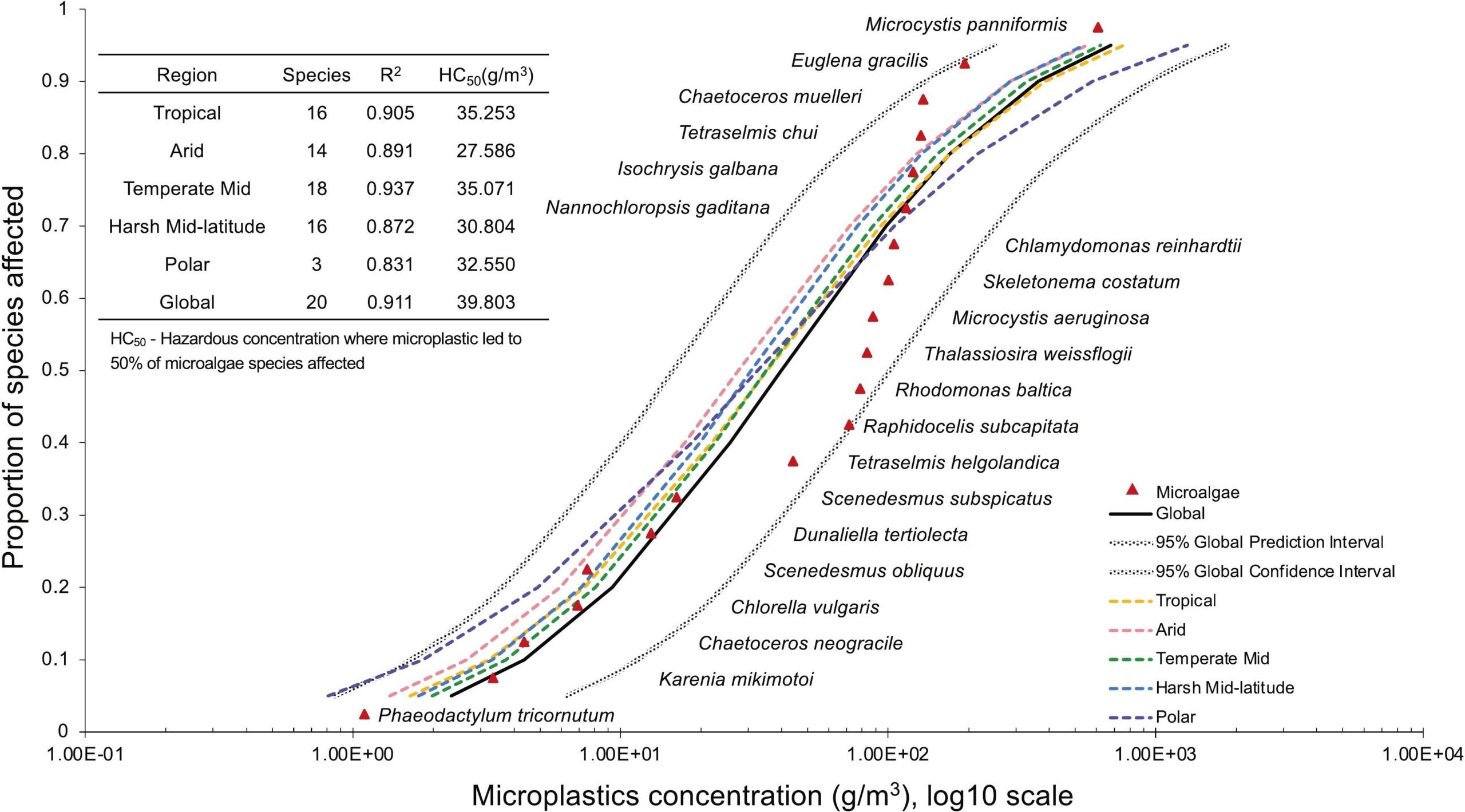
To understand the broader effect, researchers developed what are known as effect factors. These calculations estimate how much carbon may no longer be stored because of microplastic pollution.
The team reviewed data from 51 scientific studies and selected 21 that met strict quality standards. Those studies included 20 phytoplankton species with enough global occurrence data for analysis.
Scientists then divided the world’s oceans into five major climate zones: Polar, Harsh Mid-latitude, Temperate Mid-latitude, Arid and Tropical.
Using biodiversity records and satellite-based productivity data, the researchers built models showing how sensitive different algae communities are to microplastic exposure.
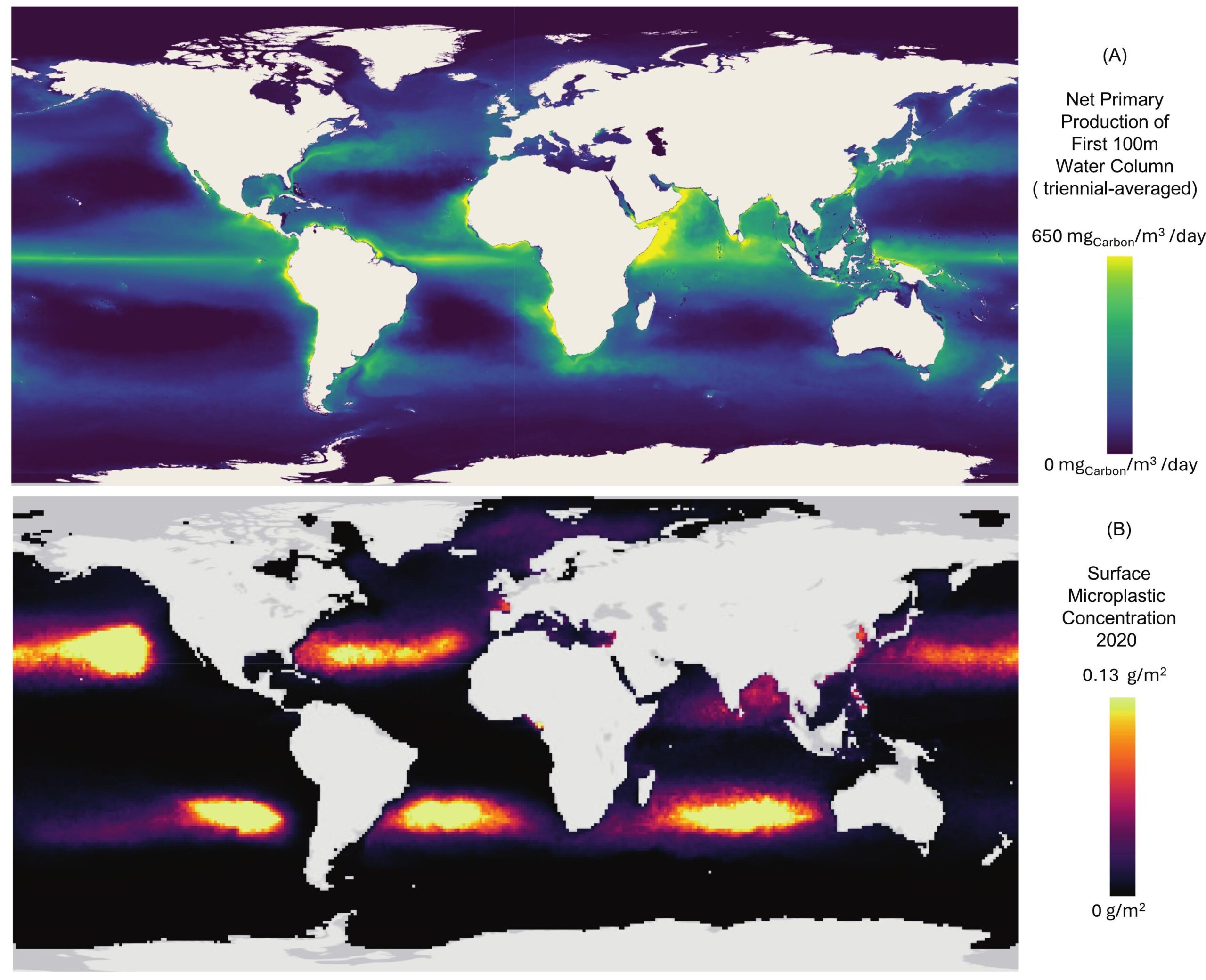
Their findings revealed that tropical and arid regions face the greatest risks. These areas both absorb large amounts of carbon and experience heavy microplastic exposure.
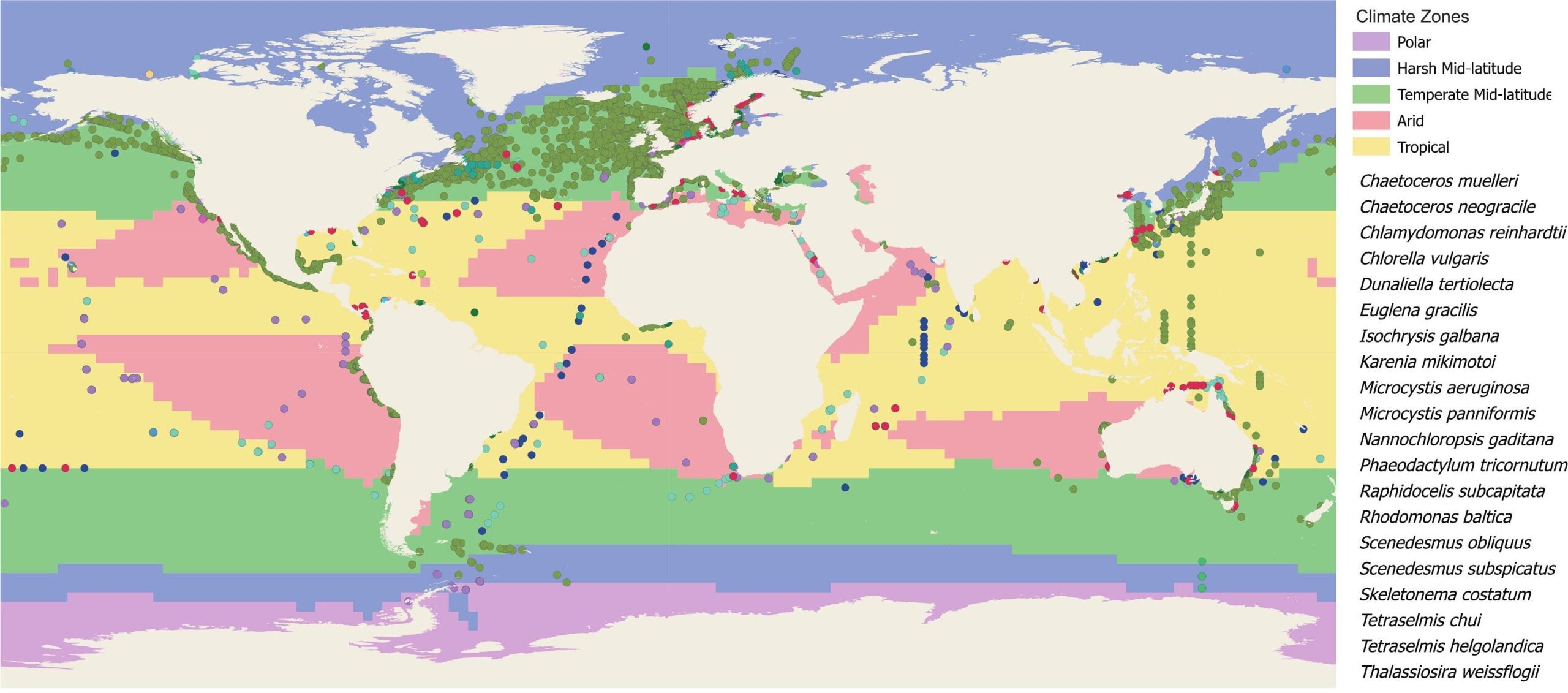
“In these areas, we found that microplastics could reduce carbon uptake by 25,000 and 48,000 tonnes, respectively, over the course of a year,” Verones said.
Globally, researchers estimated that microplastics prevented the ocean from storing roughly 75,000 metric tons of carbon dioxide in 2020 alone.
When translated into financial terms using carbon capture replacement costs, the estimated annual loss reached about $5.5 million.
The study found that the regions most vulnerable to plastic pollution often overlap with areas of high biological productivity.
Places such as the North Pacific, Arabian Sea and Bay of Bengal contain both large concentrations of microplastics and highly active phytoplankton populations.
Tropical waters showed the highest effect factor, meaning each gram of plastic caused greater losses in carbon storage potential there than in colder regions.
Polar regions showed far smaller impacts, largely because they store less carbon annually through phytoplankton growth.
Researchers stressed that even though current losses may seem relatively small compared to the ocean’s total carbon absorption, the trend remains concerning because plastic pollution continues growing worldwide.
Microplastics can remain in marine environments for centuries. Some estimates suggest they persist for up to 1,300 years.
That means even modest yearly disruptions may build into much larger environmental effects over time.
The NTNU study forms part of a larger European Union-funded project examining how plastic affects the ocean through a life cycle perspective.
Life cycle assessment evaluates the environmental impact of a product from production to disposal. Researchers examine energy use, water consumption, recycling potential and pollution effects across every stage.
“The goal is for it to be as comprehensive as possible,” Verones said.
The broader project examines three major areas: how plastic harms biodiversity, how it spreads invasive species and how it affects ecosystem services such as carbon storage.
Plastic debris can entangle marine animals or be swallowed by fish and seabirds. It can also transport organisms across oceans by allowing species to cling to floating plastic surfaces.
“This is the first time researchers have investigated how plastic affects carbon uptake in the world’s oceans and incorporated the findings into a life cycle assessment,” Verones said.
Researchers say the findings connect directly to what the United Nations calls the “triple planetary crisis,” which includes climate change, pollution and biodiversity loss.
“These challenges are interconnected,” Verones explained. “If we are to find a solution, we need to look at the big picture.”
The study also highlights limitations scientists still face. Real ocean ecosystems are far more complex than laboratory conditions. Researchers focused mainly on surface phytoplankton within the upper 100 meters of water, where most photosynthesis occurs.
They did not fully account for deeper marine ecosystems such as seagrasses, mangroves or ocean sediments, which also store carbon.
Still, scientists believe this work offers an important starting point for understanding how pollution may quietly weaken one of Earth’s most important climate systems.
This research could help governments and industries better understand the hidden environmental costs of plastic pollution. By linking microplastics directly to reduced carbon storage, the study provides a new way to measure how pollution contributes to climate change.
The findings may also guide future environmental policies. Regions identified as especially vulnerable, particularly tropical and arid oceans, could become priorities for plastic reduction programs and conservation efforts.
For researchers, the study creates a framework for future life cycle assessments that include ecosystem services such as carbon sequestration. It may also encourage more studies examining how pollution affects microscopic marine life that supports global climate stability.
Most importantly, the work reminds people that protecting the ocean means protecting a system that quietly supports human survival every day through oxygen production, climate regulation and carbon absorption.
Research findings are available online in the journal Ecosystem Services.
The original story “Microplastics may be weakening the ocean’s ability to fight climate change” is published in The Brighter Side of News.
Like these kind of feel good stories? Get The Brighter Side of News’ newsletter.
The post Microplastics may be weakening the ocean’s ability to fight climate change appeared first on The Brighter Side of News.

