The dust under a moonwalker’s boots looks harmless from a distance. Up close, it is anything but. Lunar regolith, the blanket of pulverized rock and glass covering the moon, is abrasive, dangerous and unforgiving. In fact, it can tear through seals, wear down equipment and cling to surfaces in an airless environment. That environment is marked by radiation and violent temperature swings.
That makes it one of the worst imaginable building materials.
It may also be one of the most important.
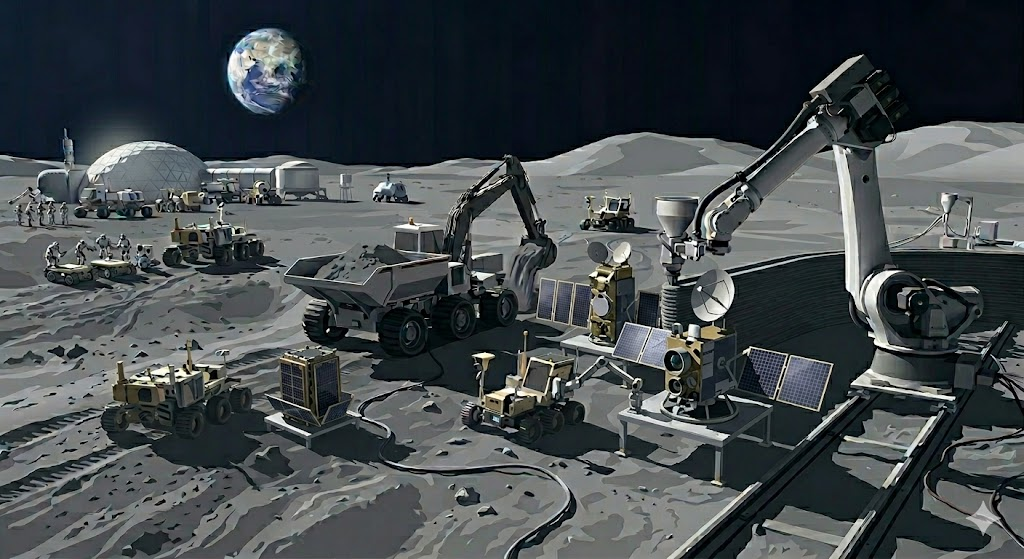
At Texas A&M University, researchers are treating lunar regolith not just as a hazard to survive. Instead, they see it as a resource to use. Their work is tied to one of the biggest practical questions in space exploration. That question is how to build a lasting human presence on the moon without hauling nearly everything from Earth.
“We are moving past the era of ‘flags and footprints,’” said Dr. Patrick Suermann, professor of construction science at the College of Architecture and retired U.S. Air Force lieutenant colonel. “We have to stop thinking like explorers and start thinking like settlers. That means building with what’s underneath our boots.”
Suermann laid out that vision at the 2026 Earth & Space conference, hosted at the Texas A&M Hotel and Conference Center.
The argument starts with cost. Building anything on the moon becomes brutally expensive when every piece must be launched from Earth.
“It costs roughly $1 million to $1.3 million per kilogram to ship materials to the moon,” Suermann said.
That number alone explains why lunar construction has shifted from a futuristic dream to a logistics problem. If a permanent base is ever going to work, astronauts cannot keep relying on shipments from home. Especially, they cannot rely on those shipments for every wall, tool and tank of fuel.
A 2018 report on lunar architecture helps show the scale of the issue. Transporting rocket propellant from Earth to the moon was estimated at roughly $10,000 per kilogram. However, producing that same fuel on the moon was estimated to cost about $500 per kilogram, almost 20 times less.
“The high cost of shipping to the moon is the million-dollar problem,” Suermann said. “Every time you can cut the mass of a payload, you save a fortune. That’s why the future depends on building infrastructure from resources already on the moon.”
That idea, known broadly as using local resources rather than imported ones, sits behind much of the current push toward long-term lunar operations. Also, NASA’s new Lunar Innovation Park, designed to support human presence and operations in the lunar environment, has added fresh urgency to that effort.
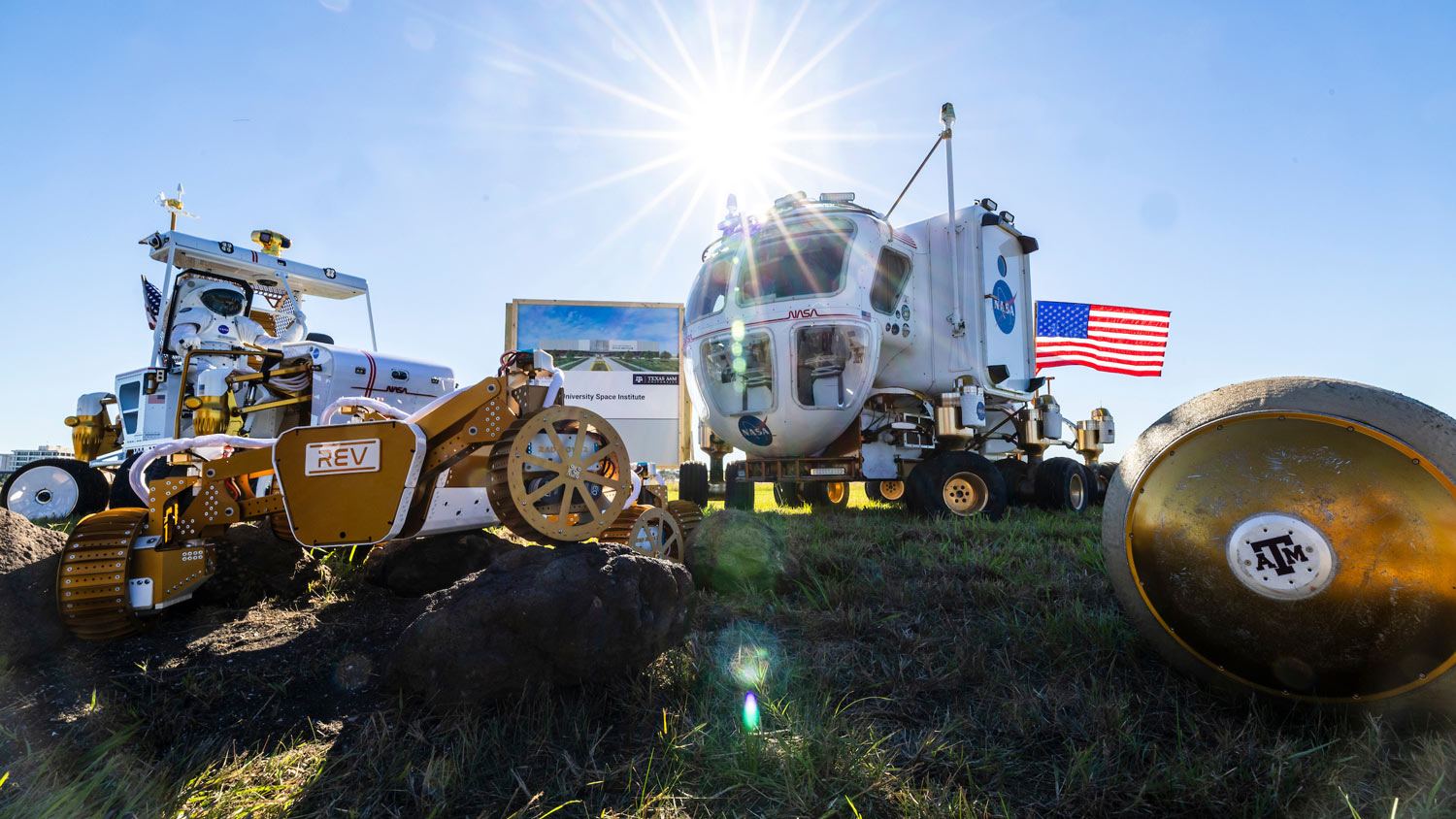
Texas A&M is trying to position itself at the center of that challenge. It is doing this through the Texas A&M Space Institute, led by Dr. Robert Ambrose, professor of mechanical engineering at the College of Engineering.
Backed by a $200 million investment from the Texas Legislature and located next to Johnson Space Center in Houston, the institute is meant to serve as a national center for off-world research, robotics and testing.
“One of the most exciting features of the 240-acre facility is it’s two-and-a-half acre testing areas: one replicating the surface of the moon, the other Mars,” Suermann said.
Those test areas are meant to recreate the practical difficulties of building beyond Earth. The moon’s surface is not just dusty; it is exposed, unstable and hard on machinery. Therefore, construction systems there would need to operate with limited human intervention, little margin for error and no easy repair shop around the corner.
The institute also draws from the Robotics and Automation Design, or RAD, Lab, which feeds research into autonomous systems, rovers and machines designed for hostile terrain.
Still, Suermann said the institute’s value is not only technical.
“It isn’t just a facility,” Suermann said. “It’s a place to get young investigators and the next generation of researchers excited and prepared to tackle the biggest challenges in space exploration.”
If the Space Institute provides the landscape, the Construction Automation, Safety and Education, or CASE, Lab focuses on the working logic of a lunar construction site.
Led by Dr. Gilles Albeaino, assistant professor of construction science at the College of Architecture, the lab is studying how people and machines might share the job. The goal is not simply remote control, but mixed reality systems. In those systems, humans and robotic systems operate as partners.
That could define the first real lunar work crews. Instead of teams of builders in hard hats, future construction sites may depend on rovers moving regolith and robotic arms printing structures layer by layer. Furthermore, they may rely on engineers directing operations through virtual reality systems from a safer location.
“On the moon, construction operations will depend on semi-autonomous robotic systems,” Suermann said. “The CASE lab is leading research into how humans and machines can work together in environments where humans can’t safely do everything themselves.”
The moon makes that partnership necessary. There is no natural shield against radiation. Temperatures swing sharply between lunar day and night. Dust gets into equipment. Repairs that might be routine on Earth can become dangerous, slow and costly.
“Every tool matters. Every ounce of material you ship matters,” Suermann said. “So, the question becomes: how do you use the environment itself as your supply chain, and how can you augment machines to become your partner in austere environments?”
For Suermann, those questions are not purely theoretical.
Before arriving at Texas A&M in 2017, he spent two decades in the U.S. Air Force, building sustainable infrastructure and bases in remote locations including Guam and Greenland. Those years, he said, shaped the way he thinks about construction under pressure.
“My experiences in serving the U.S. Air Force were formative, and transformative,” Suermann said. “It taught me a great deal about construction, and that what can go wrong will go wrong.”
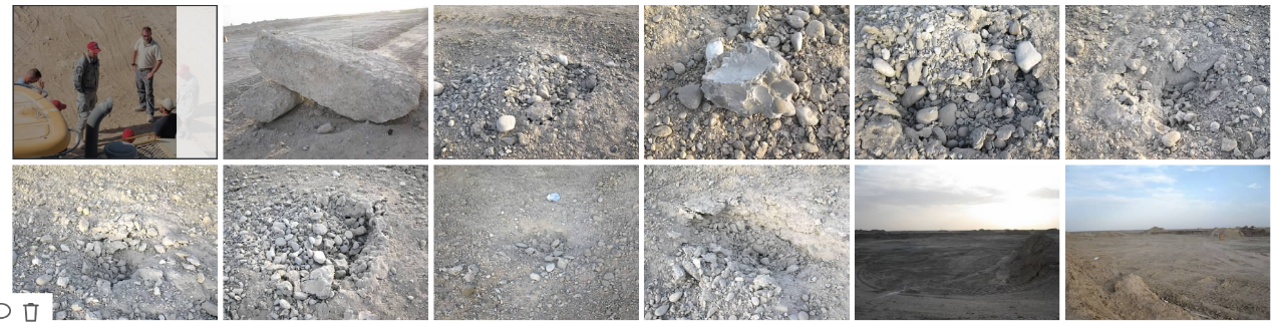
One deployment to Afghanistan seems especially relevant now. There, he led a joint military operation to build a runway and base in a remote desert environment. In that location, the ground itself worked against the project.
“The sand was this fine, talcum-like, powdered mesh,” Suermann said. “Hidden under it were these massive boulders.”
To him, that mix of loose surface material, buried obstacles and punishing logistics carries an obvious echo.
“It shows, to me, that lunar regolith isn’t too dissimilar from the terrain we have here on Earth,” Suermann said. “At the end of the day, construction is construction.”
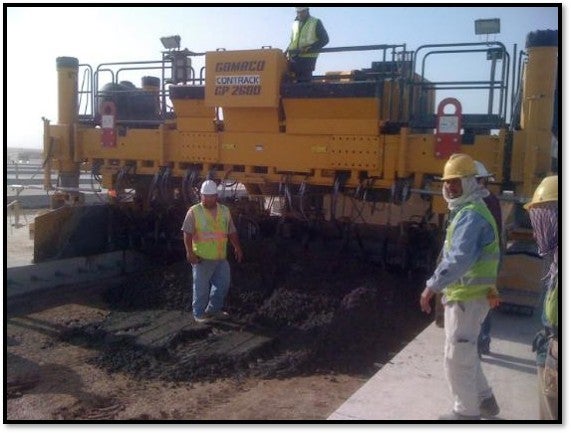
That line does not erase the moon’s dangers. However, it does suggest that some of the skills needed for extraterrestrial building may come from experience in Earth’s most difficult places. These are places where crews already work with limited supplies, unreliable ground and extreme environmental stress.
Today, Suermann is trying to pass that mindset on through collaborations that blend architecture, engineering, management and technology.
“The beauty of construction folks is that we take the ideas that live in computer simulations and make them come to life,” Suermann said. “It’s not an assembly line; it’s ideas that we turn into universal applications. To lead the future, you have to know how things are done now.”
As NASA works toward a 2040 goal for a permanent lunar base, that practical attitude may matter as much as any breakthrough material or machine. The challenge is no longer just getting people to the moon. Instead, it is figuring out how they might live there, repair there and build there with what the landscape provides.
This work points toward a future in which lunar bases depend less on expensive cargo launches and more on local materials, robotic construction and careful planning around harsh environmental conditions.
If those systems work, they could lower costs, reduce mission risk and make a permanent human presence on the moon more realistic.
The original story “Moon dust could become the foundation of humanity’s first permanent lunar base” is published in The Brighter Side of News.
Like these kind of feel good stories? Get The Brighter Side of News’ newsletter.
The post Moon dust could become the foundation of humanity’s first permanent lunar base appeared first on The Brighter Side of News.

