A steady slide into frailty is the story many people tell themselves about old age. The numbers in a long-running federal survey tell a messier tale.
In a new study led by Becca R. Levy at Yale University, nearly half of older adults tracked for up to 12 years improved in at least one basic marker of brain or body function. The odds of improvement rose with something that rarely gets treated like a health factor at all: whether someone started out with more positive beliefs about aging.
“Many people equate aging with an inevitable and continuous loss of physical and cognitive abilities,” Levy said. “What we found is that improvement in later life is not rare, it’s common, and it should be included in our understanding of the aging process.”
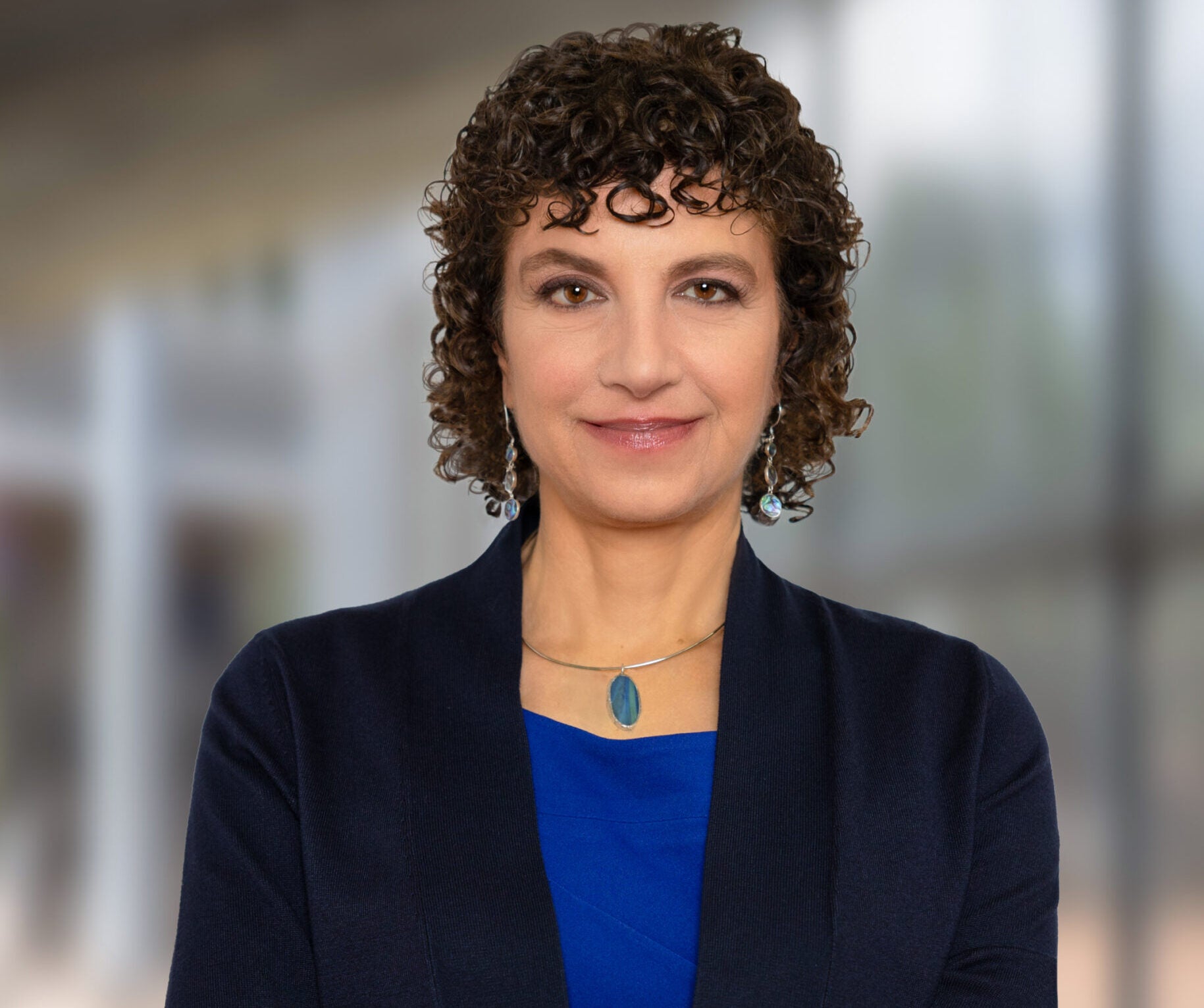
Levy, a professor of social and behavioral sciences at Yale School of Public Health, and co-author Martin Slade, a lecturer in occupational medicine at Yale School of Medicine and in the Department of Environmental Health Sciences at the School of Public Health, pulled their data from the Health and Retirement Study.
The HRS is a federally supported, nationally representative survey of Americans ages 50 and older, run every two years by investigators at the University of Michigan’s Institute for Social Research with support from the National Institute on Aging. In this analysis, the team included HRS participants who had baseline measures of age beliefs and at least one later measure of cognition or walking speed.
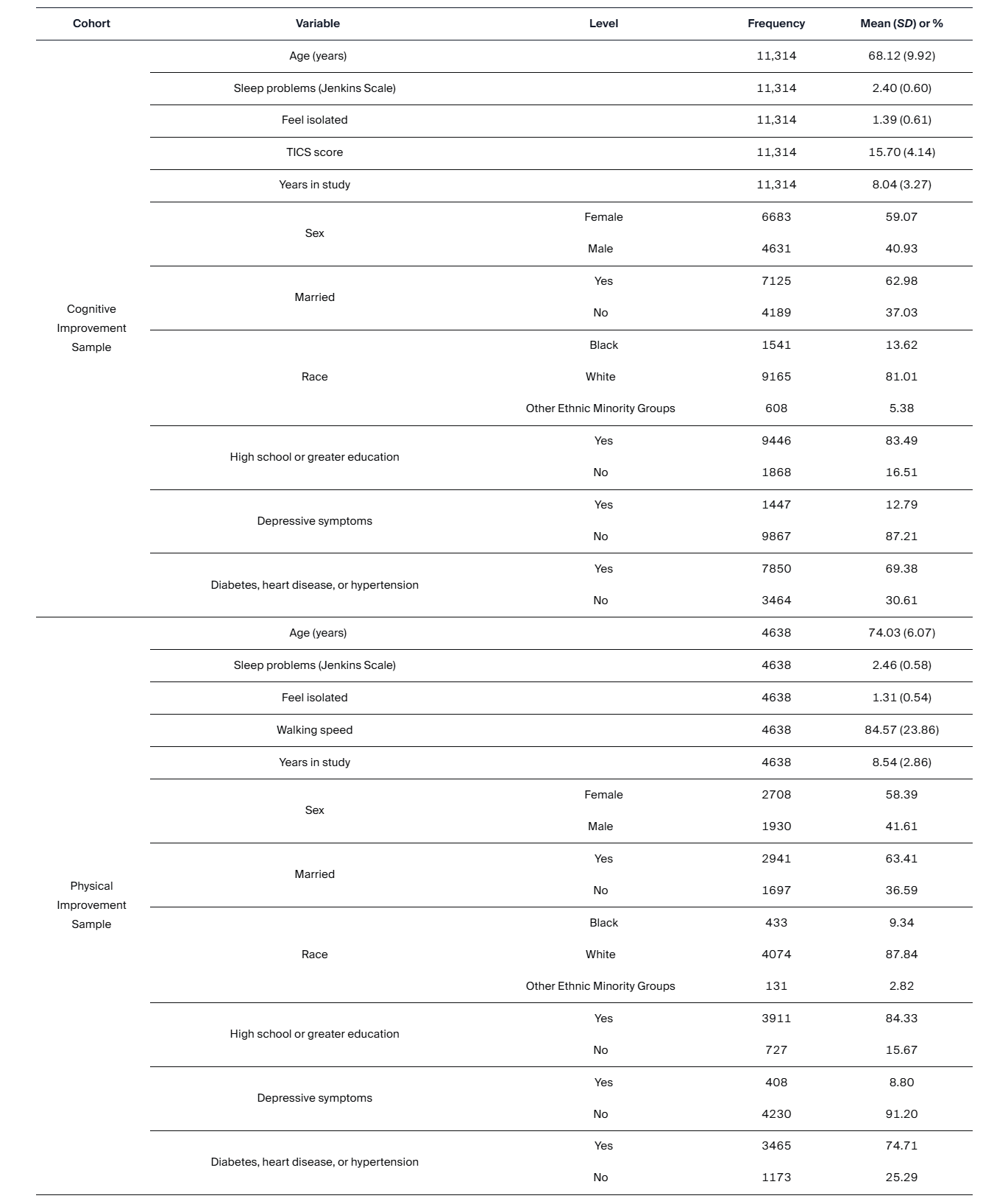
The cognitive cohort included 11,314 people, with a baseline average age of 68.12, ranging from 50 to 99. The walking-speed cohort included 4,638 people, with a baseline average age of 74.03, ranging from about 65 to 99. Most participants stayed in the study for 10 years or more.
If you take everyone as one blended group, the story looks familiar. On average, cognitive scores dropped by 1.39 points and walking speed slowed by 11.69 centimeters per second during the follow-up period.
That is the problem, Levy argues. The average can flatten out the people who are improving.
“What’s striking is that these gains disappear when you only look at averages,” Levy said. “If you average everyone together, you see decline. But when you look at individual trajectories, you uncover a very different story. A meaningful percentage of the older participants that we studied got better.”
The researchers used two performance measures, not self-reported health.
For cognition, they used the 27-point Telephone Interview for Cognitive Status, a global measure that includes short-term memory, delayed recall and math skills. Participants counted as improved if their score at their last follow-up wave was higher than their baseline score.
For physical function, they used walking speed over 2.5 meters, timed twice at each wave with participants told to walk at a normal pace and use any devices they needed. Faster time, converted to speed, was used to represent maximum capability. Participants counted as improved if their walking speed at the final assessment was faster than at baseline.
Over up to 12 years, 45.15% of participants with both measures improved in cognition, walking speed, or both. In the domains looked at separately, 31.88% improved cognitively and 28.00% improved physically.
Those rates easily cleared the team’s bar for “meaningful,” which they anchored to a national benchmark in Healthy People 2030 that uses 11.5% as a meaningful population-level target.
The study also tracked stability as another way older adults can defy a cultural script of inevitable decline. When the team counted people whose cognitive scores stayed the same as well as those who improved, 51.06% showed stability or improvement in cognition. For walking speed, 37.56% showed stability or improvement.
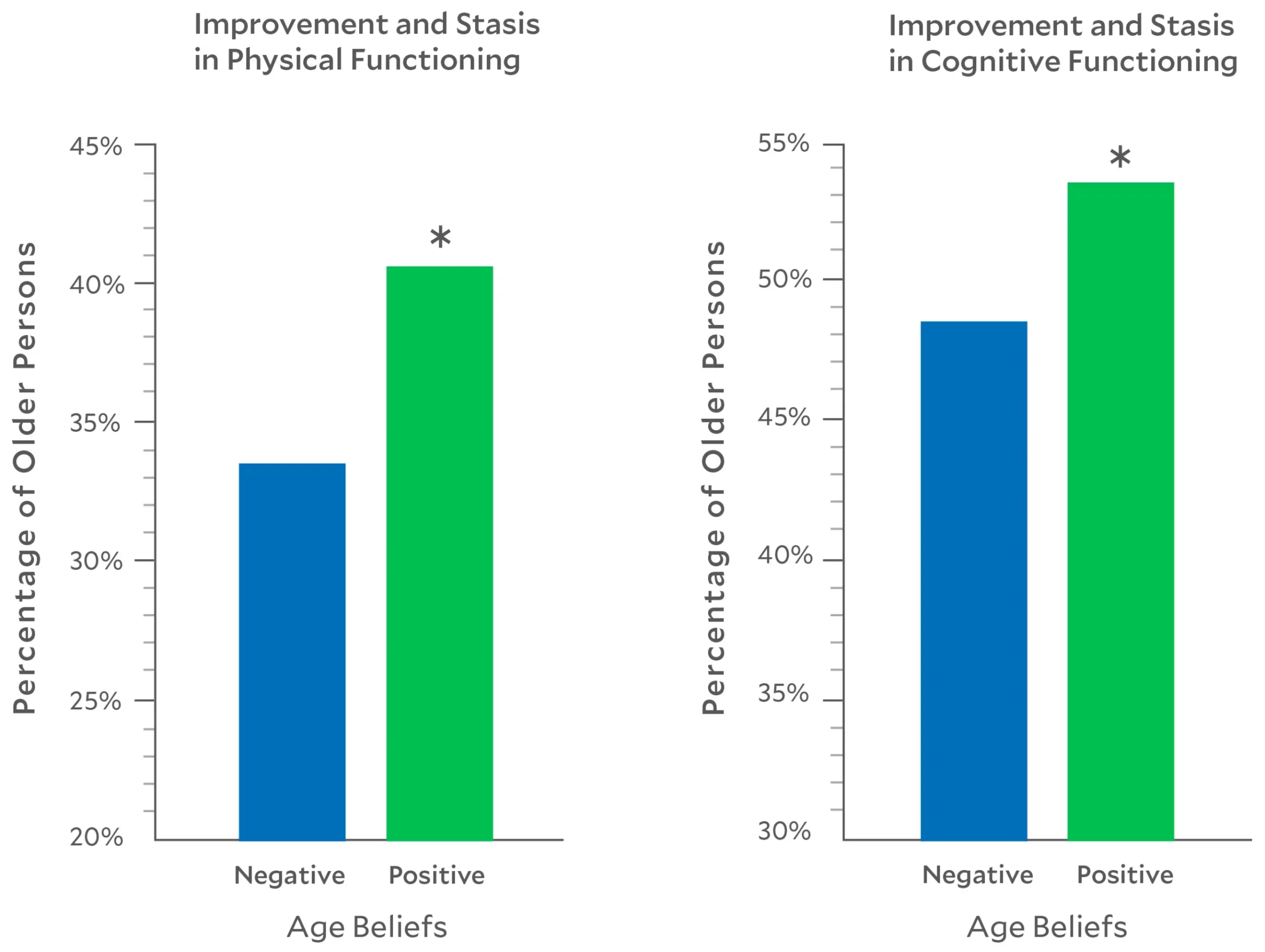
The study’s central question was not simply whether older adults sometimes get better, but why. The team focused on “age beliefs,” measured at baseline using the five-item Attitude Toward Aging subscale from the Philadelphia Geriatric Center Morale Scale. Scores could range from 5 to 30, with higher scores reflecting more positive age beliefs.
Across models, positive age beliefs predicted improvement in both domains. In logistic regression analyses, each step toward more positive age beliefs was linked to higher odds of cognitive improvement and higher odds of walking-speed improvement, even after accounting for covariates such as age, sex, race and ethnicity, education, depressive symptoms, sleep problems, marital status, cardiovascular disease or diabetes, APOE 4, social isolation, and how long participants stayed in the study.
The association held up when the team tightened the definition of improvement to reduce “regression to the mean.” Under that more conservative approach, cognitive improvement required a rise of more than 1 point on the TICS, and physical improvement required an increase of more than 5 centimeters per second in walking speed. The pattern remained, and most improvers exceeded those cutoffs: 71.98% of cognitive improvers gained 2 points or more, and 77.38% of physical improvers gained 5 centimeters per second or more.
The pattern also appeared among people who started out in the normal range. In participants with normal baseline cognition, 27.74% improved by the final assessment. In participants with normal baseline walking speed, 23.08% improved.
Levy frames the findings through stereotype embodiment theory, the idea that age stereotypes absorbed early in life become self-relevant later, with health consequences. The paper also points to prior work linking negative age beliefs to Alzheimer’s-related biomarkers such as plaques, tangles and lower hippocampal volume.
Still, this study does not pin down how beliefs might translate into better performance years later. One limitation, the authors note, is that the HRS did not include measures that could illuminate mechanisms, such as muscle satellite cell regeneration or markers of brain plasticity. They also argue that future work should test other cognitive domains, like spatial memory, and look at additional cohorts with greater representation of ethnic minority groups.
One more detail complicates the simple mind-body story: improvement in thinking and improvement in walking were only weakly linked. The correlation between cognitive and walking-speed improvement was r = 0.09, and most people who improved did so in only one domain.
Research findings are available online in the journal Geriatrics.
The original story “Nearly half of older adults improve in cognition or walking over time” is published in The Brighter Side of News.
Like these kind of feel good stories? Get The Brighter Side of News’ newsletter.
The post Nearly half of older adults improve in cognition or walking over time appeared first on The Brighter Side of News.

